Buttocks Workout with Weights: Routine and Equipment
Biomechanical Foundations of a Buttocks Workout with Weights
Transitioning from bodyweight hip extension exercises to external loading alters muscular recruitment patterns and joint dynamics. While bodyweight patterns rely on leverage and tempo, adding resistance demands strict stabilization of the lumbopelvic region and deliberate force production through the posterior chain. A structured buttocks workout with weights introduces tension across different points of the range of motion, requiring careful coordination between the hips, hamstrings, and spinal erectors.
Weighted glute training generally divides across two loading vectors: axial (vertical) and anteroposterior (horizontal). Axial patterns, such as squats and deadlifts, place high mechanical tension on the hips in lengthened positions. Horizontal patterns, such as weighted bridges and thrusts, maximize muscular tension in fully shortened positions. Successfully sequencing these variations ensures well-rounded stimulus without unnecessarily fatiguing the lumbar spine.
Executing buttocks exercises with weights also requires a stable base of support. When loading the skeleton, any unwanted shifting, foot slide, or uneven surface can disrupt pelvic alignment, reducing training efficiency and misdirecting mechanical stress onto stabilizing joints.
Essential Free-Weight Movement Categories for Glute Training
Organizing movements by movement plane and posture helps construct a balanced program. Selecting reliable weight exercises for buttocks development involves combining bilateral hip hinges, unilateral split stances, and horizontal extension patterns.
Hinges and Deadlift Variations for Deep Hip Stretch
The Romanian deadlift (RDL) stands out among bottom exercises with weights for its ability to load the gluteal complex under a deep stretch. Whether using a pair of dumbbells or a centered kettlebell, the movement hinges around the acetabulofemoral (hip) joint while the knees remain soft with minimal forward displacement.
- Foot Anchoring: Establish a firm tripod stance through the big toe, pinky toe, and heel.
- Hip Travel: Direct the hips horizontally backward toward an imaginary wall rather than bending downward.
- Neutral Spine: Keep the lats engaged and weights tracking close to the shins to prevent excessive moment arms on the lower back.
Loaded Split Squats and Lunges for Unilateral Control
Unilateral exercises address side-to-side asymmetries and challenge pelvic stability in the frontal plane. Movements such as dumbbell reverse lunges, walking lunges, and Bulgarian split squats place substantial mechanical load on the lead hip while minimizing spinal compression. Incorporating these into a dedicated bum workout weights session requires deliberate forward torso lean to keep tension concentrated on the working hip rather than shifting purely to the quadriceps.
Weighted Hip Thrusts and Bridges for Peak Contraction
Horizontal hip extension movements load the posterior chain at the top of the range of motion, where the glutes reach peak contraction. The hip thrust positions the upper back against a stable bench while a barbell or heavy dumbbell rests across the crease of the hips. Maintaining a neutral chin tuck and flat ribcage prevents lumbar hyperextension, directing effort through full hip lockout.
Selecting External Implements: Dumbbells, Kettlebells, and Booty Weights
Home gym trainees have diverse choices for resistance equipment. Selecting the right implement depends on the targeted exercise mechanics, grip demands, and spatial constraints.
For trainees completing a dynamic booty workout with weight, handheld tools provide distinct benefits:
- Dumbbells: Highly versatile for split squats, lunges, and Romanian deadlifts. They permit natural wrist rotation and balance load evenly on both sides of the torso.
- Kettlebells: The displaced center of mass makes kettlebells ideal for sumo deadlifts, goblet squats, and swings, emphasizing smooth hip hinging mechanics.
- Dedicated Booty Weights and Compact Plates: Compact cast-iron plates or specialized wearable weights allow comfortable loading across the pelvic crest during floor-based bridges without the awkward bulk of full-sized barbells.
When selecting resistance, beginners should evaluate how load progression impacts posture and movement quality, using clear training frameworks like this work out guide to match weight choices to daily readiness.
Subfloor Protection and Surface Staging for Heavy Weighted Workouts
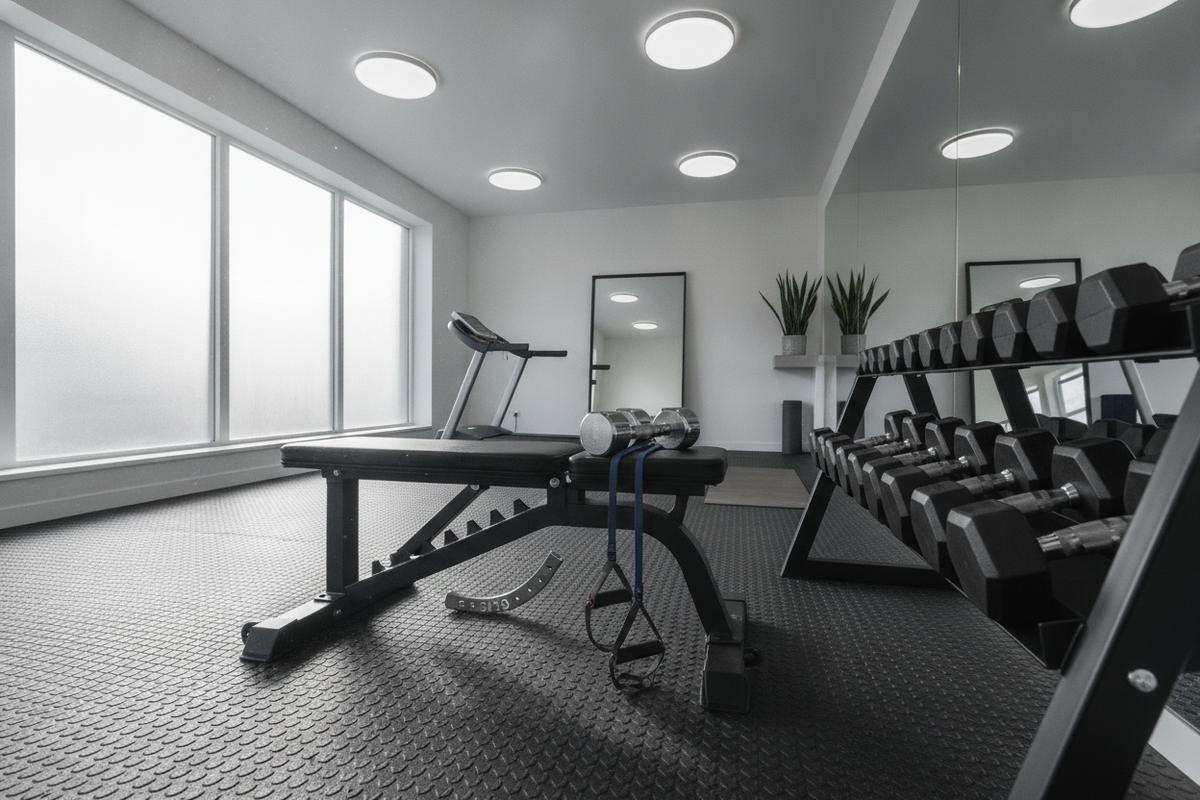
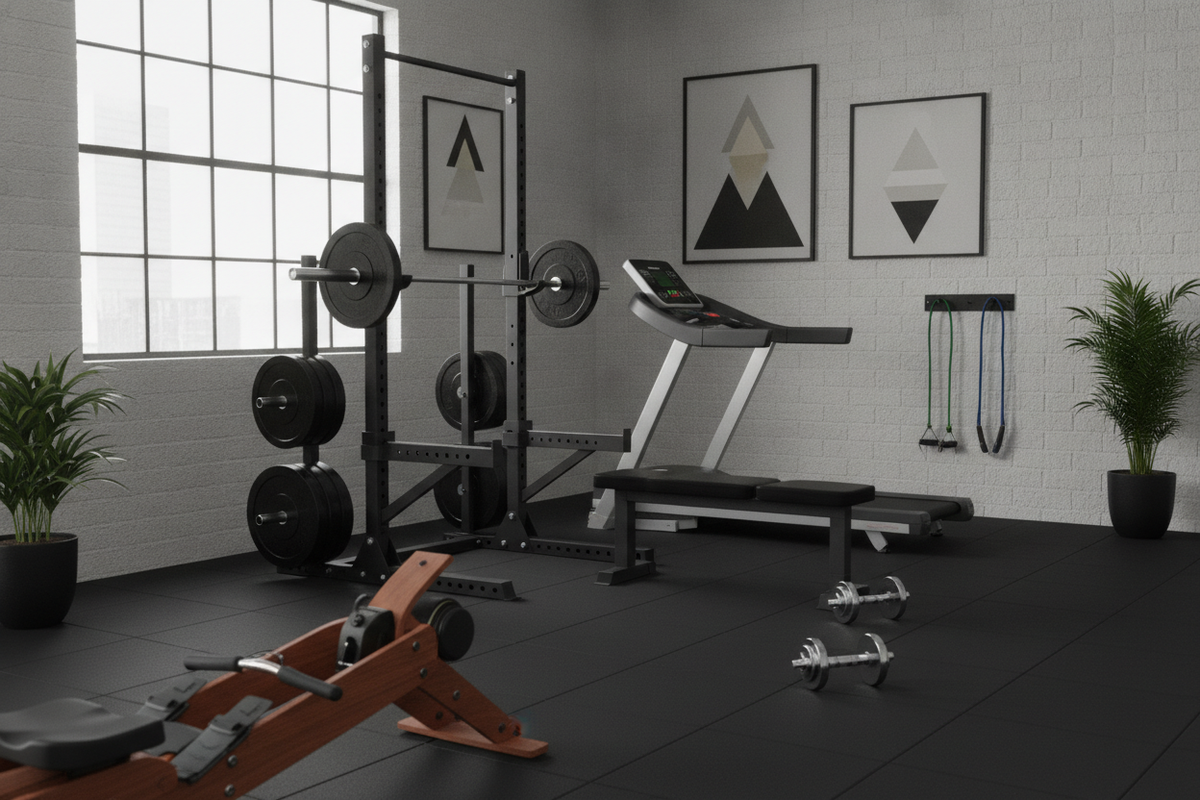
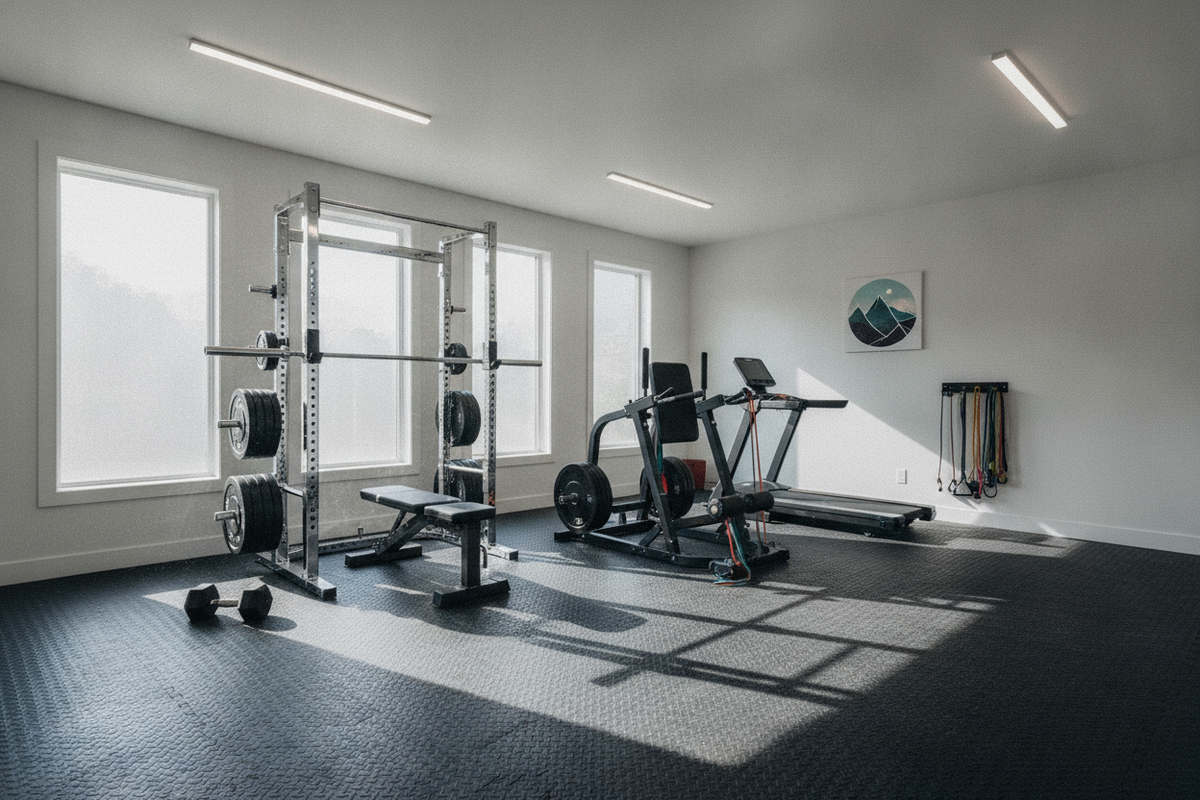
Executing a dedicated but work out with weights at home places distinct physical demands on residential subfloors. Heavy dumbbells, kettlebells, and utility benches create concentrated point loads that can dent hardwood, crack ceramic tiles, or compress carpet padding permanently.
In our experience evaluating training spaces, trainees often overlook how much foot grip influences hip drive during loaded bridges and heavy hinges. When driving through the heels during a heavy thrust or lunge, a slippery surface causes micro-slips that instantly disengage the posterior chain.
Staging your workout on a dedicated surface—such as an expansive workout product like a high-density equipment mat—solves multiple staging challenges:
- Point-Load Distribution: Thick, dense composite materials buffer subfloors against descending dumbbells and the rigid legs of weight benches.
- Traction and Anchoring: Textured, non-slip surfaces anchor the feet during heavy bilateral and split-stance drives.
- Bench Stabilization: A resilient mat prevents utility benches from sliding backward during horizontal hip thrust setups.
Structuring a Balanced Weekly Weighted Routine
Managing weekly training volume requires intentional exercise selection and adequate spacing between heavy sessions. Because the gluteal muscles assist in heavy compound lifts, excessive frequency can induce systemic fatigue that compromises form.
A balanced weekly routine often separates loading patterns across different days:
- Primary Axial Day: Emphasizes standing hinges and bilateral squats with moderate-to-heavy dumbbells or barbells.
- Horizontal and Unilateral Day: Focuses on loaded hip thrusts, Bulgarian split squats, and cable or band kickbacks to challenge peak contraction and pelvic stability.
For guidance on sequencing lower-body exercises within broader routines without overtraining, consult this exercise workout work guide, or explore broader layout strategies on the workout resource hub.
Floor Care and Equipment Maintenance for Long-Term Home Training
Consistent heavy training introduces sweat, friction, and metallic residue to your training floor. Maintaining your protective flooring ensures consistent traction and prolongs surface longevity:
- Regular Debris Removal: Sweep or vacuum grit regularly to prevent particles from abrading mat surfaces under heavy weights.
- Mild Surface Cleaning: Wipe mats down using warm water and pH-neutral cleaners; avoid harsh solvents that can degrade mat texture or density.
- Weight Storage: Store heavy dumbbells and kettlebells on dedicated racks or storage pads rather than leaving them resting permanently on active exercise areas.
By pairing intentional movement mechanics with reliable equipment and protective flooring, trainees can build an enduring, effective home setup for lower-body strength training.