Buttocks Workout 30 Days: Safe Home Routine and Setup
Deconstructing the 30-Day Challenge: Adaptation Realities vs. Repetition Pitfalls
When planning a progressive training routine, relying on a single repetitive exercise for endless daily sets can quickly lead to fatigue in the quadriceps and lower back rather than productive engagement of the gluteal muscles. Sustainable lower-body training benefits from varied movement angles, deliberate pacing, and programmed rest rather than unvaried daily repetition.
Muscular adaptation depends on progressive tension, movement variety, and sufficient recovery between sessions. A structured buttocks workout 30 days schedule achieves better continuity by alternating mechanical loading directions and assigning regular recovery windows. By varying movement planes rather than accumulating joint strain from identical daily drills, lifters can maintain consistency and preserve comfort over the course of a full month.
Core Movement Vectors: Balancing Hip Extension, Abduction, and Rotation
The gluteal complex consists of several muscle groups that perform distinct functions across different anatomical planes. Relying solely on standard vertical squat patterns primarily loads the quadriceps and neglects the multidirectional capabilities of the hips. A comprehensive program integrates three fundamental vectors:
- Horizontal Hip Extension: Movements such as glute bridges and hip thrusts apply tension at terminal hip extension, prioritizing the gluteus maximus without heavy spinal compression.
- Vertical and Diagonal Loading: Exercises such as Romanian deadlifts, split squats, and step-ups load the posterior chain through deep hip flexion and controlled eccentric stretching. Pair these patterns with insights from a structured beginner leg workout guide to maintain lower-body balance.
- Frontal and Transverse Plane Work: Lateral band walks, clamshells, and curtsy lunges engage the gluteus medius and minimus, providing pelvic stability and rotational control.
Distributing workload across these vectors creates balanced recruitment across the entire hip complex while preventing overuse patterns associated with repetitive squatting.
The Four-Phase 30-Day Workout Progression Architecture
Rather than repeating an identical daily circuit, dividing a thirty-day cycle into four structured weekly phases allows for systematic technical development and gradual intensity increases.
Phase 1 (Days 1–7): Activation and Pelvic Control
The opening phase emphasizes positional awareness, neutral spine maintenance, and isolated muscle engagement. Training days focus on unweighted glute bridges, quadruped kickbacks, and side-lying abductions performed with deliberate tempos. The primary objective is establishing conscious muscular tension at the top of each repetition rather than rushing through high volume. Controlled isometric holds at full extension help awaken hip mechanics that often remain underutilized during everyday seated postures.
Phase 2 (Days 8–15): Unilateral Stability and Stride Control
The second week introduces unilateral challenges, including reverse lunges, single-leg glute bridges, and staggered-stance Romanian deadlifts. Working one side at a time exposes strength asymmetries, demands active core stabilization, and increases total recruitment across the stabilizing hip musculature. Lifters should prioritize control throughout the descent, preventing the pelvis from tilting or rotating out of alignment.
Phase 3 (Days 16–22): Progressive Resistance and Dynamic Tension
During the third week, sessions integrate light-to-moderate external resistance, such as loop resistance bands or dumbbells, into multi-joint movements. Pauses at peak contraction and extended lowering phases increase time under tension, providing a steady stimulus without requiring excessive external loads. Band placement around the distal thighs during bridges and squats encourages active external hip rotation and continuous lateral tension.
Phase 4 (Days 23–30): Mechanical Density and Movement Integration
The concluding phase combines compound patterns with targeted isolation finishers. Movement complexes pair standing hinge exercises with floor-based abduction drills, refining muscular endurance and coordination across all planes of motion. Pacing remains steady, emphasizing crisp form and full joint ranges rather than rapid, uncontrolled tempo.
Home Training Floor Staging: Subfloor Defense, Pelvic Cushioning, and Slip Prevention
Floor-based hip extension exercises, lunges, and kneeling quadruped variations place direct pressure on the knees, pelvis, and household flooring. Training directly on bare hardwood, thin residential carpet, or slick tile can compromise exercise mechanics by introducing joint discomfort and foot slippage.
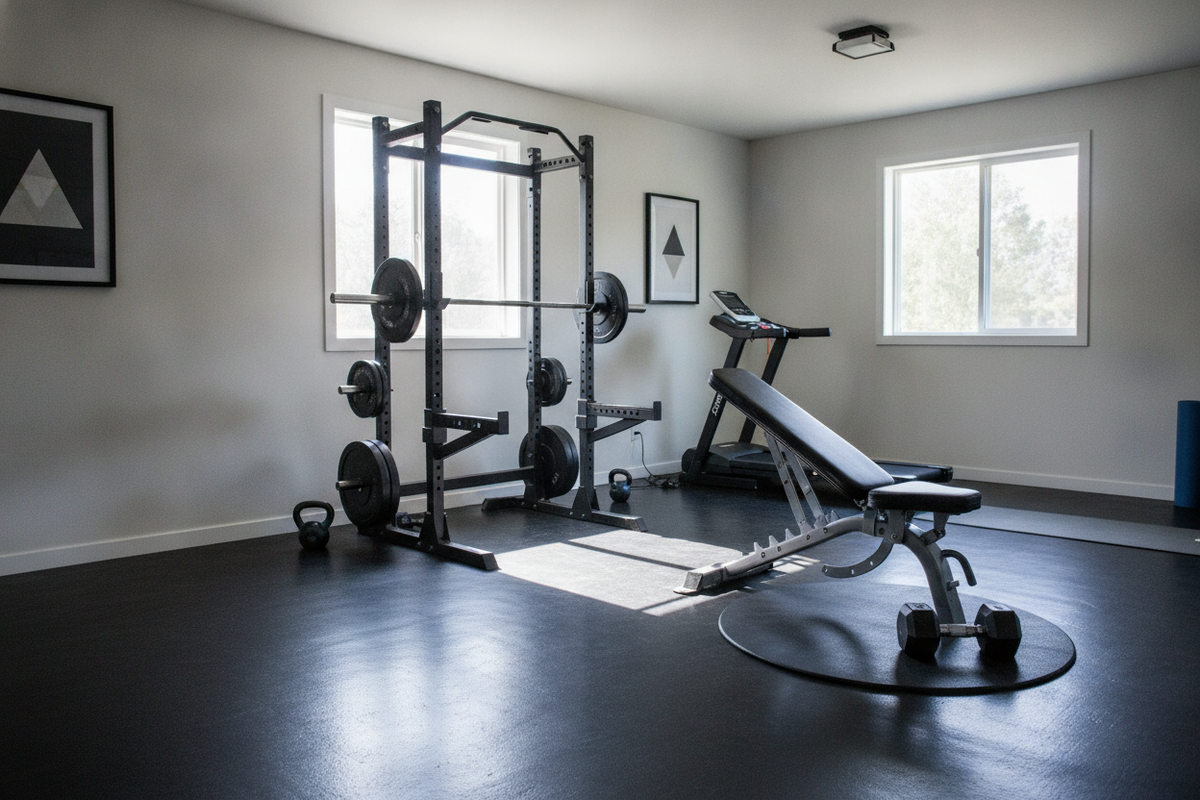
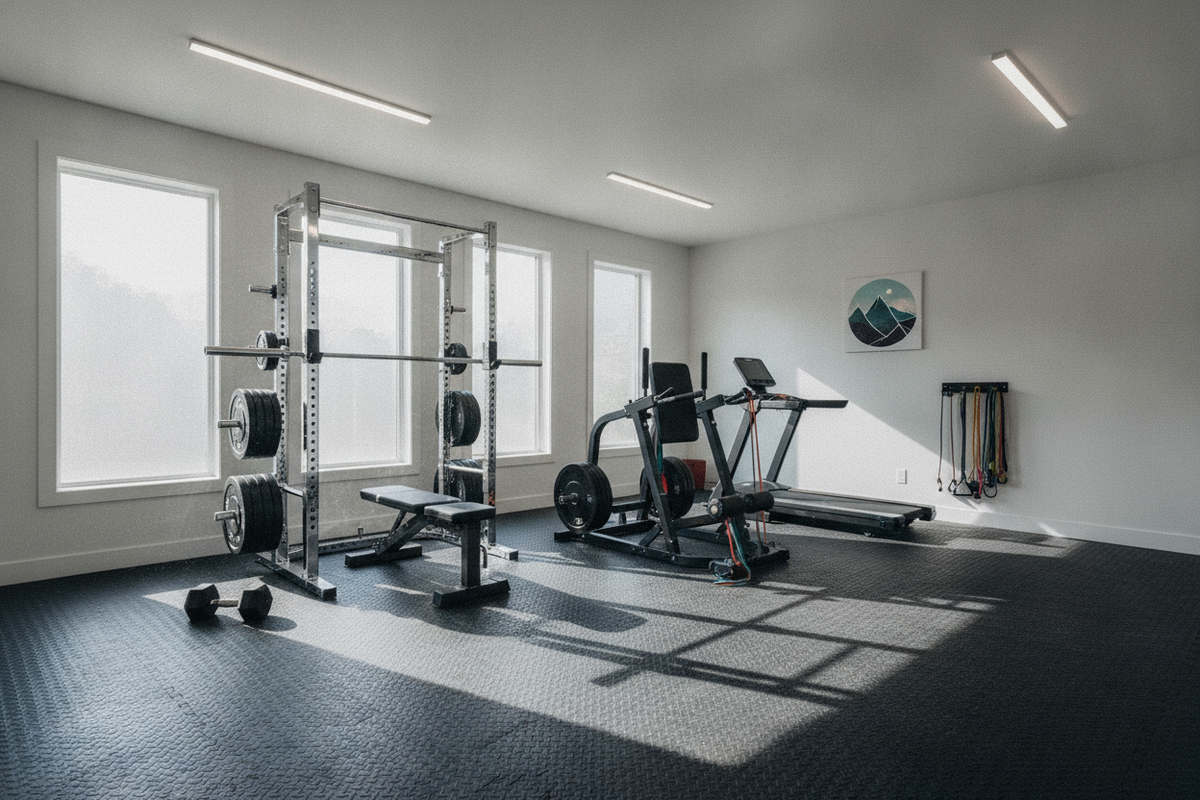
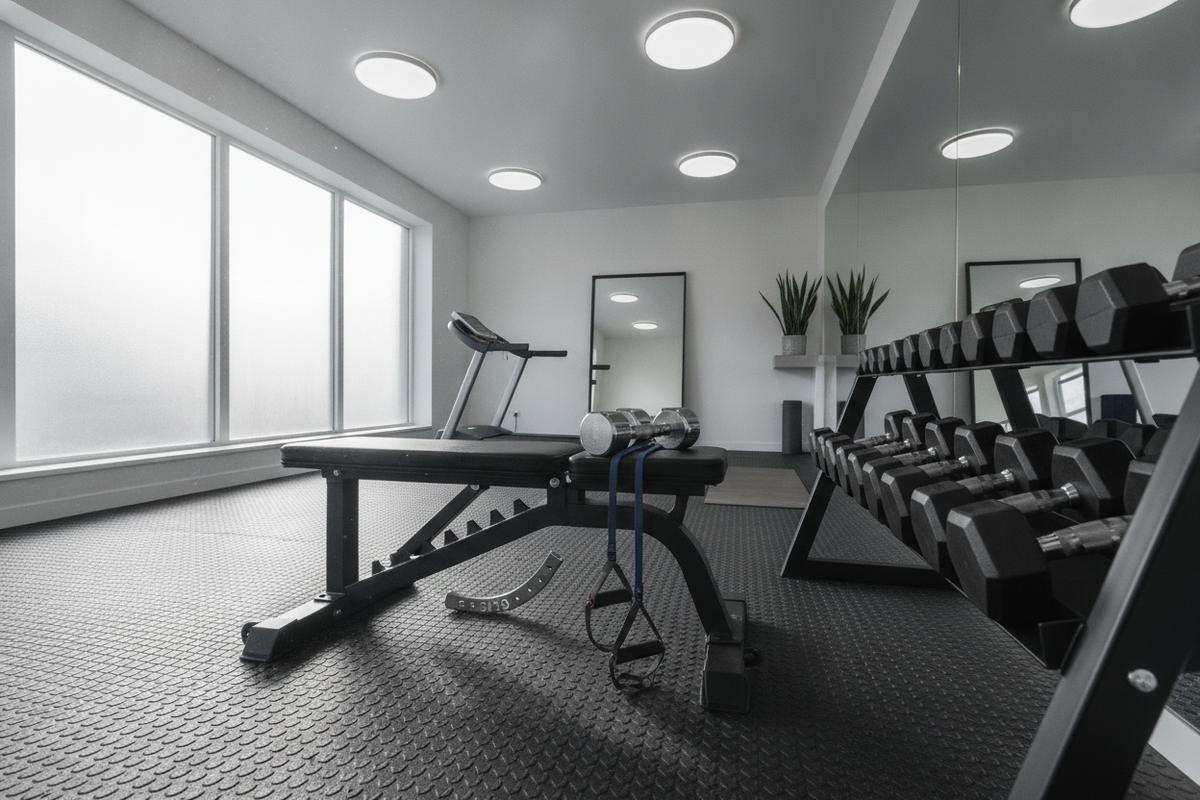
Establishing a dedicated training surface with an expansive exercise workout product creates the stable foundation required for multi-directional lower-body sessions. Key floor considerations include:
- Pelvic and Sacral Cushioning: Glute bridges and kneeling kickbacks require high-density padding that compresses enough to protect bony landmarks without bottoming out against hard concrete or subfloors.
- Traction and Stance Stability: Lunges and lateral bounds require high-friction surface textures that prevent shoes or bare feet from sliding during wide, dynamic foot placements.
- Subfloor Preservation: Controlled dumbbell floor work and repetitive foot strikes can scuff finished floors over time; dense protective matting distributes contact pressure and shields the underlying floor surface.
In our editorial review work, we often find that a home lifter's stability improves immediately once an unstable, sliding mat is replaced with a dense, non-shifting foundation.
Key Movement Execution Protocols and Form Refinements
Proper biomechanical execution ensures that mechanical work targets the hip musculature rather than transferring strain into the lumbar spine.
The Glute Bridge
Lie supine with feet set hip-width apart and knees bent comfortably. Before initiating the movement, brace the abdominal wall to secure a neutral pelvis. Drive through the heels to elevate the hips until thighs and torso align. Avoid arching the lower back at the top; the apex of the movement should rely on posterior pelvic tilt and conscious gluteal contraction. Lower under control to preserve tension across each repetition.
The Romanian Deadlift Pattern
Stand with feet hip-distance apart, holding weights in front of the thighs. Initiate the movement by pushing the hips backward while maintaining a soft bend in the knees. Keep the shins relatively vertical and lower the torso until a stretch is felt in the hamstrings and glutes, keeping the spine neutral throughout the descent. Drive the hips forward to return to standing upright without overextending the lumbar spine.
The Bulgarian Split Squat
Position the rear foot on an elevated bench or sturdy platform with the front foot firmly planted on high-grip flooring. Lower down and slightly back into the front hip, keeping the front knee aligned over the midfoot. Press through the lead heel to return to the starting position without locking out the knee abruptly. Maintaining an active torso angle balances the load comfortably across the front hip.
Recovery Phasing and Long-Term Programming Beyond Day 30
Sustained development does not end when the initial month concludes. Dedicating two full rest or active-recovery days each week during the 30-day schedule allows muscle tissue to repair and reduces connective tissue strain. Light walking, hip mobility routines, and tissue work complement training days effectively, keeping joints mobile between loading sessions.
Upon finishing the four-week sequence, lifters can transition these movement foundations into structured strength programs, such as a guided days challenge resource, to continue progressing with external resistance, barbell loading, and comprehensive full-body training splits.