Buttocks Workout at Home: Exercises and Setup
Designing an effective home training plan for the hips and glutes requires more than randomly assembling high-repetition bodyweight drills. A balanced buttocks workout addresses how the pelvis interacts with the femur across multiple movement planes while accounting for the physical environment where training occurs. When training on residential flooring, stability, joint comfort, and traction directly shape the quality of each repetition.
Understanding Gluteal Mechanics in a Comprehensive Buttocks Workout
The gluteal complex consists of layered muscle groups responsible for hip extension, abduction, internal rotation, and external rotation. Relying solely on vertical movements like traditional squats often under-stimulates fibers that respond best to horizontal or lateral tension lines.
Primary Movement Vectors: Vertical, Horizontal, and Lateral Demands
An all-around routine incorporates three primary force vectors:
- Horizontal vectors: Exercises such as hip thrusts and glute bridges produce peak mechanical tension at full hip extension, where horizontal force output peaks.
- Vertical vectors: Movements like Romanian deadlifts and step-ups challenge the gluteus maximus through deep hip flexion under gravitational load.
- Lateral vectors: Abduction drills and lateral band walks engage the gluteus medius and minimus, providing pelvic stability during single-leg actions.
Minimizing Quadricep Dominance Through Foot Placement and Hip Angles
Many lifters struggle to engage their glutes during compound lower-body patterns due to forward knee travel and knee-dominant leverage. Shifting shin angles perpendicular to the floor at the top of a bridge, or maintaining a soft bend in the knees during hinge patterns, redirects primary tension toward the posterior chain. Adjusting stance width and foot turnout helps align the hip joint with the target muscle fibers.
Core Movement Archetypes for Home Glute Training
Executing an intentional routine at home does not require specialized gym machinery. Selecting complementary movement archetypes provides comprehensive muscle recruitment without excessive equipment clutter. For additional movement combinations, consult our build booty workout guide.
Horizontal Loading: Bridges and Hip Thrust Progressions
Grounded glute bridges serve as the baseline horizontal archetype. Progressing from double-leg bridges to single-leg variations increases relative load without requiring heavy weights. When elevating the shoulders onto a stable platform for hip thrusts, maintain ribcage depression and rotate the pelvis slightly backward at lockout to avoid lumbar hyperextension.
Vertical and Diagonal Hinges: Stiff-Leg Variations and Step-Ups
Hinge patterns target the glutes in their lengthened position. Single-leg Romanian deadlifts combine hip extension with balance demands. Step-ups, when performed with an intentional forward torso lean and minimal push-off from the trailing foot, load the lead hip through a broad active range of motion. Comparing these compound variations with focused floor exercises is explored further in our build glutes booty guide.
Lateral and Rotational Isolation: Banded Floor Work and Abductions
Grounded isolation drills target stabilizing musculature that compound lifts may underemphasize. Side-lying clamshells, quadruped fire hydrants, and banded kickbacks isolate external rotation and abduction. Performing these exercises with controlled tempos ensures tension remains on the target muscles rather than relying on hip flexor momentum.
Home Gym Staging: Stability, Knee Protection, and Subfloor Defense
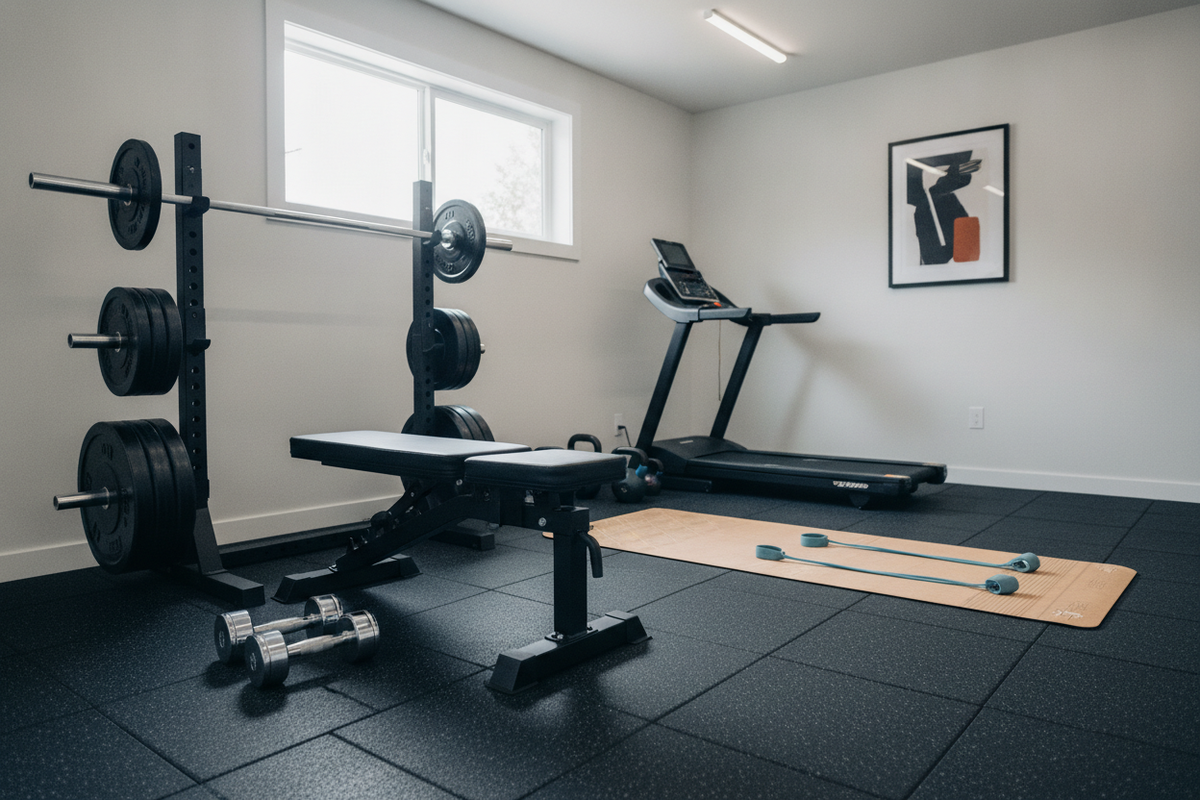
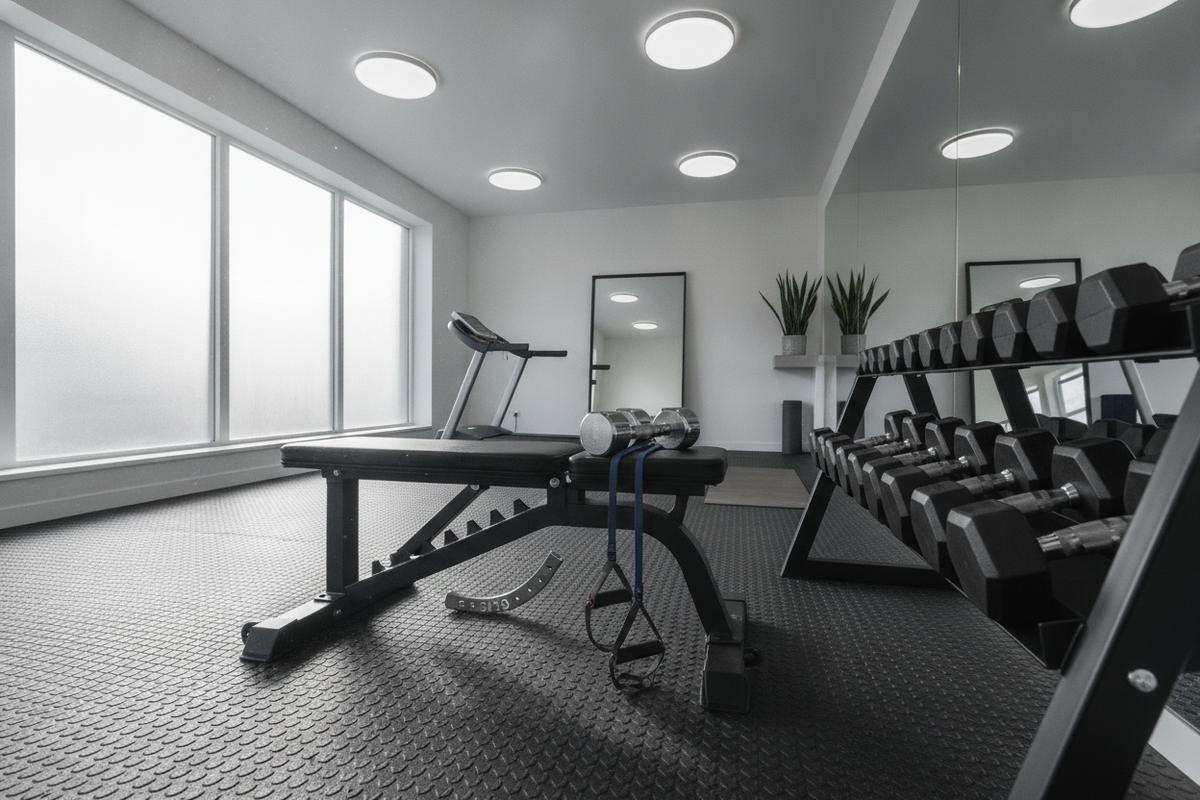
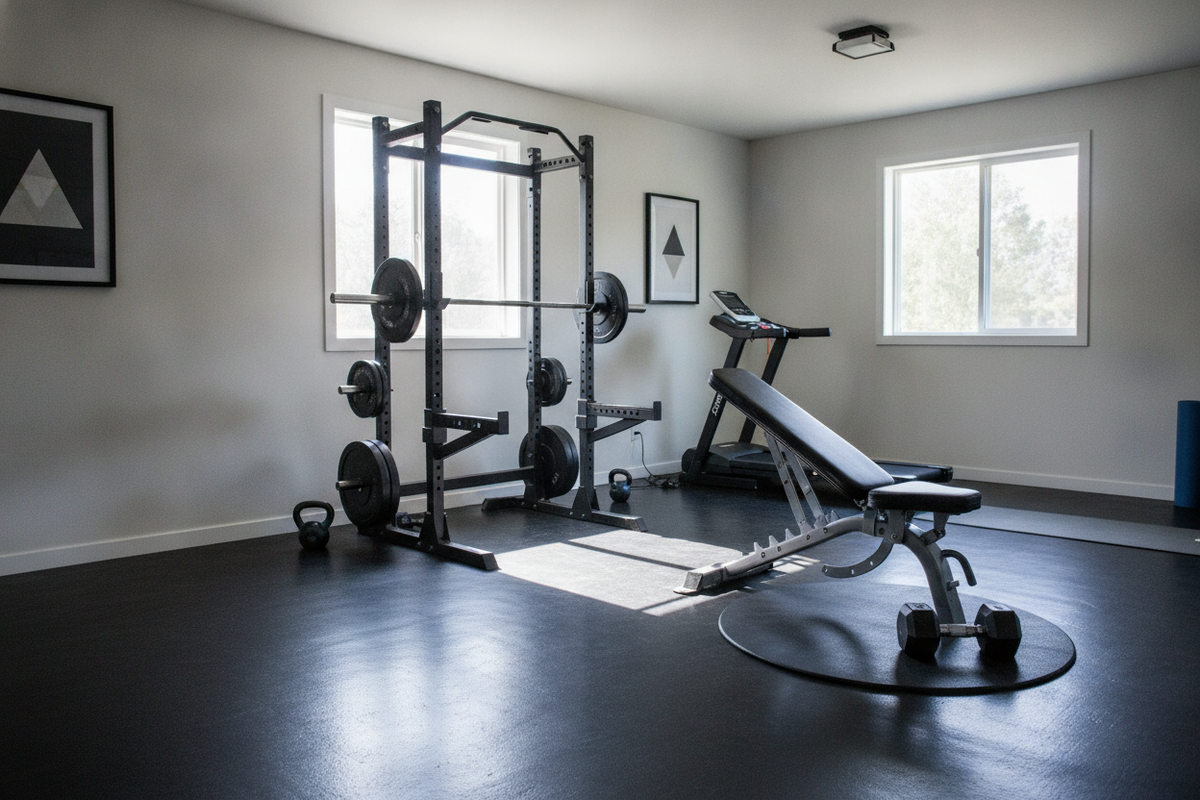
Training at home presents distinct environmental variables that differ from commercial fitness facilities. Hardwood, laminate, and polished tile lack the surface friction needed for aggressive lateral foot drives and stable bench positioning. Selecting dedicated flooring from our broad exercise collection helps establish a dependable, cushioned foundation for every session.
Preventing Bench Slippage During Loaded Hip Thrusts
During a weighted hip thrust, horizontal shear forces push the support bench backward while driving the lifter's feet forward. In my experience reviewing training spaces, bench slippage is the single most frustrating interruption during heavy thrusts. Setting up both the bench feet and the lifter's footwear on a high-traction surface like an exercise workout product prevents shifting and preserves consistent mechanics throughout the set.
Point-Load Protection for Dumbbells, Kettlebells, and Hardwood Floors
Kneeling floor drills, such as quadruped kickbacks and bird-dogs, concentrate body weight directly onto the patella. Unpadded subfloors create uncomfortable joint pressure that compromises posture. Furthermore, setting down heavy dumbbells or kettlebells between sets can scratch or dent residential timber floors. Dense matting disperses point loads across a wider surface area, shielding both joints and underlying surfaces.
Structuring Your Weekly Buttocks Workout Routine
Consistent progress requires managing training volume, movement selection, and recovery between lower-body sessions. Balancing loaded compound work with targeted floor drills allows you to train productively without overtaxing localized connective tissues.
Sample Vector-Balanced Home Circuit Template
A balanced training session can be arranged into three purposeful pairs:
- Primary Horizontal Pair: Elevated hip thrusts paired with bodyweight frog pumps to accumulate horizontal extension volume.
- Unilateral Lengthening Pair: Deficit reverse lunges paired with kickstand Romanian deadlifts to challenge hip control independently.
- Lateral and Rotational Finisher: Banded lateral walks paired with quadruped fire hydrants on a cushioned mat for focused abduction fatigue.
Progressive Overload Through Mechanical Disadvantage and Tempo
When external loads are limited, training difficulty can be advanced by manipulating execution variables. Introducing a pause at peak contraction eliminates momentum, while lengthening the lowering phase increases time under tension. Shifting from bilateral stances to staggered or single-leg variations increases mechanical difficulty without requiring additional weights.
Mat Care, Cleaning, and Equipment Maintenance After High-Tension Sessions
Dedicated lower-body routines generate substantial floor contact, transferring perspiration and footwear debris directly to your training surface. Maintaining a clean workout area preserves surface friction and extends the service life of your equipment:
- Wipe Down Regularly: Clean the mat surface after each session using a soft cloth dampened with mild soapy water to remove sweat and skin oils.
- Avoid Harsh Solvents: Steer clear of bleach or abrasive scrubbers, which can degrade the protective top layer and reduce surface grip.
- Allow Full Air Drying: Let the surface air dry completely before rolling or stacking equipment to prevent moisture accumulation.
- Store Flat or Loosely Rolled: Keep the mat stored away from direct sunlight and extreme temperature changes to maintain material flexibility.