Buttock Lift Exercise Guide: Moves and Mat Setup
Kinematic Foundations of the Grounded Buttock Lift Exercise
Executing an effective buttock lift exercise depends on understanding how horizontal force vectors interact with ground contact points. Unlike vertical standing lifts that recruit significant quadricep tension, floor-based hip extension isolates the posterior chain by stabilizing the torso against a firm surface. When the hips travel through extension from a grounded supine orientation, the primary driving force shifts directly to gluteal contraction without spinal loading.
Achieving full tension during a buttock lift exercise requires deliberate pelvic positioning. Initiating the movement with a slight posterior pelvic tilt prevents lumbar hyperextension, allowing the gluteus maximus to achieve complete active shortening at the apex of the lift. Maintaining this pelvic alignment keeps tension concentrated across the targeted musculature rather than shifting strain into the lower back or knee joints.
Surface Traction and Footing Mechanics for Pure Hip Extension
Plantar traction forms the foundation for proper hip extension kinematics. When performing floor bridges or elevated presses, downward and backward force travels through the feet into the training surface. If the footing slips or shifts even slightly, recruitment patterns alter instantly. Foot drift redirects mechanical effort toward the hamstrings and forces stabilizing joints to compensate for the lost grip.
A resilient, textured workout surface maintains uniform friction, preventing plantar slide during the concentric phase of the movement. Securing firm footing enables trainees to direct force directly downward through the midfoot and heel, stabilizing the knees in a neutral tracking line. For a comprehensive walkthrough on mastering these fundamental positions, review our foundational buttock lift exercise guide.
Essential Buttocks Lift Exercises: Movement Selection and Contact Dynamics
Programming balanced lower-body training requires rotating through varied ground-based contact patterns. Supine glute bridges represent the core floor-based archetype, relying on solid upper back contact and grounded heel placement. When transitioning to single-leg variations, ground contact area decreases significantly, demanding greater rotational stability from the pelvic stabilizers and the underlying floor surface.
Elevated hip thrusts increase the active range of motion by anchoring the upper back against a bench. In this configuration, the friction between the bench feet and the gym flooring becomes paramount. Any backward skid of the bench compromises the mechanics of the drive and disrupts hip extension paths. Meanwhile, quadruped kickbacks and fire hydrants relocate loading to the knees, palms, and forearms. These multi-point exercises require dense protective padding beneath bony contact points to sustain consistent training volume. Trainees can expand their programming repertoire by exploring our comprehensive exercise buttocks guide for targeted lower-body movements.
Home Gym Floor Defense: Mitigating Point-Load Stress from Hip Thrust Gear
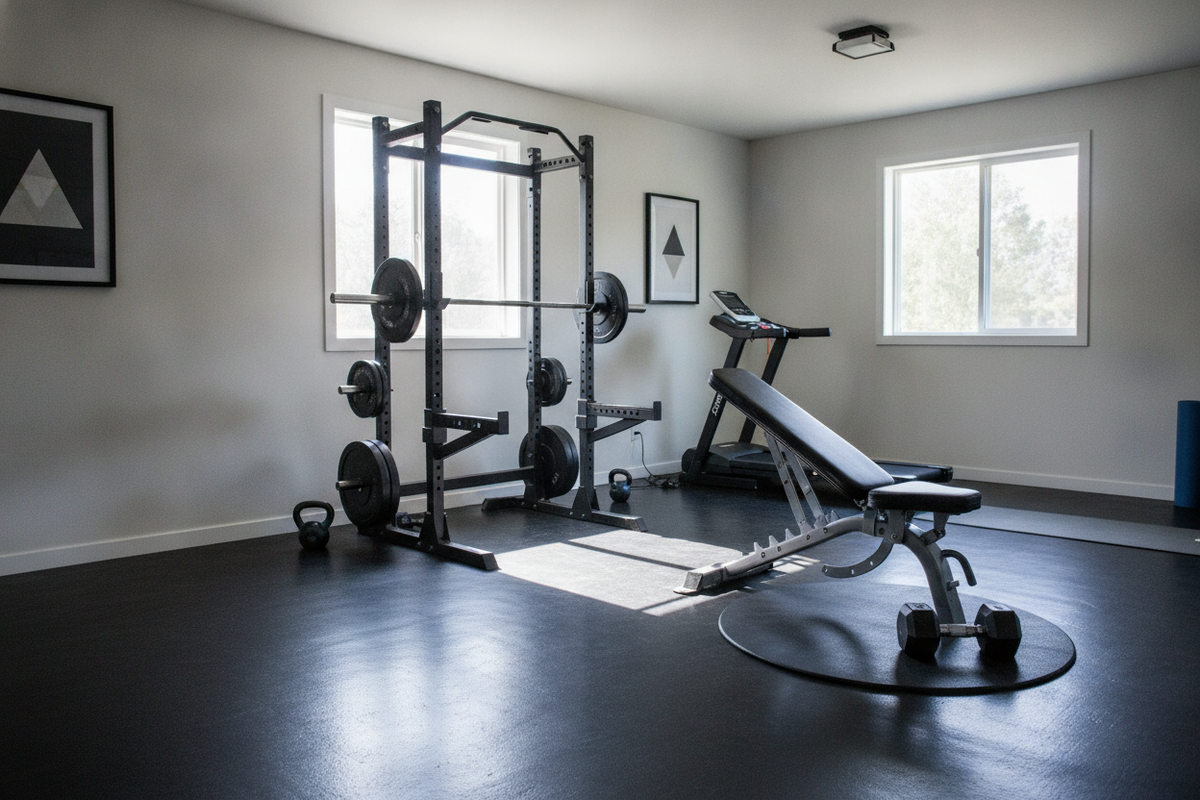
Weighted variations of buttocks lift exercises introduce mechanical demands that extend beyond human biomechanics to domestic subfloor integrity. Hip thrust benches, weighted barbells, and plate sets concentrate mass across narrow contact patches. Over time, repeated point-load stress can crack ceramic tile, dent hardwood, or permanently depress residential carpeting.
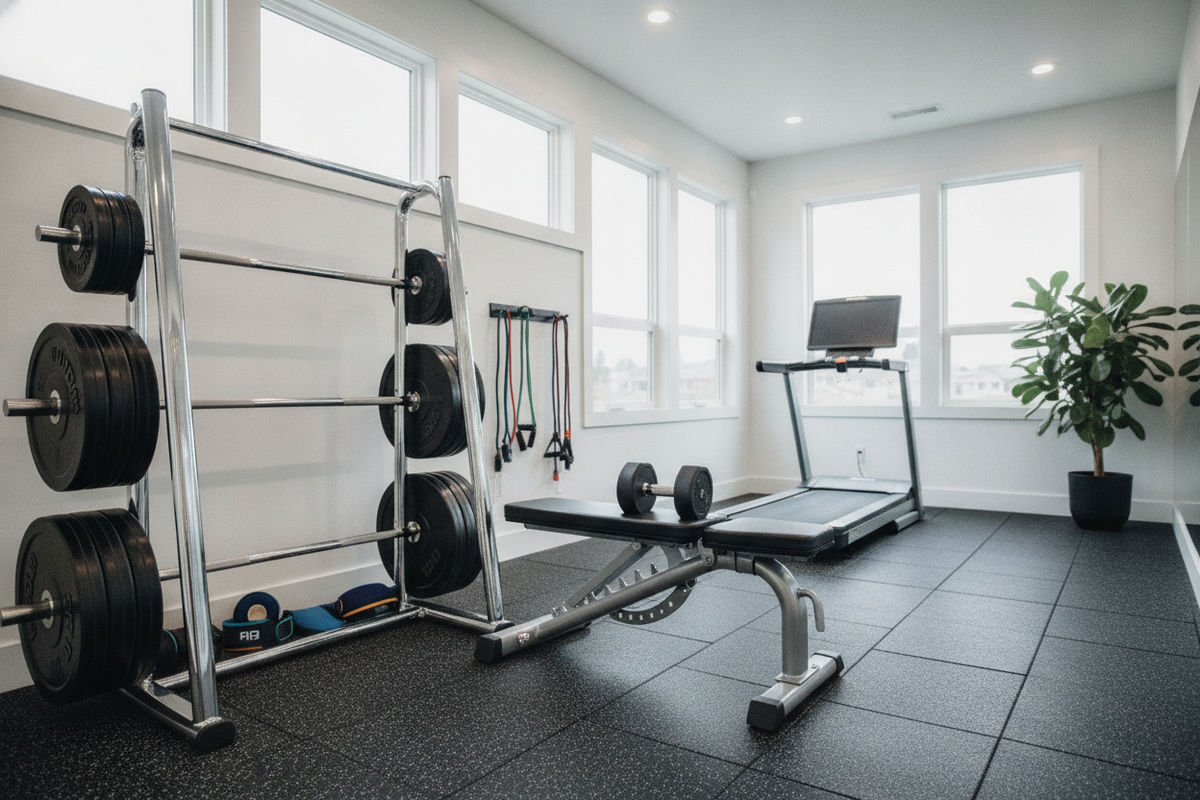
Strategically layering protective flooring redistributes concentrated downward pressure across a broader surface area. Selecting dedicated padding from a curated exercise collection provides the necessary firmness to resist bottoming out under heavy bench feet while absorbing contact forces from loaded plates. Dense, multi-layered padding ensures that equipment stays stationary without leaving permanent impressions on the underlying subfloor.
Staging Your Home Workout Zone for Free-Flow Movement and Large-Scale Coverage
Home strength circuits frequently alternate between dynamic barbell hip extensions, floor pulses, and open-chain leg kickbacks. Transitioning seamlessly between these movements requires adequate perimeter clearance around benches and free weights to prevent tripping and maintain rhythm.
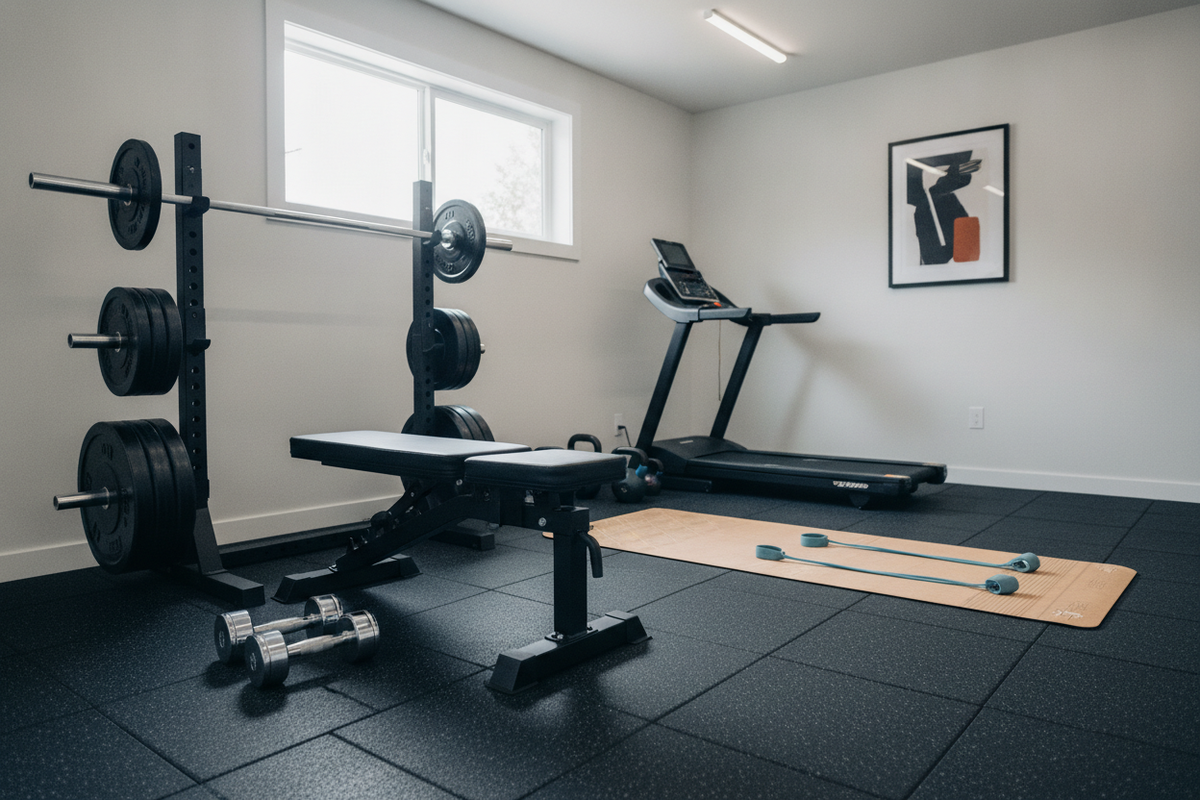
Confining training gear to narrow strips of foam often results in edges curling up or equipment sliding over unprotected seams. Utilizing broad, continuous flooring solutions from our expansive exercise collection eliminates spatial constraints and prevents edge-catching during transition sets. For a unified staging zone capable of accommodating both loaded bench setups and open floor work simultaneously, deploying an all-in-one exercise product gives trainees ample footprint to position benches, weights, and bodyweight stations on a single uniform platform.
Surface Hygiene and Long-Term Mat Maintenance for Floor-Based Workouts
Because grounded buttock lift exercises demand sustained torso, arm, and palm contact with the floor, hygiene management directly influences the longevity and usability of workout gear. Persistent perspiration can degrade inferior foam surfaces, leading to traction loss and material breakdown over extended training periods.
Maintaining equipment integrity involves routine care and appropriate storage practices:
- Wipe down mat surfaces after each training session using a mild cleaning agent to remove surface oils without stripping the anti-slip grip.
- Ensure the surface is completely dry before rolling or storing to maintain closed-cell material elasticity.
- Regularly inspect the mat underside to confirm it remains free of loose dust and maintains reliable traction against the domestic subfloor.
Adhering to these maintenance steps preserves the traction, structural firmness, and clean contact essential for consistent floor-based training.