Buttocks Gym Exercises: Workout and Setup Guide
Understanding Glute Mechanics in Gym-Based Training
Developing strong gluteal muscles requires an understanding of functional anatomy and movement mechanics. Training the hips involves distinct movement planes, meaning a single movement pattern rarely covers all training demands. Structuring an effective session begins with isolating how the hip joint moves under load and identifying how complementary lower-body structures interact during heavy efforts.
Primary Movement Vectors: Hip Extension, Hinging, and Abduction
The primary muscle groups of the buttocks act as powerful drivers of hip extension, external rotation, and abduction. To train these muscles thoroughly, lifters organize gym movements across three core vectors:
- Horizontal Hip Extension: Movements like the barbell hip thrust load the glutes when the hip reaches full extension, maximizing tension in shortened muscle positions.
- Vertical and Diagonal Hinging: Variations such as the Romanian deadlift place the greatest mechanical tension on the hips in the lengthened position as the pelvis shifts backward.
- Transverse and Lateral Abduction: Cable kickbacks, seated abduction machines, and lateral band walks recruit the upper gluteal complex, providing stability across the pelvis.
Balancing these vectors ensures comprehensive muscular stimulation without overloading a single joint angle or posture.
Avoiding Common Biomechanical Compensations
A frequent error during buttocks gym exercises is compensating through the lumbar spine or allowing the quadriceps to dominate hip-driven patterns. When performing loaded hinges or bridges, overextending the lower back at lockout can shift tension away from the gluteal muscles and strain connective tissues. Maintaining a neutral pelvis, actively bracing the core, and focusing on a controlled hip hinge rather than an exaggerated lumbar arch helps keep mechanical tension focused squarely on the posterior chain.
Essential Buttocks Gym Exercises Across Apparatus Types
Targeting the gluteal muscles in a fully equipped gym allows for diverse training tools, from free weights to specialized plate-loaded and cable machinery. Exploring varied apparatus selections helps balance movement versatility with focused joint control.
Barbell and Free Weight Movements
Free weight exercises form the cornerstone of heavy lower-body training due to their progressive loading potential and multi-joint recruitment. Reviewing a detailed booty gym exercise guide provides useful perspective on setting up key compound lifts effectively.
- Barbell Hip Thrust: Executed with the upper back supported against a stable bench, this lift provides direct horizontal resistance. Proper foot placement is critical: positioning the shins vertically at the top of the lift keeps the workload focused on the hips rather than shifting into the quadriceps or hamstrings.
- Romanian Deadlifts (RDLs): Whether performed with a barbell or heavy dumbbells, the RDL prioritizes backward hip travel while maintaining soft knee flexion, challenging the glutes through a deep stretch.
- Walking Lunges and Split Squats: Unilateral variations test hip stability and resolve left-to-right asymmetries. Leaning the torso forward slightly during a split squat places greater mechanical emphasis on the working hip.
Cable Column and Machine Selections
While free weights excel at loading lengthened and mid-range positions, cable stations and selectorized machines offer steady, continuous resistance throughout an entire arc of motion:
- Cable Glute Kickbacks: Utilizing an ankle strap attached to a low pulley allows lifters to line up the path of resistance directly with the orientation of glute muscle fibers, creating consistent tension without momentum.
- 45-Degree Hyperextensions: By rounding the upper back slightly and flaring the toes outward, a standard back extension bench can be adapted to emphasize hip extension over spinal erection.
- Seated Abduction Stations: These machines isolate lateral hip actions, making them ideal as high-repetition accessory finishers following heavy barbell work.
Equipment Staging and Floor Protection for Glute Workouts
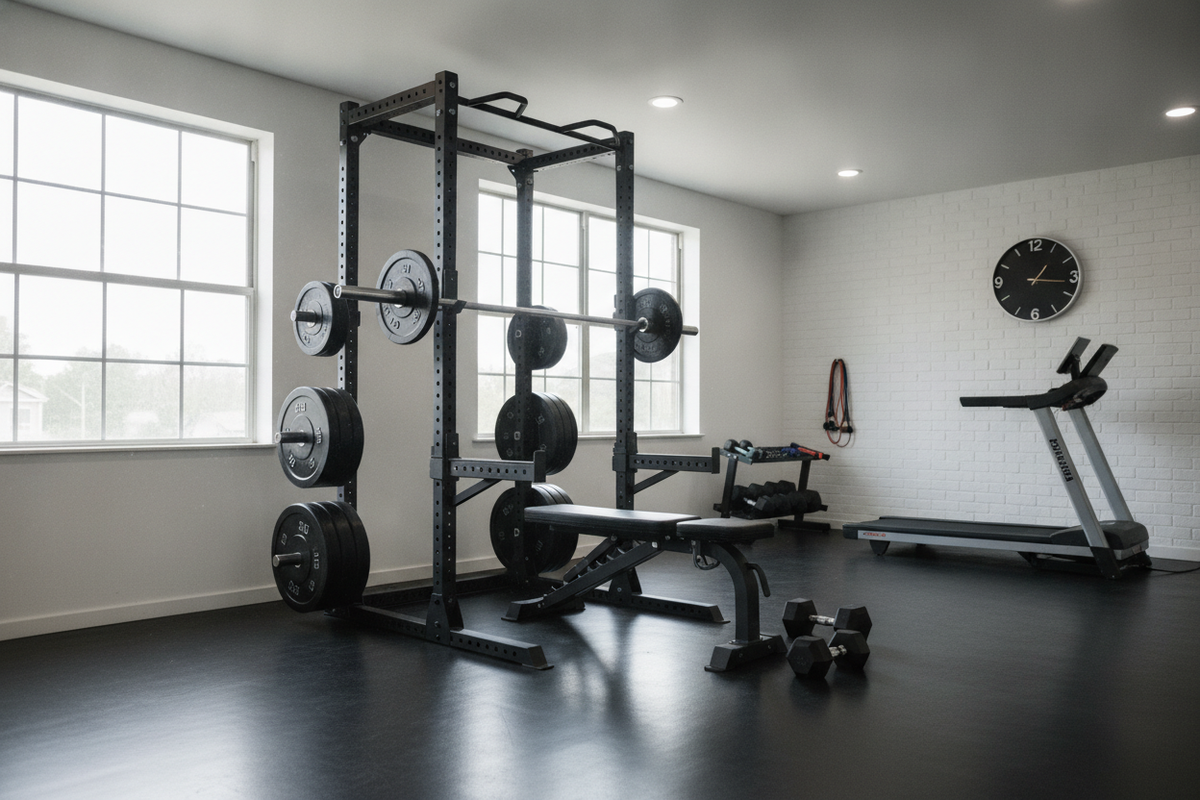
Executing heavy hip exercises requires thoughtful preparation of the training environment. Concentrated loads from heavy weights, metal benches, and repetitive foot contact can damage underlying subfloors if the training zone lacks adequate surface protection.
Managing Point Loads and Barbell Impact
Exercises such as barbell hip thrusts and heavy Romanian deadlifts introduce substantial point loads into the floor. A loaded barbell resting between sets concentrates significant mass onto narrow iron or urethane plate edges. Furthermore, standard weight benches focus immense downward force through small steel feet, especially when supporting both the lifter and external loads.
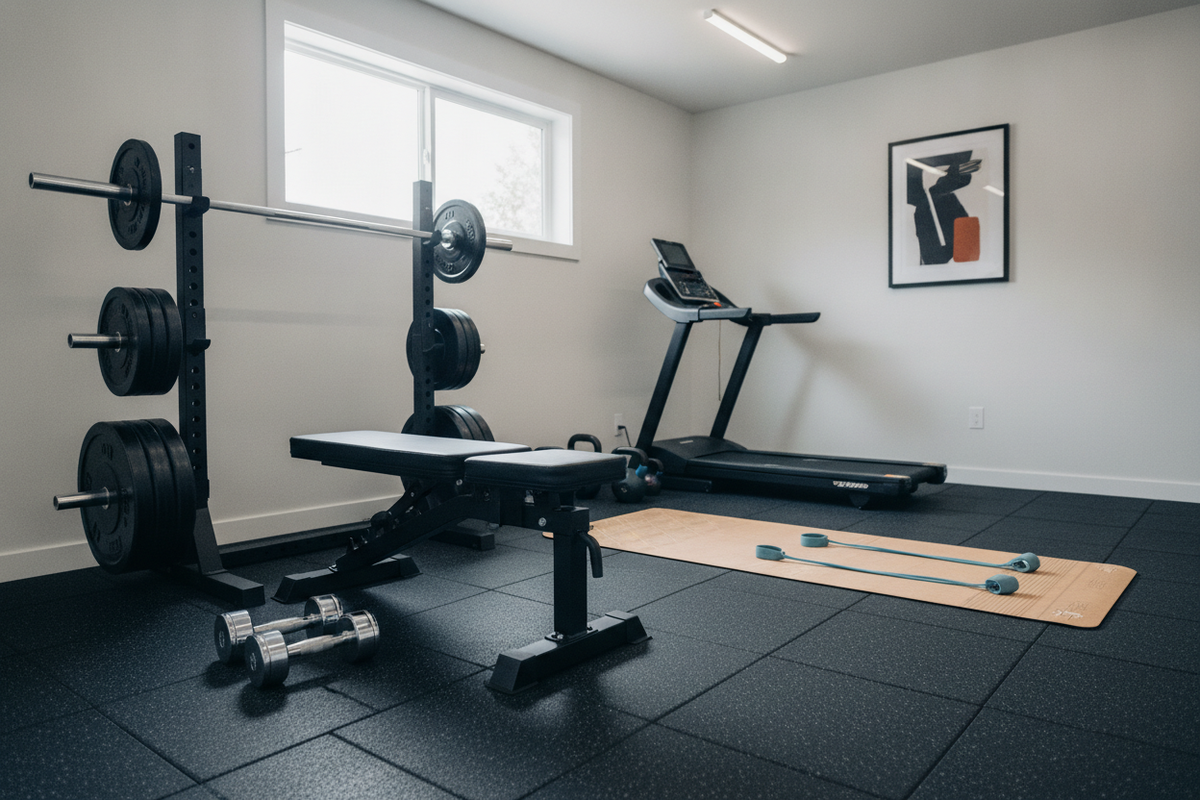
Without a resilient barrier, repeated loading can crack tiles, dent hardwood, or degrade concrete subfloors over time. Integrating heavy-duty mats from a specialized exercise gym collection helps distribute these focused point pressures, dampen vibration transfer, and preserve floor surfaces across rigorous training sessions.
Creating Stable Traction Zones for Dynamic Lunges and Hinges
Foot stability is fundamental for maintaining proper alignment during unilateral movements like walking lunges, Bulgarian split squats, and single-leg deadlifts. A shifting footing or slick floor can compromise balance, disrupting hip mechanics during a set. Utilizing a substantial surface such as a dedicated exercise gym workout product creates a wide, non-slip foundation that accommodates extended lunging paths while shielding the subfloor against dropped dumbbells or kettlebells.
Structuring a Balanced Buttocks Gym Workout Routine
Building an effective workout routine involves deliberate exercise sequencing and proactive gym space management. Balancing these components promotes structured training progression alongside equipment longevity.
Exercise Order and Fatigue Management
To optimize session quality, place high-skill, heavy compound movements at the beginning of the workout when mental focus and physical capacity are highest. Integrating lower-body sessions into a broader training split can be informed by a balanced exercise workout gym guide to ensure adequate recovery across muscle groups.
A practical order for a glute-focused gym session generally follows this progression:
- Primary Compound Lift: Begin with heavy barbell hip thrusts or Romanian deadlifts to challenge the hips through high mechanical tension.
- Unilateral Movement: Progress to dumbbell walking lunges or Bulgarian split squats to address bilateral imbalances and build single-leg stability.
- Cable or Machine Accessory: Transition to cable kickbacks or 45-degree hyperextensions for steady continuous tension across moderate rep ranges.
- High-Repetition Finisher: Conclude with seated abduction or bodyweight band work to thoroughly fatigue the glute complex without adding spinal fatigue.
Home Gym Floor Maintenance and Equipment Hygiene
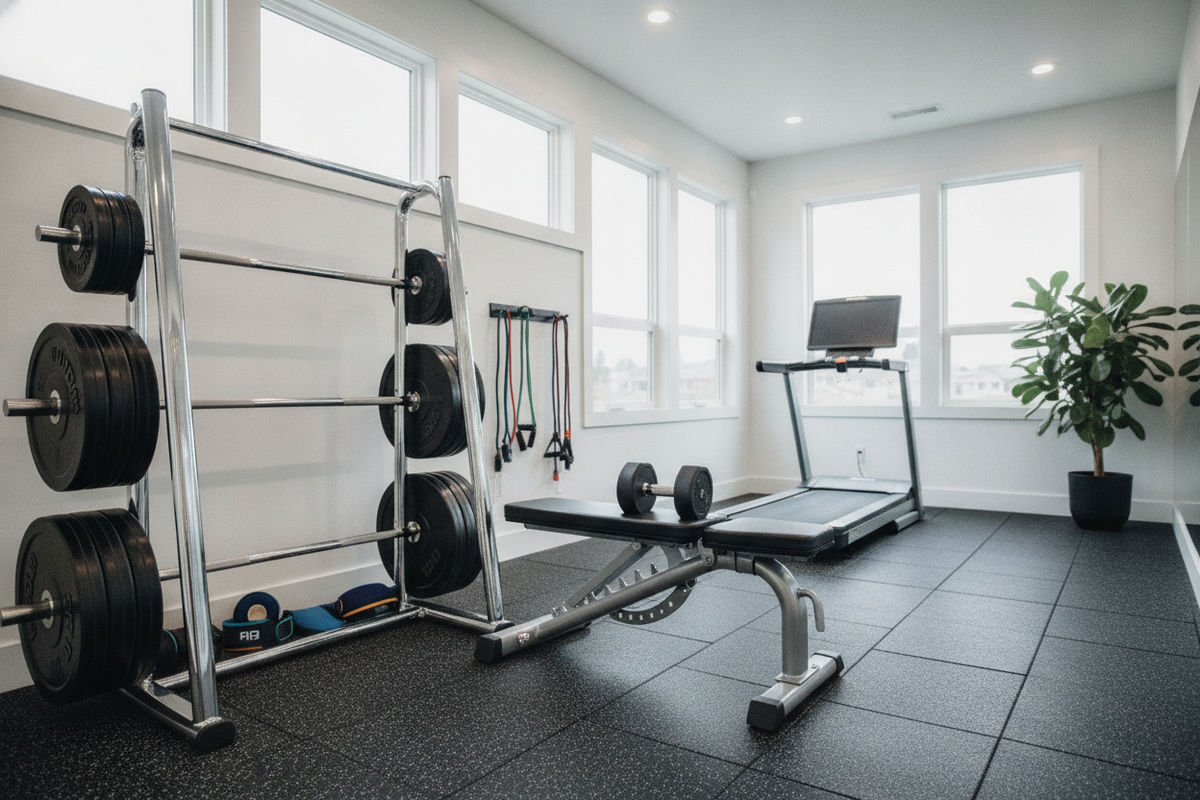
Maintaining gym mats and equipment preserves the training environment over the long term. Mats subjected to intense training accumulate chalk dust, sweat, and floor debris that can diminish surface grip if left uncleaned. Regularly sweeping debris and wiping down matting with mild, neutral cleaners preserves surface traction. In my view, taking a few minutes to clean mat surfaces after heavy sessions makes the entire training space feel significantly more inviting and reliable for the next workout. Ensuring that heavy barbell plates and dumbbell pairs are returned to dedicated storage racks also prevents prolonged, localized floor compression, extending the lifespan of both protective mats and subfloors.