Inferior Gluteal Nerve: Glute Training and Floor Setup
Understanding the pathways that drive your hip muscles can transform how you approach lower-body training. The inferior gluteal nerve serves as the direct neural link to the largest power generator in the human body. Every time you stand up, drive through your heels during a heavy lift, or sprint across a track, this pathway fires to coordinate force production. For lifters building out a training space, knowing how this system works underscores why stable footing and dedicated floor protection matter during demanding strength sessions.
What Is the Inferior Gluteal Nerve?
The inferior gluteal nerve is a major peripheral motor pathway originating from the sacral plexus within the pelvic cavity. Often referred to simply as the inf gluteal nerve in anatomical notes, it arises primarily from the posterior divisions of the L5, S1, and S2 spinal nerves. The primary inferior gluteal nerve root contributions pass through the lower portion of the lumbosacral trunk and merge with upper sacral branches to form a focused bundle.
Unlike sensory pathways that convey touch or temperature signals from the skin back toward the central nervous system, this branch functions strictly as a pure motor nerve. It carries efferent commands away from the spinal cord directly to muscle fibers. As the nerve bundle coalesces, it prepares to exit the pelvis and enter the posterior gluteal region, where it distributes into arborizing branches designed to activate dense muscle tissue.
Where Does the Inferior Gluteal Nerve Emerge?
The inferior gluteal nerve emerges from the pelvis into the buttocks by passing through the greater sciatic foramen just beneath the lower border of the piriformis muscle. This exit point places the nerve directly in the infrapiriform canal alongside several vital structures, including the sciatic nerve, the internal pudendal vessels, and the posterior femoral cutaneous nerve.
After crossing below the piriformis, the nerve enters the subgluteal space. Here, it branches out across the deep surface of the muscle it supports. Because it travels close to the sciatic nerve, movement specialists and anatomists pay close attention to this transitional zone. Deep hip tension or postural shifts around the piriformis and pelvic floor can influence how surrounding soft tissues interact around the nerve bundle.
Inferior Gluteal Nerve Innervation and Muscle Action
When studying neuromuscular anatomy, athletes frequently wonder: what does the inferior gluteal nerve innervate? The answer is focused and singular.
The inferior gluteal nerve innervation supplies one single target: the gluteus maximus. While other peripheral branches spread out across multiple small compartments, this nerve is dedicated entirely to controlling the largest muscle of the gluteal region. If you explore inferior gluteal nerve innervates what muscles in classic kinesiology references, you will find that the gluteus medius, gluteus minimus, and tensor fasciae latae are managed instead by the superior gluteal nerve. This division of labor allows the body to isolate lateral hip stability from raw posterior propulsion.
Through its dedicated motor connection, the inferior gluteal nerve governs primary hip extension, external rotation of the thigh, and pelvic stabilization against forward torso displacement. When you rise from a low squat or carry loads uphill, this pathway sends rapid electrical signals that cause the gluteus maximus fibers to contract forcefully.
Structural Path and Inferior Gluteal Nerve Cadaver Landmarks
In anatomical dissections, observing the inferior gluteal nerve cadaver specimen reveals an intricate branching network across the deep aspect of the gluteus maximus. After traversing the greater sciatic foramen, the nerve divides into several primary twigs that enter directly into the muscle belly from underneath.
Anatomists use specific landmarks to track this course. The nerve runs inferior to the piriformis, running medial to the large trunk of the sciatic nerve before sending superior and inferior arborizations into the gluteus maximus. Because the muscle acts as a shield over the infrapiriform space, any posterior hip dissection requires carefully reflecting the gluteus maximus outward to expose the nerve branches, accompanying blood vessels, and underlying rotators. Understanding this layout illustrates why deep hip alignment and joint mobility play a meaningful role in comfortable, unrestricted movement patterns.
Training Hip Extension: Exercises That Demand Glute Power
Targeting the gluteus maximus requires purposeful movement patterns that demand full hip extension against external resistance. Because the inferior gluteal nerve coordinates the recruitment of high-threshold motor units during heavy extension, structured training yields substantial gains in strength and power. For an in-depth breakdown of muscle recruitment during hip hinges, consult our hip thrust muscles guide to see how different planes of movement recruit the posterior chain.
Key exercises that rely heavily on the inferior gluteal nerve include:
- Barbell Hip Thrusts: By positioning the upper back against a bench and driving the hips upward against horizontal resistance, hip thrusts place maximum mechanical tension on the gluteus maximus at peak extension.
- Conventional Deadlifts: Pulling weight from the floor challenges the entire posterior chain, demanding strong neural drive through the lumbosacral trunk to lock out the hips upright.
- Bodyweight and Weighted Glute Bridges: Floor-based glute bridges allow lifters to isolate hip extension with minimal spinal compression, ideal for establishing mind-muscle connection.
- Step-Ups and Lunges: Unilateral variations challenge the inferior gluteal nerve to produce force while stabilizing the pelvis alongside the superior gluteal nerve.
As you progress in your routine, neuromuscular adaptations occur before noticeable muscle enlargement begins. Learning how resistance training works can help you appreciate how the central nervous system fine-tunes motor unit firing rates. Over weeks and months of steady volume, consistent signals from the inf gluteal nerve lead to structural hypertrophy, as detailed in our muscle building timeline guide.
Setting Up Your Workout Floor for Heavy Glute Work
Executing heavy glute exercises demands a solid, predictable base beneath your feet. When you engage in hip thrusts or deadlifts, your heels press forcefully into the ground to anchor hip extension. If your footing shifts or the floor under your shoes slides, the inferior gluteal nerve cannot coordinate clean, efficient force transfer.
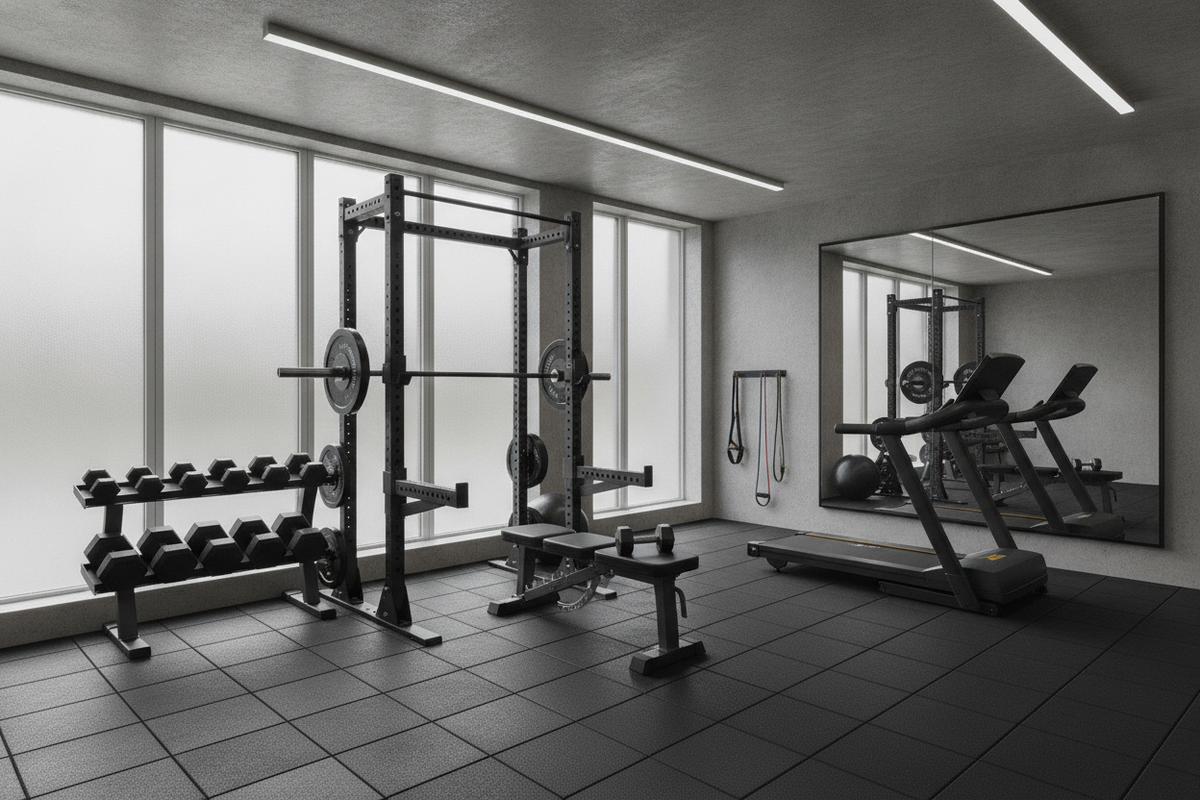
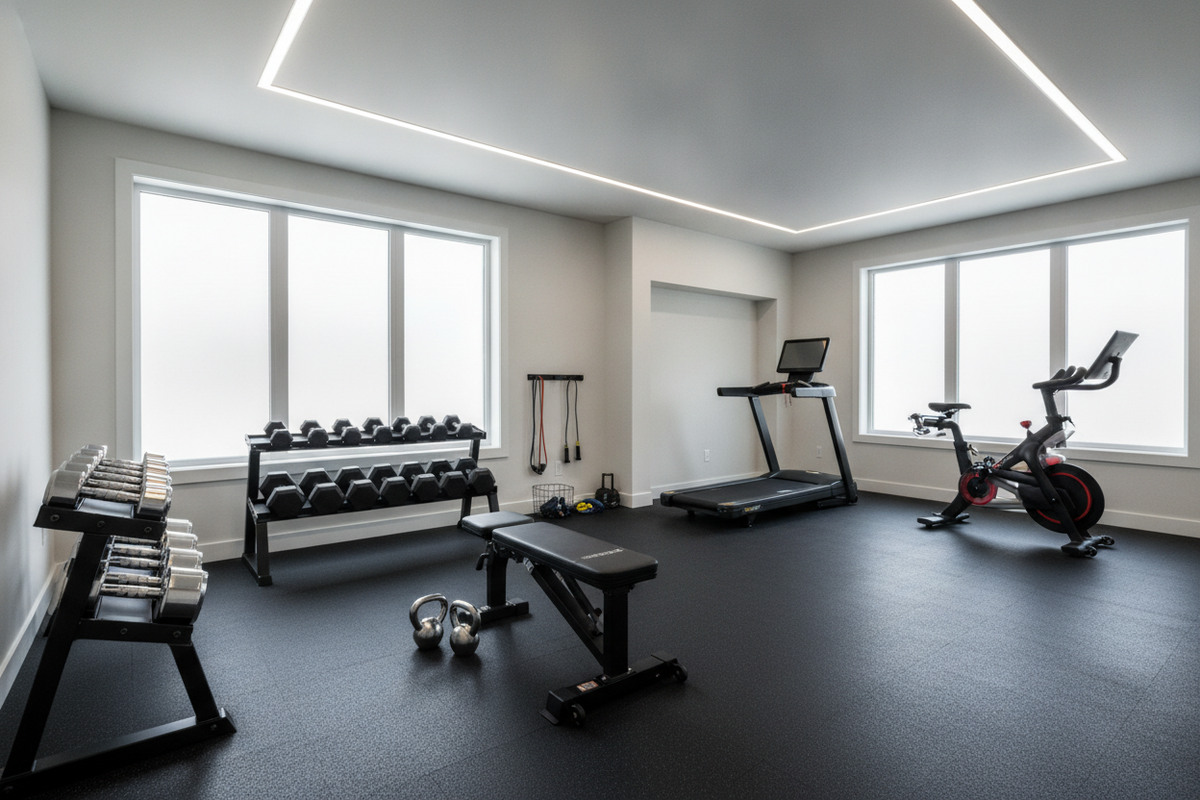
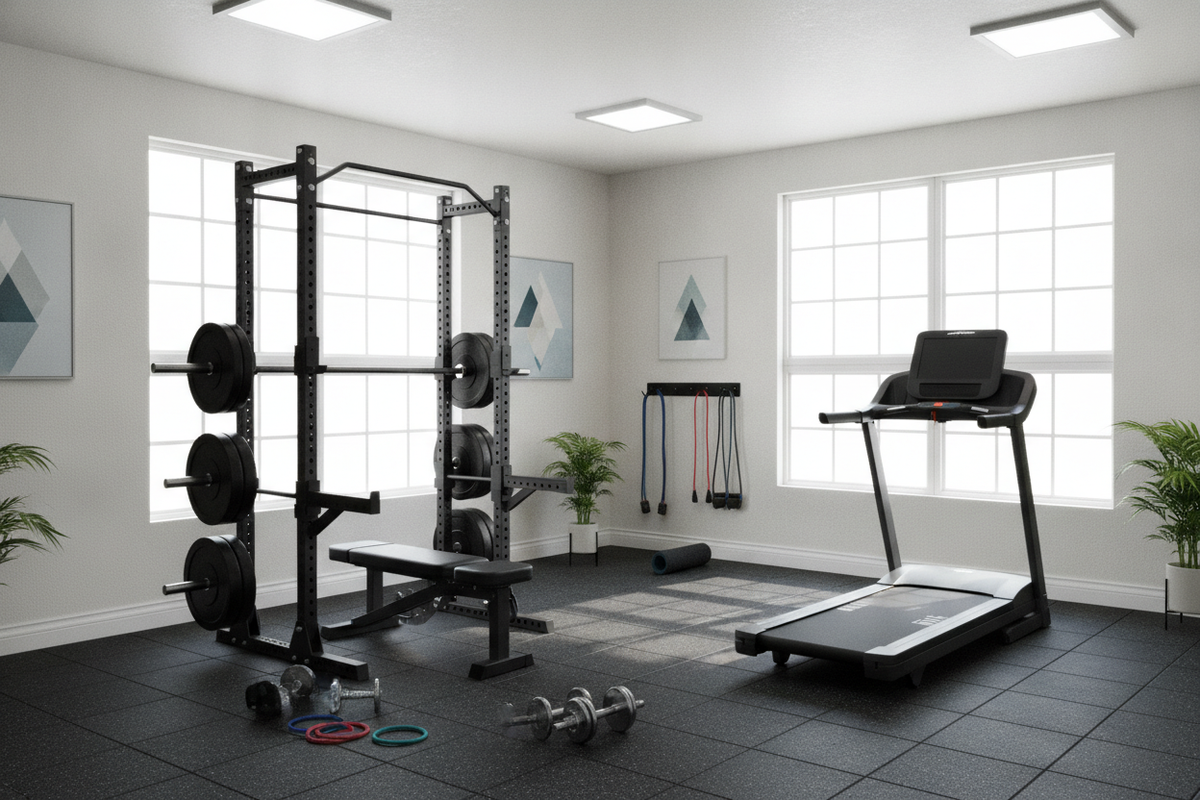
Using a dense exercise mat or specialized rubber gym flooring creates the stable footing necessary for serious training. A squishy or overly soft yoga mat compresses unevenly under load, altering your ankle and knee alignment. In contrast, high-density materials deliver firm ground traction that supports your joints while shielding the underlying floorboards from dropped weights and bench pressure.
A reliable non-slip workout surface ensures that benches remain locked in place during hip thrusts. When you rest your upper back on a bench and press a loaded barbell off your hips, lateral forces push the bench backward. With quality rubber matting underneath, friction keeps your setup secure, allowing you to focus entirely on glute recruitment rather than equipment slippage.
Equipment Placement and Floor Care in Your Home Gym
Creating an organized space for lower-body lifting protects your home and extends the life of your equipment. Heavy hip training involves barbells, bumper plates, dumbbells, and adjustable benches, all of which exert concentrated pressure on floors.
Consider these recommendations when arranging your training space:
- Lay Down Dedicated Subfloor Protection: Placing interlocking rubber tiles or large equipment mats over concrete or hardwood provides essential subfloor protection against impact and scuffing.
- Anchor Your Bench on Firm Ground Traction: Position your thrust bench fully on the dense exercise mat so that both the bench feet and your own shoes share the same non-slip workout surface.
- Maintain Clean Rubber Gym Flooring: Dust, chalk, and sweat can reduce floor grip over time. Wipe down your dense exercise mat periodically with mild soap and water to preserve surface friction.
- Distribute Weight Safely: Never leave heavy loaded bars sitting on a bare floor. Use designated mats and plate storage to maintain floor integrity and keep your lifting paths unobstructed.
By pairing a sound understanding of neuromuscular anatomy with a thoughtfully designed workout environment, you create the best possible conditions for lower-body strength. When your nervous system, your glutes, and your training surface work together, every hip extension feels balanced, powerful, and secure.