Combine Cardio and Strength Training at Home
Learning how to combine cardio and strength training is one of the most effective approaches to building well-rounded physical capability. When you bring aerobic exercise and resistance work together, you target endurance, movement control, and lean tissue all within a single balanced fitness plan. For home exercisers, knowing how to combine cardio and strength training efficiently saves precious time while keeping training varied and engaging week after week.
Building a home workout routine that incorporates both disciplines requires thoughtful planning. You need to consider how each movement demands energy, how to schedule your sessions across the week, and how to configure your home workout space to keep transitions seamless and comfortable. Whether your goal is to combine strength and cardio for everyday stamina or simply enjoy varied sessions, balancing these elements creates a sustainable fitness lifestyle.
Why Combine Cardio and Strength Training for Daily Vitality
Choosing to combine cardio and strength training gives your body a broad spectrum of physical adaptations. Traditional resistance training focuses on taxing skeletal muscle against an external load, which helps preserve muscle mass and reinforce joint stability. In contrast, aerobic exercise engages your cardiovascular system over prolonged intervals, improving circulation and stamina. When you pursue a thoughtful combination of weight training and cardio, you avoid the limitations of focusing exclusively on one style of fitness.
Many people find that combining cardio and resistance training enhances their overall energy levels throughout the day. Rather than feeling completely drained by high-volume sessions, balancing moderate lifting with conditioning intervals supports physical vitality. Maintaining your muscle mass through focused weightlifting ensures your joints stay supported, while regular aerobic work supports quicker breathing recovery between demanding sets. To explore the trade-offs between different styles of training, review our weight cardio strength guide for additional perspective on long-term goals.
Another key advantage when you combine cardio and strength training is time economy. Most busy adults cannot commit two separate hours each day to isolated training disciplines. By establishing a unified workout routine, you can combine weight training and cardio in ways that respect your daily schedule while maintaining consistent progress.
How to Structure Cardio and Strength Training Combined
When organizing cardio and strength training combined into a weekly schedule, you generally have two primary pathways: alternate-day splits or hybrid same-day sessions. Both approaches work well, and your selection depends on personal recovery time, daily availability, and equipment access.
The Alternate-Day Weekly Schedule
An alternate-day weekly schedule dedicates specific days exclusively to resistance training and other days to aerobic exercise. For instance, you might lift free weights on Monday, Wednesday, and Friday, while using Tuesday and Thursday for steady-state jogging, cycling, or rowing. This division gives your muscular system dedicated recovery time after heavy lifting days while keeping your body active throughout the week.
Same-Day Hybrid Sessions
If you prefer to combine cardio and strength training on identical days, you can run them back-to-back or within a brisk circuit training format. In a circuit format, you alternate between a resistance exercise, like a dumbbell goblet squat, and a brief cardio burst, such as jumping rope. Circuit training maintains an elevated heart rate while still providing muscular tension, making it an efficient way to combine cardio and weights when training time is limited to thirty or forty minutes.
Should I Do Cardio Before or After Strength Training?
Perform your resistance work before cardio if your primary objective is building strength or lifting heavier weights. The deliberate exercise order you choose dictates which physical system receives your freshest focus. Lifting demanding free weights requires sharp nervous system coordination, high muscular force, and mental concentration. If you exhaust your muscles with twenty minutes of intense aerobic exercise beforehand, your lifting technique may falter, increasing joint impact and reducing the mechanical tension placed on target muscles.
Conversely, if your primary pursuit is running endurance or preparing for a cycling event, placing your aerobic exercise first makes sense. However, for general fitness enthusiasts seeking to combine cardio and strength training evenly, starting with weights and finishing with low-impact or moderate conditioning remains the most practical exercise order. A brief dynamic warm-up of three to five minutes is always beneficial to elevate body temperature before touching a barbell or kettlebell.
Designing Safe Transitions for Cardio and Weight Training Together
Managing cardio and weight training together requires paying close attention to movement transitions and physical fatigue. Sudden shifts from heavy compound lifts to rapid footwork can test your balance and coordination. Structuring safe intervals ensures that you combine strength and cardio without compromising form.
- Pacing Between Movements: Give yourself thirty to sixty seconds of steady breathing after putting down heavy weights before moving into active cardio intervals.
- Footwear Considerations: Dedicated running shoes often feature thick, cushioned heels that compress under heavy loads, which can reduce stability during squats or deadlifts. Flat-soled cross-trainers offer a balanced platform for both weightlifting and lateral jumping drills.
- Energy Management: Monitor your energy levels throughout the workout routine. If fatigue sets in during the final rounds of circuit training, reduce dumbbell weights rather than letting posture deteriorate.
- Managing Joint Impact: Mix high-impact plyometric jumps with lower-impact conditioning options like rowing, shadowboxing, or stationary cycling to protect knees and ankles.
By respecting these transition rules, you can safely combine cardio and strength training session after session while keeping joint stress manageable.
Setting Up Your Home Space to Combine Cardio and Weights
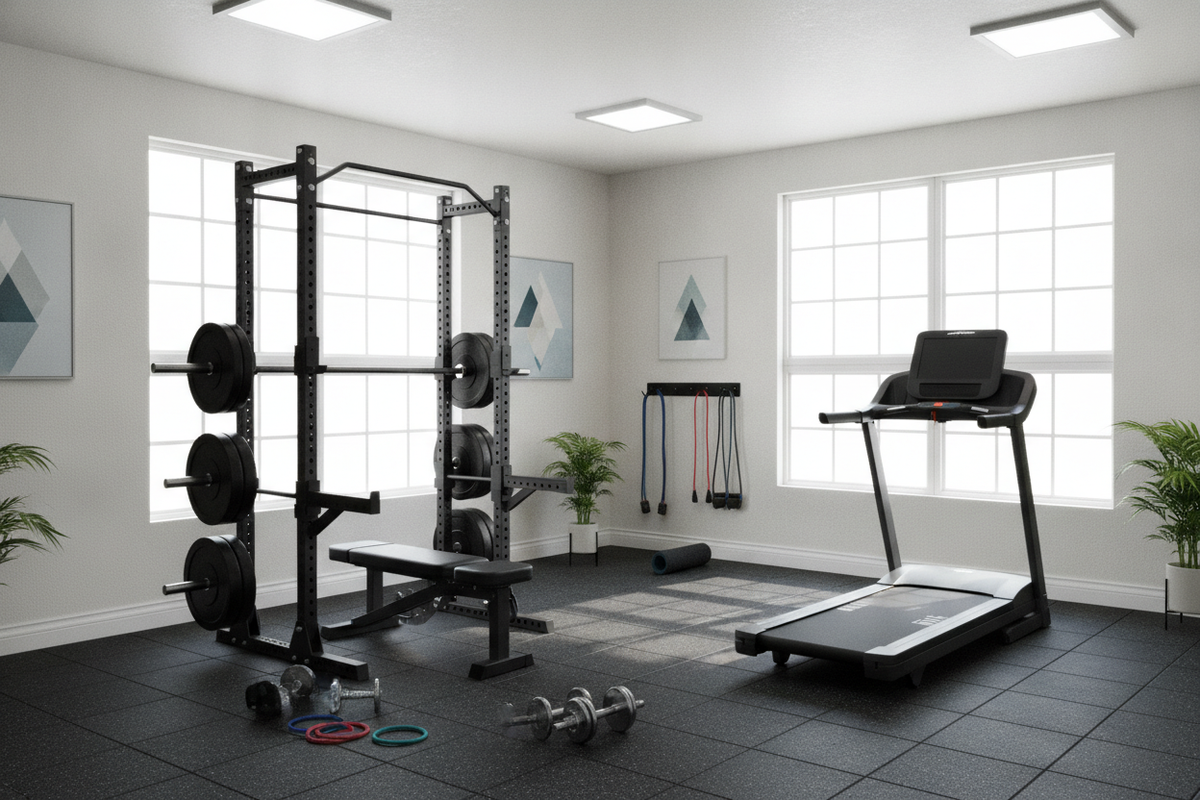
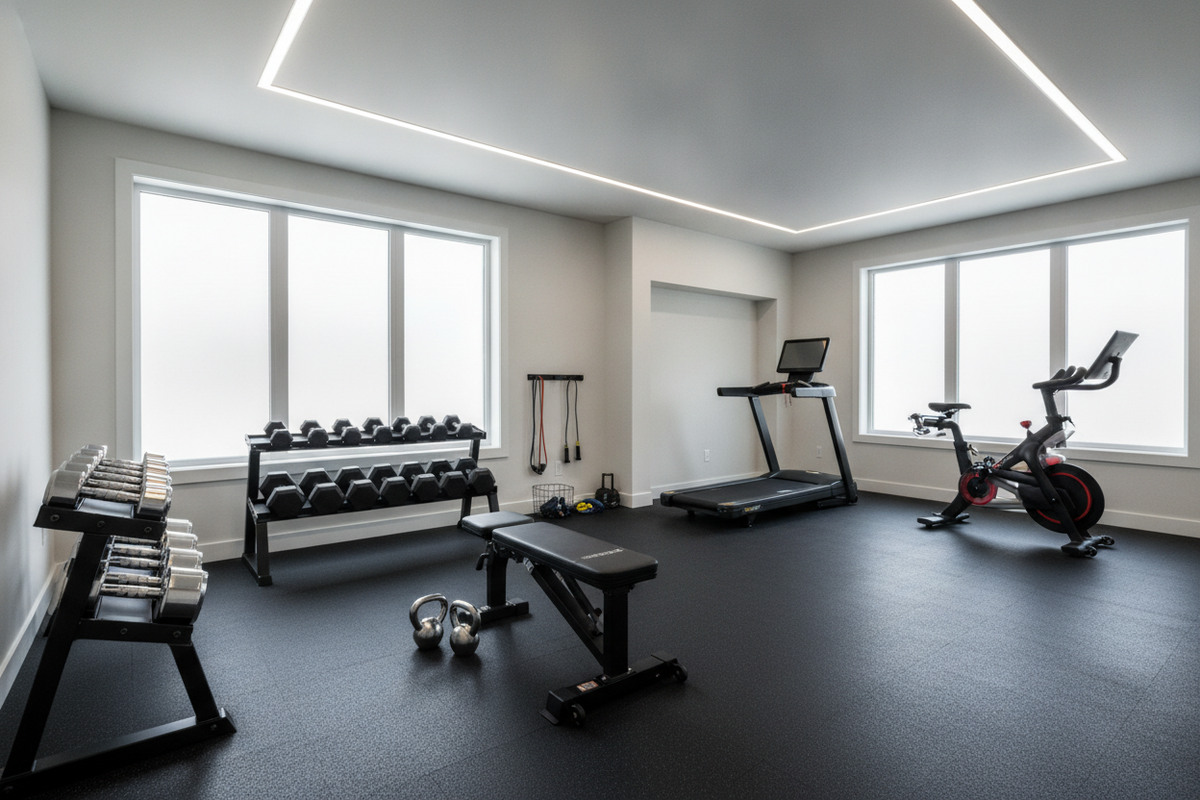
To successfully combine cardio and weights in a home gym, your physical room layout needs careful planning. A multi-purpose home workout space must balance open floor area for dynamic movement with dedicated footprint for heavy iron and storage racks. Proper equipment placement ensures you can shift from barbell presses to agility ladders without tripping over gear.
Your choice of gym flooring plays an indispensable role when you combine cardio and strength training at home. Standard residential floors, such as hardwood, laminate, or carpeted surfaces, are not designed to endure dropped dumbbells or repetitive jumping. Laying down a continuous high-density rubber mat provides immediate subfloor protection against cracked tiles or dented floorboards caused by heavy free weights.
Beyond floor protection, durable gym flooring offers critical shock absorption during high-cadence cardio intervals like jump rope or burpees. High-density rubber cushions joint impact while maintaining a non-slip surface, ensuring your feet stay planted during heavy overhead lifts or rapid lateral shuffles. Top-tier exercise surfaces also deliver excellent sweat resistance, preventing moisture from seeping underneath into underlying baseboards. Organize your accessories neatly by exploring our strength training collection to keep barbells, collars, and bands safely stored off the main exercise floor.
Can You Combine Cardio and Strength Training on the Same Day?
Yes, you can combine cardio and strength training on the same day by dividing your session into distinct segments or pairing complementary movement patterns. When planning cardio and strength training combined in one workout, keep the overall duration reasonable—typically between forty-five and sixty minutes. Pushing beyond that timeframe often causes form breakdown as mental focus and glycogen stores deplete.
One reliable method to combine strength and cardio on the same day is the upper-lower split format. On days when you train upper-body resistance training, you can finish with lower-body aerobic work like cycling or stair climbing. When you train lower-body strength, finish with low-impact upper-body conditioning such as battle ropes or an assault bike. This split approach prevents overloading the same muscle groups with heavy resistance and repetitive aerobic strain on identical days.
Choosing the Right Home Gear and Strength Equipment
Selecting adaptable tools makes it simple to combine cardio and strength training without cluttering your floor. Instead of filling your room with single-station machines, prioritize versatile implements that serve multiple workout styles. Adjustable dumbbells, resistance bands, and kettlebells let you transition seamlessly between explosive swings and controlled pressing.
For those who prefer dedicated stations, consider a compact selectorized setup from our strength collection that fits neatly against a wall, leaving ample floor space open for aerobic drills. Pairing modular machines with open gym flooring allows you to execute combination of weight training and cardio circuits smoothly in spaces of any size.
What Flooring Is Best for Combining Cardio and Strength Training at Home?
A resilient high-density rubber mat is the ideal surface when you combine cardio and weights in a residential environment. Unlike soft foam puzzle tiles, which can tear under heavy benches or shift during rapid sprints, dense rubber remains anchored firmly in place. It delivers the firm foundation required for heavy weightlifting while simultaneously offering shock absorption to cushion joint impact during explosive aerobic exercise.
Quality gym flooring also provides reliable subfloor protection and superior sweat resistance. After intense interval training, non-porous rubber mats can be wiped clean quickly with a damp microfiber cloth, maintaining hygiene and preventing lingering odors in your home workout space.
Maintaining Your Workout Floor and Gear
When you regularly combine cardio and strength training, your training equipment and gym flooring encounter continuous sweat and heavy mechanical loads. A quick post-workout wipe-down removes surface moisture, preserving the sweat resistance and grip texture of your high-density rubber mat. Periodically inspect mat seams to ensure they remain flat and tightly aligned, eliminating potential trip hazards during active agility drills.
Additionally, practice thoughtful equipment placement by avoiding leaving heavy free weights rested indefinitely on soft accessories. Distributing heavy iron evenly across sturdy storage racks protects your subfloor protection layers from prolonged indentation, keeping your home workout space functional for years to come.
Summary of Best Practices
Learning to combine cardio and strength training at home transforms your weekly routine into an efficient, full-body wellness habit. By organizing a balanced weekly schedule, prioritizing proper exercise order, and outfitting your home workout space with protective gym flooring, you ensure that every workout is both safe and productive. Whether you choose alternate-day splits or hybrid circuit sessions, combining cardio and resistance training delivers enduring strength and daily stamina.