I Threw Away My Generic Leg Workout Chart (Here's What I Use)
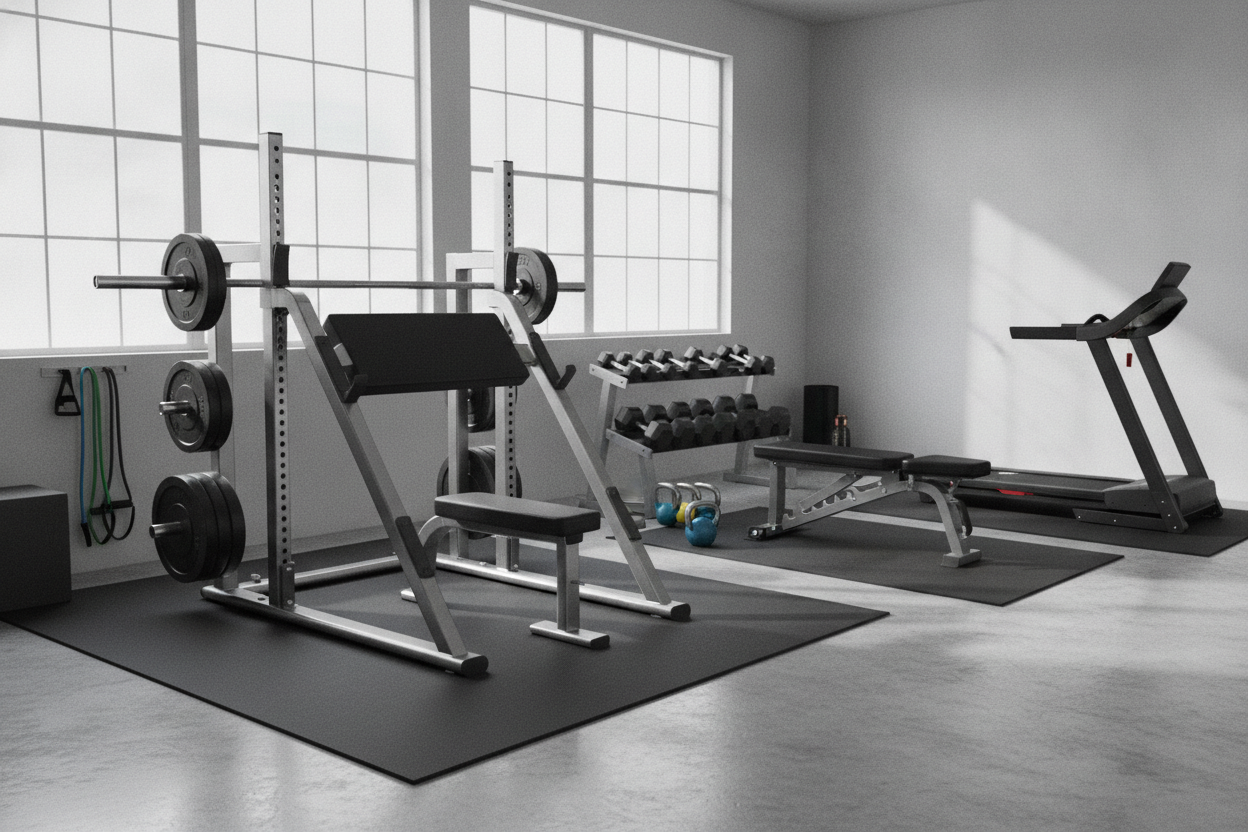
I used to have a leg workout chart taped to the plywood wall of my garage gym. It was a pixelated PDF I found on Google Images back in 2018. For six months, I checked the boxes, did my three sets of ten, and wondered why my quads still looked like pool noodles despite the effort. I was working hard, but I was following a map that didn't have any actual directions.
The problem with most static plans is they assume you are a robot. They don't care if you slept poorly, if your knees are cranky, or if the weight you lifted last week is now too easy. If you want real growth, you have to stop treating your training like a grocery list and start treating it like a data set.
Quick Takeaways
- Static PDFs fail because they lack built-in progressive overload models.
- A real leg workout program must track RPE (Rate of Perceived Exertion) and tempo, not just reps.
- Compound movements like squats and hinges are the 'big rocks' that anchor your week.
- Isolation work should be high-volume but shouldn't be 'junk volume.'
- Your tracking sheet needs to be a living document that forces you to beat your past self.
The Problem With the 'Print and Pray' Method
Most people searching for a leg exercise program just want to be told what to do. I get it. But a static chart is a snapshot in time. It tells you to do 3x12 lunges, but it doesn't tell you what to do when 3x12 becomes a breeze. Without a progression model, you're just maintaining, not building.
A real leg training plan requires more than just checkboxes. You need to track intensity—how hard that set actually felt—and rest intervals. If you do the same weight but cut your rest from three minutes to ninety seconds, you've improved. A generic chart won't show you that. It won't account for the 'grind' or the days where 225 lbs feels like a house. You need a system that evolves with your central nervous system, not a piece of paper that stays the same while you're supposed to change.
Why I Ripped Up My Old Routine
I hit a wall in 2020. I was stuck at a 315-lb squat for what felt like an eternity. I was following a cookie-cutter workout plan for legs that I'd used since college. I realized that doing 3 sets of 10 of the same four movements forever is the fastest way to stall. My body had adapted to the stimulus, and I was just going through the motions.
I stopped looking for 'magic' exercises and started looking for a better hub of workout routines that actually prioritized periodization. I realized I didn't need more exercises; I needed a better way to execute the ones I already had. I ripped up the old chart and started a logbook that tracked every variable, from foot position to the speed of the eccentric phase. That is when the scale finally started moving again.
Building a Dynamic Leg Training Plan Instead
Your new leg training programme shouldn't be a static grid. It needs to be a living document—whether that's a spreadsheet on your phone or a beat-up notebook. The goal is to track load, tempo, and RPE. RPE is huge for home lifters. If a set of squats is an RPE 7, you had three reps left in the tank. If it's a 10, you barely survived. Tracking this ensures you aren't sandbagging or overtraining.
When you structure the best workout routine for legs, you need to think about how the movements complement each other. You shouldn't just pick five random exercises. You need a primary heavy lift followed by a secondary movement that hits the muscle from a different angle or with a different resistance profile. I started looking at a science-based leg workout for bigger legs to understand that muscle fiber recruitment isn't just about moving weight from A to B; it's about time under tension and mechanical advantage.
The Big Rocks: Squat and Hinge Variations
Every leg focused split needs to be anchored by the 'Big Rocks.' For me, that's a squat pattern (back squat, front squat, or safety bar squat) and a hinge pattern (deadlift, RDL, or good mornings). These are the movements that build the most slab. When I log these, I’m not just looking at the total weight. I’m looking at the quality of the reps.
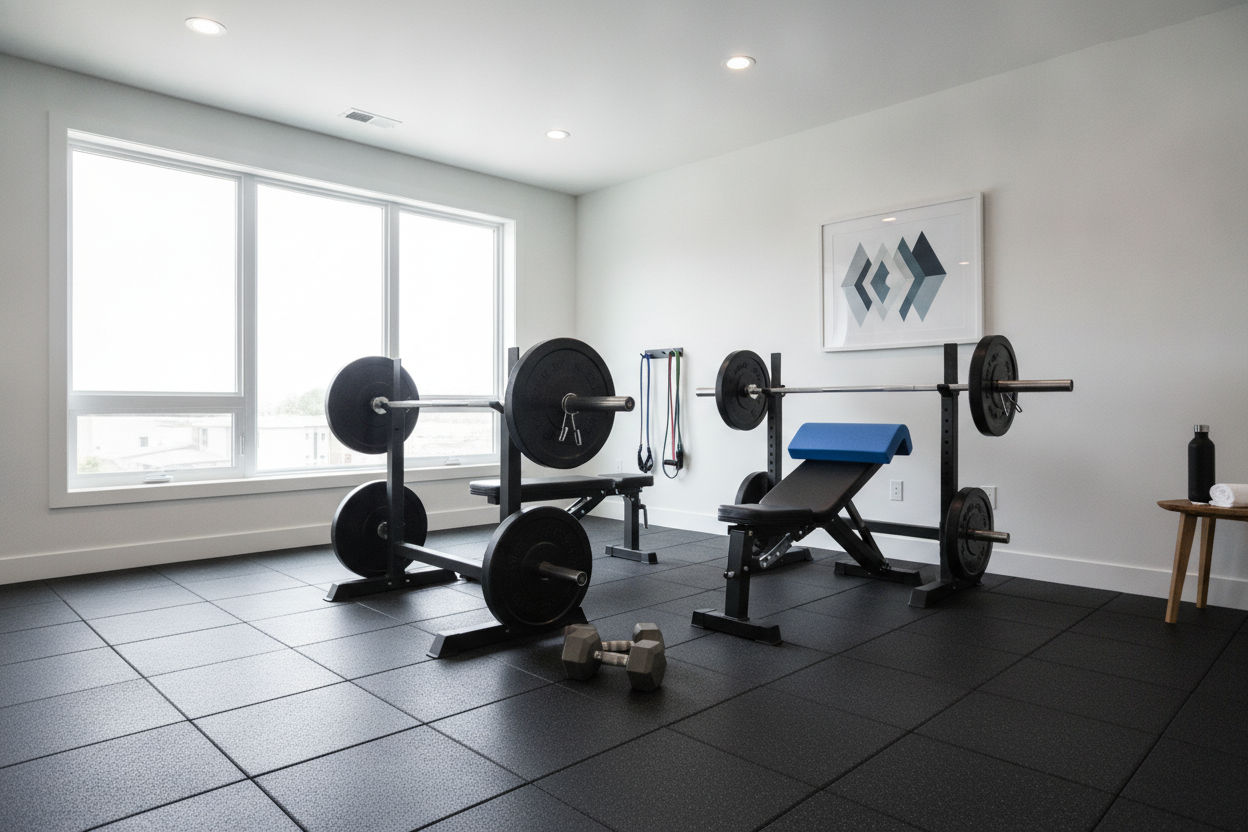
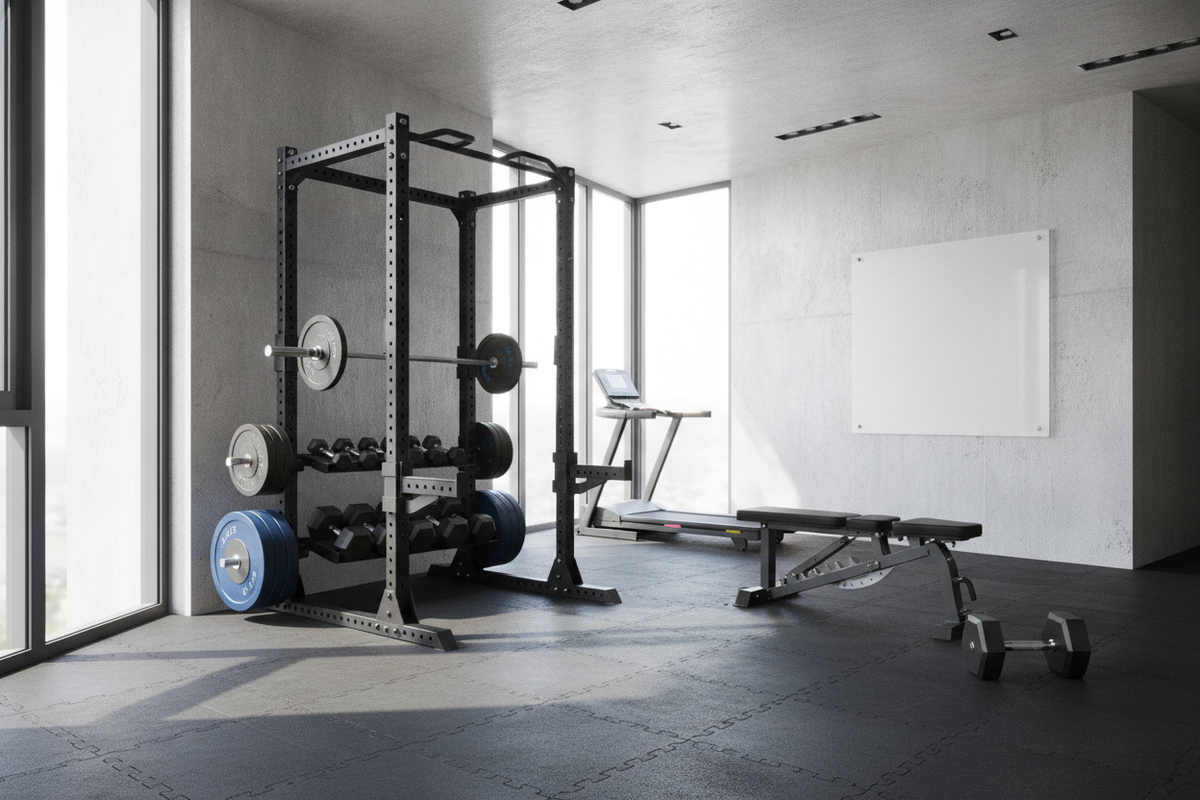
If you're training in a garage like I am, safety and stability are everything. When I’m pulling heavy RDLs or setting up for a max effort squat, I need a surface that doesn't compress or slide. Investing in proper gym flooring for home workout was a turning point for my hinges. Having that 3/4-inch density under my feet meant I could actually root my heels into the ground without worrying about the concrete cracking or my feet shifting mid-set. It changes the way you log your lifts when you actually feel secure.
Isolation and Accessories for High Volume
Once the heavy lifting is done, it's time for the accessories. This is where you fill in the gaps of your legs workout plan. I’m talking about Bulgarian split squats, leg curls, and calf raises. The mistake most people make here is 'junk volume'—doing sets just to do them. Every accessory should have a purpose, whether it's fixing a quad imbalance or building the posterior chain.
Sometimes, I don't even use the barbell for these. If my back is fried from squats, I'll pivot to bodyweight leg workout variations or high-rep lunges to get the blood flowing without the spinal loading. The key is to track these just as strictly as your squats. If you did 20 lunges with 50-lb dumbbells last week, you better try for 21 this week or pick up the 55s. That is how a leg day workout program actually yields results.
Creating the Only Tracking Sheet You Actually Need
Forget the fancy graphics. Your workout plans legs should be a simple table with six columns: Date, Exercise, Weight, Reps, RPE, and Notes. The 'Notes' column is actually the most important part. That's where you write things like 'felt a twinge in left hip' or 'used a wider stance today.' This data is what allows you to make informed decisions for the next week.
When you sit down to write your leg day workout routines, aim for a mix of rep ranges. I like to keep my big compounds in the 5-8 range and my accessories in the 12-15 range. This hits both myofibrillar and sarcoplasmic hypertrophy. By the end of a 4-week block, you should see a clear trend: either the weight went up, the reps went up, or the RPE went down for the same load. If none of those happened, your leg workout regimen isn't working, and it's time to swap an exercise or check your recovery.
Leg Training FAQ
How many exercises should be in a leg workout?
Usually 4 to 6. Any more than that and you're likely just doing 'junk volume' where the intensity drops too low to cause real adaptation. Focus on two heavy compounds and three targeted accessories.
Can I build big legs at home without a rack?
Yes, but it's harder. You'll need to master high-rep Bulgarian split squats and lunges. You can also use heavy dumbbells or kettlebells for goblet squats. Volume and tension are your best friends when you can't load a bar to 400 lbs.
How often should I train legs?
For most people, twice a week is the sweet spot. This allows for enough recovery while still hitting the muscles frequently enough to trigger growth. One 'quad-dominant' day and one 'hamstring-dominant' day works well for a leg focused split.