I Tested the Shoulder Press Machine vs Dumbbell for 6 Months
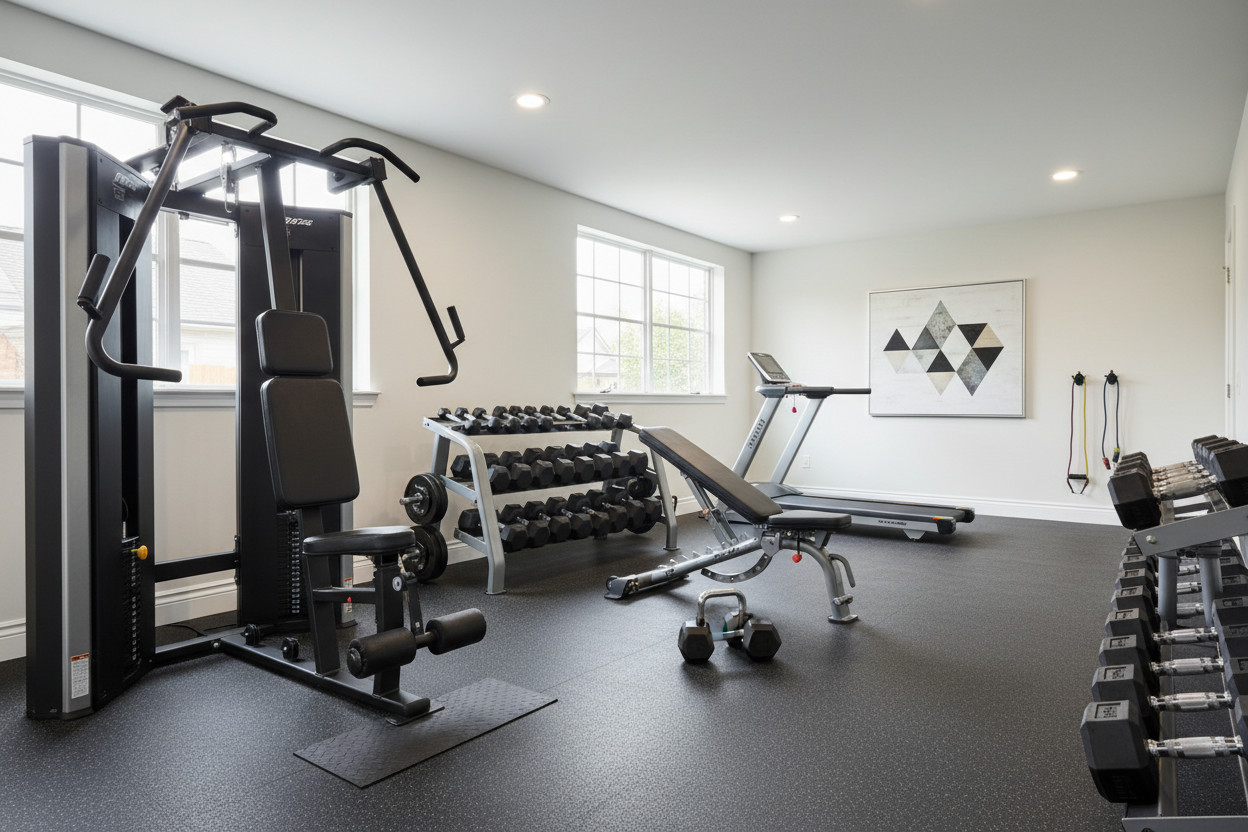
I used to be a free-weight purist. If it wasn't a barbell or a pair of heavy bells, I didn't think it was worth the floor space. But after two decades of training, my right rotator cuff started sending me invoices for all the ego lifting I did in my 20s. Every time I tried to kick a pair of 90-pounders into position, I felt a sharp pinch that had nothing to do with muscle growth. I finally decided to settle the shoulder press machine vs dumbbell debate once and for all by parking a commercial-grade unit in my garage and shelving the bells for a full six months.
Quick Takeaways
- Dumbbells are king for stabilizer recruitment and natural joint tracking but become a liability when you're chasing true failure.
- The machine path allows you to focus 100% of your effort on the deltoids without worrying about balancing the load or dropping a weight on your head.
- If your goal is pure hypertrophy (size), the machine usually wins because of the constant tension and safety at high intensities.
- Home gym owners need to weigh the 15-20 square foot footprint of a machine against the versatility of a dumbbell rack.
The Free-Weight Trap I Kept Falling Into
There is a specific kind of frustration that comes with heavy dumbbell pressing. You spend half your energy just getting the weights from your knees to your shoulders. By the time you start your first rep of a machine vs dumbbell shoulder press session, you've already burned through your freshest ATP. I realized I was leaving gains on the table because I was too tired from the setup to actually crush the set.
When you're handling 80, 90, or 100-pound dumbbells, the risk of a 'miss' isn't just about failing the rep. It's about the weight drifting too far back and taking your shoulder socket with it. I spent years thinking this was just part of the grind. It wasn't until I switched to a fixed path that I realized how much my nervous system was holding back to keep those weights balanced.
Why Dumbbells Are Great (Until They Aren't)
Don't get me wrong; I still love dumbbells for accessory work. They allow your wrists and elbows to move in a way that feels natural for your specific anatomy. If you have a history of impingement, the freedom to rotate your palms inward is a massive benefit. But is is machine shoulder press better than dumbbell for everyone? Not necessarily.
Dumbbells force your smaller stabilizer muscles to work overtime. That's great for 'functional' strength, but those stabilizers are often the first things to fatigue. If your serratus or traps give out before your medial delts do, your shoulders aren't actually getting the growth stimulus they need. You're just getting tired, not bigger.
The Case for the Fixed Path: Pure Muscular Failure
The beauty of a high-quality machine is the stability. When you don't have to balance the weight, you can push your deltoids to absolute mechanical failure. I’m talking about those slow, grinding reps where the weight barely moves. On a shoulder press machine vs barbell setup, the machine wins for isolation every time. You aren't using your lower back to cheat the weight up, and you aren't worried about the bar hitting your chin.
Because the path is set, you can safely use techniques like rest-pause or drop sets that would be suicidal with free weights. I found that the machine beats free weights for hypertrophy simply because it removes the 'fear factor' from the overhead press. I could finally focus on the squeeze at the top and the slow eccentric on the way down without my form breaking into a chaotic mess.
Front Press vs Shoulder Press Mechanics
Most machines have a slight incline or a specific grip that mimics a front press vs shoulder press hybrid. By tucking the elbows slightly forward—about 30 degrees into the scapular plane—you put the anterior deltoid in a much stronger position. I noticed that my front delts blew up over those six months because the machine kept me locked into that 'sweet spot' that is incredibly hard to maintain with shaky dumbbells.
Shoulder Press Machine or Dumbbell: How to Choose for Your Space
If you're building a home gym, the shoulder press machine or dumbbells choice usually comes down to your floor plan. A dedicated shoulder press machine is a luxury. It takes up a roughly 4x5 foot area and usually only does one thing. If you're tight on space, a solid set of adjustable dumbbells and a high-quality bench are much more practical. They let you do rows, curls, and chest presses in the same footprint.
However, if you have the room and your joints are starting to feel the miles, the machine is the best investment you can make for your longevity. After six months, my shoulders felt 'quiet' for the first time in years. No clicking, no nagging inflammation, just more mass. When deciding which builds bigger delts, the answer is whichever one allows you to train the hardest with the least amount of pain. For me, that’s the machine.
FAQ
Is the machine press cheating?
Only if your goal is to be a circus performer. If your goal is to build muscle, the machine isn't cheating; it's an optimization tool. It isolates the target muscle by removing the need for balance.
Can I replace the barbell overhead press with a machine?
You can, especially during a hypertrophy phase. While the barbell is better for total-body power and 'brute' strength, the machine is superior for targeting the deltoids without the systemic fatigue of a heavy standing press.
Are machines worse for your joints?
Only if the machine is poorly designed and forces you into an unnatural movement path. Look for machines with converging or diverging handles that mimic the natural arc of a human press.