I Swapped Barbell Squats for a Dumbbells Training Program
I remember the morning my lower back decided it was officially done with 405-lb squats. It wasn't a sudden, dramatic pop, but a dull, grinding realization that I couldn't walk right for three days after every leg session. I was chasing numbers for an imaginary audience instead of actually building a physique. That is when I committed to a strict dumbbells training program to see if I could actually maintain my size without the constant spinal compression and clicking shoulders.
Quick Takeaways
- Progressive overload is non-negotiable, even without a barbell.
- High-quality adjustable dumbbells are the ultimate space-saving investment for a home gym.
- Unilateral work (single-limb exercises) builds more stability and core strength than bilateral moves.
- Your joints will feel younger, but your muscles will work harder than ever.
The Day I Finally Walked Away From the Barbell
I spent a decade convinced that the barbell was the only way to be 'serious' about lifting. If you weren't under a rack, you were just playing around. But the truth was, my joints were paying a tax I couldn't afford anymore. My shoulders were constantly inflamed from fixed-position benching, and my lower back felt like a dry twig every time I pulled from the floor. I was grinding out reps that looked like garbage just to hit a PR that nobody cared about but me.
Switching to a dumbbell training plan wasn't an admission of defeat; it was an evolution. I had to swallow my pride and realize that a 100-lb dumbbell press is often more effective for chest hypertrophy than a 225-lb barbell bench because of the increased range of motion and freedom of movement. When I finally ditched the rack, the chronic aches started to fade within three weeks. I wasn't lifting less; I was lifting better. The realization hit me: muscle doesn't know the difference between a 45-lb plate and a 45-lb hex bell. It only knows tension.
Why Most Dumbbell Routines Are Complete Garbage
If you search for a 'home dumbbell program' online, you usually find influencer-style circuits: 20 reps of light lateral raises followed by jumping jacks. That is not a training program; that is a cardio session with props. A legitimate dumbbells training program requires the same brutal adherence to progressive overload as any powerlifting routine. Most people fail with dumbbells because they stop when it gets 'uncomfortable' rather than when the muscle actually fatigues.
To see real growth with a home exercise program with dumbbells, you have to stop chasing a 'sweat' and start chasing performance. You need to be tracking every set and every rep. If you did 10 reps with the 50s last week, you better be aiming for 11 this week or moving up to the 55s. The 'toning' myth has killed more gains than any injury ever has. You build muscle with dumbbells by lifting heavy, resting long enough to recover, and then doing it again. Don't let the lack of a barbell trick you into thinking you can't build a massive amount of strength in your garage.
Setting Up the Space (You Need Less Than You Think)
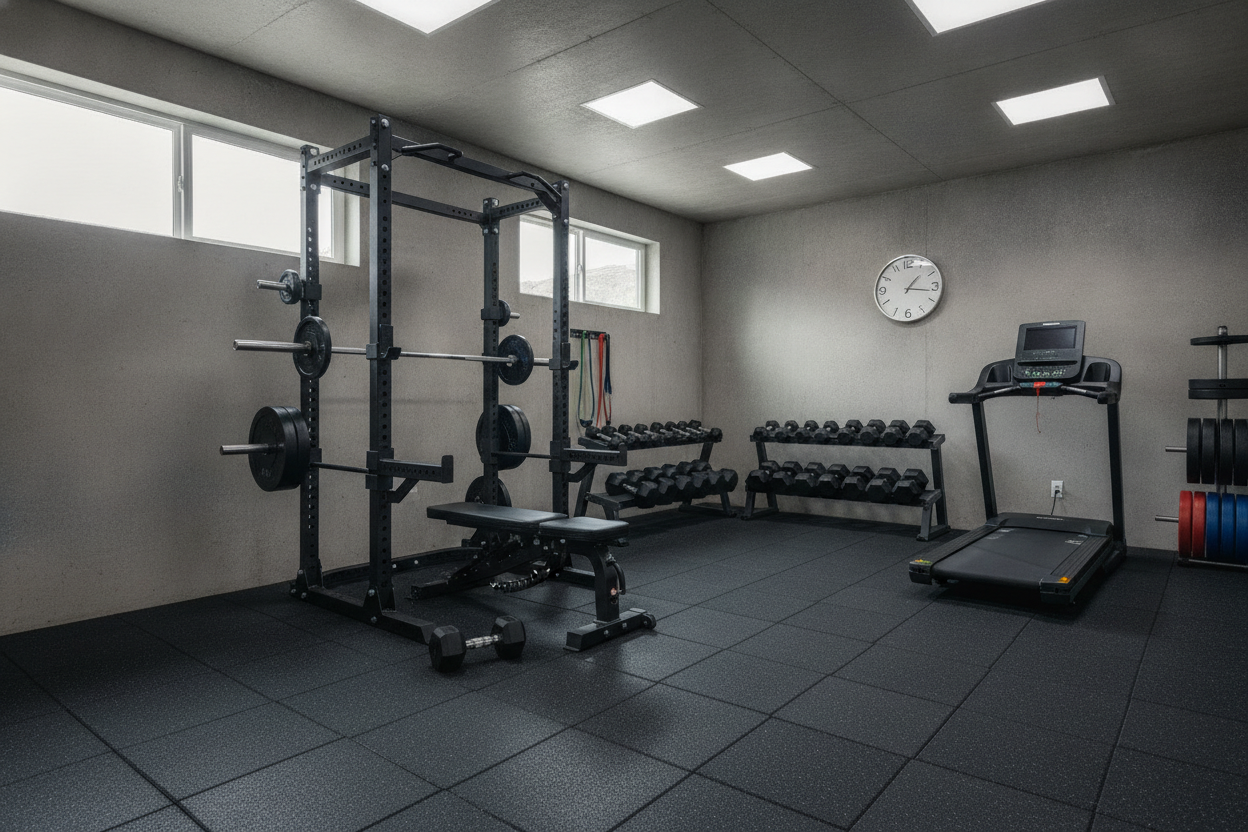
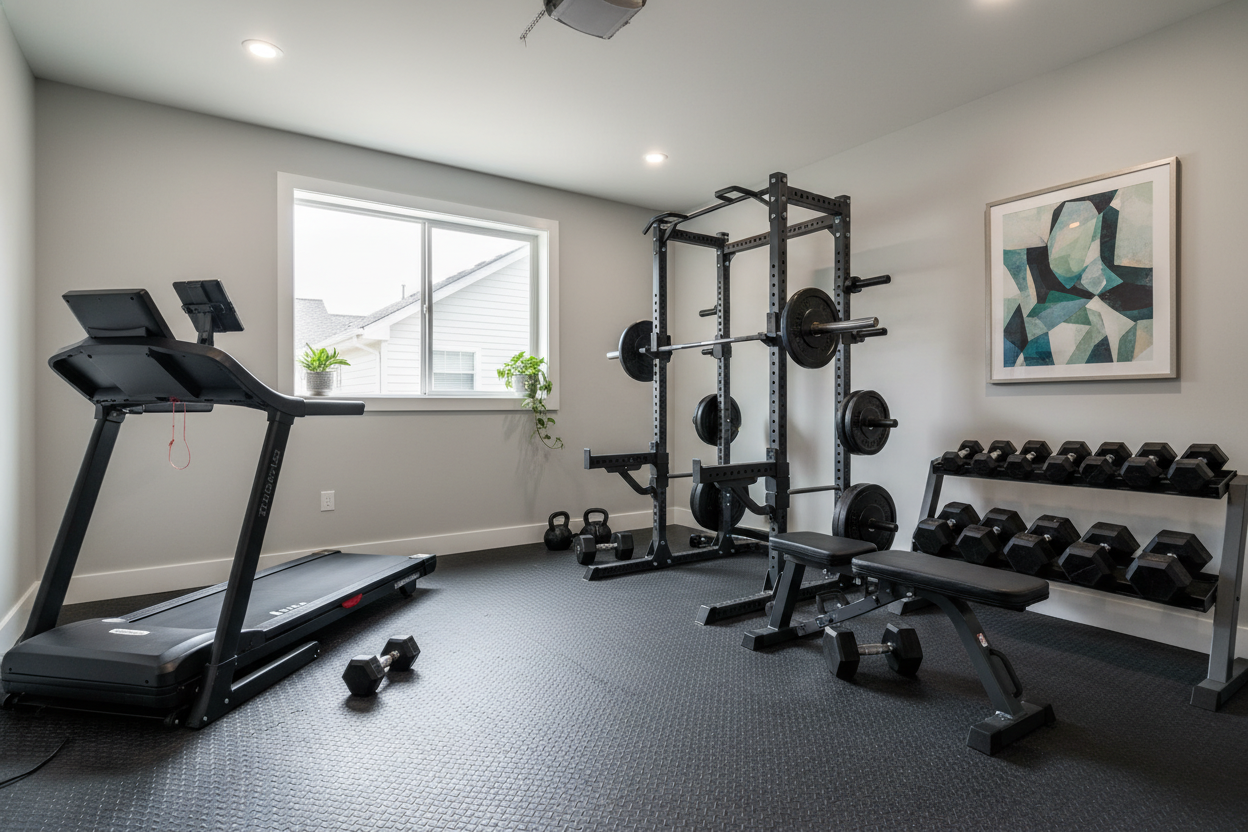
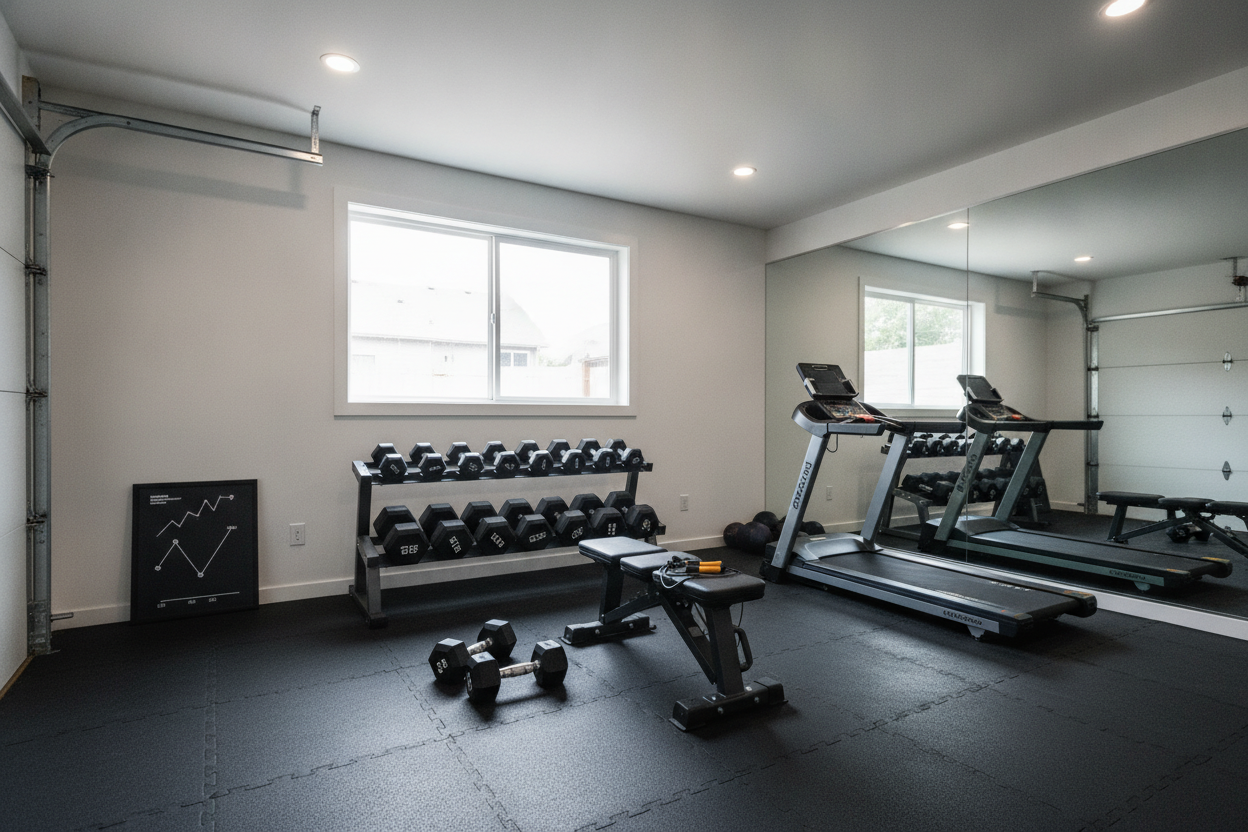
The beauty of a workout plan with dumbbells at home is the footprint. You don't need a 40-foot rig or a dedicated platform. However, you do need gear that won't fail when you're mid-set. A rock-solid adjustable bench is the centerpiece. Look for something with at least 11-gauge steel and a high weight capacity—around 600 to 1,000 lbs—so you aren't wobbling when you're trying to press heavy. If the bench feels cheap, your confidence in the lift will be cheap too.
Next is the floor. I learned the hard way that standard garage concrete will crack if you bail on a heavy set of RDLs or rows. Getting a high-density exercise mat gym flooring is the first thing I tell people to buy. It protects your foundation and dampens the noise so you aren't waking up the whole house during a 6 AM session. Finally, invest in a pair of heavy adjustable dumbbells. Having a set that goes up to 80 or 90 lbs per handle ensures you won't outgrow your equipment in three months.
The 4-Day Iron-Clad Split That Actually Worked
My workout routine at home with dumbbells follows a classic 4-day upper/lower split. This provides the perfect balance between frequency and recovery. You hit the upper body on Monday and Thursday, and the lower body on Tuesday and Friday. This dumbbell workout program at home ensures that every muscle group gets hit twice a week, which is the sweet spot for hypertrophy. It is a simple, effective dumbbell home training program that cuts out the fluff and focuses on the 'big' movements that actually move the needle.
Heavy Pushing and Shoulder Health
Switching to neutral grip dumbbell presses—where your palms face each other—saved my rotator cuffs. Unlike a barbell, which forces your wrists and elbows into a fixed plane, dumbbells allow your joints to follow their natural path. This allowed me to push heavier weights with zero pain. To really round out the physique, I added specific isolation work. You can build 3D delts with this dumbbell shoulder workout at home by focusing on controlled lateral raises and rear delt flyes that target the heads of the shoulder a barbell simply cannot reach.
Getting Enough Leg Volume Without a Squat Rack
People think you can't build legs without a rack. Tell that to someone who just finished a set of Bulgarian split squats with 70-lb dumbbells. The stability required for a workout routine with dumbbells at home is significantly higher than bilateral work. By moving to unilateral exercises, you double the load on the working leg without needing a 500-lb barbell on your spine. Heavy goblet squats and dumbbell RDLs have improved my hamstring and glute development more than squats ever did because I can actually feel the muscle stretching without my lower back taking over the movement.
Arm Isolation That Doesn't Take All Day
I don't spend forty minutes on curls. I tack on a few high-intensity sets at the end of my upper body days. If you're short on time, a quick tricep workout at home with dumbbells can be done in ten minutes using overhead extensions and floor presses to finish the pump. The goal is to maximize the blood flow to the muscle after the heavy compound work is done. It is about efficiency, not spending your whole night in the garage.
How to Keep Progressing When You Max Out Your Weights
What happens when your home dumbbell workout plan leads you to maxing out your heaviest pair? You don't necessarily need to buy more weights immediately. You get creative with intensity. I started using 3-second negatives and 2-second pauses at the bottom of every rep. This increases time under tension significantly. If you can do 10 reps of a standard press, try doing 10 reps where every descent takes four seconds. It will feel like a completely different weight.
You can also utilize pre-exhaustion. This means doing an isolation movement, like dumbbell flyes, immediately before your main dumbbell bench press. By the time you get to the 'heavy' lift, your chest is already fatigued, making the lighter weights feel like a ton of bricks. This is how you keep an at home workout plan with dumbbells effective for years, not just weeks. Don't just search for a 'free dumbbell' PDF; understand the mechanics of how to make a weight feel heavier than it is. That is the secret to long-term progress in a home gym.
FAQ
Can you really build muscle with just dumbbells?
Yes. Your muscles respond to tension and mechanical stress. As long as you are pushing close to failure and increasing your weight or reps over time, you will grow. Many professional bodybuilders use dumbbells for the majority of their accessory work for this exact reason.
Are adjustable dumbbells better than a full rack?
For a home gym, usually yes. They save an incredible amount of space and are often cheaper than buying 10 separate pairs of fixed dumbbells. Just make sure you buy a reputable brand with a secure locking mechanism so you don't have plates falling on your face during presses.
How long should a dumbbell workout last?
If you are training with high intensity, 45 to 60 minutes is plenty. If you find yourself in the garage for two hours, you are likely resting too long or doing too much 'junk volume' that isn't actually contributing to muscle growth.