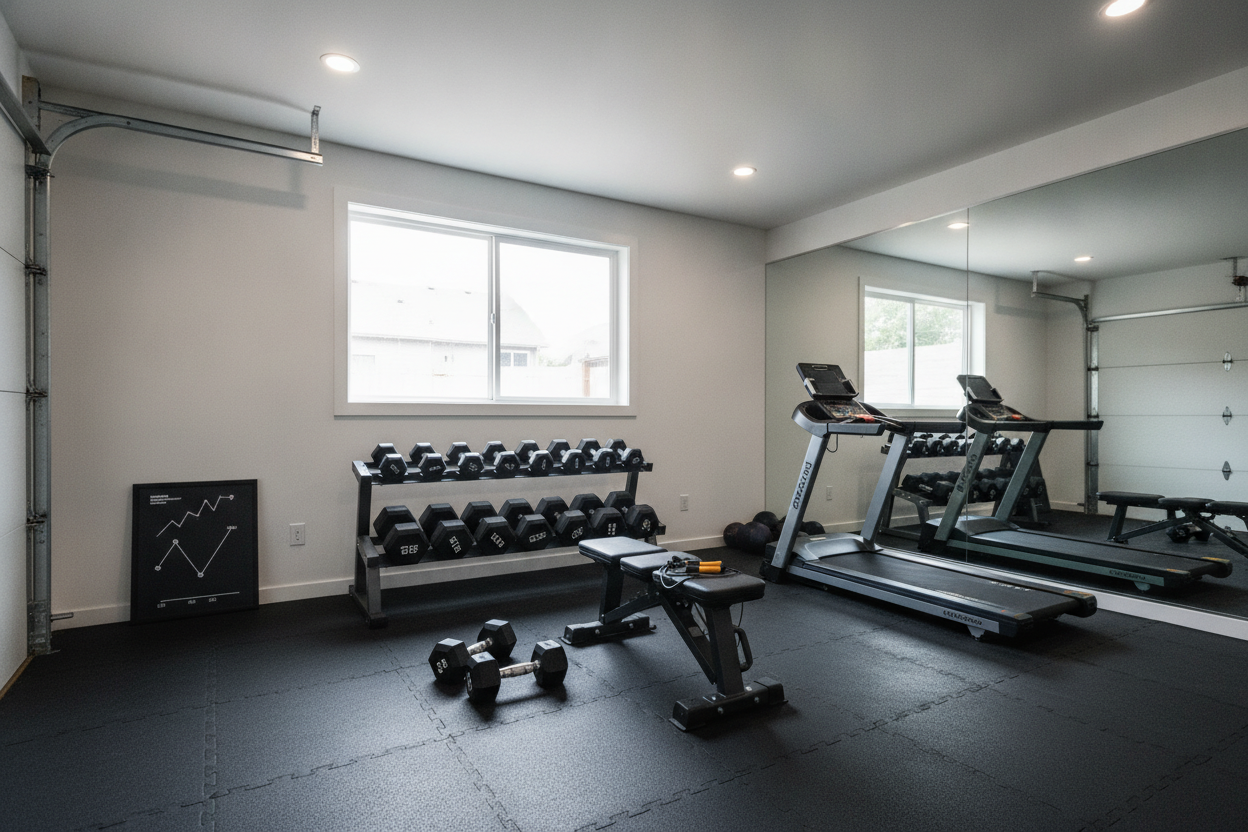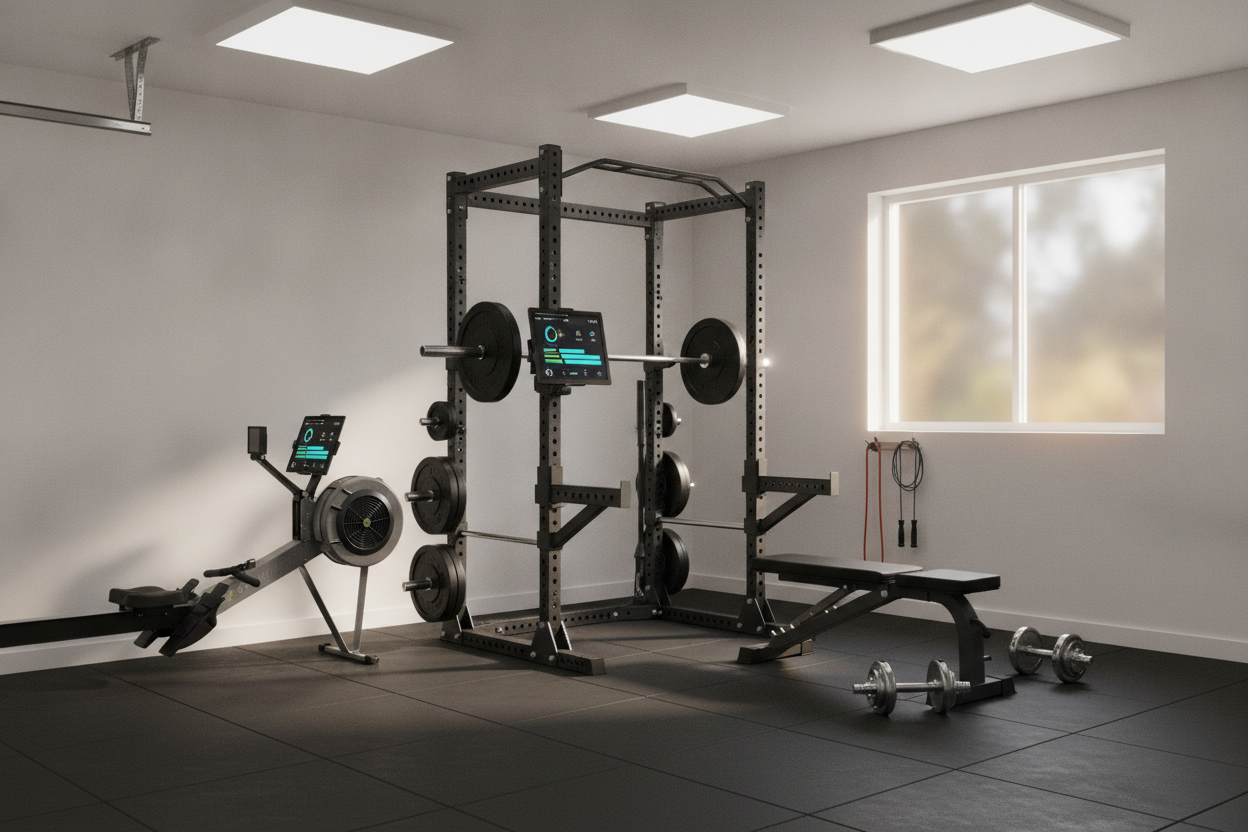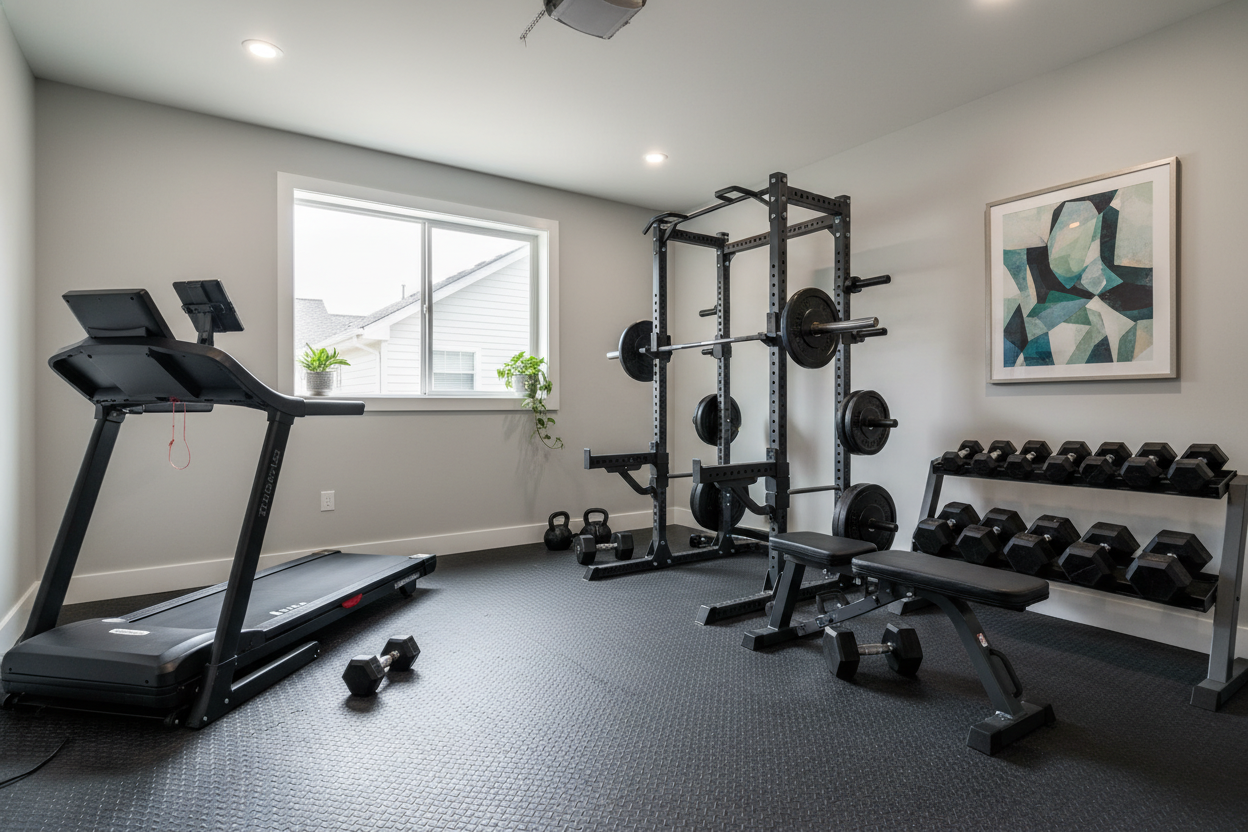
The Real Reason Your Muscle Strength Exercises at Home Aren't Working
I remember the day I realized my living room workouts were a complete waste of time. I had just finished 50 air squats and felt... nothing. No pump, no burn, just a slightly elevated heart rate. I missed my 45-pound plates, the aggressive knurling of a power bar, and the heavy rack. I was convinced that muscle strength exercises at home were just a weak substitute for the real thing.
I was wrong. I wasn't failing because I lacked a 500-lb plate collection; I was failing because I was training like I was in a cardio class. If you are asking yourself, 'can I do strength training at home?' the answer is yes—but you have to stop treating your reps like a race against the clock.
Quick Takeaways
- Tempo is the secret to making light weights feel like a heavy barbell.
- The eccentric (lowering) phase is where you actually build strength.
- Hardwood floors and socks are the enemies of heavy, controlled reps.
- If you don't control the weight, you aren't doing strength training; you're doing aerobics.
The 'Too Easy' Trap of Living Room Lifting
The biggest mistake people make when moving from a commercial gym to a home setup is trying to replicate their heavy lifts with zero resistance. You can't just do 10 fast push-ups and expect the same results as a 225-lb bench press. When people doubt 'can you strength train at home,' it's usually because they are moving too fast to create any real mechanical tension.
In a gym, gravity and iron do the work for you. At home, you have to create that tension manually. If a movement feels 'too easy,' it's because your execution is lazy. You aren't focusing on the muscle; you're just moving an object from Point A to Point B as quickly as possible to get the set over with.
Why I Stopped Chasing Weight and Started Chasing Time
I used to be obsessed with the numbers on the side of the dumbbell. If I wasn't curling 50s, I felt like I was shrinking. That changed when I embraced Time Under Tension (TUT). By slowing down the movement, you can make a 20-lb dumbbell feel like a 60-lb monster. Your muscle fibers don't have eyes; they only know how much tension they are under and for how long.
I stopped worrying about buying a full commercial rack and started focusing on how much I could make a single pair of adjustable dumbbells hurt. It’s a mental shift. You have to stop thinking about 'how many' and start thinking about 'how long.' This is the only way to ensure the strength training you can do at home
actually results in a physique you're proud of.
The 4-Second Eccentric Rule
The eccentric phase is the lowering portion of any lift—think of the way down on a push-up or the descent of a squat. This is where the most muscle damage and subsequent growth happen. Most people just 'drop' into their reps. That is wasted effort.
I started implementing a strict 4-second eccentric on every single rep. Drop into a push-up and count: one-one-thousand, two-one-thousand, three-one-thousand, four-one-thousand. By the time you hit rep eight, your chest will be shaking. This recruits more motor units than 20 fast, sloppy reps ever could.
My Core Muscle Strength Exercises at Home
Not every exercise works for this. You need movements that allow for a deep stretch and a hard contraction. Bulgarian split squats are the king here. Put your back foot on the couch, hold a weight in the opposite hand, and take four seconds to lower your hip. It is absolutely brutal.
I also rely on deficit push-ups (using books or handles to get deeper) and paused dumbbell rows. To build a complete physique, you should look for exercises you can do at home for 3D strength. You need to hit those rear delts and stabilizers if you want to look like you actually lift, rather than just someone who does a few sets of sit-ups.
You Have to Fix Your Floor First
I spent my first month of home training sliding around on a hardwood floor. My feet were constantly drifting during lunges, which meant I couldn't focus on the muscle. You cannot grind out a slow, painful rep if you're worried about ending up in a split. Traction is non-negotiable.
Before you spend another dime on fancy adjustable dumbbells, get a large exercise mat for home gym use. You need a dedicated space where your feet stay glued to the floor. It allows you to drive through your heels and maintain the stability required for high-tension training. If you're slipping, you're losing gains.
So, Can I Do Strength Training At Home Long-Term?
You can, but you have to be honest with yourself. Eventually, you will get so strong that even a 5-second eccentric with your current weights won't cut it. At that point, you'll need to invest in a real barbell or heavier plates. But for most people, mastering tempo will provide enough stimulus for months, if not years, of progress.
Stop rushing. Stop counting reps like you're trying to win a race. Slow down, fix your floor, and make the weight respect you. That is how you actually build muscle in a spare bedroom.
FAQ
Do I need a bench for home strength training?
Not necessarily. You can do floor presses for chest and use a sturdy chair or the edge of a couch for rows and split squats. A bench is nice, but it's not the barrier to entry.
How do I know if I'm going heavy enough?
If you can't maintain a 4-second eccentric for at least 8 to 12 reps before reaching technical failure, the weight is plenty heavy. If you can do 20+ reps easily, you need more resistance or a slower tempo.
What are the best strength exercises to do at home without equipment?
Focus on the 'Big Three' of bodyweight: Deficit push-ups, Bulgarian split squats, and pull-ups (if you have a doorway bar) or inverted rows under a sturdy table.