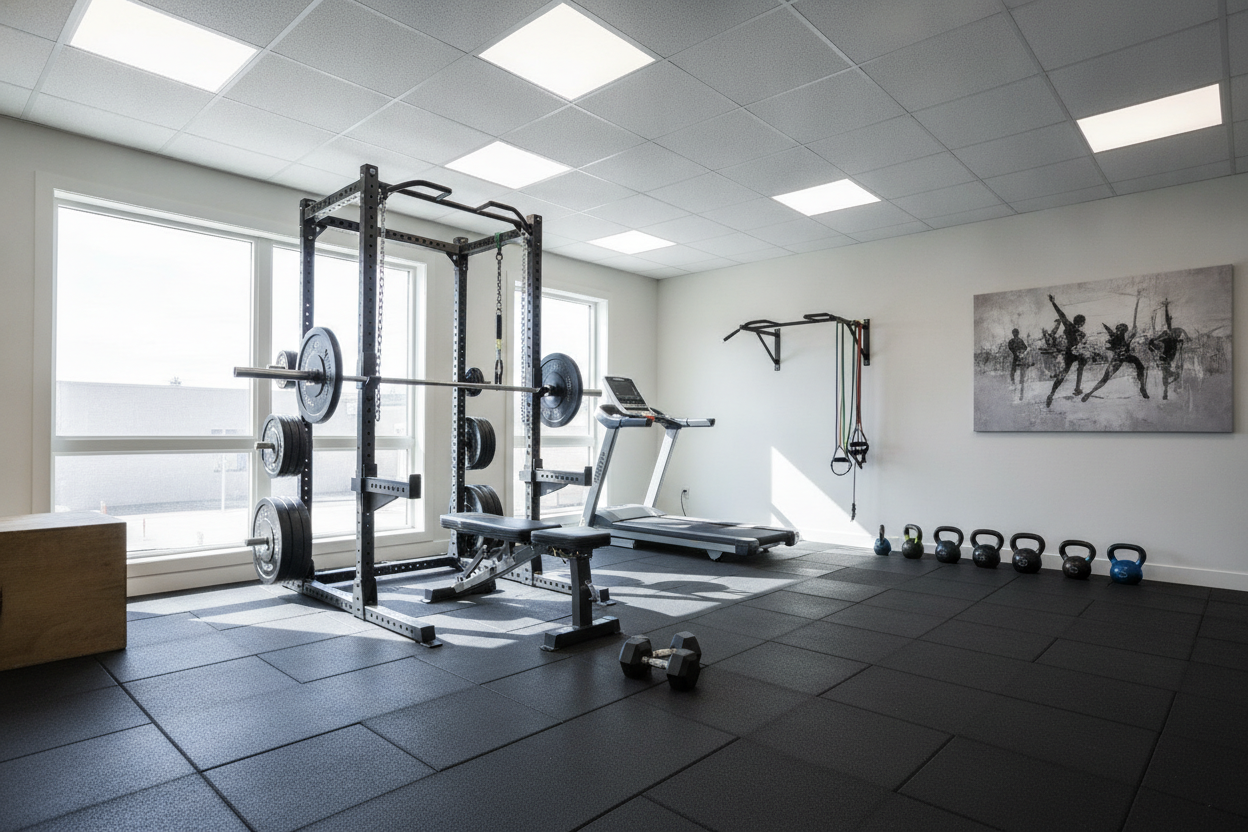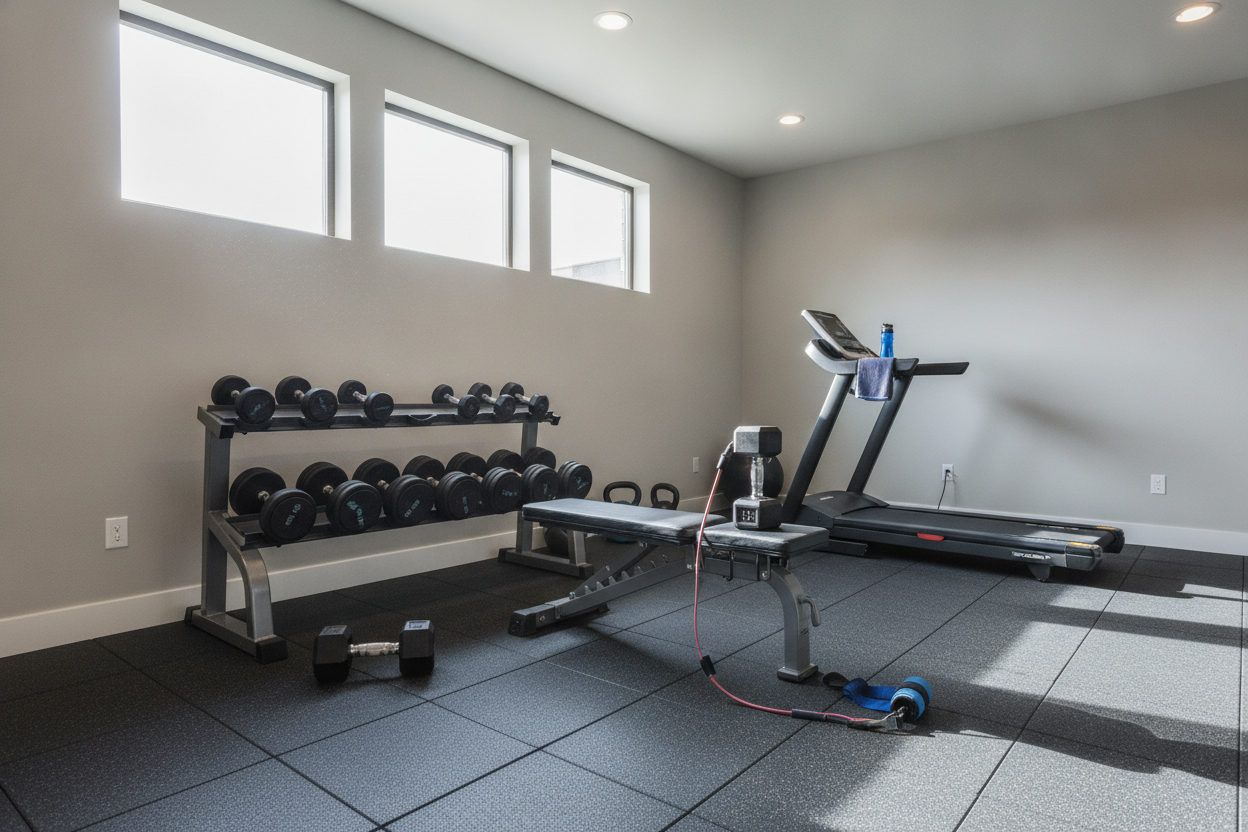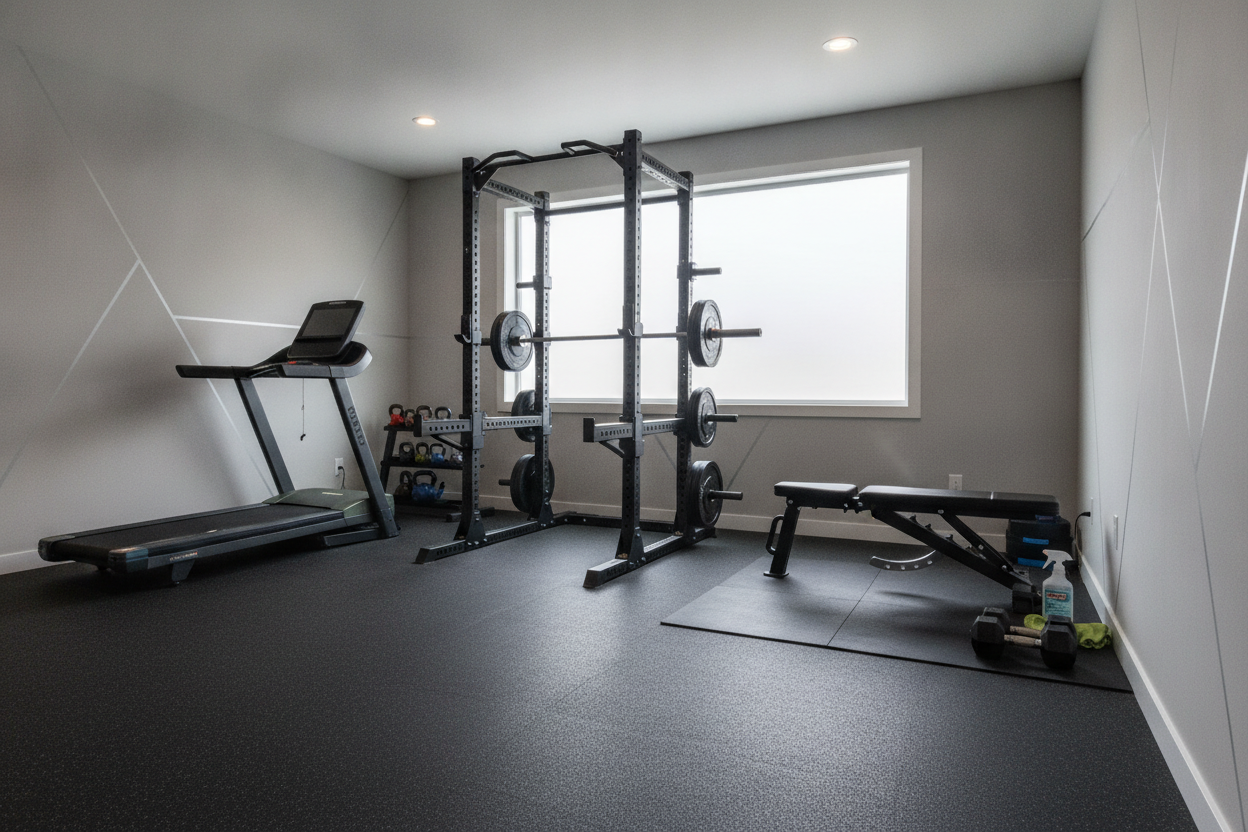
I Ruined My Floor With Heavy Gym Gears (Here Is the Fix)
The sound of a 45lb cast iron plate meeting bare concrete is a sound you never forget. It is not a thud; it is a sharp, sickening crack. I learned that the hard way three years ago when I finally decided to stop paying a monthly membership and build my own sanctuary. I had just spent a small fortune on high-end gym gears, feeling like a king as the delivery truck dropped off several hundred pounds of iron and steel. I thought I was ready to pull a heavy triple. I was wrong.
Quick Takeaways:
- Concrete is brittle and will crack under point-loading from dropped weights.
- Foam mats are for stretching, not for protecting your subfloor from 300-lb deadlifts.
- High-density rubber is the only material that actually dissipates impact energy.
- A 6x8ft footprint is the minimum safe zone for a power rack and barbell work.
The Rookie Mistake I Made When Building My First Setup
I was so focused on the knurling of my new barbell and the finish on my plates that I completely ignored the foundation. I had spent weeks browsing every gym online shop I could find, comparing the tensile strength of steel and the diameter of pull-up bars. I finally pulled the trigger on a full set of cast iron plates and a pair of 50-lb dumbbells. When they arrived, I didn't even wait to buy flooring. I figured the concrete in my garage was 'tough enough.' It’s concrete, right? It’s what they build bridges out of.
On my very first session, I was adapting an online fitness program that called for heavy Romanian deadlifts. On the last rep of my third set, I set the bar down a little too fast. Not a drop, just a firm placement. I heard a 'pop' that sounded like a dry twig breaking. When I moved the bar, there was a spiderweb of cracks radiating from where the right-side plates hit. My stomach dropped. I hadn't even finished my first workout and I had already caused hundreds of dollars in damage to my home's foundation.
This is the trap most home gym owners fall into. We get blinded by the shiny new equipment and treat the floor as an afterthought. We assume that because we aren't 'dropping' weights from overhead, the floor is safe. But concrete isn't designed for impact; it's designed for static loads. When you put a 300-lb barbell on a 1-inch contact point, the PSI is astronomical. I learned my lesson: you don't build a gym from the rack down; you build it from the floor up.
Why a Basic Foam Mat Will Not Save Your Concrete
After I saw the cracks, I panicked and ran to a local big-box store to buy those interlocking foam tiles. You know the ones—they look like giant puzzle pieces. I thought that half an inch of soft foam would solve the problem. I was wrong again. Foam is fantastic for comfort, but it is useless for structural protection. When you drop a heavy dumbbell on foam, the material compresses instantly to the thickness of a piece of paper. The energy doesn't disappear; it travels straight through the compressed foam and into the concrete.
Think of it like this: if you dropped a hammer on your foot, would you rather be wearing a pair of fluffy slippers or a steel-toed boot? The foam is the slipper. It feels nice when you’re standing on it, but it offers zero resistance to force. I quickly realized that a standard 6x4ft yoga mat is great for your morning mobility work or some high-rep floor press, but it’s a sacrificial lamb if you’re pulling heavy iron. You need density, not just cushion.
The biomechanics of impact are simple. You need a material that can absorb the shock and spread the load across a wider surface area. Rubber does this by deforming slightly without bottoming out. Foam just gets out of the way and lets the concrete take the hit. If you can pinch the material between your thumb and forefinger and feel your fingers meeting, it’s not thick enough for your weights.
Navigating a Gym Online Shop for Heavy-Duty Protection
Once I realized foam was a lie, I went back to the gym online shop world, but this time I ignored the weights and looked at the specs for flooring. You’ll see a lot of marketing fluff about 'anti-microbial' surfaces and 'designer colors.' Ignore all of that. What you actually care about is density and thickness. For a serious lifting space, you are looking for large exercise mats designed for impact that are at least 1/2 inch thick, though 3/4 inch is the gold standard for heavy deadlifts.
I spent hours researching Shore A hardness ratings. Most high-quality gym flooring sits between 60 and 70. This is the sweet spot where the floor is firm enough to provide a stable base for your feet—you don't want to feel like you're lifting on a mattress—but soft enough to save your slab. If the website doesn't list the thickness or the weight of the mat, move on. A real 4x6ft rubber mat should weigh about 60 to 90 pounds. If it’s light enough to carry under one arm, it’s not going to protect your floor.
I also stopped looking at 'exercise mats' and started looking at 'vulcanized rubber.' This is rubber that has been treated with heat and pressure to make it incredibly durable. It doesn't crumble, it doesn't compress over time, and it can handle a 500-lb drop without flinching. I realized that investing in proper rubber flooring is actually an insurance policy for your house. It's much cheaper to buy $200 worth of rubber than it is to hire a contractor to resurface your garage floor or fix a cracked post-tension slab.
Sizing Your Platform: How Much Rubber Do You Actually Need?
You don't necessarily need to cover your entire garage in rubber. Unless you're running a commercial facility, wall-to-wall flooring is often an unnecessary expense. I measured my 'working zone'—the area where the barbell actually travels. For most people, a 6x8ft exercise mat is the perfect footprint. It’s wide enough to accommodate a standard 7-foot Olympic bar with room to spare on the ends, and long enough to fit a power rack and a bench.
I set mine up by centering the rack on the back half of the mat. This leaves a 4-foot 'deadlift porch' in front of the rack. This is where the heaviest impacts happen. By concentrating my budget on one high-quality, thick mat rather than ten cheap ones, I got better protection for less money. If you're doing Olympic lifts where you might have to bail on a snatch, you might want to go wider, but for 90% of us, that 6x8 zone is the sweet spot.
Don't forget to account for the 'creep.' Over time, mats can slide on smooth concrete. I used a bit of heavy-duty double-sided carpet tape on the corners of my mat to keep it locked in place. Now, when I set the bar down, there is no crack, no vibration, and no sliding. Just the dull, satisfying thud of a protected floor.
FAQ
Can I just use plywood?
Plywood is great for a lifting platform base to provide stiffness, but it doesn't absorb impact. If you use plywood, you still need a layer of rubber on top to dampen the shock, otherwise, you're just turning your floor into a giant drum that will annoy your neighbors.
Is the smell of rubber mats permanent?
New rubber flooring often has a 'new tire' smell. It usually fades in 2-4 weeks. If it bothers you, mop the mats with a mixture of water and a little bit of Dawn dish soap, then leave the garage door open for a day. Avoid mats made with low-quality adhesives, as those 'off-gas' much longer.
Do I need flooring if I only use adjustable dumbbells?
Yes. Adjustable dumbbells are actually more fragile than solid iron ones. If you drop a 50-lb adjustable dumbbell on bare concrete, you aren't just risking the floor; you're risking the internal mechanism of a $400 piece of equipment. Always have at least a 1/2 inch of rubber under them.