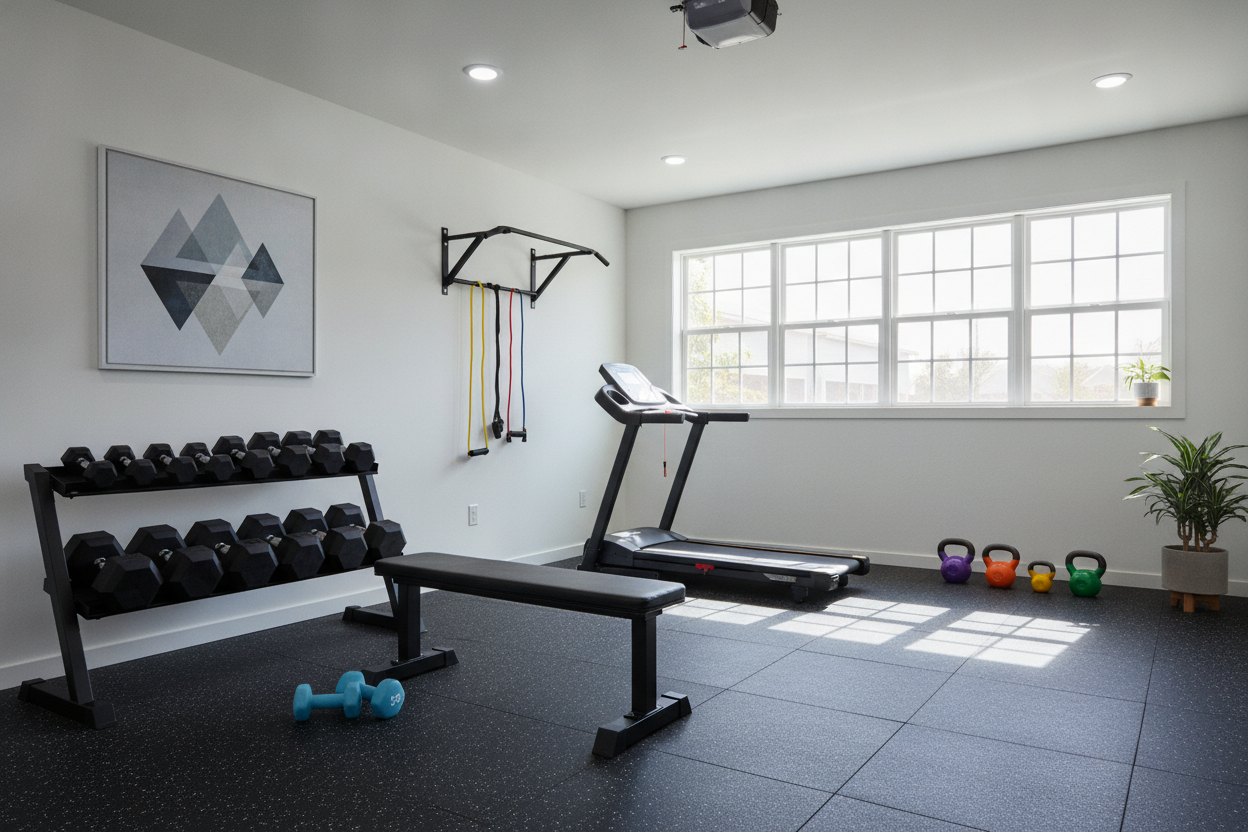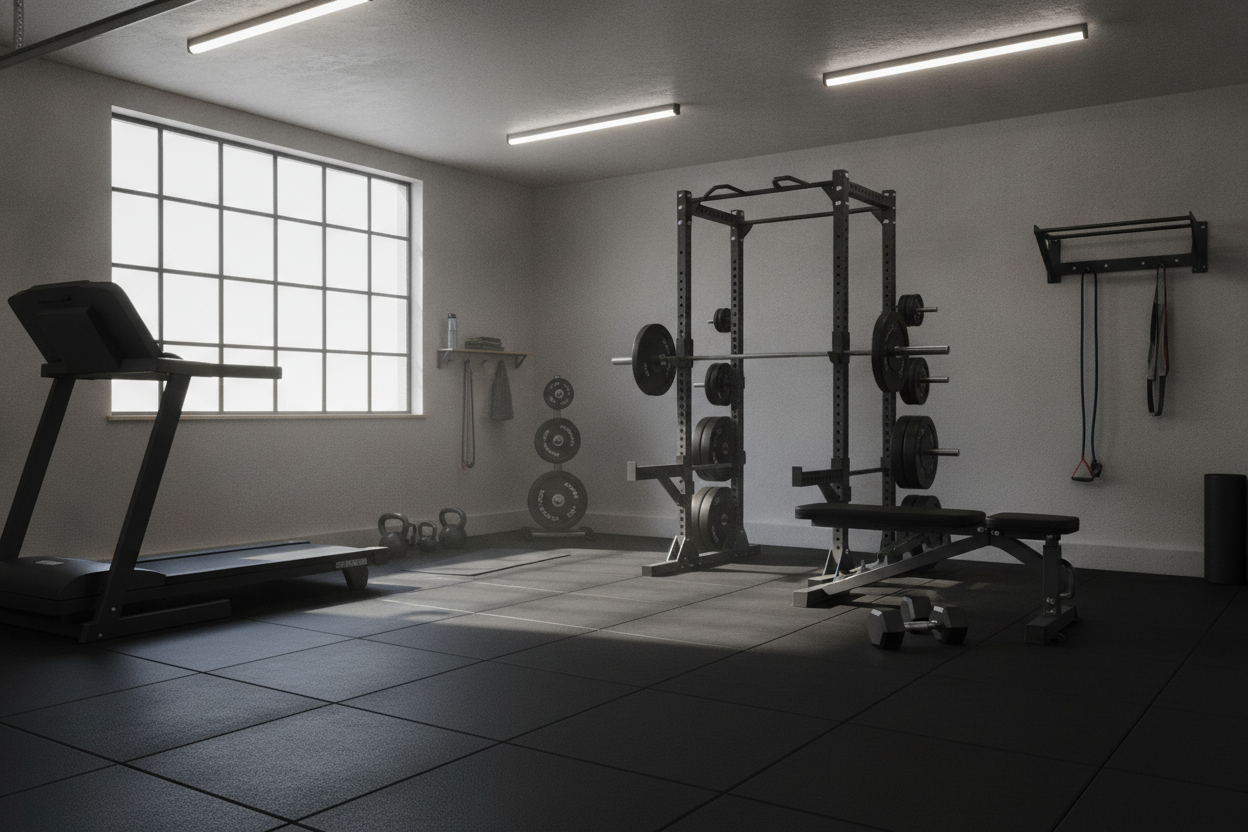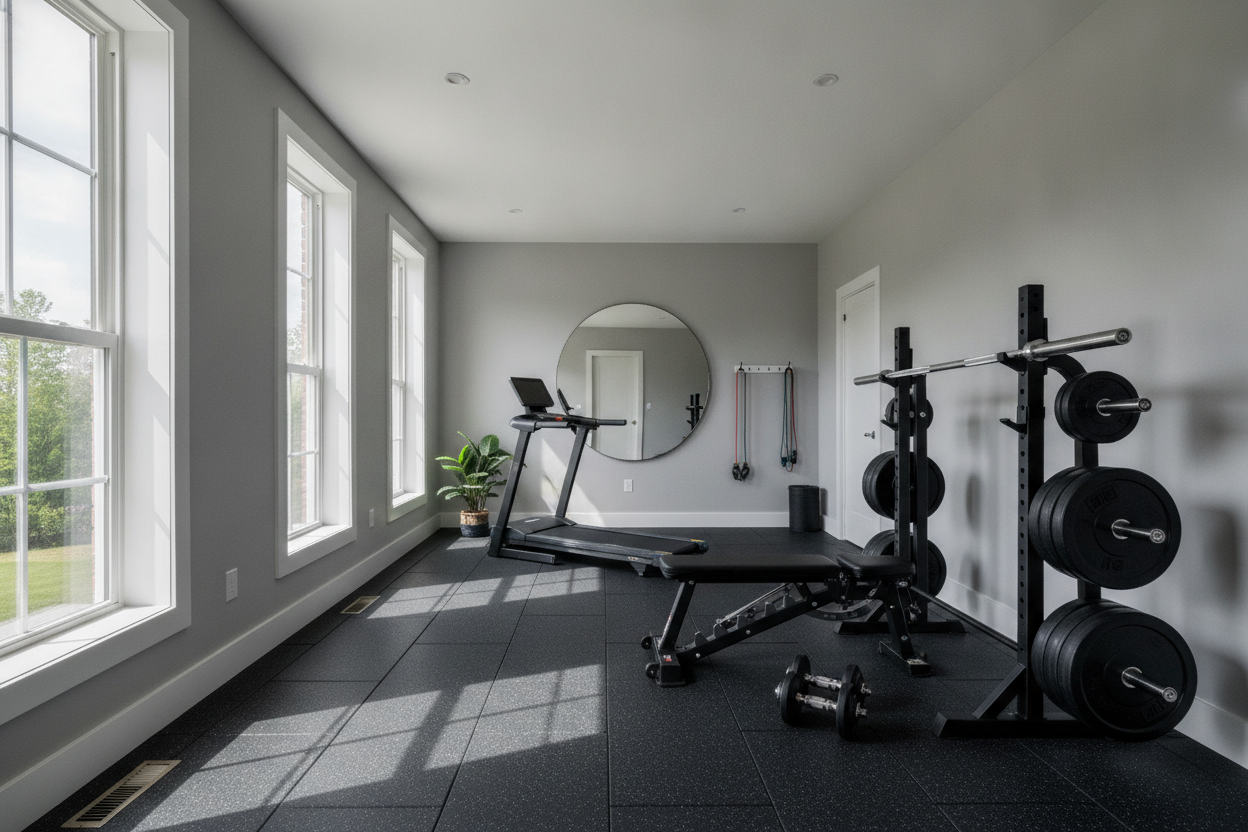
I Replicated Every Gym Exercise at Home Using Just 3 Things
I remember staring at a $3,000 functional trainer online, convinced I couldn't build a back without it. Then I looked at my bank account and my cramped one-car garage. I realized I was overcomplicating a simple problem: moving weight against gravity. Performing a gym exercise at home shouldn't require a commercial lease or a second mortgage.
- Machines are just fancy ways to apply tension; your muscles can't tell the difference between a cable and a dumbbell.
- Mastering five basic movement patterns covers about 95% of the results you see in a commercial gym.
- Dumbbells and a solid floor are more versatile than a 12-station cable rig will ever be.
- Stop buying 'as seen on TV' gadgets and stick to heavy, durable basics that won't break when you actually use them.
The Big Mistake We Make When Leaving the Commercial Gym
We get paralyzed by the 'missing' machine. You think you need a Pec Deck to grow a chest or a dedicated Leg Extension station to see quad definition. That is a mental trap that keeps people from ever starting their home setup.
I have seen guys wait months to start training because they didn't have a specific preacher curl bench. In reality, a heavy set of dumbbells and a sturdy chair do the exact same thing. The commercial gym sells you variety, but the home gym requires focus.
The machine-heavy mindset also leads to clutter. You buy a cheap, wobbly leg extension attachment that takes up four feet of space and ends up as a clothes rack. Forget the machines. Focus on the stimulus.
Stop Chasing Equipment, Start Chasing Movement Patterns
If a movement is a push, pull, hinge, squat, or carry, you are covered. A Leg Press is just a squat with a backrest. A Lat Pulldown is just a pull from an overhead position. When you think about a gym exercise home setup through the lens of biomechanics, the equipment list shrinks fast.
I categorize everything by how the joints move. If I need to hit my posterior chain, I'm hinging. If I need to hit my lats, I'm pulling. You don't need a row of 20 machines to satisfy these patterns.
Most people overcomplicate their gym moves at home because they try to mimic the exact 'feel' of a cable. Cables are great for constant tension, but heavy free weights build the kind of stabilizing strength that machines actually bypass. Embrace the instability; it is where the real work happens.
The 'Big Three' Machine Replacements You Actually Need
Leg press? Grab heavy dumbbells and do Bulgarian Split Squats. It is arguably harder and builds better core stability. Cable rows? Use a single heavy dumbbell and a bench or even the edge of a sturdy table. Chest flies? Floor flies protect your shoulder capsules while hitting the same fibers as the fancy machine at the club.
By adapting gym exercise at home, you realize the 'limitations' of home gear are actually benefits. You are forced to move in a more natural, three-dimensional way.
I personally swapped my cable crossovers for weighted pushups and floor presses. My shoulders have never felt better. Most commercial machines are built for the 'average' person, but your home gear can be adjusted specifically to your limb length and range of motion.
Why Your Floor is the Ultimate Unsung Hero
Don't lift on bare concrete or thin carpet. It is slippery, loud, and ruins your equipment the first time you set a weight down too hard. I use a 6x8ft exercise mat because it gives me enough runway for lunges without sliding into the water heater.
Stability is the foundation of force production. If your feet are sliding during a heavy goblet squat, you aren't training your legs; you're just trying not to fall over. A high-density mat absorbs the shock when you drop a 50lb bell after a grueling set of rows.
It also defines your 'territory.' In a small space, having that designated 6x8 foot zone tells your brain it's time to work. It keeps the sweat off your floor and the noise away from your neighbors.
Putting It Together: A Sample Blueprint
Focus on one heavy compound move, then two accessories. For gym moves at home, keep it simple: Goblet squats, DB Rows, and Floor Press. You can find more detail on mastering exercise at home gym if you want a full 12-week block.
I spent years thinking I needed more stuff. My garage was full of half-baked attachments that didn't fit right. Now, I have a set of adjustable dumbbells, a solid mat, and a bench. That's it.
The results didn't come from the gear; they came from the consistency of having no excuses left. When your gym is ten feet away, 'I didn't have time to drive there' stops working as an excuse.
Is home equipment as durable as commercial gear?
Usually not, but it doesn't have to be. Commercial gear is built for 18 hours of daily abuse. Your home gear only needs to survive you. Look for solid steel and high-density rubber over plastic parts.
Can I really build muscle without cables?
Absolutely. Cables are just one way to provide resistance. Your muscles respond to mechanical tension. Whether that tension comes from a $5,000 pulley system or a $50 dumbbell, the hypertrophy process remains the same.
How much space do I actually need?
If you can lie down and spread your arms without hitting a wall, you have enough space. A 6x8 foot area is the 'goldilocks' zone for most people to perform every major lift safely.