Why Most At Home Beginner Workouts Are Actually Designed for Pros
I remember my first attempt at a 'beginner' fitness video. Ten minutes in, I was wheezing on my living room carpet while a 22-year-old instructor with a permanent six-pack told me to 'just keep pulsing.' It was demoralizing, painful, and entirely unnecessary. Most at home beginner workouts you find on social media are actually high-intensity interval training (HIIT) disguised as entry-level fitness. They aren't designed to help you get started; they're designed to keep you clicking.
- Avoid plyometrics (jumping) until you have a strength foundation.
- Focus on three core movements: Push, Pull, and Squat.
- Consistency is more important than how much you sweat.
- Invest in a dedicated floor surface to protect your joints and prevent slips.
The YouTube 'Beginner' Trap That Sets You Up to Fail
YouTube influencers are in the business of entertainment, not education. When you search for a basic beginner workout at home, you’re served videos with high production value and instructors who haven't been true beginners in a decade. They throw 50 burpees and mountain climbers at you because it makes you sweat, and sweat feels like progress. But for a novice, this is a trap. High-intensity cardio masquerading as starter exercises at home leads to three things: extreme soreness that makes you quit, sloppy form that leads to injury, and a mental association that exercise equals suffering.
Real home fitness for beginners shouldn't leave you gasping for air on the floor; it should leave you feeling like you moved with intent. Most of these videos ignore the reality of neurological adaptation—the process where your brain learns how to actually fire your muscles. If you're just flailing around to keep up with a timer, you aren't building muscle; you're just practicing bad habits. We need to stop equating 'exhaustion' with 'effectiveness.' A successful workout is one you can repeat 48 hours later without needing an ice bath.
Stop Jumping: The Rule for Starter Exercises at Home
The first rule of my 'No-BS' beginner guide? Stop jumping. Your joints, specifically your knees and ankles, aren't ready for the impact of plyometrics yet. If you haven't mastered a standard bodyweight squat, why on earth are you trying to do a jump squat? It’s a recipe for tendonitis and shin splints. Plus, most people are doing these movements on hardwood floors or thin, slippery carpets. Without a dedicated, grippy surface like a 6X4Ft Yoga Mat Exercise Mat Gym Flooring For Home Workout, you're one sweaty palm away from a faceplant during a plank.
You need a non-slip foundation where you can focus on static strength and controlled movement. Jumping is an advanced skill that requires significant eccentric strength—the ability to absorb force. Beginners usually lack this, leading to 'heavy' landings that rattle your spine and annoy your downstairs neighbors. Build the muscle first by keeping your feet on the floor; the explosive power can come six months from now when your connective tissue has actually hardened.
A Genuinely Basic Beginner Workout at Home
Let's talk about a genuinely basic beginner workout at home. You don't need a 45-minute circuit. You need three movements performed with perfect form. First: The Incline Push-up. Forget push-ups on your knees; they don't teach you how to hold a proper plank. Use your kitchen counter or the back of a sturdy sofa. This allows you to keep your body in a straight line while reducing the load on your chest and shoulders. As you get stronger, move to a lower surface like a coffee table.
Second: The Box Squat. Find a chair. Stand in front of it, sit down slowly until your butt barely touches the seat, then drive back up through your heels. This fixes the common 'knees-first' mistake beginners make and protects your lower back. Third: The Glute Bridge. Lie on your back, feet flat, and lift your hips toward the ceiling. This is the best beginner at home workout move because it wakes up your glutes—which probably haven't fired properly since you started your desk job. Do 3 sets of 10 for each. It won't make a cool social media post, but it will actually make you stronger without wrecking your body.
How to Start Exercise for Beginners at Home (And Actually Stick to It)
The secret to how to start exercise for beginners at home isn't a '30-day shred' program. It's the 'Rule of Three.' Commit to three days a week, twenty minutes a day. That's it. Your ego will tell you to do more, but your ego is what got you to quit last time. Consistency is the only metric that matters in the first 90 days. If you're too sore to move on Wednesday, you did too much on Monday. Scale back until the movement feels challenging but repeatable.
Once you can hit those three sessions a week without fail for a full month, you've earned the right to look for something more complex. At that point, you might transition into one of the Best At Home Workout Programs For Beginners Start Smart to keep yourself challenged. But until then, stay in your lane. Track your progress by how many clean reps you do, not by how many calories your watch says you burned. Strength is a skill, and like any skill, it requires practice, not just effort.
Setting Up Your Living Room for Success
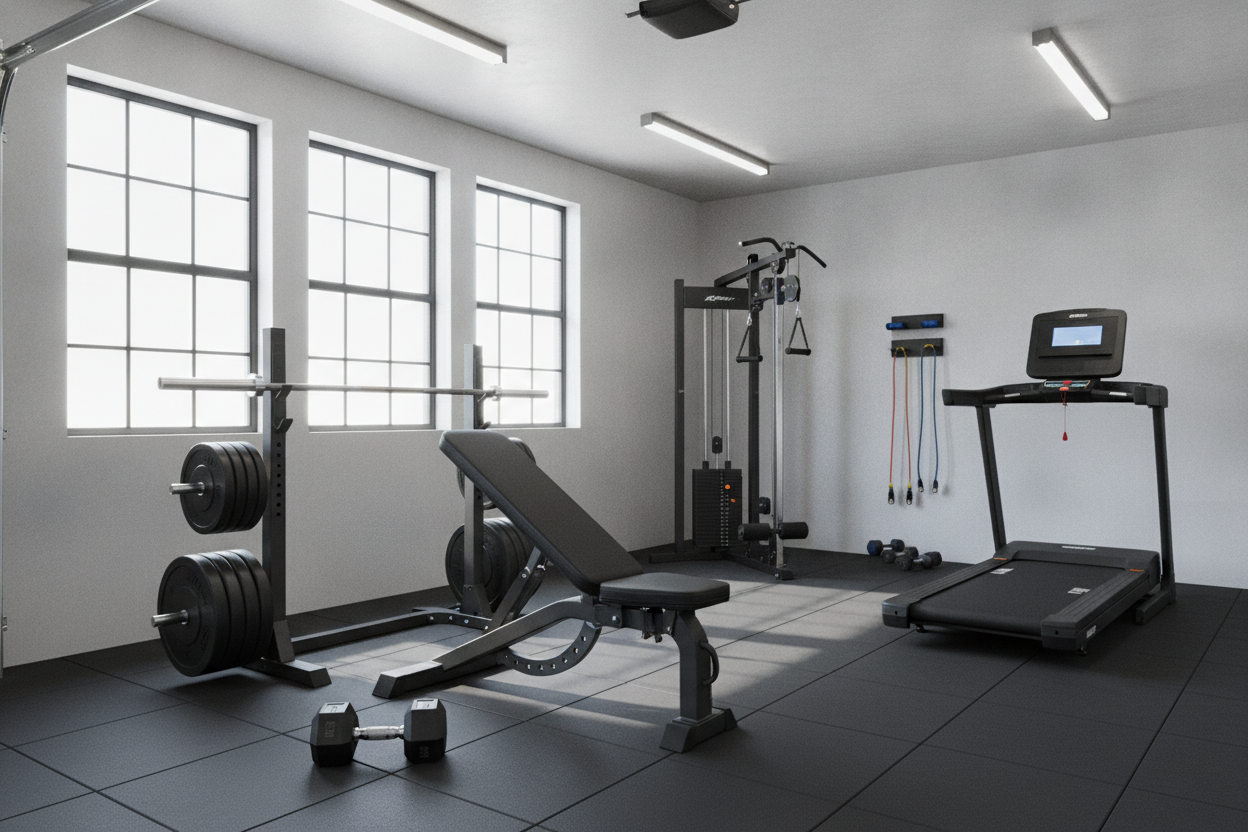
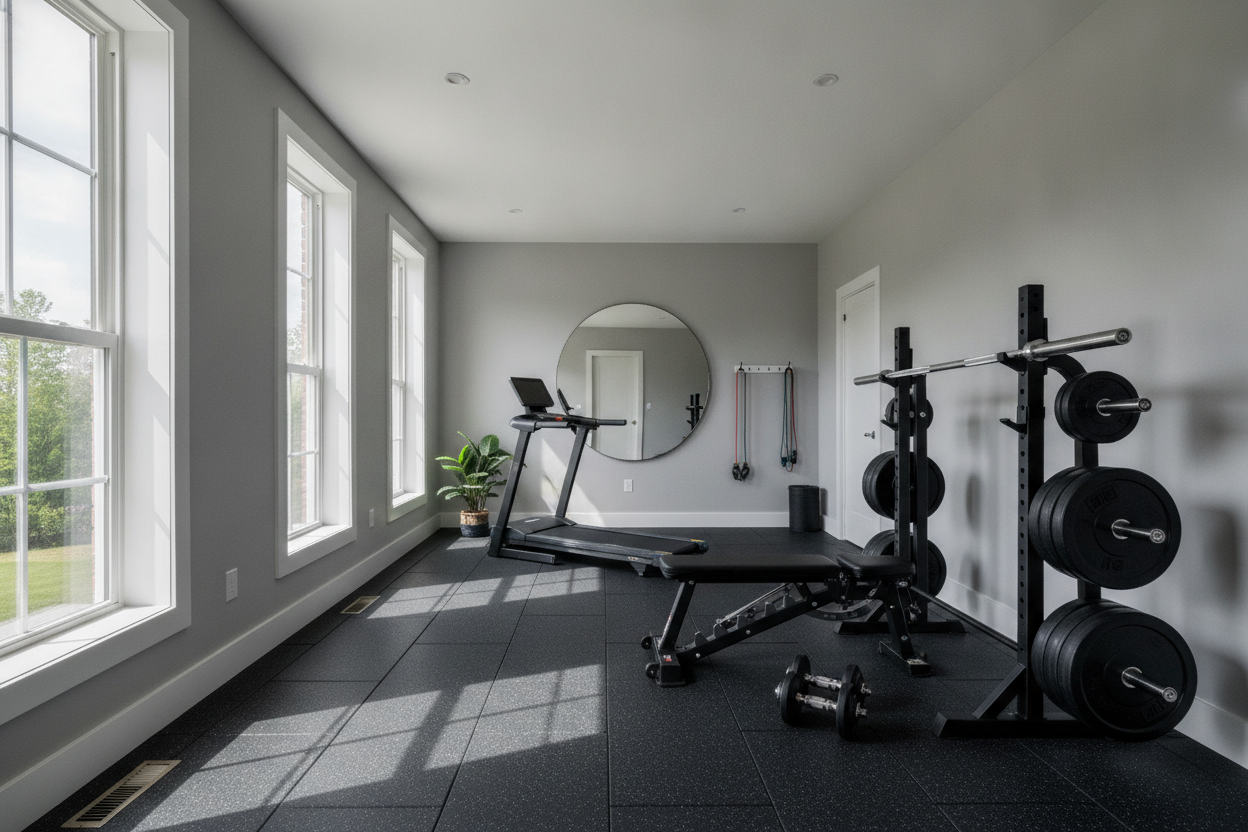
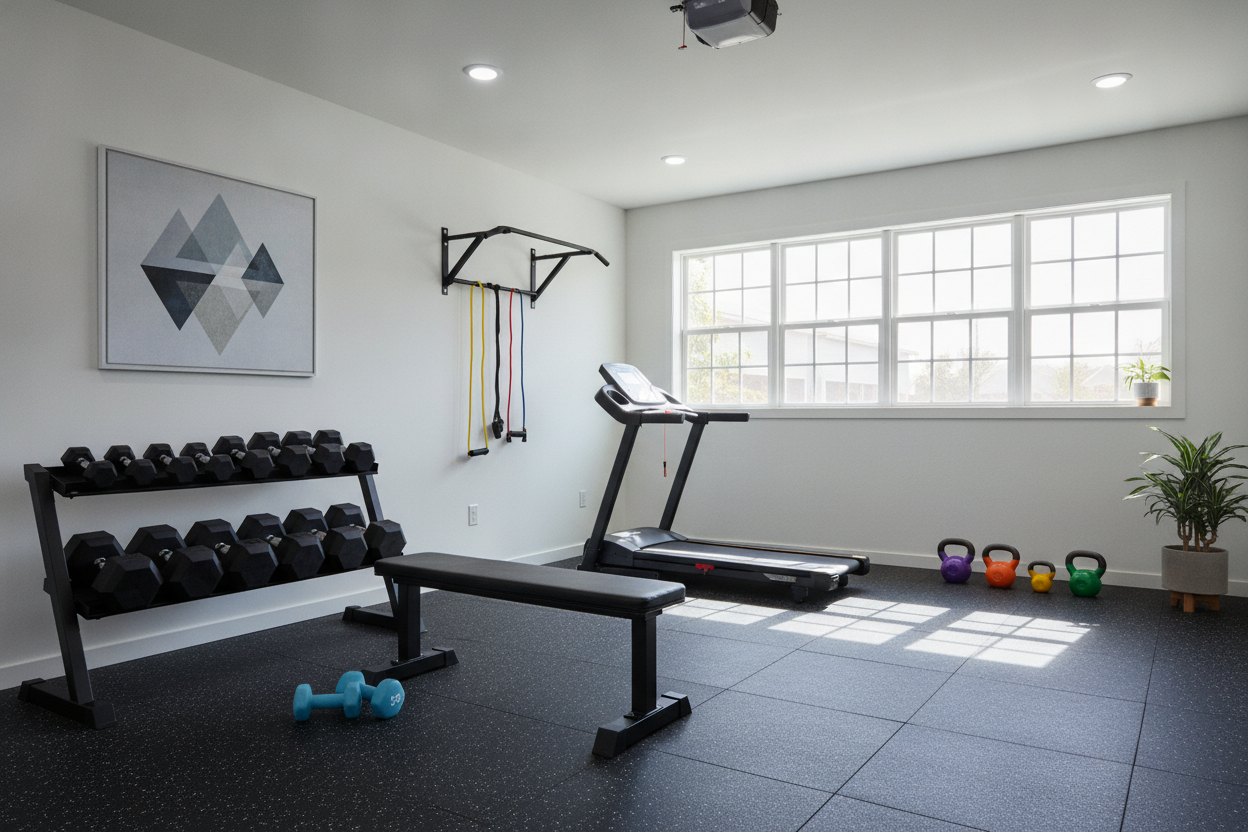
Your environment dictates your success. You can't effectively do beginner exercise at home if you're tripping over a rug or dodging a coffee table. Clear out a dedicated 6x6 foot space. If you're working on a hard floor, your knees will hate you by week two. I’m a huge advocate for transforming a corner of your room with a Large Exercise Mat For Home Gym. It protects your floor, mutes the noise, and psychologically tells your brain that when you’re on that mat, you’re working.
Treat your home gym—even if it's just a corner of the living room—with respect. Remove distractions, put your phone on 'Do Not Disturb,' and make sure you have enough overhead clearance. A small investment in flooring and space preparation makes the difference between a workout that feels like a chore and one that feels like a professional training session.
Personal Experience: My 'Sand-Filled' Mistake
When I first started training at home, I bought a set of cheap, plastic-coated dumbbells from a big-box store. Within a month, the plastic cracked and they started leaking sand all over my carpet. I also tried to follow a 'Hardcore Ab Shred' video that had me doing 100 crunches a day. By day five, my neck hurt so bad I couldn't turn my head to check my blind spot while driving. I realized I was trying to run before I could crawl. I stripped everything back to basic lunges and planks, and that's when the real progress finally started happening.
FAQ
Do I need to wear shoes for home workouts?
If you have a high-quality, cushioned mat, training barefoot is actually great for building foot and ankle stability. However, if you're on tile or thin carpet, wear a supportive pair of cross-trainers to protect your arches.
How long should a beginner workout last?
Forget the hour-long sessions. 15 to 25 minutes of focused, high-quality movement is plenty for a beginner. If you go longer, your form usually breaks down, increasing your risk of injury.
Can I do these exercises every day?
No. Your muscles grow and repair while you rest, not while you're working out. Aim for every other day. Giving your central nervous system time to recover is just as important as the workout itself.