I Refuse to Do Body Strength Exercises That Require a Spotter
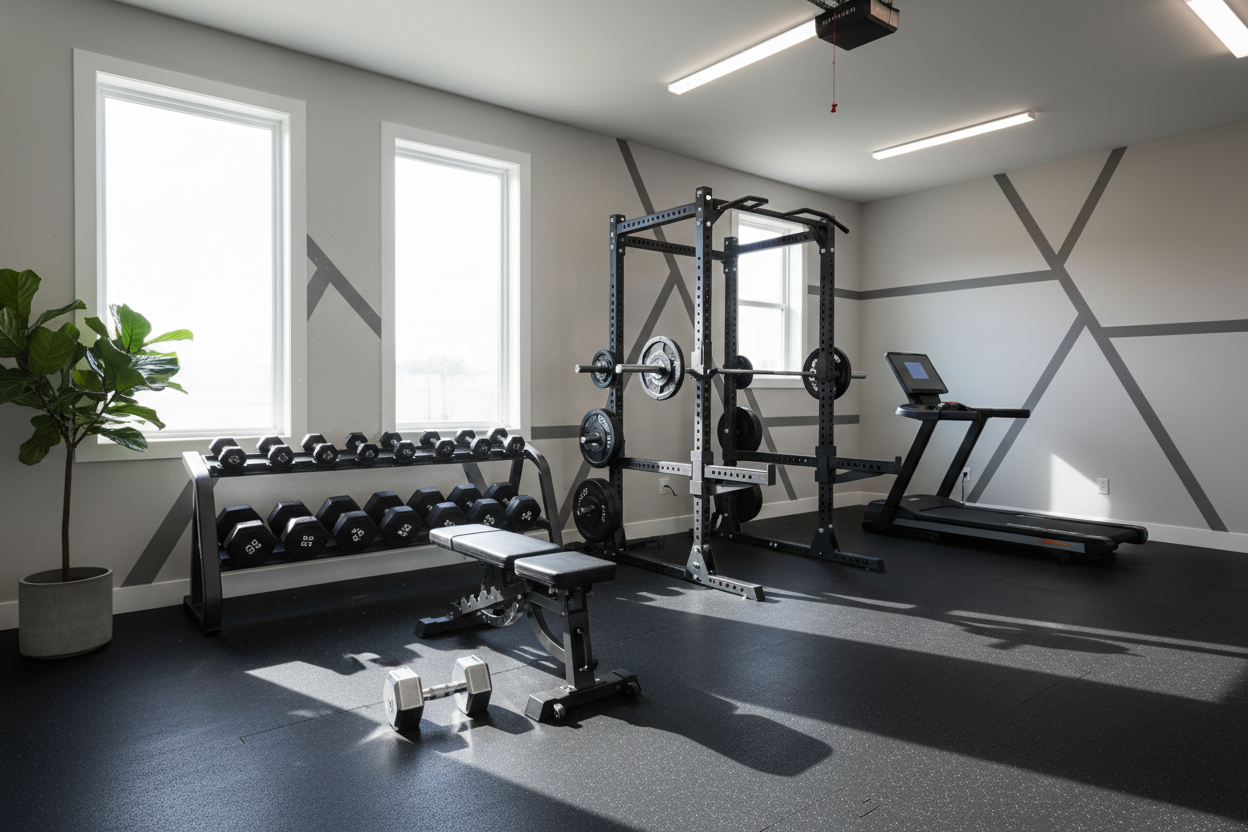
It is 11:15 PM. My garage is cold, the neighbors have been asleep for hours, and I am staring at a barbell loaded with 275 pounds. In a commercial gym, I would grab a random guy and ask for a lift-off. Here, it is just me and my 11-gauge steel rack. If I miss this rep on a standard bench press, I am performing the 'Roll of Shame' across my diaphragm, or worse, getting pinned. That is why I have fundamentally changed how I approach body strength exercises.
Training alone forces a specific kind of honesty. You cannot rely on a partner to pull the bar off your chest when your triceps give out. You have to choose movements that allow for a clean exit. This is not about training light; it is about training smart enough to survive to the next session. If an exercise requires a 'save' from a human being, it does not belong in my solo routine.
- Bailability is King: Every lift must have a clear, safe way to fail without injury.
- Dumbbells Over Barbells: For chest and shoulder pressing, dumbbells allow you to simply drop the weight to the side.
- Front-Loaded Squats: Front squats and Zercher squats are easier to dump forward than back squats are to dump backward.
- Mechanical Safeties: Use spotter arms and pin-pipe safeties on every single set, no matter how light it feels.
The Harsh Reality of Lifting Heavy in an Empty Garage
There is a specific kind of ego that dies when you start training in a garage. In a public gym, you want to look strong. In a garage, you just want to finish the set without a trip to the ER. I have seen too many guys try to max out on a barbell bench press without a rack or spotter. It is a recipe for a crushed windpipe. When you are the only soul in the room, the stakes of failure change from 'embarrassing' to 'catastrophic'.
Adapting your exercise selection is not a sign of weakness. It is a survival strategy. I have spent years testing the limits of what a person can safely do alone. The reality is that your nervous system behaves differently when it knows there is no safety net. You might think you are pushing hard, but your brain often holds back a few percentage points of effort out of pure self-preservation. By choosing fail-safe movements, you actually give yourself the mental 'green light' to push closer to true muscular failure.
I have had to ditch the standard back squat for weeks at a time because I didn't trust my ability to dump the bar if my lower back flared up. I have swapped the guillotine-style bench for floor presses and weighted push-ups. These changes didn't kill my gains; they made them more consistent because I was never sidelined by a 'freak accident' during a solo session.
My Golden Rules for Picking Fail-Safe Body Strength Exercises
When I am looking at adding a new movement to my program, I put it through the 'Bail Test'. If I am at the bottom of the rep and my muscles completely shut down, what happens to the weight? If the answer is 'it stays on top of me,' the exercise is out. I prioritize mechanical tension and high-yield movements that offer an immediate exit strategy.
This starts with investing in reliable strength equipment. A rack that wobbles when you re-rack 225 pounds is a liability. You need spotter arms that are rated for more than you can lift. I prefer heavy-duty flip-down safeties because they give you a wide target if you have to dump a squat. If your gear doesn't have built-in safety features, you are essentially gambling with every heavy set.
My second rule is prioritizing unilateral work. Exercises like Bulgarian split squats or single-arm overhead presses are inherently safer because you always have one limb free to stabilize yourself or guide the weight down. Plus, the stabilization required for these movements builds a level of core density that standard bilateral lifts often miss. You are not just building muscle; you are building a body that is harder to break.
Upper Body Push and Pull: Ditching the Barbell Bench
The barbell bench press is the most dangerous exercise for a solo lifter. Period. If you don't have a power rack with properly set safeties, you are inviting disaster. I have shifted my primary heavy chest work to dumbbell chest workouts. If I hit a sticking point with 100-pound dumbbells, I just open my hands and let them hit the stall mats. It is loud, but I am alive.
For vertical pressing, I prefer the seated dumbbell press or the Viking press attachment on a landmine. Both allow for a safe bailout. For pulling movements, the risk is lower, but I still favor chest-supported rows over heavy bent-over barbell rows. It keeps the ego in check and prevents the 'cheat' reps that lead to lower back tweaks when you are tired. Weighted chin-ups are my go-to for heavy pulling—if you fail, you just drop to your feet. It is the ultimate fail-safe strength builder.
Lower Body Grinds That Won't Trap You
Training legs to failure is a special kind of torture, but doing it alone requires a specific setup. I have almost entirely replaced the low-bar back squat with the front squat. Why? Because if I can't get out of the hole, I just push the bar forward and step back. The bar hits the floor, and I am fine. It also forces a more upright torso, which is generally friendlier on the spine during high-volume body strength workouts.
If I really want to push the volume without any risk of spinal loading, I will move to a lower body strength machine like a belt squat or a heavy-duty leg press. These machines have physical stops that prevent the weight from crushing you. It allows me to take my quads to the point of absolute quivering failure—the kind where you can't stand up for five minutes—without worrying about a barbell pinning me to the floor. It is about using the right tool for the intensity level you are trying to reach.
Structuring Your Solo Body Strength Workouts
Building a routine without a spotter means you have to be your own coach. I like to start my sessions with a 'Big Lift' that has a high safety ceiling—like a trap bar deadlift or a front squat inside a rack with safeties. These are my primary strength builders where I stay in the 3-5 rep range. I never take these to absolute technical failure; I always leave one rep in the tank.
Once the heavy work is done, I transition to the 'Safe Failure' movements. This is where I use dumbbells, cables, or machines to chase hypertrophy. Since the risk of being pinned is zero, I can push these sets until the muscle literally stops moving. This structure ensures I get the heavy loading needed for bone density and central nervous system adaptation while still getting the high-volume metabolic stress required for muscle growth.
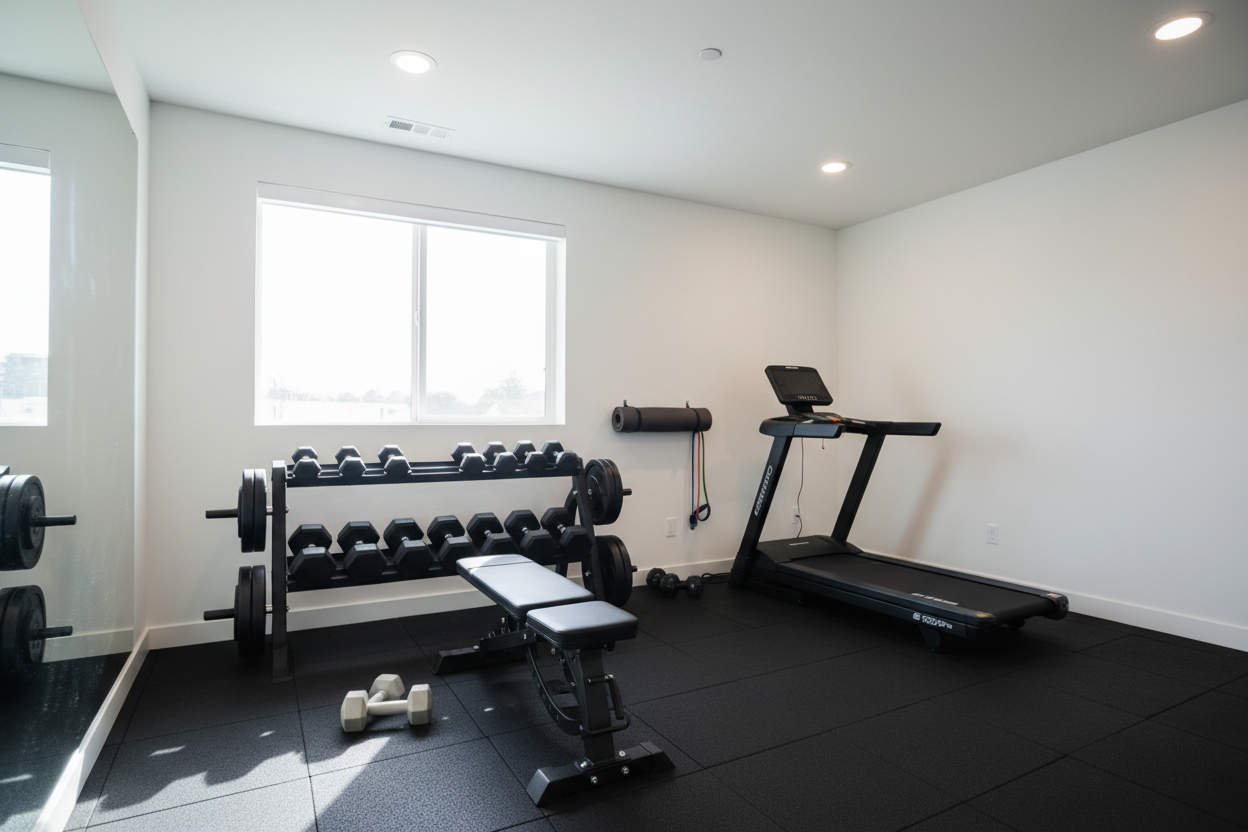
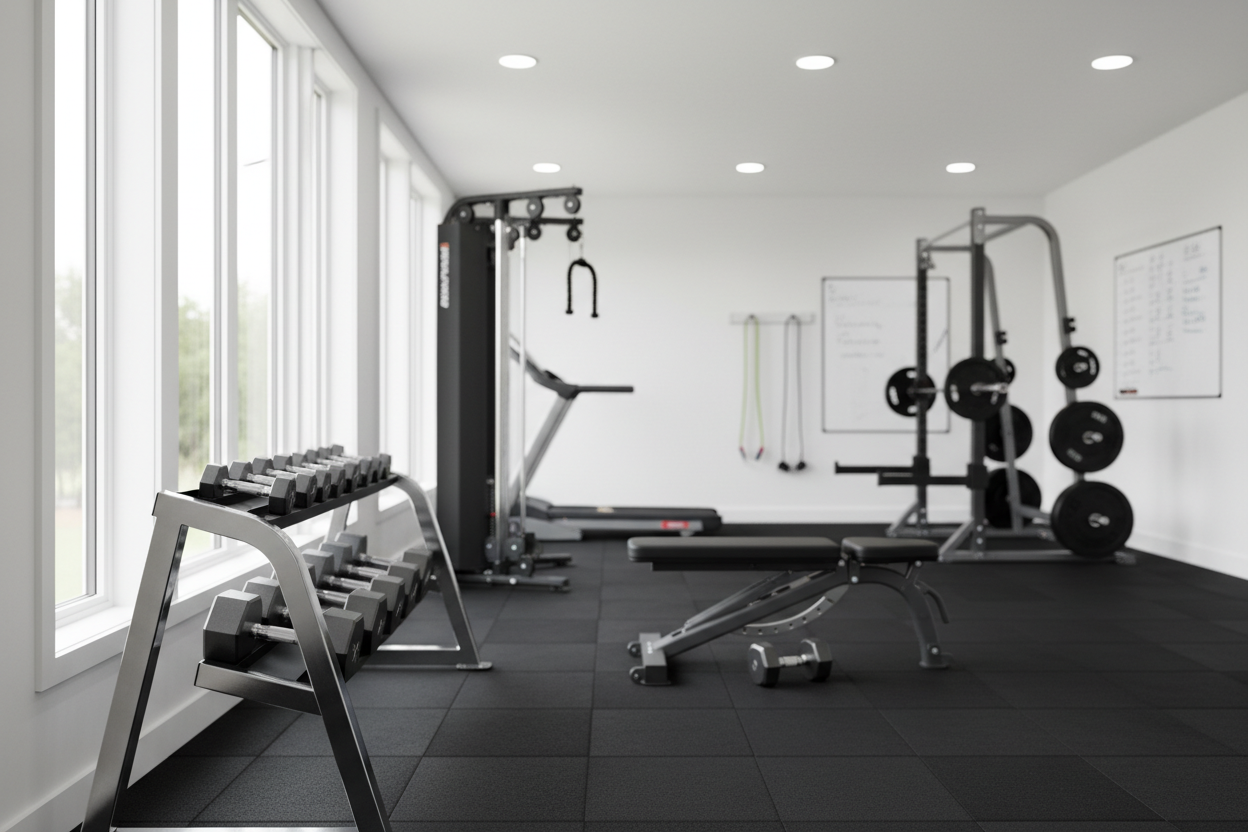
Finally, I make sure my home gym setup for strength is organized for efficiency. I keep my dumbbells close to my bench and ensure my rack's safety pins are always set to the correct height for the specific lift I am doing. It takes thirty seconds to adjust them, but it is the difference between a productive workout and a disaster. Training alone isn't a limitation; it is an opportunity to master your own mechanics and build a resilient, self-reliant physique.
Personal Experience: The 315-lb Wake-Up Call
A few years ago, I was feeling invincible. I was going for a PR on the back squat in my garage. No spotter arms—just me and the bar. I hit the bottom, felt a pop in my hip, and realized I wasn't coming back up. I had to awkwardly roll the bar down my spine and hope it didn't take my ears with it. I ended up with a trashed lower back and a massive bruise that lasted a month. That was the last day I ever lifted heavy without a mechanical safety or a clear bail plan. Now, I use a Safety Squat Bar (SSB) for my heavy work. The handles allow me to stay upright, and if I fail, the bar stays centered on my shoulders while I drop it onto the pins. It was a painful lesson, but it made me a much better coach and lifter.
Frequently Asked Questions
Can I build just as much muscle with dumbbells as with a barbell?
Absolutely. Your muscles don't know if you are holding a long metal stick or two short ones. They only respond to tension, stretch, and load. In many cases, dumbbells allow for a greater range of motion and better muscle fiber recruitment because you aren't limited by the bar hitting your chest.
What is the safest way to fail a squat?
If you are back squatting, you should have spotter arms set just below your lowest depth. If you fail, you simply descend a few more inches until the bar rests on the arms, then you crawl out. If you are front squatting, you simply push the bar off your shoulders and let it fall in front of you while you jump back.
Are machines better than free weights for solo trainers?
They aren't 'better' in terms of total muscle activation, but they are 'better' for safety when training to absolute failure. A good mix is best: use free weights for your primary movements and machines to safely blast your muscles at the end of the workout.