I Hate How Complicated We Make Weights Exercises for Beginners
I remember standing in a big box gym years ago, staring at a cable machine that looked like a NASA prototype. I just wanted to get stronger, but every influencer online insisted I needed a complex 6-day split and a degree in biomechanics to see results. It is a lie designed to sell apps and overpriced coaching. If you are looking for weights exercises for beginners, you do not need a lab coat; you need a pair of dumbbells and a floor that can handle a little sweat.
- Focus on movement patterns (Push, Pull, Squat) rather than individual muscles.
- Free weights beat machines for building stability and real-world strength.
- Consistency in the first 30 days matters more than the 'perfect' program.
- Master the form before you worry about the number on the side of the plate.
Why Does the Fitness Industry Make Starting So Damn Hard?
The industry loves to gatekeep. They use terms like 'hypertrophy' and 'eccentric loading' to make simple movements sound like rocket science. It is paralyzing. I have seen too many people quit before they even start because they are worried their elbow is at a 45-degree angle instead of a 30-degree angle. A basic workout with weights should be boring, repetitive, and effective. You do not need a fancy app to tell you to pick up a heavy object and put it back down.
Initial growth does not come from 'confusing the muscle.' It comes from teaching your nervous system how to move. When you are just starting out, your body is incredibly responsive. You could probably get stronger just by carrying your groceries the long way home, but a structured approach will get you there faster without the unnecessary jargon.
Machines vs. Free Weights: Where Should You Actually Start?
You will see a lot of people gravitating toward Weight Lifting Machines because they feel safer. I get it. A machine has a fixed path, so you do not have to worry about a dumbbell wobbling or falling on your face. They are great for isolating specific muscles once you are advanced, but for a beginner, they can actually be a crutch. Machines do the stabilizing work for you.
I always tell people to start with free weights—dumbbells or kettlebells. When you hold a weight in space, your core and all those tiny stabilizer muscles in your joints have to wake up. This builds 'functional' strength that actually carries over to your daily life. If you can balance a 20-lb dumbbell, you can balance a heavy box in the garage. Machines are fine for finishing a workout, but free weights are the main course.
The Only 3 Movement Patterns You Need to Learn First
Stop thinking about 'biceps day' or 'leg day.' That is for bodybuilders who have been training for a decade. For a workout with weights for beginners, you only need to master three basic patterns: Push, Pull, and Squat. If you do these, you hit every major muscle group in your body without needing a map of the human anatomy.
Pushing (Without Wrecking Your Shoulders)
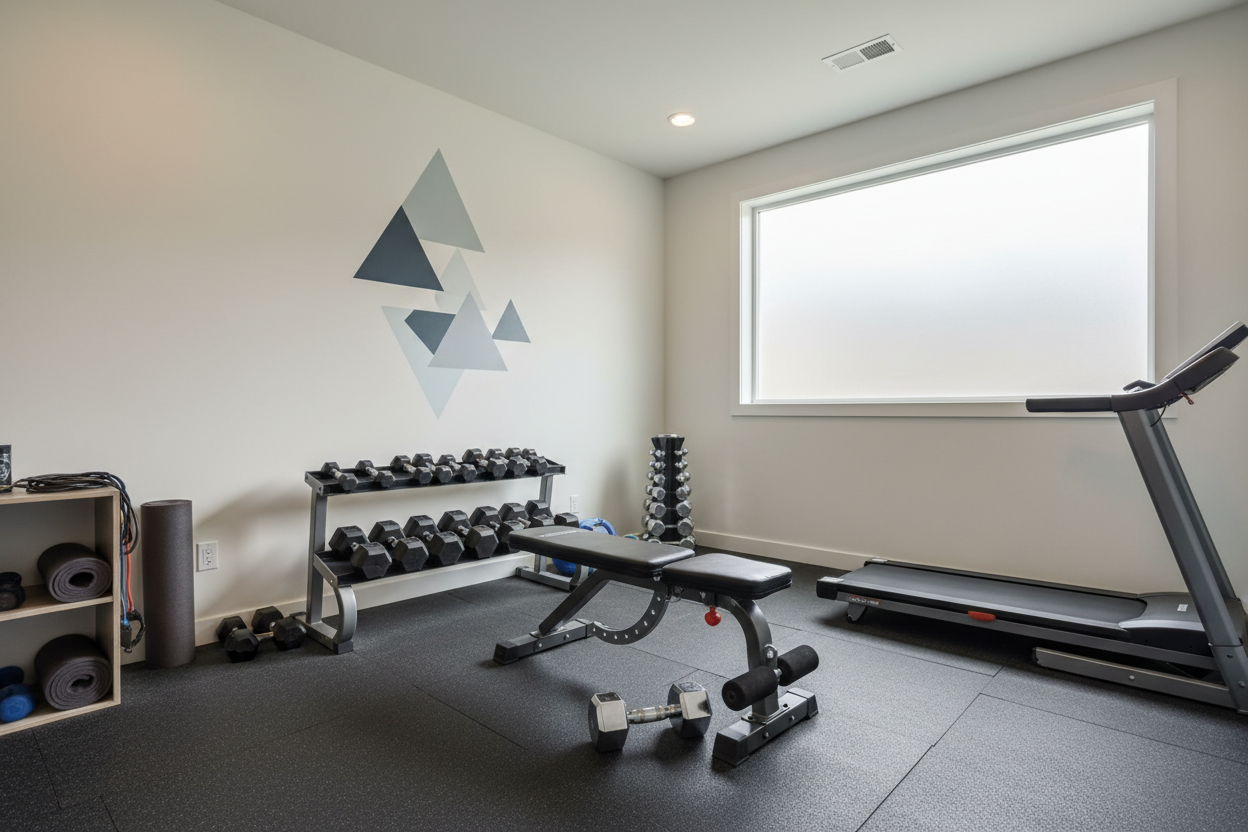
The dumbbell floor press is my go-to for beginners. It is safer than a barbell bench press because the floor prevents your elbows from dropping too low and straining your shoulders. You need a stable surface, and while the floor works, eventually you will want a Gxmmat Adjustable Weight Bench to allow for a full range of motion. Focus on tucking your elbows slightly toward your ribs rather than letting them flare out like wings. Squeeze your shoulder blades together like you are trying to hold a pencil between them.
Pulling (Because Everyone Ignores Their Back)
Most of us spend all day hunched over a laptop. The dumbbell row is the antidote. Set one hand on a bench or your knee, keep your back flat like a table, and pull the weight toward your hip. The secret? Pull with your elbow, not your hand. If you focus on your hand, your biceps do all the work. If you drive the elbow toward the ceiling, your lats and mid-back take over, which is exactly what you want for better posture.
Squatting (Yes, You Have to Do It)
Forget the barbell back squat for now. It is too easy to round your back and hurt yourself if your core is not ready. Start with the goblet squat. Hold one dumbbell against your chest like a holy grail. This front-loading naturally forces your torso to stay upright and keeps your weight on your heels. It is the most 'idiot-proof' way to learn how to squat deep without falling over or straining your lower back.
Putting It Together: A Stupid-Simple Easy Weight Workout
Do not overthink this. Pick three days a week—Monday, Wednesday, Friday. Perform 3 sets of 10 reps for each of the movements we just talked about. Rest 90 seconds between sets. That is it. This easy weight workout is designed to build the habit of showing up. Once you can do all 30 reps with perfect form, it is time to grab a heavier weight.
Some people want to jump straight into a high-intensity metabolic workout with weights for weight loss, but I advise against it for the first month. Speed kills form when you are a novice. Learn the mechanics at a slow, controlled pace first. You will still burn calories, but more importantly, you will build a foundation that prevents you from being sidelined by an injury in week three.
When Are You Ready to Upgrade to the Heavy Stuff?
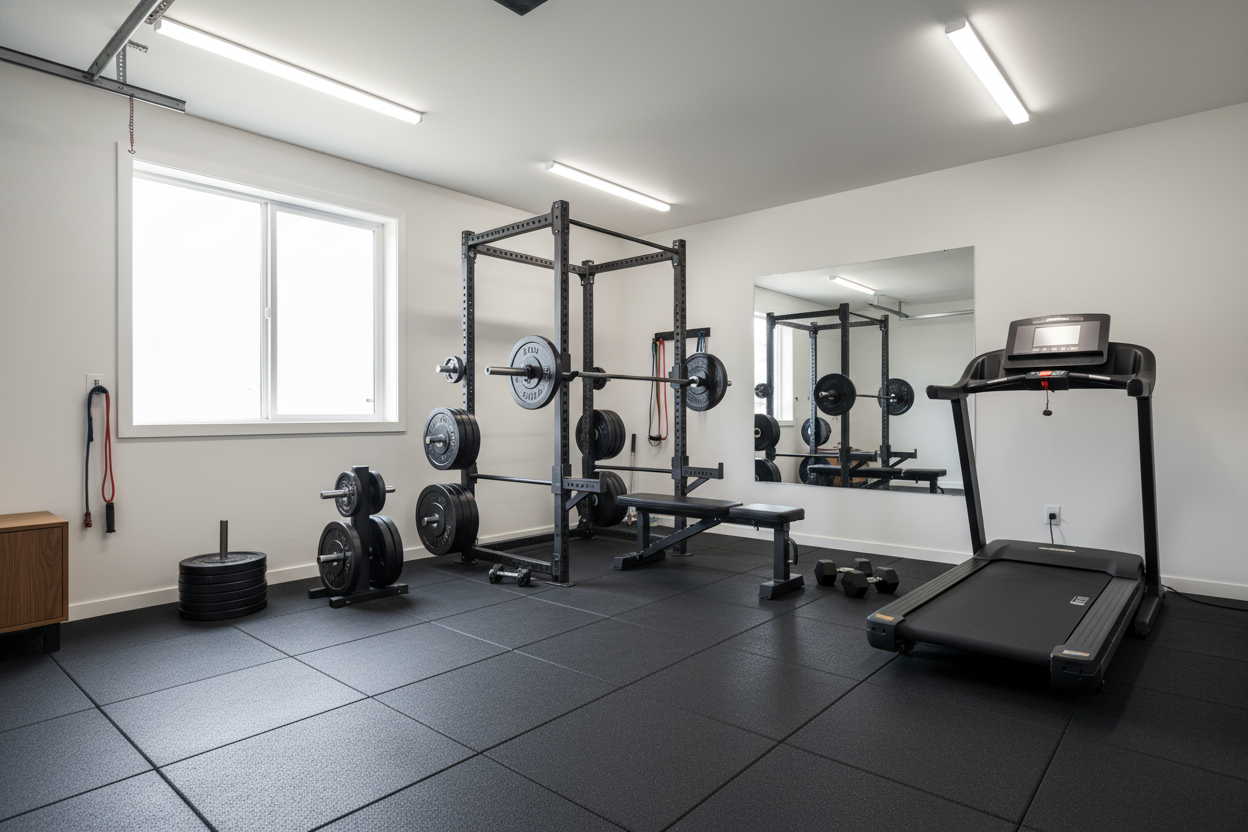
You will know it is time to level up when your 'heavy' dumbbells start feeling like toys. If you are knocking out 15+ reps easily, you have outgrown your current setup. This is usually the point where people realize that a few loose dumbbells in the living room are not enough for long-term progress. If you have the space, the logical next step is a dedicated setup like the Gxmmat X6 Power Rack Weight Bench Package. Having a rack allows you to safely handle much heavier loads, which is where the real strength gains happen.
Personal Experience: My First Garage Fail
I started my journey with a set of plastic-coated, sand-filled weights I bought at a garage sale. They were bulky, awkward, and eventually leaked sand all over my mom's carpet. I tried to follow a complex 'pro' routine I found in a magazine, involving 12 different exercises per session. I lasted two weeks before my joints screamed for mercy. I only started seeing real progress when I stripped everything back to the basics: rows, presses, and squats. I realized that 30 minutes of focused, simple work is worth more than two hours of confused wandering around a gym floor.
FAQ
How much weight should I start with?
Pick a weight you can move for 10 reps where the last two feel difficult but your form does not break. If you are shaking like a leaf on rep five, it is too heavy.
Should I lift every day?
No. Your muscles grow while you rest, not while you are lifting. For beginners, 3 or 4 days a week is the sweet spot. Anything more usually leads to burnout.
What if I do not have a bench?
You can do floor presses for your chest and use a sturdy chair or the side of a couch for supported rows. Do not let a lack of gear be an excuse to skip the workout.