I Dropped Arm Day For These compound exercises for upper body
I remember standing in my garage at 9 PM, staring at a pair of 25-lb dumbbells and wondering why my physique looked exactly the same as it did six months ago. I was following the standard bodybuilding split, hitting 12 sets of curls and triceps extensions, chasing a pump that vanished before I even finished my post-workout shake. I was exhausted, but I wasn't getting bigger or stronger.
The reality is that most home lifters waste 45 minutes on 'junk volume'—isolation moves that feel hard but don't actually force the body to grow. I finally saw real progress when I stripped my routine down to the essentials. By prioritizing compound exercises for upper body development, I stopped taxing my joints and started taxing my central nervous system in a way that actually built dense, functional muscle.
Quick Takeaways
- Isolation work is often 'junk volume' that drains energy without providing enough stimulus for total body growth.
- Multi-joint lifts recruit more muscle fibers and trigger a significantly higher hormonal response.
- The 'Big 4' (Press, Pull-up, Row, Dip) are all you need for a thick, powerful upper body.
- Stability matters: your lifts are only as strong as the floor you're standing on.
The Trap of Chasing the Arm Day Pump
We've all been there. You see a pro bodybuilder on YouTube doing fifteen variations of cable flys and think that's the secret. In a garage gym setting, where time and equipment are often limited, this approach is a trap. Spending your limited energy on triceps kickbacks before you've even touched a barbell is a recipe for mediocrity.
An upper body compound workout isn't just about efficiency; it's about intensity. When you perform an upper body compound exercise, you're forcing multiple muscle groups to coordinate under heavy load. This creates a systemic demand that isolation moves can't touch. If you want sleeves that actually fit tight, stop worrying about the peak of your bicep and start worrying about how much weight you can row.
What Actually Qualifies as a Multi-Joint Mover?
To pick the best compound upper body exercises, you have to look at the joints involved. A true compound movement crosses at least two joints—usually the shoulder and the elbow. This allows you to move significantly more weight, which is the primary driver of hypertrophy. Think about the difference between a lateral raise and a standing overhead press. One uses a 20-lb dumbbell; the other uses a 135-lb barbell.
These complex upper body exercises also include exercises that move you through space, often referred to as closed-kinetic chain movements. When your torso moves while your hands stay fixed—like in a pull-up or a dip—the neuromuscular demand is much higher than when you're just moving a weight around your body. These are the upper body compound movements that build 'old man strength'—that dense, hard-to-lose muscle mass.
The 4 Lifts That Completely Rebuilt My Physique
If I could only keep four upper body compound lifts for the rest of my life, these would be them. No fluff, just heavy iron. First is the Standing Overhead Press (OHP). It’s the ultimate test of upper body strength, hitting the delts, traps, and triceps while forcing your core to stabilize like crazy. If your OHP goes up, your bench press will almost certainly follow.
Next, we have Weighted Pull-ups and Barbell Rows. These are the bread and butter of back development. I prefer a Pendlay row where the bar starts dead on the floor every rep—it prevents cheating and builds explosive power. For the chest and triceps, I actually favor heavy weighted dips over the flat bench. Dips are one of the most effective alternative chest exercises because they allow for a deeper stretch and a more natural range of motion for the shoulder joint than being pinned against a bench.
Programming Your New Heavy Routine
You don't need to live in the gym to see results from compound workouts for upper body. In fact, if you're doing them right, you can't. I recommend a 3-day split (Monday, Wednesday, Friday) to allow your central nervous system (CNS) to recover. Heavy upper body combo exercises like the OHP and weighted pull-up are taxing. If you're hitting PRs, your brain needs as much rest as your muscles.
Stick to a 3x5 or 5x5 rep scheme for the big lifts. Rest at least 3 minutes between sets. I know, it feels like a long time when you're used to supersetting curls, but you need that ATP to replenish so you can move maximal weight on the next set. This isn't a cardio session; it's a strength session. If you aren't slightly intimidated by your next set, you aren't lifting heavy enough.
Why Your Pressing Power Starts at the Floor
One mistake I made early on was ignoring my feet during an upper body compound exercise. Whether you're rowing 225 lbs or pressing 155 lbs overhead, your connection to the ground is your anchor. If you're lifting on slippery concrete or squishy carpet, you're leaking energy. You can't fire a cannon from a canoe.
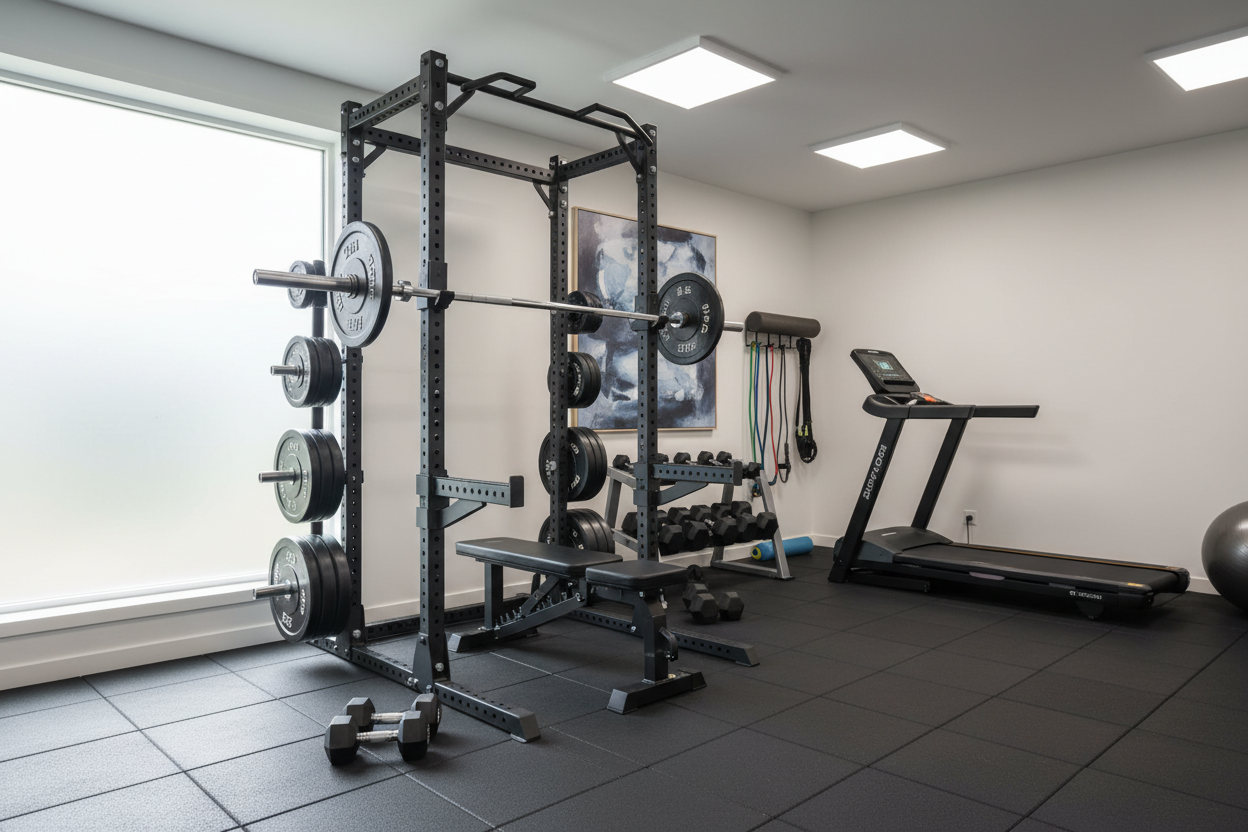
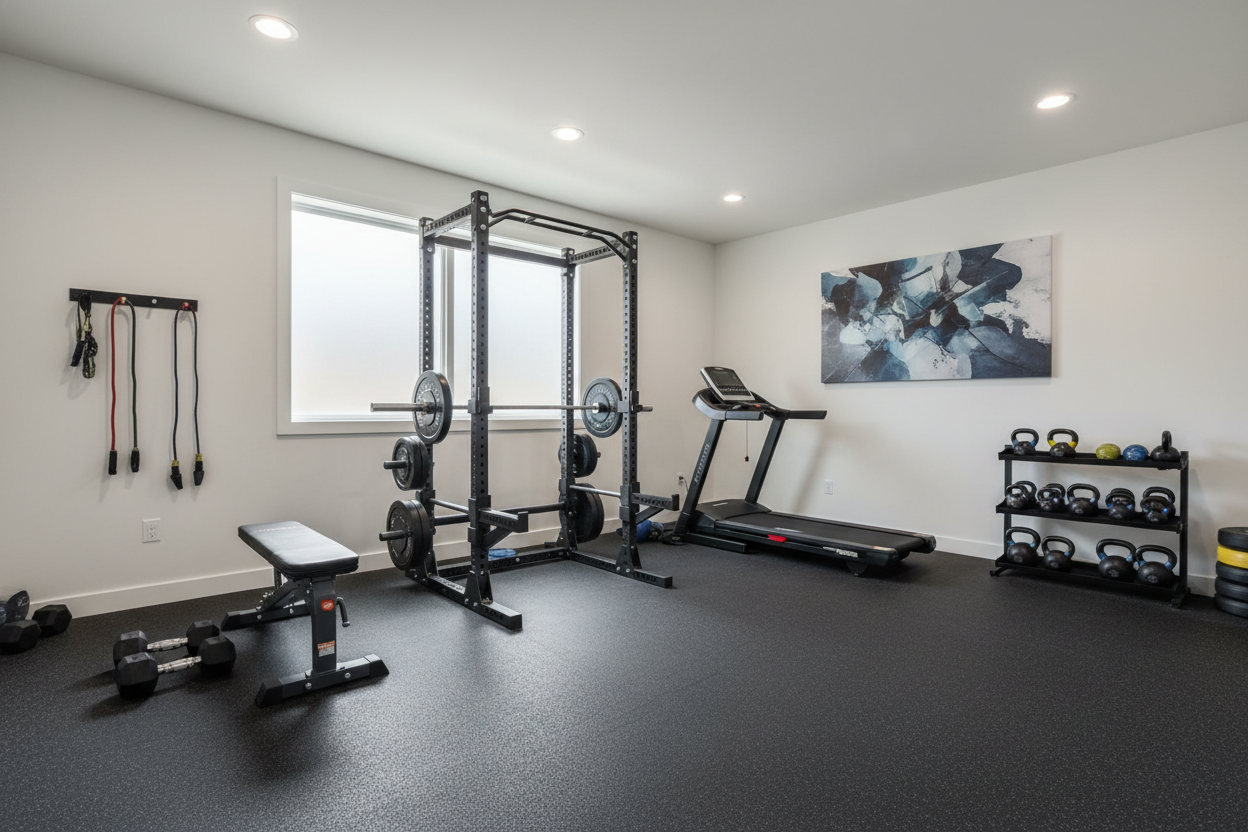
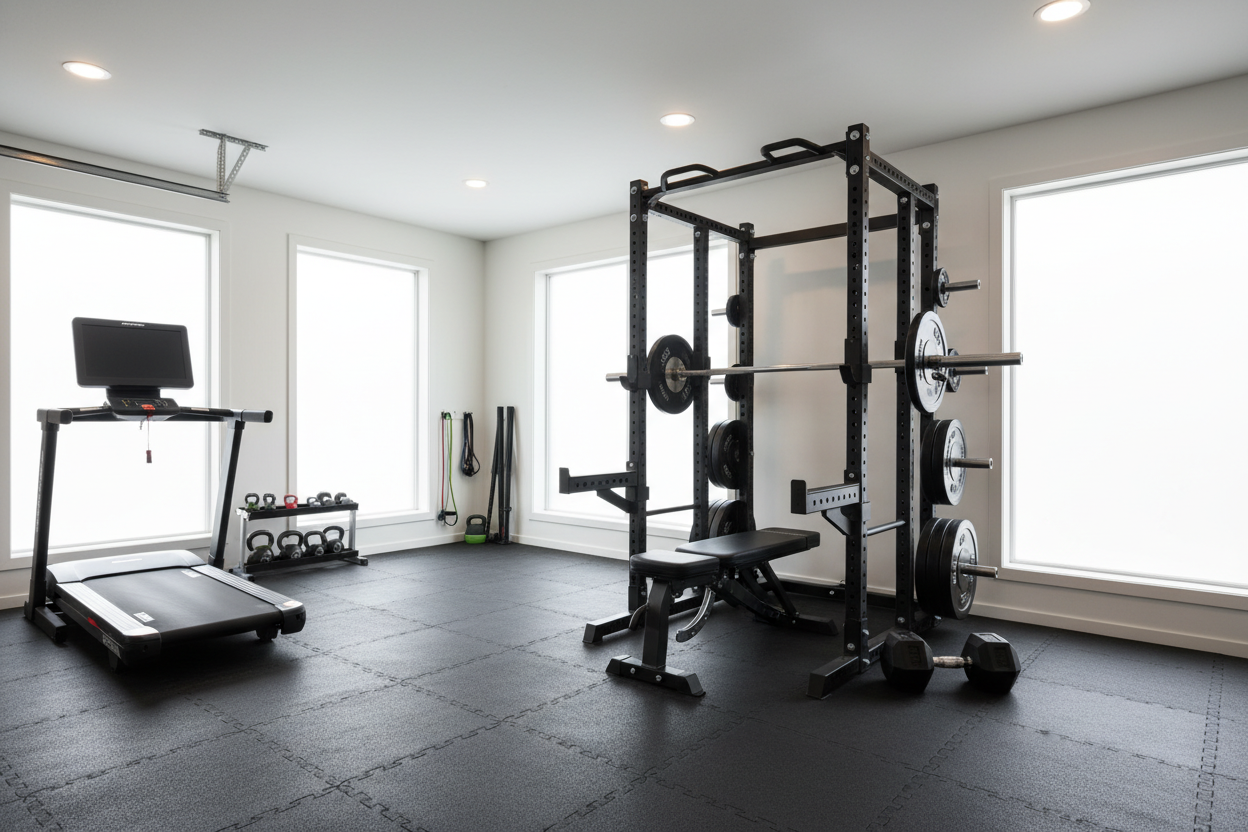
I eventually invested in high-density home gym flooring, and the difference in my overhead press was immediate. Having a non-slip, stable surface allows you to 'screw' your feet into the ground and generate leg drive, even on 'upper body' days. That stability translates directly into more weight on the bar and fewer nagging injuries in your lower back.
Personal Experience: The 'More is Better' Myth
I used to think that if I didn't leave the gym with my arms shaking, I hadn't worked hard enough. I would finish my main lifts and then spend 30 minutes doing 'burnout' sets of cable curls. All I did was stall my progress. My OHP stayed stuck at 135 lbs for a year because I was too fatigued to recover. The moment I cut the fluff and focused on just four big moves, my strength exploded. I hit a 185-lb press within four months. Less really is more when the 'less' is heavy as hell.
FAQ
Can I build big arms with only compound movements?
Absolutely. Your triceps are the primary movers in heavy presses and dips, and your biceps are heavily recruited during weighted pull-ups and rows. Most people with a 315-lb bench and a 100-lb weighted pull-up don't have small arms.
How often should I change my exercises?
Don't fall for the 'muscle confusion' myth. Stick to the same 4-5 compound lifts for at least 8-12 weeks. You need time to get technically proficient and progressively load the weight. If you change exercises every week, you'll never know if you're actually getting stronger.
Are compound lifts dangerous for the shoulders?
Any lift is dangerous with bad form. However, movements like dips and overhead presses actually promote better shoulder health by engaging the stabilizing muscles (rotator cuff and serratus anterior) more effectively than locked-in machine presses.