Does Training for Strength Build Muscle? An Honest Answer
I remember the day I finally hit a 405-lb deadlift in my garage. I felt like a monster until I caught my reflection in the window and realized I still looked exactly like I did when I was pulling 315. My t-shirt wasn't any tighter, and my quads still lacked that sweep I was chasing. It’s a frustrating plateau that hits almost every home lifter: the numbers on the bar go up, but the scale and the mirror stay stubbornly still.
The truth is, **does training for strength build muscle**? Yes, but it is remarkably easy to get strong without getting big. If you are tired of being the strongest guy in the room who looks like he barely lifts, you need to understand the fundamental divide between your nervous system and your muscle fibers.
Quick Takeaways
- Strength is a neurological skill; muscle size is a structural adaptation.
- Low-rep, high-intensity sets (1-3 reps) train the brain to recruit more fibers, not necessarily make them bigger.
- Hypertrophy requires volume and metabolic stress, usually found in the 8-12 rep range.
- A 'Powerbuilding' approach is the best way to keep your strength gains while filling out your sleeves.
Why You Look the Same After Adding 50lbs to Your Deadlift
Lifting heavy is a skill. When you add 50 pounds to your deadlift, you haven't necessarily built new muscle tissue. More often than not, you've just taught your Central Nervous System (CNS) how to fire your existing muscles more efficiently. Your brain is getting better at 'turning on' the fibers you already have. This is why a 150-lb gymnast can be pound-for-pound stronger than a 250-lb bodybuilder.
In a home gym setting, we often get obsessed with the PR. We chase that single heavy rep because it feels like objective progress. But if your goal is to actually change your physique, you have to realize that the barbell is just a tool to create tension. If you're using momentum or 'cheating' the movement just to lock out a heavy weight, you're building a skill, not a physique.
How to Build Strength vs Muscle (The Science Minus the Lab Coat)
To understand **how to build strength vs muscle**, you have to look at what's happening inside the cell. Strength training is largely about 'Motor Unit Recruitment.' You’re training your nerves to send a faster, stronger signal to the muscles. It’s like upgrading the software on your computer without changing the hardware.
Hypertrophy, or muscle growth, is a hardware upgrade. This requires structural damage and metabolic stress. You need enough 'Time Under Tension' to force the muscle to grow thicker to survive the next workout. If your set only lasts six seconds because you’re doing a heavy double, you aren't creating enough stress to trigger significant growth. This is why a strength training program for muscle growth eventually has to move away from pure triples and toward sets that actually make the muscle burn.
The Overlap: So, Does Training for Strength Build Muscle?
I’m not saying strength training won't build any muscle. You won't find many people with a 500-lb squat who have thin legs. Heavy loads do recruit the high-threshold motor units that have the most potential for growth. However, it’s the least efficient way to get there. If you only train for strength, you’re leaving about 40% of your potential size on the table.
Bodybuilders and powerlifters often use the same equipment, but they use it differently. A powerlifter wants to move the weight from point A to point B as efficiently as possible. A bodybuilder wants to make that movement as difficult as possible for the target muscle. To get the best of both, you have to stop thinking like a specialist and start training like an athlete.
Tweaking Your Garage Routine for Both Size and Power
You don't have to choose between being strong and looking good. The solution is 'Powerbuilding.' Start your session with one heavy compound lift—squat, bench, or deadlift. Do 3 to 5 reps to keep your CNS sharp and your ego happy. But once that’s done, the rest of your workout should look like a bodybuilding session.
After your heavy sets, move into accessory work. If it's chest day, think about the best muscle groups to pair with chest day to maximize your time in the garage. This is where you hit the 10-15 rep range. Focus on the 'squeeze' and a slow eccentric (the lowering phase). You can maximize your home gym strength equipment by simply changing your tempo. A 135-lb bench press with a 4-second descent will build more muscle than a 225-lb bench press that you bounce off your chest.
Don't Let Your Foundation Ruin Your Heavy Lifts
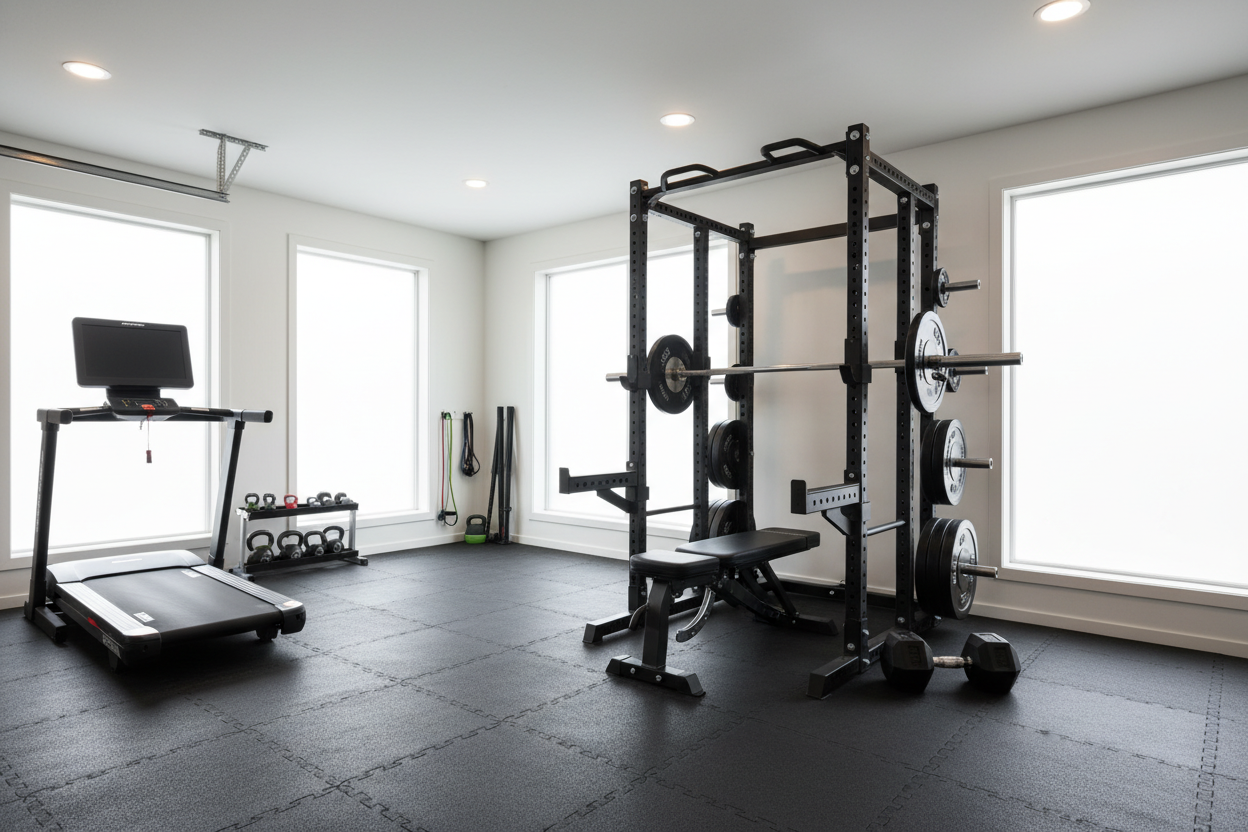
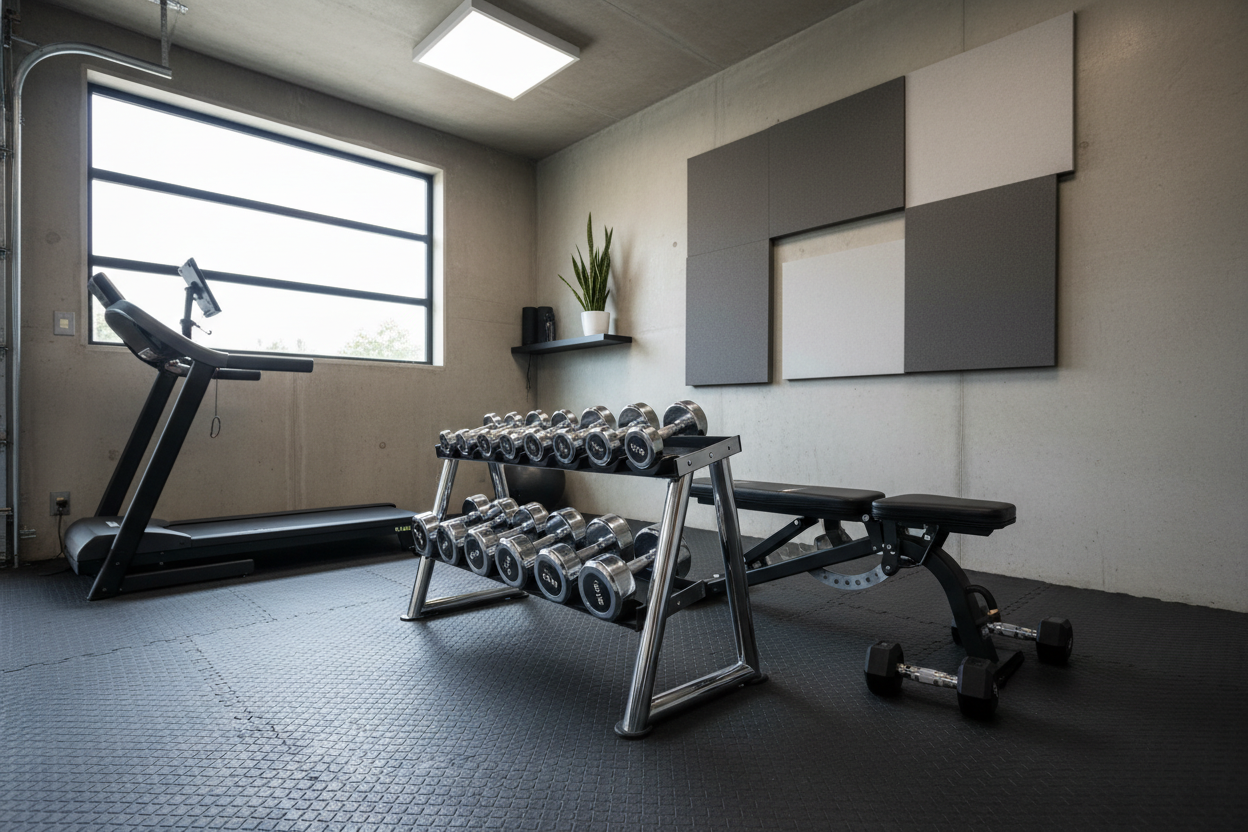
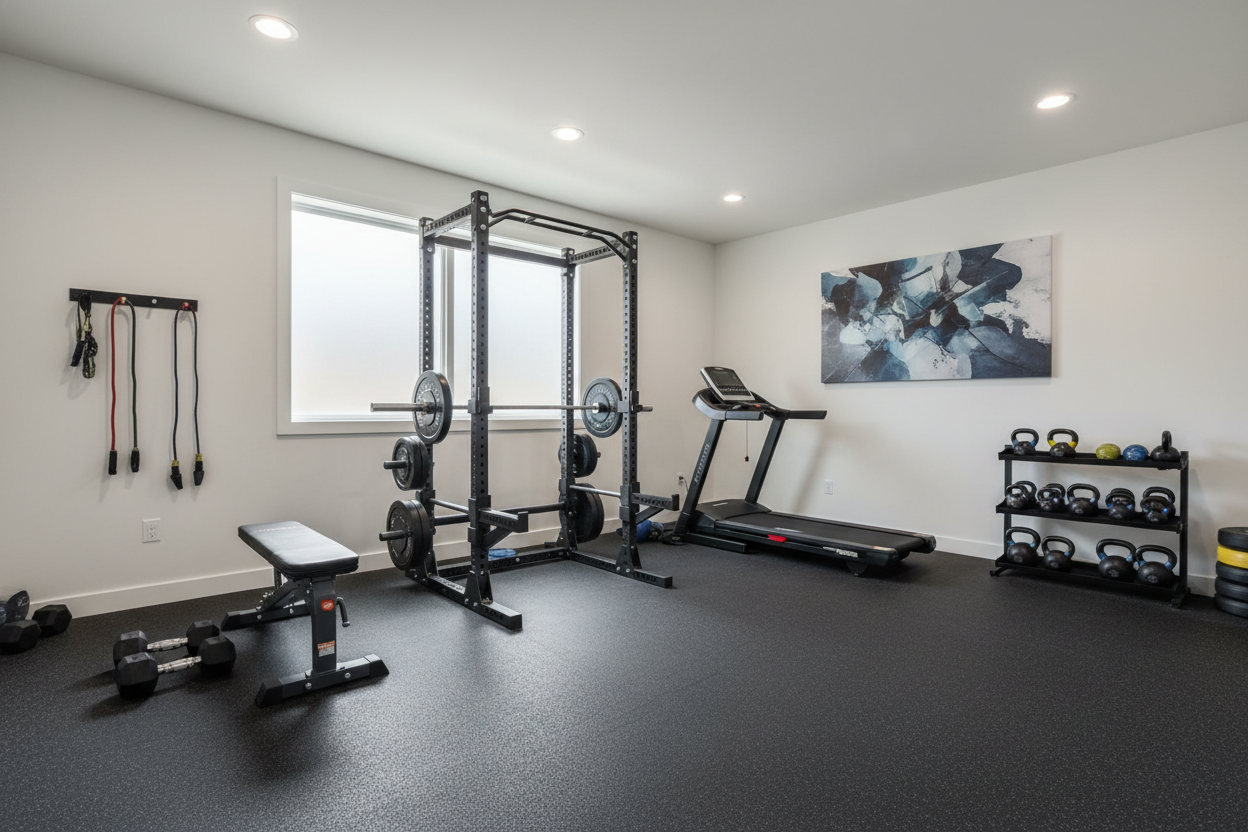
One thing I learned the hard way: you can't build muscle if you can't generate force. If you're lifting on a slick, bare concrete garage floor, your brain will actually 'throttle' your strength. It’s a safety mechanism. If your feet feel like they might slip during a heavy squat, your nervous system won't let your quads fire at 100%.
Investing in high-density gym flooring for home workout isn't just about protecting your concrete from dropped dumbbells. It’s about creating a high-friction surface where you can drive your heels into the ground. When your foundation is stable, you can actually target the muscle fibers you're trying to grow instead of just trying not to fall over.
Personal Experience: My 'Small but Strong' Mistake
A few years ago, I ran a strict Smolov Jr. cycle for my bench press. My max went from 275 to 305 in a matter of weeks. I was ecstatic. But when I looked at my progress photos, my chest actually looked smaller. Because I was doing so little volume and focusing purely on the 'skill' of the bench press, I had lost the sarcoplasmic hypertrophy (the fluid in the muscle) I had from my previous high-volume phases. Now, I never let my reps drop below 5 for more than a few weeks at a time. Lessons learned the hard way are the ones that stick.
FAQ
What is the best rep range for building muscle?
While you can build muscle in any range, the 'sweet spot' is generally 8 to 12 reps. This provides enough weight to create tension and enough duration to create metabolic stress.
Can I get big by only doing 1-rep maxes?
It’s highly unlikely. You would need to do an absurd number of sets to get the necessary volume, which would likely fry your nervous system or lead to a joint injury before you saw real growth.
How many days a week should I train for both strength and size?
Four days is usually the gold standard for home lifters. This allows for an Upper/Lower split where you can hit heavy compounds and still have energy for high-volume accessory work.