The Only Essential Strength Exercises I Still Do After 10 Years
I remember dragging my first 300-lb Olympic weight set into a damp garage a decade ago. Back then, I was convinced I needed to 'confuse' my muscles every three weeks with some bizarre new movement I saw in a magazine. Ten years later, my gym is better equipped, but my routine is the simplest it has ever been. I stopped chasing the 'new' and doubled down on the **essential strength exercises** that actually move the needle.
Quick Takeaways
- Novelty is the enemy of long-term hypertrophy and strength.
- If an exercise can't be progressively loaded for years, it's an accessory, not a staple.
- Five basic movement patterns cover 95% of your physiological needs.
- Quality basics beat a room full of expensive, single-use machines.
The Problem with Constantly 'Confusing' Your Muscles
The fitness industry is addicted to novelty because 'do the same five things for ten years' is a terrible sales pitch. They want you to believe your muscles have a brain that gets bored. In reality, your muscles only understand tension, mechanical advantage, and recovery. When you jump between trendy movements, you never actually get good enough at any of them to apply real weight.
Constant variation in **fundamental weight training** usually just masks a lack of progress. If you're always doing a new move, you're in a perpetual 'learning phase' where your nervous system is just trying to figure out the coordination. You aren't actually stressing the muscle. Plus, doing 'creative' exercises often puts your joints in compromised positions that lead to chronic aches rather than real power.
What Actually Makes a Lift 'Essential'?
To survive my decade-long audit, a movement has to meet three criteria. First, it must have a massive runway for progressive overload. If you 'max out' the movement in six months, it’s not essential. You need lifts where you can start with an empty bar and potentially end up moving 400-plus pounds over a lifetime.
Second, it must be multi-joint. We are looking for the biggest bang for our buck. If it only works your bicep, it’s a luxury, not a necessity. Finally, it shouldn't rely on a $4,000 specialized machine. If you can't do it with a barbell, a rack, or a pair of heavy dumbbells, it’s probably not a fundamental requirement for a strong body.
So, What Are the 5 Basic Strength Training Exercises?
People often overcomplicate the answer to the question: **what are the 5 basic strength training exercises**? It isn't about specific brand-name workouts; it's about movement patterns. After a decade of trial and error, these are the five pillars that remain in my logbook every single week.
1. The Heavy Squat (Moving Weight Vertically)
The squat is the undisputed king of lower body development. Whether you prefer a high-bar back squat or a heavy goblet squat, you are teaching your body to move a load vertically against gravity. This triggers a massive central nervous system response that smaller exercises just can't match.
If you're feeling 'stuck' or dealing with nagging knee pain, it's usually a technique or equipment issue. Spend time mastering free weight leg exercises before you try to set a PR. I’ve found that slowing down the eccentric (the way down) does more for my quad growth than adding an extra 50 lbs of 'ego weight' ever did.
2. The Hinge (Bulletproofing Your Posterior Chain)
The hinge—think Deadlifts and Romanian Deadlifts (RDLs)—is the ultimate antidote to the 'office chair spine.' This pattern is about moving your hips horizontally while keeping your spine neutral. It targets the hamstrings, glutes, and the entire erector spinae.
I personally prefer the RDL for pure muscle building. The constant tension and the stretch at the bottom build a level of back thickness that you simply can't get from machines. It’s the difference between looking like you lift and actually being strong.
3. The Push (Building Pressing Power)
Pressing is how we build the chest, shoulders, and triceps. But here is a hard truth: you cannot press heavy weight if your base is wobbly. I’ve wasted money on cheap, 300-lb capacity benches that shook like a leaf when I tried to unrack 225 lbs. It’s distracting and dangerous.
Investing in a heavy-duty adjustable weight bench is the smartest move I made for my home gym. When you feel 'locked in' to a solid piece of steel, your brain allows you to push harder. Whether it’s an overhead press or a bench press, stability equals strength.
4. The Pull (Thickening the Upper Back)
For every pushing set you do, you should probably do two pulling sets. Rows and pull-ups are mandatory for shoulder health. They pull your scapula back into the right place and counteract the 'rounded shoulder' look that comes from too much bench pressing.
I’m a huge fan of the weighted pull-up. Once you can do 10 clean bodyweight reps, start hanging plates from a belt. There is something about the mechanics of pulling your own body weight plus a 45-lb plate that builds a wide, dense back faster than any lat pulldown machine ever could.
5. The Loaded Carry (Real-World Core)
Forget crunches and planks. If you want a core that can handle real-world stress, you need to pick up something heavy and walk with it. Farmer’s walks and suitcase carries are the most underrated **fundamental strength exercises** in existence.
Carries force your entire midsection to stabilize under a moving load. Your grip, traps, and obliques will be screaming after 40 yards. It’s the most 'functional' exercise I do—it’s the difference between making three trips to bring in the groceries and doing it in one go like a pro.
Equipping Your Gym for Fundamental Strength Exercises
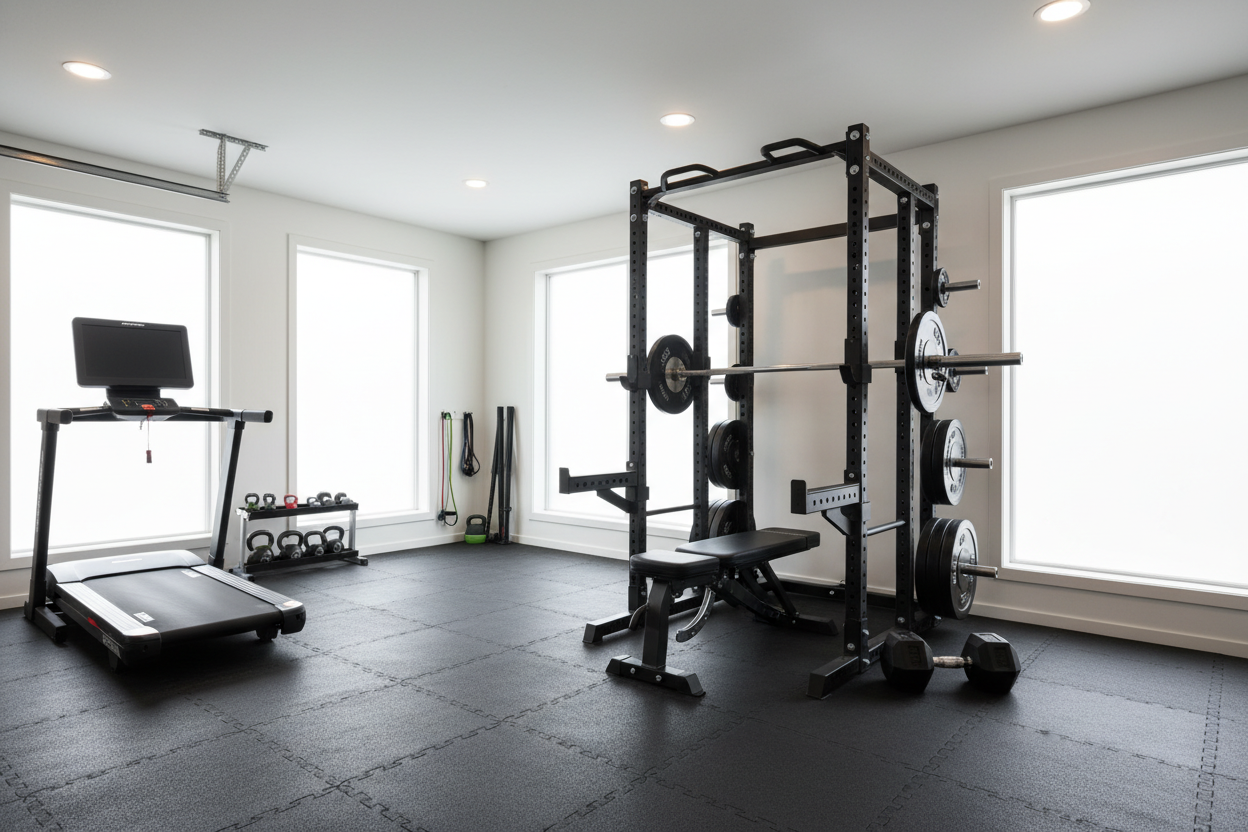
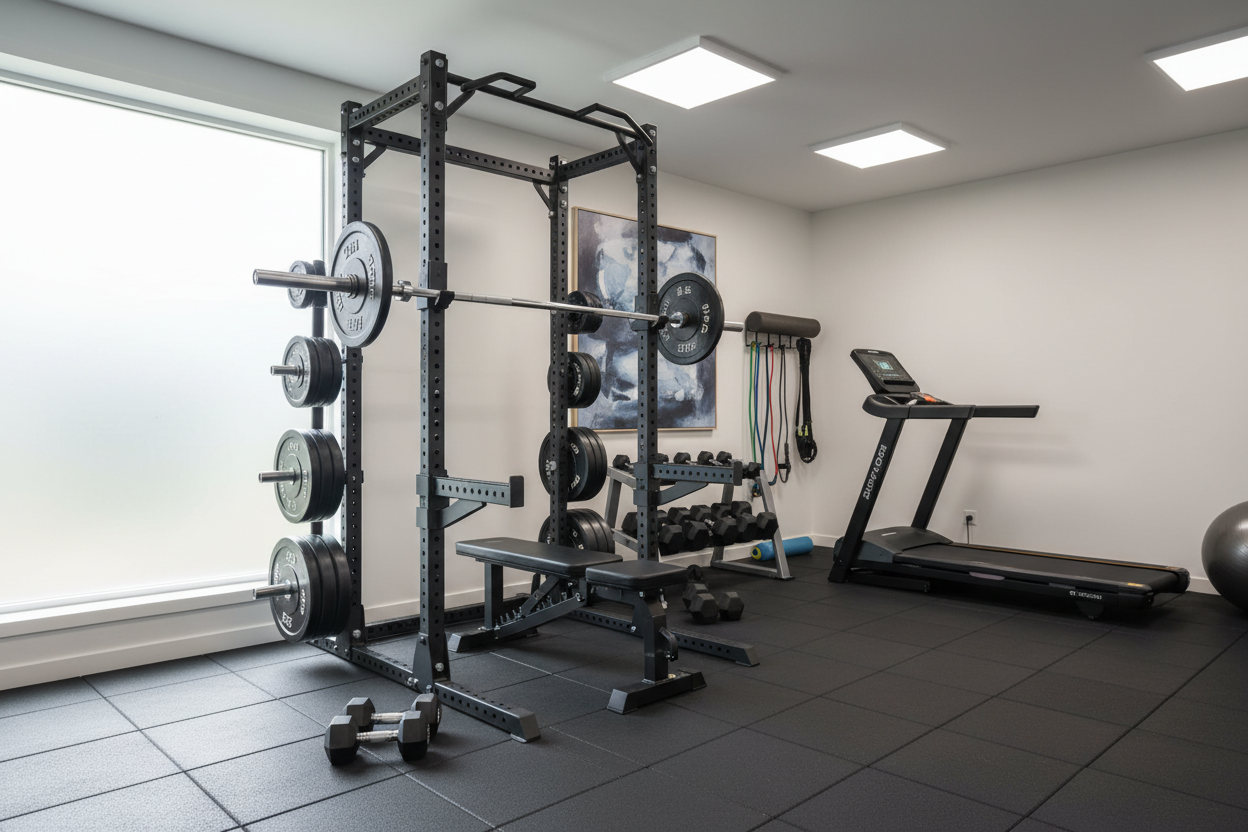
You don't need a 2,000-square-foot commercial space to get elite results. You need a few high-quality pieces that won't fail when the weights get heavy. When you're picking the right weight training equipment, prioritize the barbell and the floor. A bar with a 190,000 PSI tensile strength and a solid lifting surface are the foundation of everything.
Beyond the big items, you only need a few basic strength training accessories. A bottle of liquid chalk, a decent leather belt for your heavy sets, and maybe some versa gripps for high-volume rows. Don't get distracted by 'fat grips' or 'vibration platforms' until you can squat 1.5 times your body weight.
How to Program This Without Dying of Boredom
The biggest hurdle to sticking with the basics is the mental itch for variety. You don't need to change the exercise to get variety; you change the stimulus. One month, focus on 3 sets of 10 with a slow tempo. The next month, move to 5 sets of 3 with more explosive power.
You can also swap variations within the same pattern. Switch from a back squat to a front squat. Change your grip on the pull-ups. These small tweaks provide enough novelty to keep you engaged without abandoning the **essential strength exercises** that actually build your foundation. Consistency is boring, but the results aren't.
Personal Experience: My Biggest Mistake
About five years in, I got bored and replaced my heavy squats with 'functional' lunges and leg extensions for six months. I thought I was being sophisticated. Instead, my leg drive evaporated and my lower back started hurting because I lost the bracing strength that comes from heavy squatting. I had to spend three months just getting back to where I started. Now, the 'Big 5' are non-negotiable.
Frequently Asked Questions
Can I do these exercises every day?
No. These are high-demand movements. Your central nervous system needs time to recover. Three to four days a week is the sweet spot for most people training in a home gym.
Do I really need a barbell, or are dumbbells enough?
Dumbbells are great, but you will eventually 'outgrow' them for hinges and squats. It's hard to hold 200 lbs of dumbbells, but 200 lbs on a barbell is just the beginning. Get a bar if you're serious about long-term growth.
What is the best exercise for core strength?
The heavy carry. Walking with 50% of your body weight in each hand will do more for your abs and obliques than 1,000 sit-ups ever will.