I Built a Real Strength Bootcamp in My Two-Car Garage
I spent three years paying $180 a month for a local studio that promised a 'total body transformation.' Every morning, I’d show up, grab a pair of 15-pound dumbbells, and do burpees until I saw stars. I was sweaty, I was tired, and I was exactly the same size three years later. I realized I wasn't getting stronger; I was just getting better at being exhausted.
The realization hit me when I tried to deadlift a modest 225 at a friend's house and nearly threw my back out. My 'high-intensity' training hadn't prepared me for actual weight. That week, I cleared the boxes out of my garage and started building a strength bootcamp that actually delivers on the name. No neon lights, no loud remixes, just heavy iron and actual progress.
- Real Weights: If you aren't lifting 70-80% of your max, it isn't a strength class.
- Rest is Required: You can't build muscle if you're huffing and puffing too hard to stabilize your spine.
- Space Efficiency: You only need about 64 square feet to get this done.
- Cost Savings: A year of boutique classes pays for a high-end power rack and plates.
The Dirty Secret About Boutique Fitness Classes
Most boutique studios are just cardio classes in disguise. They use the word 'strength' because it sells memberships to people who are tired of the treadmill. But if you're doing 50 reps of a bicep curl with a light pink dumbbell while jumping on a box, you aren't building strength. You're doing metabolic conditioning.
These classes are designed to maximize caloric burn during the 45 minutes you're there. That feels good because you leave drenched in sweat, but it does very little for your basal metabolic rate. To actually change your physique and build power, you need mechanical tension. That means lifting something heavy enough that your brain has to scream at your muscle fibers to wake up. Most studios avoid this because coaching real barbell movements to 30 people at once is a liability nightmare.
What a True Strength Bootcamp Actually Looks Like
A real bootcamp for strength focuses on compound movements: squats, hinges, pushes, and pulls. In my garage, the 'circuit' isn't about how many reps I can finish in a minute. It's about how much quality I can pack into a set of five. The goal is progressive overload.
We use strict work-to-rest ratios. If I'm doing a heavy set of overhead presses, I’m taking 90 seconds of rest. That allows my central nervous system to recover so the next set is just as heavy. We save the 'bootcamp' intensity for the tail end of the workout—the finisher. That’s where we move fast, but only after the real work of moving heavy objects is done.
The Gear You Need to Suffer Properly at Home
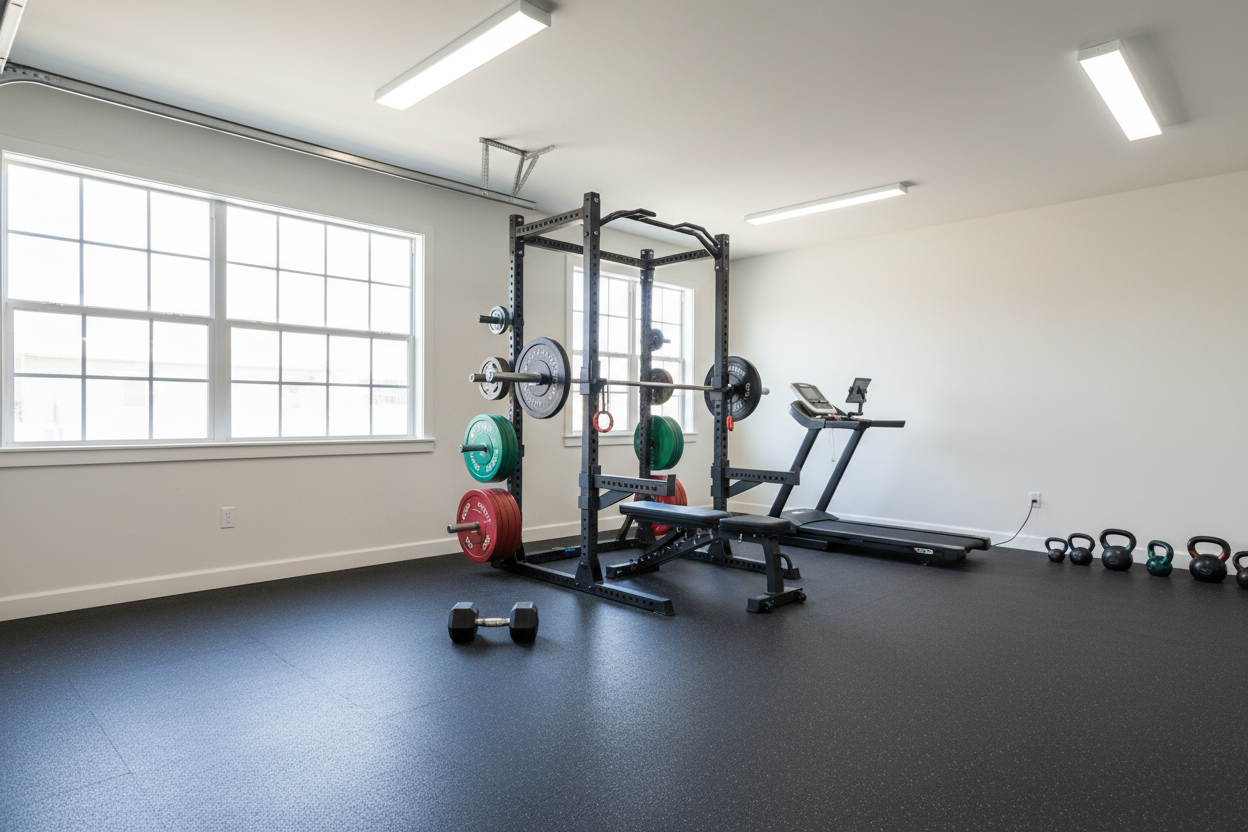
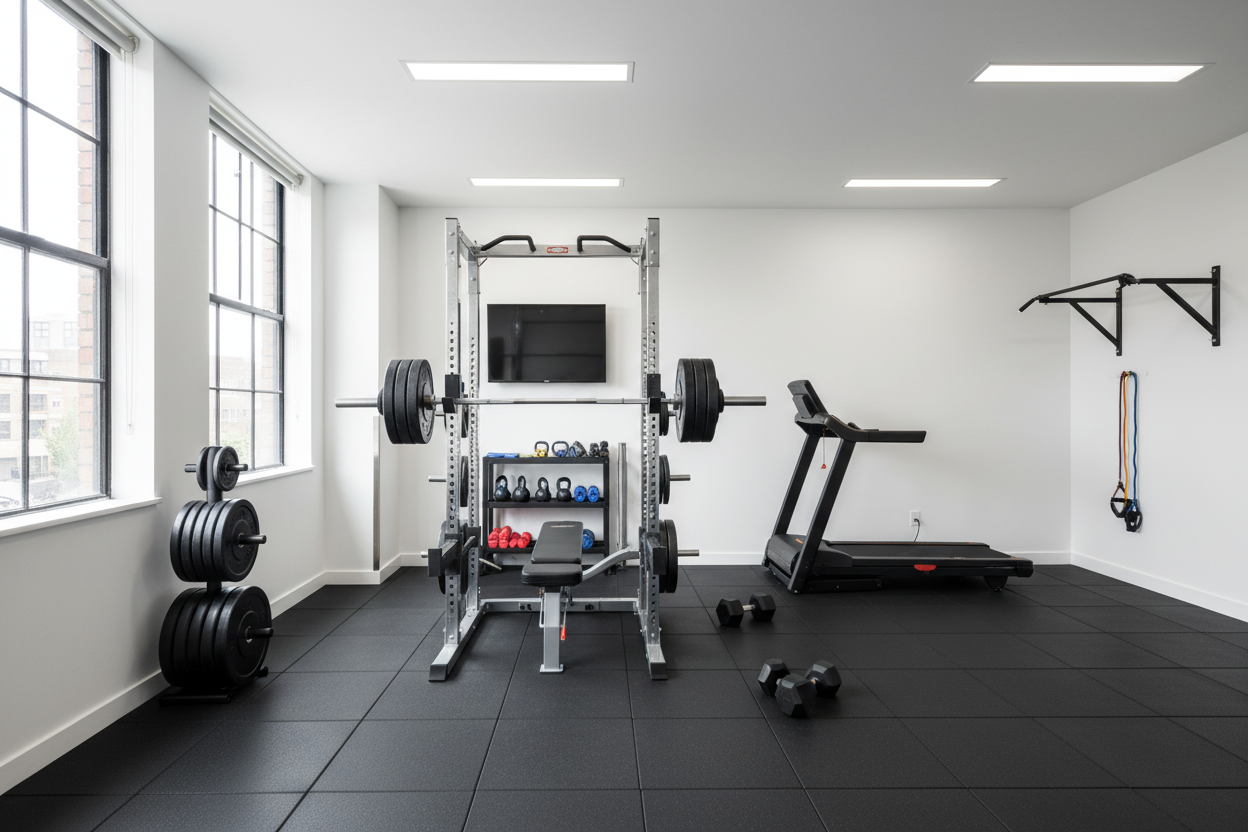
You don't need a 20-piece circuit of machines. I started with a solid squat stand and a flat bench. For the heavy movements, I invested in durable strength equipment like a 20kg barbell with decent knurling and a set of bumper plates. Bumper plates are a must in a garage; unless you want to crack your concrete or wake up the neighbors, you need that rubber coating to absorb the shock of a dropped deadlift.
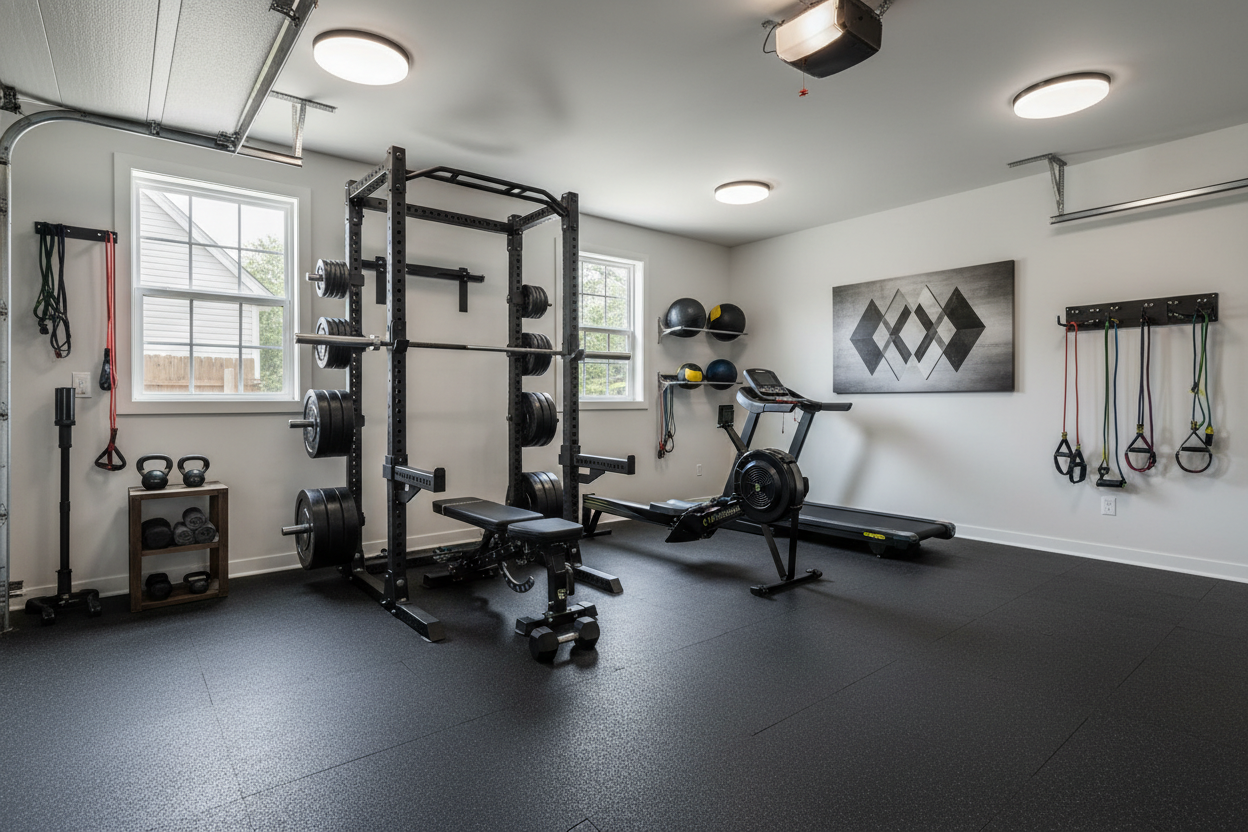
Once the big stuff was handled, I added some strength training accessories to fill the gaps. A set of heavy resistance bands and a pair of adjustable kettlebells go a long way. I prefer the kettlebells that go up to 50 or 70 pounds—the light ones are useless for anything other than a paperweight once you actually start training. I also keep a jump rope and a sandbag in the corner. The sandbag is the ultimate 'suffering' tool for the end of a session; there is nothing like a 100-pound bag to remind you that you aren't as fit as you think you are.
My 4-Week Garage Bootcamp Blueprint
I run a four-day split that balances heavy lifting with high-output conditioning. Monday and Thursday are 'Heavy' days. I focus on low reps (3-6) and high sets (5-6) for the big lifts. Tuesday and Friday are 'Capacity' days where the weights get lighter, the reps go up, and the rest periods shrink. This keeps the heart healthy without sacrificing the muscle mass I worked for on Monday.
On those capacity days, I often plug in a specific routine like this 60 min fat killer hiit strength workout. It’s a brutal way to test your conditioning, but I only do it after my primary strength work is finished. If you do the cardio first, you’ll be too fatigued to lift safely. Wednesday and the weekend are for active recovery—walking the dog or light mobility work. If you try to go 100% every day in a garage gym, you’ll burn out your CNS in three weeks. Trust me, I’ve done it.
Stop Confusing Being Tired With Getting Strong
Fatigue is not a trophy. I see people brag about being unable to walk after a workout, but if your squat numbers haven't moved in six months, you're just spinning your wheels. The human body is an adaptation machine. It only gets stronger if you give it a reason to—and that reason is more weight on the bar over time.
Build your garage gym around the big lifts. Use your accessories to shore up your weaknesses. Treat your conditioning as a tool, not the entire job. When you stop chasing the 'burn' and start chasing the 'plate,' everything changes. You'll find that 20 minutes of real work in your garage beats 60 minutes of fluff in a boutique studio every single time.
Personal Experience: The 'Budget' Mistake
When I first started, I bought a cheap, bolt-together rack from a big-box retailer. It was rated for 300 pounds, but when I racked 225, the whole thing swayed like a willow tree in a hurricane. It was terrifying. I ended up selling it for half what I paid and buying a 3x3 11-gauge steel rack. Do not cheap out on the things that hold the weight over your face. Buy once, cry once.
FAQ
How much space do I really need?
An 8x8 foot area is the bare minimum for a rack and a barbell. If you have a standard two-car garage, you can fit a full strength setup and still park one car inside if you're organized.
Do I need a platform?
If you plan on doing Olympic lifts or deadlifting heavy, yes. You can build one with two layers of plywood and a horse stall mat for about $150. It saves your floor and your equipment.
Can I do this with just dumbbells?
You can get far with dumbbells, but you'll eventually hit a ceiling. It's much harder to 'bootcamp' a 100-pound dumbbell into position than it is to just unrack a barbell. If you're serious, get a bar.