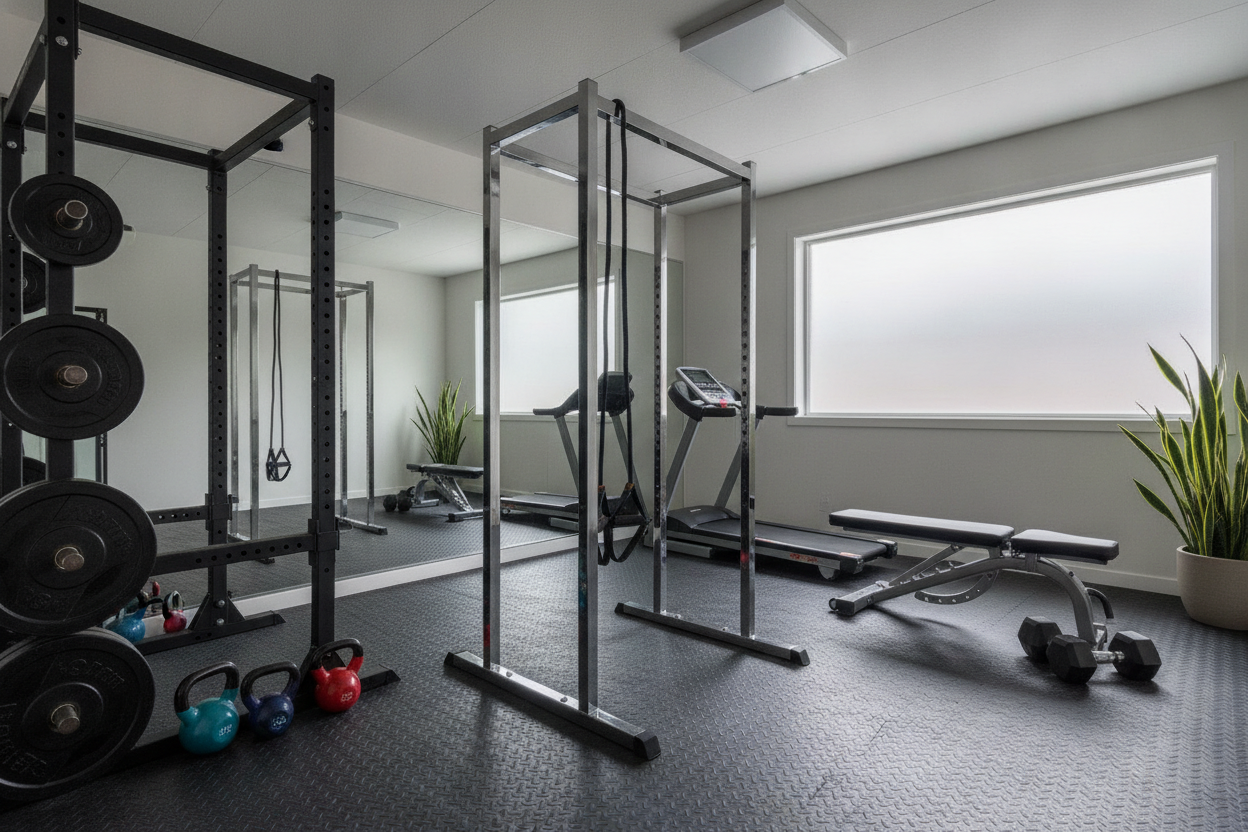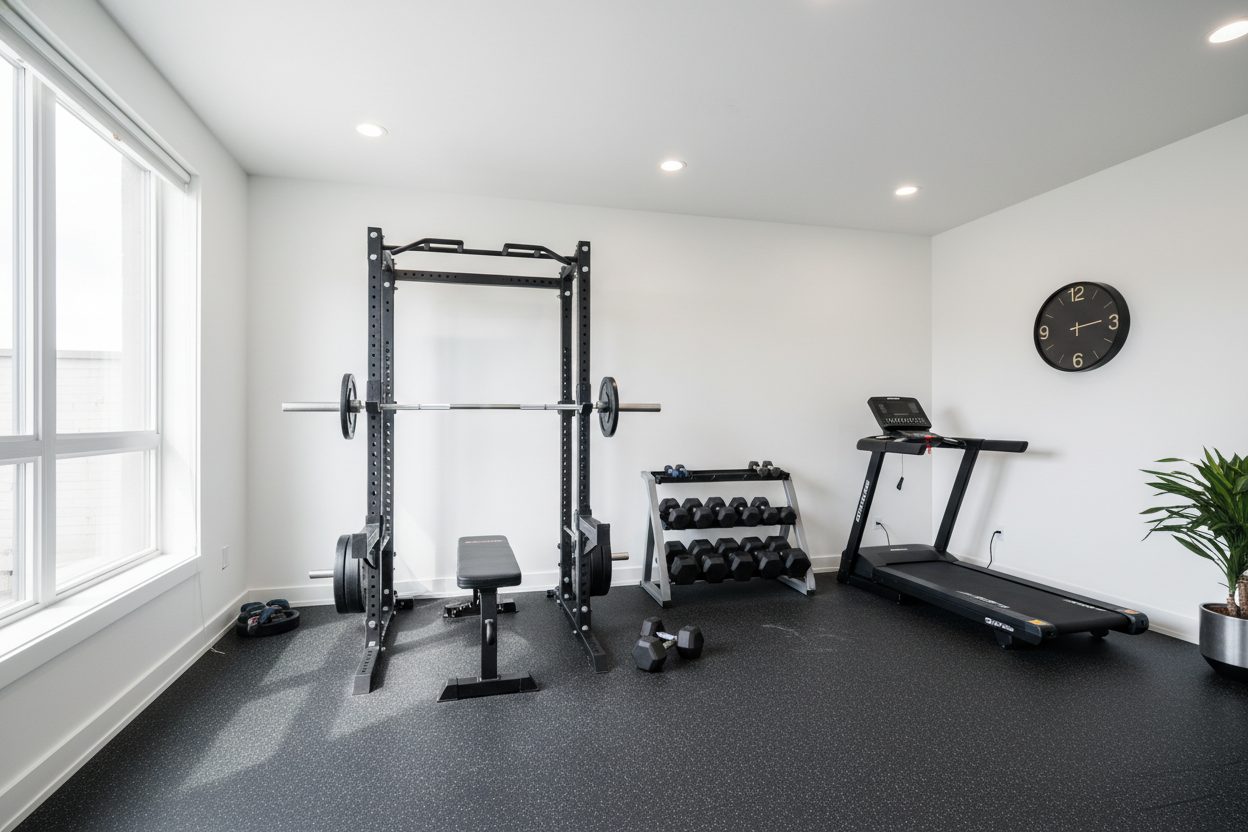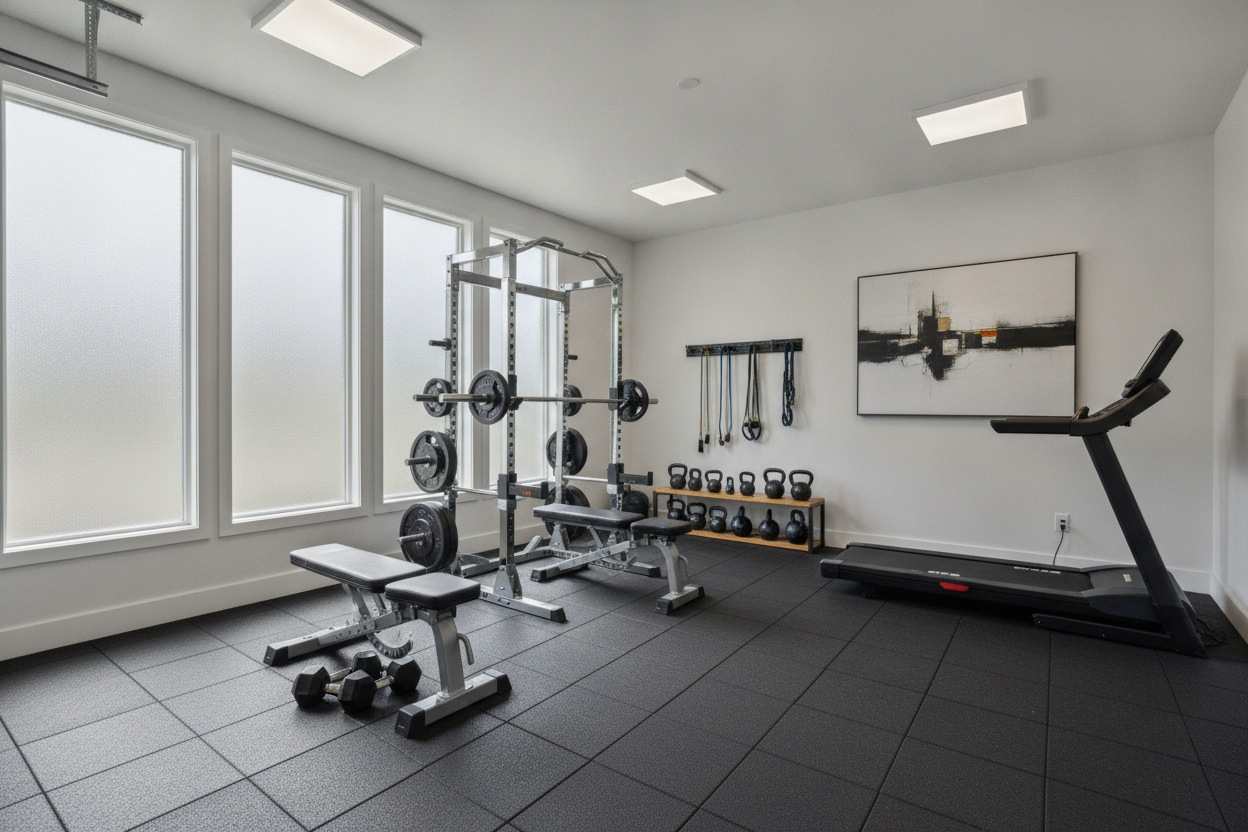
I Audited 50 Workout Exercises at the Gym (Only 4 Matter)
I recently stepped back into a commercial mega-gym after three years of training exclusively in my garage. The smell of industrial-grade disinfectant and the sound of 40 different speakers competing for dominance was a shock. But the real headache? The rows of shiny, complex machines that look like they were designed by NASA but feel like they were built for someone with three elbows.
When you are looking for workout exercises at the gym, the sheer variety is a trap. You end up wandering from the pec deck to some weird seated crunch machine, wasting 20 minutes on movements that offer zero carryover to your actual strength. Most of these machines are built to fit the 'average' person, which usually means they don't fit anyone particularly well.
- Cables and hack squats are the only machines that truly outclass home gym basics.
- Most isolation machines have fixed paths that wreck your joints over time.
- Stability is the secret sauce of commercial equipment—use it to load heavy.
- If a machine takes more than 30 seconds to set up, it is probably not worth the squeeze.
The Commercial Gym Culture Shock
Walking into a big-box facility when you are used to a rack and a barbell is overwhelming. In my garage, if I want to do pull-ups, I grab the bar. In the gym, I have to decide between the assisted machine, the wide-grip station, the neutral-grip handles, or the jungle gym. This paradox of choice is why most people never see real progress; they do a little bit of everything and a whole lot of nothing.
The sensory overload is real, but so is the potential. While I love my minimalist setup, there is a distinct advantage to having access to 500-lb weight stacks and specialized leg machines that do not require me to balance a barbell on my spine. The trick is ignoring 90% of the floor space.
Why Most 'Gym Exercise Ideas' Are Garbage
Most gym exercise ideas you see on posters or Instagram are biomechanical nightmares. Take the seated leg extension or the rotary torso machine. These movements often place shear force on your joints in ways that feel 'targeted' but actually just create inflammation. They look impressive because you can move a lot of weight, but that weight is moving on a track that ignores your natural limb length.
I have spent enough time analyzing leverage to know that if a machine forces your body into a fixed arc, your connective tissue pays the price. This is especially true when you are trying to figure out what to do on drop in days. You want high-reward movements that justify the guest pass, not a tour of every bicep curl station in the building. Stick to the stuff that requires a massive footprint—the kind of gear you can't fit in a spare bedroom.
The Core 4: Workout Exercises at the Gym You Should Actually Do
There are only four categories of movements that actually justify that monthly membership fee. These are the exercises that provide a stimulus you simply cannot get with a standard power rack and a set of dumbbells. They focus on constant tension and extreme stability—two things that are hard to DIY in a garage.
Movement 1: Heavy Cable Work (The Constant Tension Fix)
Cables are the king of the commercial gym. Unlike dumbbells, where the tension drops off at the top or bottom of the rep, a dual adjustable pulley keeps 20 lbs feeling like 20 lbs through the entire range of motion. Use these for face pulls, cable crossovers, and lat pulldowns. The ability to change the angle of resistance by moving a pin is something even the best home gym setups struggle to replicate without a $3,000 functional trainer.
Movement 2: The Hack Squat (Saving Your Lower Back)
The hack squat is the greatest leg builder ever invented, period. By removing the stability requirement of a barbell squat, you can push your quads to absolute failure without your lower back giving out first. It allows for a deep range of motion that most people can't safely achieve with a bar on their back. If your gym has a high-quality hack squat with a massive footplate, that should be your primary leg movement for the day.
Bringing the Gym Standard Back Home
You can actually replicate a lot of this stability in your own space if you are smart about your gear. The biggest difference between a commercial leg press and a home workout is the 'wiggle' factor. Commercial machines are bolted to the floor and weigh 800 lbs. To get that feeling at home, you need to start with a rock-solid foundation. I always tell people that a large exercise mat for home gym use is non-negotiable—it dampens vibration and keeps your rack from shifting during heavy pulls.
If you are looking for the best at home workout machines, focus on items that offer versatility, like a high-quality lat pulldown or a plate-loaded functional trainer. You don't need 50 machines; you need two or three that don't feel like toys. Stability is the name of the game.
Your Blueprint for Surviving Workouts in the Gym
Next time you find yourself doing workouts in the gym, stop wandering. Go straight to the cable machines for your upper body volume and the hack squat or leg press for your lower body. Use the dumbbells for your heavy presses, but skip the fancy-looking machines that have 'Chest Press' written in 14 languages. They usually have terrible leverage points that will leave your shoulders clicking for a week.
Remember that commercial gym flooring for home workout spaces is often thicker than what you find in a standard garage. That density allows for more aggressive movements. If you're at a commercial spot, take advantage of that—drop the weights (within reason) and push the intensity. Then, take what you learned about stability and apply it to your home setup.
Personal Experience: The 'Functional' Trap
I once spent three months using a fancy '3D' cable machine at a local club, thinking the extra freedom would build 'stabilizer muscles.' Instead, I ended up with a nagging rotator cuff tweak because the pulley path was inconsistent. I went back to a standard, heavy-duty lat pulldown and the pain vanished in two weeks. More features usually just mean more ways for the machine to break or for your form to fail. Stick to the heavy, simple stuff.
FAQ
Is the Smith Machine actually bad?
No, it is just misunderstood. It is terrible for 'learning' how to squat, but it is an incredible tool for high-volume lunges or shrugs where you want to focus entirely on the muscle and not the balance.
How do I know if a machine fits me?
If your joints feel like they are being pulled in a direction they don't want to go at the top or bottom of the rep, the pivot point is wrong for your height. Move on to a different machine.
Should I use machines or free weights first?
In a commercial gym, I prefer using the heavy machines (like the hack squat) first when I have the most energy to push the weight, then finishing with dumbbells for accessory work.