Stop Piecing Together Random Free Gym Exercises
I remember sitting on my weight bench, thumbing through a 'saved' folder of 400 different clips while my coffee got cold. I was trying to stitch together free gym exercises that looked cool on a phone screen but didn't translate to a single pound of muscle in my garage. It was a chaotic mess of 'functional' movements that left me exhausted but no stronger than I was a month prior.
- Novelty is the enemy of actual strength gains.
- Randomly selected movements do not constitute a training program.
- If you cannot track the weight and reps easily, it belongs on TikTok, not in your rack.
- Stick to one routine for at least 8 weeks before changing a single thing.
The 'Instagram Frankenstein' Workout Problem
The modern trap is the 'Instagram Frankenstein.' You see a guy with 3% body fat doing a circus-act squat variation with three bands and a kettlebell hanging off the bar, and you think, 'I'll add that to my leg day.' By the time you're done, you've wasted 20 minutes setting up a movement that does half the work of a standard barbell squat. Your workout lacks a 'why.' It's just a collection of 'whats.'
When you cherry-pick exercises, you lose the logic of muscle sequencing. You might be hitting your front delts four times in a session without realizing it, simply because the movements looked different on camera. This leads to joint fatigue, not growth. I've been there, trying to fit a 15-minute 'ab blaster' into a session where I already did heavy deadlifts. It's a recipe for a lower back tweak, not a six-pack.
Movements vs. Programs: Why You're Not Growing
A movement is just a single action. A program is a map. To see results, you need free weightlifting plans that prioritize the boring, heavy basics. I spent years chasing the 'pump' with cable crossovers before I realized my bench press had been stuck at 185 lbs for two years. Consistency beats variety every single time.
People often get lost in the machine vs free weights debate, picking flashy isolation machines because they saw a pro use one in a video. In reality, most of us training in a garage or a small commercial space need to master the heavy barbell work first. Machines have their place, but they shouldn't be the foundation of a 'free' plan you're building from scratch. Progressive overload requires repetition, not a new stimulus every Tuesday.
My 3-Question Test for Online Exercises
I use a BS-detector framework for any new exercise I see online. First: Does it use equipment I actually own? If it requires a specialized cable attachment and I only have a power rack and some dumbbells, it's a 'no.' Second: Can I load it progressively? If it's a weird balancing act on one leg, adding 5 lbs next week is going to be impossible. If you can't measure it, you can't improve it.
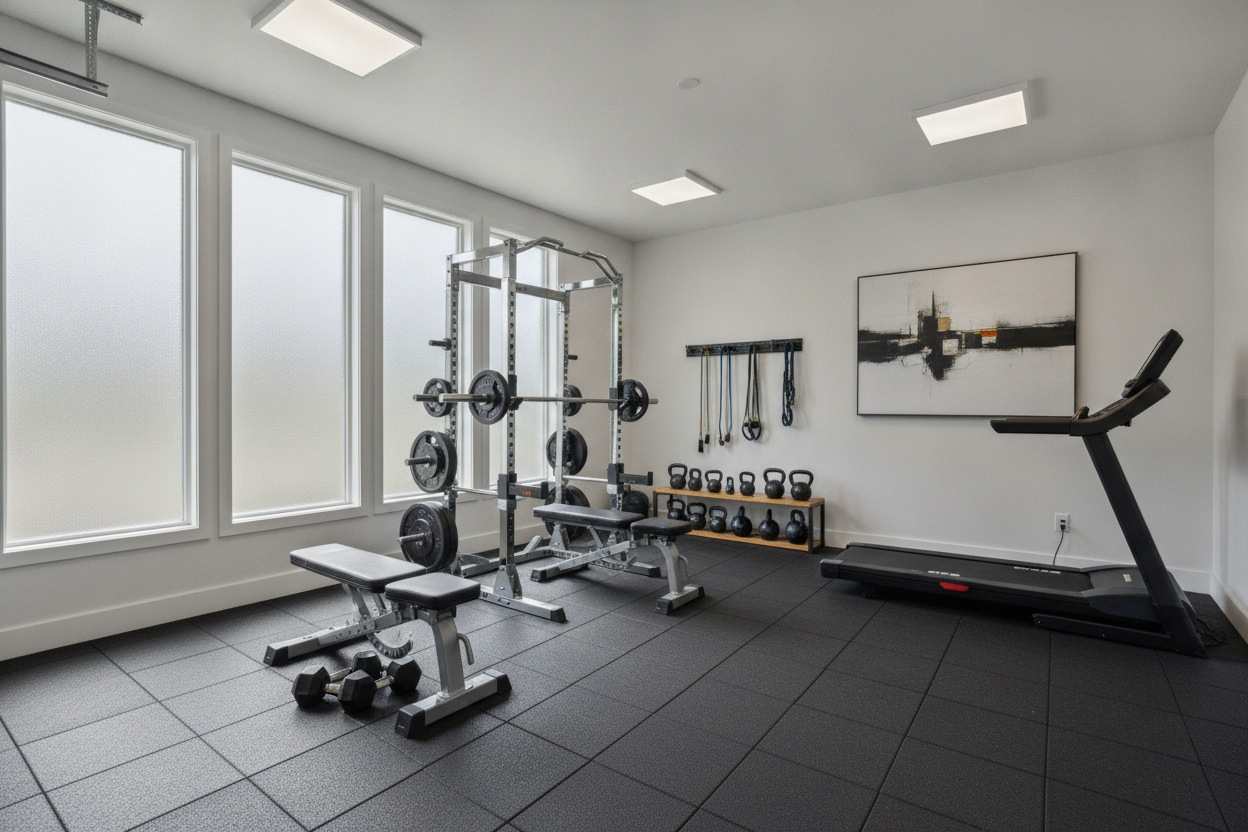
Third: Is it safe to perform alone? I train in a 10x10 shed. I'm not doing heavy cleans without a proper platform or bumper plates, and I'm certainly not doing 'risky' bench variations without spotter arms. If an exercise looks like it requires a team of three people to help you set it up, skip it. Stick to the movements where you can safely fail and live to lift another day.
How to Actually Organize Your Saved Exercises
Stop scrolling and start Slotting. Take a basic Push/Pull/Legs split and treat it like a shelf. You have five slots per day. For 'Push' day, you need a heavy horizontal press, an overhead press, a dip or incline movement, and some triceps work. Only then can you slot in one of those 'cool' variations you saved, provided it passes the 3-question test.
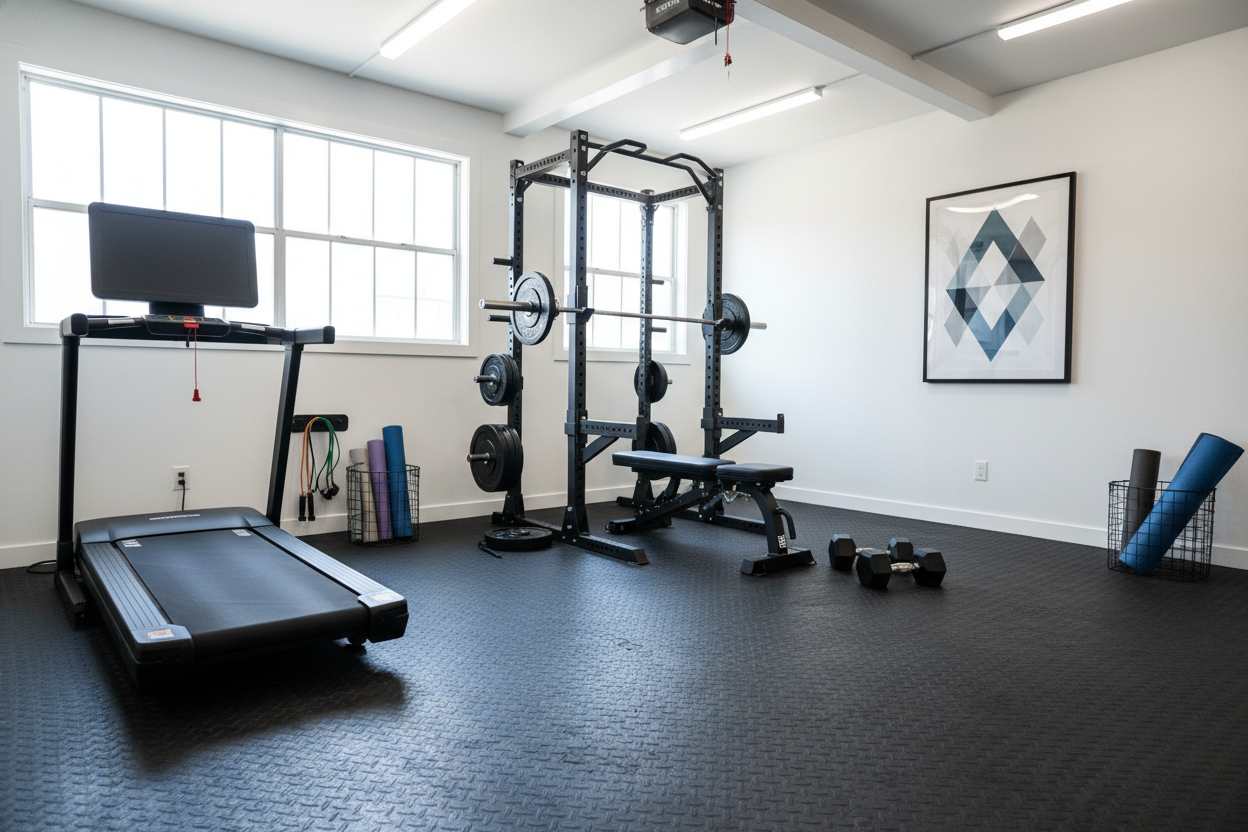
If you're doing floor-based work like dumbbell floor presses, dead bugs, or mobility drills, don't just lay on the concrete. Get a large exercise mat for home gym so you aren't grinding your spine into the floor. If organizing this feels like a second job, just download a free beginner workout plan and follow it to the letter. There is no shame in using a blueprint that someone else already stress-tested.
Commit to the Routine (and Close the App)
Boredom is a sign that your program is working. When you stop wondering 'what should I do today?' and start knowing exactly what weights you need to hit, you've won. Stick with your newly built routine for 6 to 8 weeks before swapping out a single movement. If you're hitting your numbers, don't change the plan just because you saw a new reel.
How often should I change my exercises?
Change your accessory movements every 8-12 weeks. Keep your main lifts (squat, bench, deadlift, press) the same for as long as you are making progress. If it isn't broken, don't fix it.
Can I build a pro-level physique with just free weights?
Yes. Some of the greatest physiques in history were built with nothing but iron plates and a bar. Machines are a luxury, not a necessity for growth.
What if I don't have a spotter for heavy lifts?
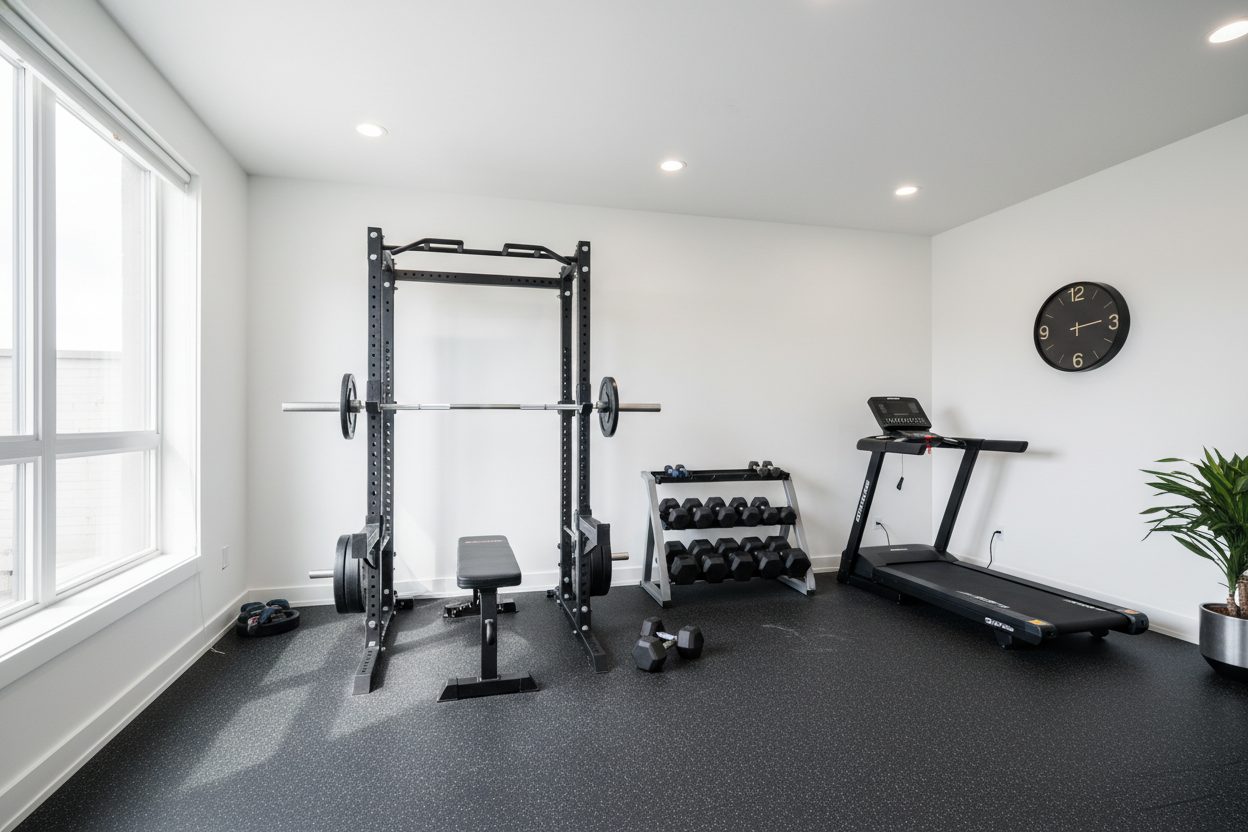
Use a power rack with safety pins or spotter arms. Set them just below your chest height for benching and just below your squat depth. Never lift heavy alone without a physical fail-safe.