How to Build a Machines Workout That Actually Saves Time
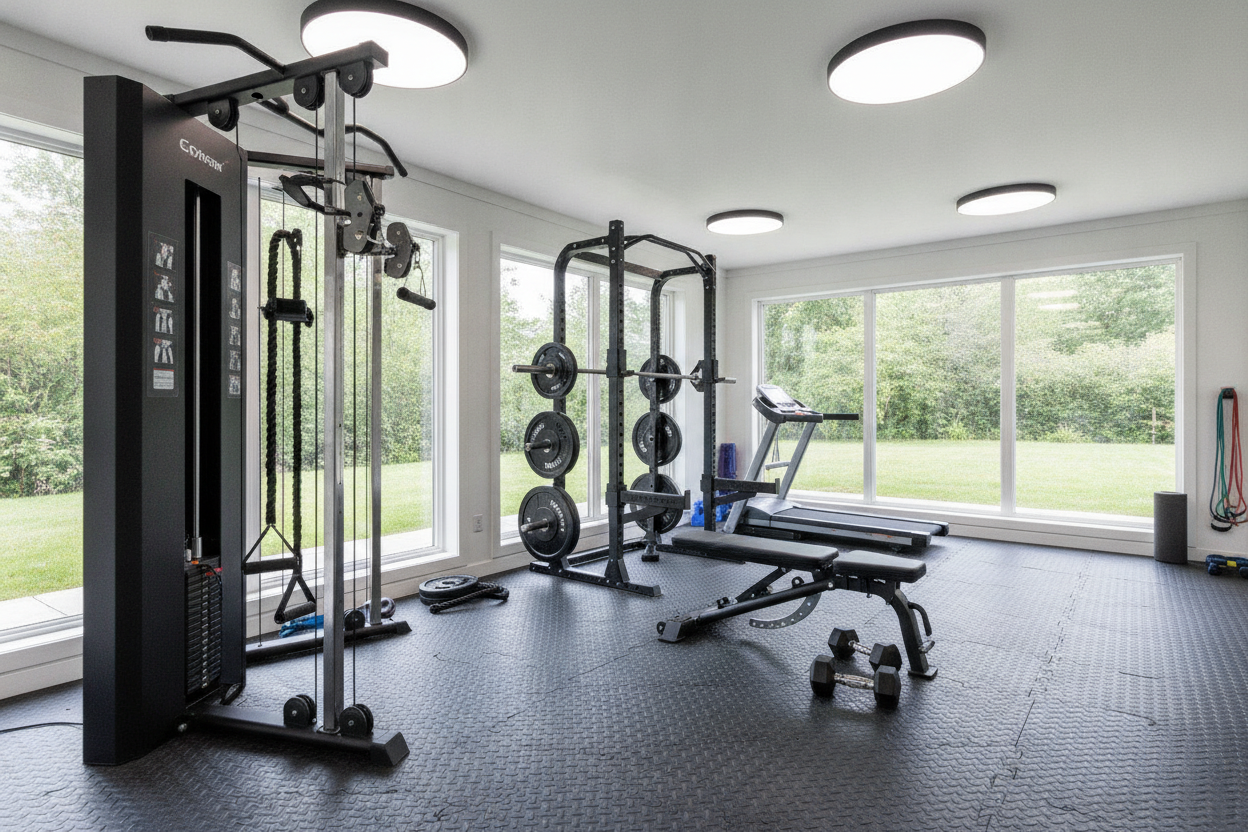
I remember staring at my first all-in-one home station, thinking I had finally escaped the $60-a-month commercial gym trap. Then I spent twenty minutes of my first session fumbling with sticky carabiners and swapping a 48-inch lat bar for a pair of nylon d-handles. By the time I finished my third set, my heart rate had plummeted and I was scrolling through my phone instead of training.
Building a machines workout at home is a different beast than hitting a line of dedicated Nautilus pieces. You only have one or two cable exit points, which means the logistics of your routine matter as much as the weight on the stack. If you do not have a plan for the transition, you are just moving metal around without any real intensity.
Quick Takeaways
- Group exercises by cable height to minimize adjustment time.
- Invest in high-quality climbing-grade carabiners to replace the cheap ones that come with the unit.
- Superset machine movements with dumbbells to keep the tension high.
- Use a dedicated floor mat to prevent the machine from 'walking' across the room during heavy rows.
Stop Treating Your Multi-Gym Like a Commercial Cable Setup
The biggest mistake I see guys make is trying to run a standard 'Bro Split' on a single-stack home machine. In a commercial gym, you walk from the lat pulldown to the seated row. At home, that transition involves unhooking the long bar, dragging the bench out of the way, and hooking up the footplate. If you do this five times a workout, you have wasted fifteen minutes of prime lifting time.
Inefficient transitions are the silent killer of any weight loss machine workout. When your rest periods stretch to three minutes because you are fighting with a rusted clevis pin, your metabolic demand drops. You lose the pump, you lose the focus, and you lose the calorie burn. You need to treat your home machine like a single, evolving tool rather than a collection of separate stations.
The Secret to Flow: Grouping by Cable Height
To keep the intensity high, you have to organize your movements by pulley position. I follow a simple 'High-to-Low' or 'Low-to-High' strategy. Start with everything that requires the top pulley—lat pulldowns, tricep pushdowns, and high-to-low cable flys. Once those are done, move the carriage to the middle or bottom and never look back.
This flow allows you to master the universal workout machine exercises without the constant mechanical friction of resetting the machine. For example, I’ll pair a standing cable chest press with a face pull at the same height. The only thing that changes is which way I am facing. This keeps the 'Time Under Tension' high and the 'Time Wasted Fiddling' low. If your machine doesn't have a smooth sliding carriage, this becomes even more critical for your sanity.
Don't Neglect Your Legs When You Workout With a Machine
Most home weight workout machine designs treat the lower body as an afterthought. You usually get a mediocre leg developer that feels more like a shin-bruiser than a muscle-builder. The leverage is often weird, and the range of motion is usually cut short by the frame. But that is no excuse to just do upper body and call it a day.
If your current setup feels like it’s going to tip over when you try to do a heavy leg extension, you need better equipment. I eventually added a dedicated leg extension curl machine to my garage because I wanted a pivot point that actually aligned with my knees. If you are stuck with an all-in-one, try doing single-leg movements. It doubles the time, sure, but it halves the load on the machine's frame, making the movement feel much smoother and more stable.
Blending Dumbbells With Your Weight Workout Machine
I am a huge fan of 'Mechanical Drop Sets' using a hybrid approach. Cables provide constant tension that dumbbells simply can't match, especially at the top of a chest fly or a lateral raise. However, dumbbells allow for a more natural path of motion. I like to start a set on the cable machine to fatigue the muscle with that constant resistance, then immediately grab a pair of 35s to finish the set.
When you workout with machine and free weights simultaneously, you get the best of both worlds. You get the safety and stability of the machine for your heavy sets, and the freedom of dumbbells for your finishers. For a library of these hybrid routines, I usually point people toward the complete workout hub. It is better to use the machine as a tool in the toolbox rather than the entire garage.
Save Your Joints (and Your Hardwood Floors)
Heavy cable rows and lat pulldowns put a massive amount of downward and lateral pressure on your floor. I learned the hard way that a 250-lb weight stack slamming down can crack a concrete slab or ruin a laminate floor over time. Plus, if the machine is on a slick surface, it will start to shift or 'walk' when you are pulling heavy weight, which ruins your alignment and can tweak your lower back.
Do yourself a favor and get a heavy-duty exercise mat to sit under the footprint of the machine. It dampens the noise—which your family will appreciate during 6 AM sessions—and it provides the grip you need to plant your feet during heavy rows. A stable base is the difference between a machine that feels like a piece of junk and one that feels like a professional rig.
Personal Experience: The 'Cheap Carabiner' Incident
A few years back, I was doing heavy face pulls on a budget functional trainer. I had the stack pinned at about 150 lbs. Halfway through the set, the cheap, zinc-plated carabiner that came with the machine literally snapped in half. The handle flew back and caught me right in the bridge of the nose. I spent the next hour in the ER getting three stitches and a lot of 'I told you so' looks from my wife. Now, I replace every single stock clip with 25kN-rated climbing carabiners. It costs twenty bucks and saves you a trip to the hospital. Don't trust your face to a five-cent piece of mystery metal.
FAQ
Can I build muscle using only machines?
Absolutely. Your muscles don't know the difference between a 40-lb dumbbell and a 40-lb cable stack. They only know tension. Machines actually make it easier to reach true failure because you don't have to worry about balancing the weight.
How often should I grease the pulleys?
If you hear a squeak, you're already late. I hit my guide rods with a silicone-based spray every three months. Never use WD-40; it attracts dust and turns into a sticky sludge that will ruin the smoothness of your pull.
Are 1:1 or 2:1 ratios better?
It depends on your goals. A 1:1 ratio means 100 lbs on the stack feels like 100 lbs. A 2:1 ratio (common on functional trainers) means 100 lbs feels like 50 lbs but gives you more cable travel. For heavy compound moves, 1:1 is king. For isolation and 'flow' workouts, 2:1 is much smoother.