Stop Sabotaging Your Weight Loss Machine Workout: The Correct Plan
Walk into any commercial gym, and you will see the same scene: rows of people sitting on resistance machines, scrolling through their phones, waiting for the “burn” to happen. If that sounds familiar, you are likely leaving results on the table.
Machines are often dismissed by purists as inferior to free weights, but for fat loss, they are a tactical weapon if used with high intensity. They provide stability, allowing you to push muscles to absolute failure safely. The problem isn't the equipment; it's the intensity. This guide breaks down a scientifically sound weight loss machine workout designed to spike your metabolism and keep it elevated long after you leave the gym.
Key Takeaways: The Strategy
- Focus on Compound Machines: Prioritize equipment that moves multiple joints (e.g., Leg Press, Chest Press) over isolation tools (e.g., Bicep Curl).
- Utilize Circuit Training: Move from one machine to the next with minimal rest to mimic cardio intensity while building muscle.
- Control the Eccentric: Spend 3 seconds lowering the weight to maximize muscle fiber recruitment.
- Progressive Overload: If you aren't increasing weight or reps every week, your body has no reason to burn more fat.
Why Machines Are Secret Weapons for Fat Loss
There is a misconception that you need to be jumping around doing burpees to lose weight. While cardio burns calories during the activity, resistance training builds muscle tissue, which is metabolically expensive. The more muscle you carry, the more calories your body burns at rest.
A gym machine workout routine for weight loss offers a unique advantage: Mechanical Tension without Stability Fatigue. When you squat with a barbell, your lower back or core might tire out before your legs do. On a leg press machine, you can hammer the quads until total failure without risking injury. This allows for higher volume and greater metabolic stress.
The "Big 5" Circuit: A Gym Equipment Workout Plan for Weight Loss
To maximize efficiency, we will structure this as a circuit. Do not rest between exercises. Rest 90 seconds only after completing one full round. Aim for 3 to 4 rounds.
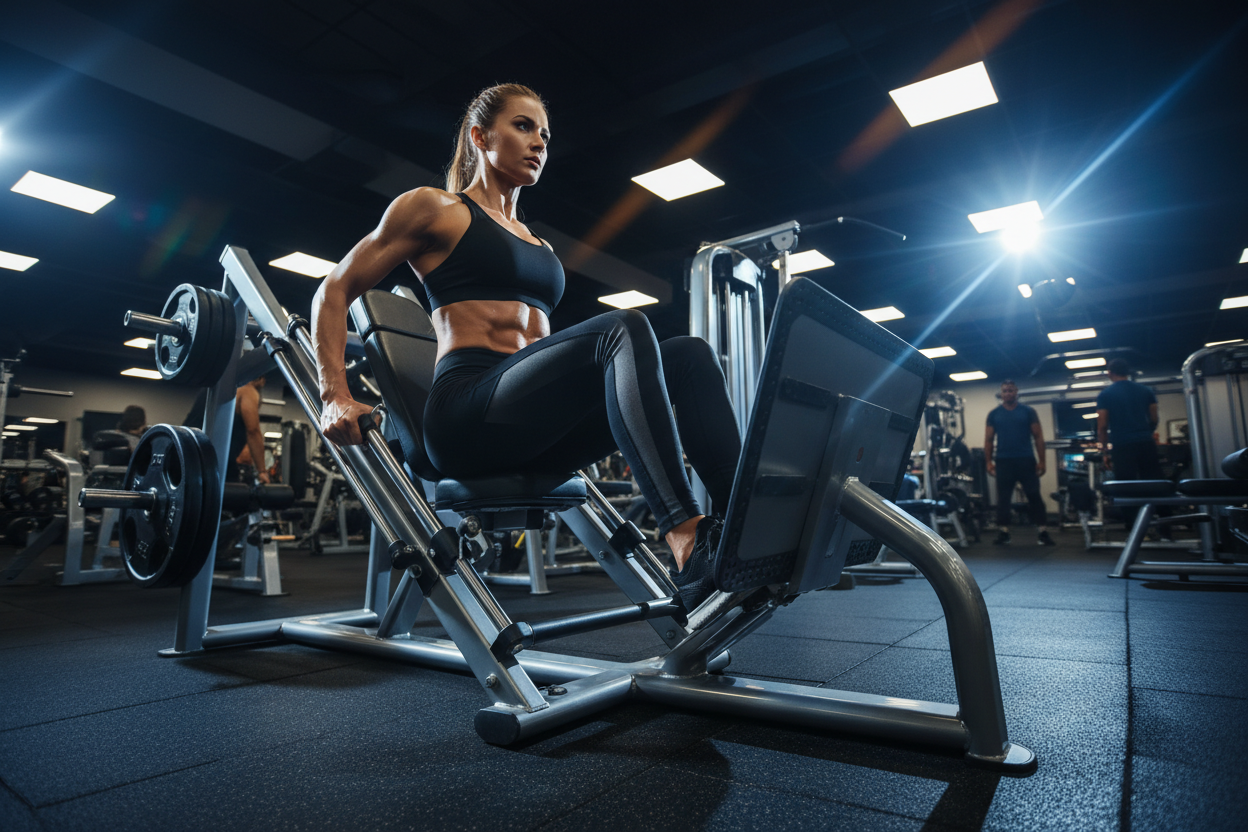
1. Seated Leg Press (12-15 Reps)
This is your engine builder. Place your feet shoulder-width apart. As you lower the sled, keep your lower back glued to the pad. If your hips lift, you are going too deep. Push through your heels, not your toes, to engage the glutes and hamstrings.
2. Wide-Grip Lat Pulldown (10-12 Reps)
This targets the largest muscles in your back. A wider back creates the illusion of a smaller waist. The key here is to initiate the pull with your elbows, not your hands. Think about tucking your elbows into your back pockets.
3. Seated Chest Press (10-12 Reps)
Most weight loss gym equipment workout plan guides skip this, but the pectorals are massive muscles. Adjust the seat so the handles align with your mid-chest. Press forward explosively and take three full seconds to return to the starting position.
4. Seated Cable Row (12-15 Reps)
Posture correction is vital for weight loss aesthetics. Keep your chest up and pull the handle toward your belly button. Squeeze your shoulder blades together at the peak of the movement like you are cracking a walnut.
5. Machine Overhead Press (10-12 Reps)
Finish the circuit by targeting the shoulders. This completes the full-body stimulus. Be careful not to arch your back excessively; let the machine support your spine.
Common Mistakes With Weight Machine Workouts for Weight Loss
The machine provides the path of motion, but you provide the effort. The biggest error I see is the "gravity drop." This happens when you push the weight out and then let it slam back down.
You are cheating yourself out of 50% of the rep. The lowering phase (eccentric) causes the most micro-tears in the muscle, which requires energy (calories) to repair. Control the weight stack; don't let it control you.
My Training Log: Real Talk
I want to be honest about what a proper weight machine workout for weight loss actually feels like. I remember testing this specific circuit a few years ago when I was recovering from a minor ankle sprain and couldn't use free weights.
The first round felt easy. I thought, "This is just sitting down." But by the middle of the third round on the Leg Press, reality set in. There is a specific, uncomfortable heat that builds up in the quads when you don't rest between machines. I recall the gritty texture of the rubber handle on the chest press slipping slightly because my palms were sweating so much—something that rarely happens to me with barbells.
The worst part wasn't the weight; it was the nausea. Because the machines stabilize your body, you can push much harder than you think. I remember sitting on the locker room bench afterward, staring at my shoelaces, waiting for my heart rate to drop below 140. That’s when you know the workout worked. If you leave the gym looking fresh, you didn't push the intensity.
Conclusion
Stop viewing machines as the "easy" option. When applied with circuit-style intensity, a weight machine workout for weight loss can be just as grueling and effective as any CrossFit WOD. The secret lies in the rest periods—keep them short, keep the weight heavy enough to challenge the last two reps, and respect the recovery process.
Frequently Asked Questions
Can you really lose weight just using gym machines?
Yes. Weight loss is determined by a caloric deficit. Gym machines build muscle mass, which increases your resting metabolic rate (BMR). A circuit-style machine workout also burns significant calories during the session due to the elevated heart rate.
How often should I do this machine workout?
For optimal results, perform this routine 3 times per week on non-consecutive days (e.g., Monday, Wednesday, Friday). This allows your muscles 48 hours to repair and grow, which is the process that consumes energy and burns fat.
Is it better to do high reps or heavy weight for weight loss?
Ideally, use a moderate weight where you reach failure between 12 and 15 reps. Extremely high reps (20+) often result in boredom or poor form, while very low reps (1-5) are for strength, not necessarily metabolic conditioning. The 12-15 range strikes the perfect balance for hypertrophy and calorie burn.