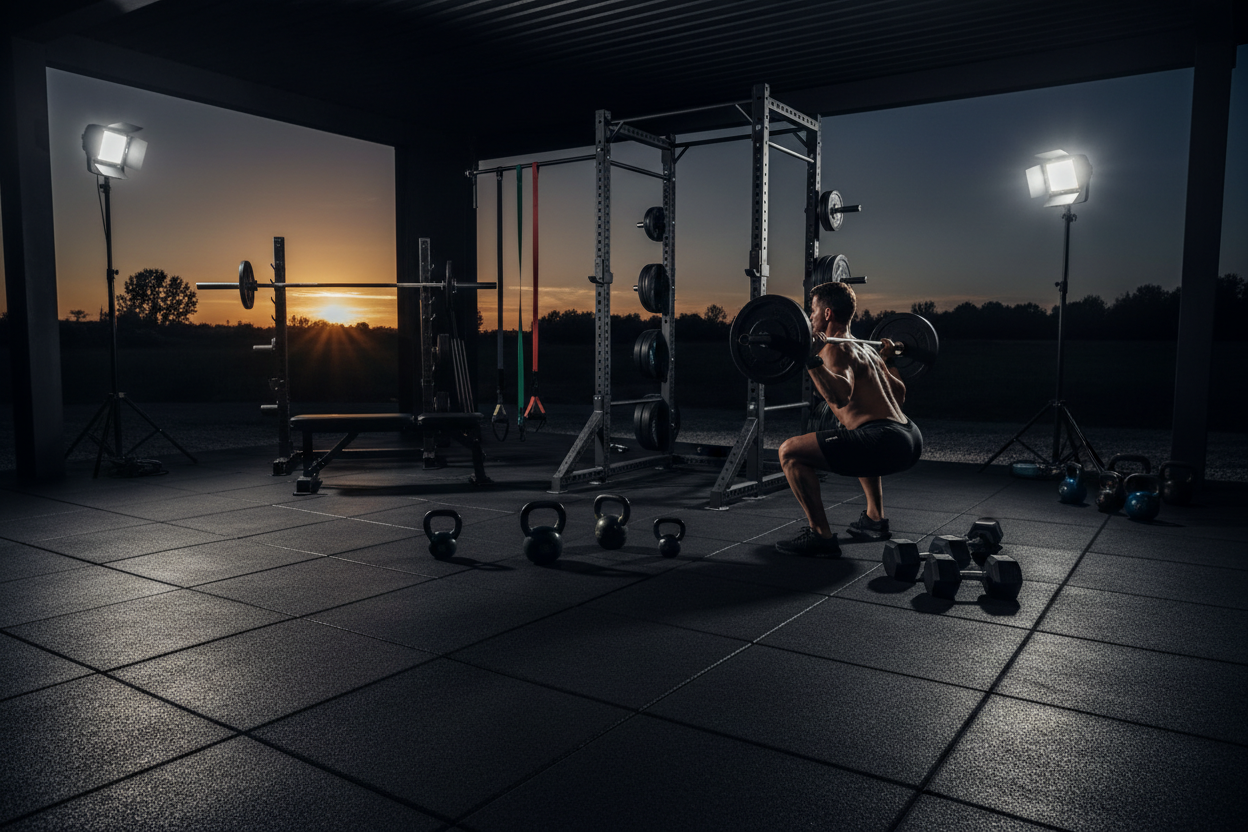
Outdoor Large Rubber Mats: The Ultimate Backyard Gym Guide
Taking your workouts outside is one of the best ways to break through a training plateau. There is nothing quite like hitting a heavy lifting session in the fresh air and natural sunlight.
But there is a catch: concrete driveways, patio pavers, and wooden decks are unforgiving. They will chew up your expensive bumper plates and wreck your joints during high-impact exercises. That is exactly where high-quality outdoor large rubber mats come into play.
In this guide, we will break down exactly what you need to look for when building an outdoor training space, from weather resistance to thickness requirements, ensuring your gear and your joints stay protected year-round.
Key Takeaways
- Thickness matters: Aim for at least 1/2-inch to 3/4-inch thickness if you plan on dropping heavy weights.
- Vulcanized rubber is king: It resists moisture absorption, preventing the mat from freezing or cracking in winter.
- UV protection is essential: Without it, direct sunlight will cause standard mats to crumble and release strong odors.
- Drainage is non-negotiable: Look for textured bottoms or waffle patterns to prevent water pooling on wooden decks.
Choosing the Right Mat for the Elements
Not all gym flooring is created equal, and taking indoor stall mats outside is a recipe for disaster. You need materials specifically engineered for the elements.
Thickness and Impact Absorption
If you are dropping kettlebells or heavy barbells, impact absorption is your primary concern. A thin 1/4-inch mat might be fine for yoga or light stretching, but it will not protect a concrete driveway from a dropped deadlift. For serious strength training, 3/4-inch commercial-grade thickness is the gold standard.
UV and Moisture Resistance
When shopping for a large outdoor rubber rug, you must prioritize UV stability. Standard indoor mats will bake in the sun, eventually degrading into a crumbly mess. Vulcanized rubber is non-porous, meaning it will not absorb rain or snow, making it ideal for a permanent outdoor setup.
Sizing Your Backyard or Patio Setup
Planning your outdoor gym space requires precise measurements, especially since outdoor areas often lack the clear boundaries of an indoor room.
Calculating Your Footprint
If you are setting up a squat stand and a lifting zone, a single 4x6 foot mat will not cut it. You will likely need to tape together multiple pieces or invest in a rubber outdoor mat large enough to cover an 8x8 foot area. This ensures your bench, rack, and feet remain on a level, grippy surface during heavy lifts, preventing dangerous slips.
Weathering the Storm: Long-Term Care
Durability is the main reason you invest in premium outdoor flooring, but a little maintenance goes a long way in extending the lifespan of your gym base.
Cleaning and Drainage
To prevent mold and mildew beneath the surface, ensure your setup has a slight grade for water runoff. A quick sweep to remove abrasive dirt and an occasional hose-down with a mild soap is usually all it takes to keep the surface performing optimally.
From Our Gym: Honest Take
We test a lot of gear, and taking our barbell club outside was a game-changer. Last summer, I set up a dedicated deadlift station on my concrete patio using 3/4-inch vulcanized outdoor mats. Here is the honest truth: they perform flawlessly under heavy loads, and the grip is actually better than my indoor stall mats when my hands get sweaty.
However, there is a minor caveat. Even with UV treatment, the deep black color faded to a dusty charcoal after a few months of direct afternoon sun. It does not affect the performance or structural integrity at all, but if you want them looking brand new forever, you will need to occasionally apply a rubber floor finish. Also, at roughly 100 pounds per mat, moving them solo is a serious workout in itself—grab a friend for the initial setup.
Frequently Asked Questions
Are outdoor large rubber mats safe to leave in the rain?
Yes, provided they are made of non-porous, vulcanized rubber. This prevents water from seeping into the material, expanding, and causing the mat to crack during freezing temperatures.
How thick should a rubber outdoor mat be for weightlifting?
For general fitness and dumbbell work, 3/8-inch is sufficient. However, if you are dropping barbells or heavy kettlebells, you need at least a 3/4-inch mat to protect the underlying concrete or patio stones from cracking.
Will a large outdoor rubber rug damage my wooden deck?
It can if water gets trapped underneath for extended periods. If placing rubber mats on wood, ensure the mats have a grooved or waffle-patterned bottom to allow for airflow and drainage, which prevents wood rot and mildew.