Hip Thrust Bench vs Glute Bench: Which Is Right for You?
Quick answer: A hip thrust bench is a padded box at about the height of a standard bench, around 16". It's made for barbell hip thrusts. A lower, longer glute bench supports more of your back and suits shorter lifters, glute bridges and step-ups. The GXMMAT Hip Thrust Bench is 15.75" tall ($119.99). The GXMMAT Glute Bench is 11.81" tall and 23.62" long ($149.99). Both are rated to 500 lb and have anti-slip bottoms.
Key takeaways
- Bench height matters most. The bench should sit just below your shoulder blades when you're seated on the floor.
- Hip thrust bench (15.75"): the classic barbell hip thrust height, best for average and taller lifters.
- Glute bench (11.81", longer pad): better for shorter lifters, beginners, bridges and step-ups.
- Both beat a regular weight bench for hip thrusts. They don't tip or slide, and they're padded where your back rests.
Why not just use a regular weight bench?
You can, but there are three common problems: a lightweight bench can slide or tip as you drive your hips up, the edge can dig into your back, and its height may not suit your body. A dedicated hip thrust box solves all three with a stable, wide base, a padded edge and an anti-slip bottom.
Hip thrust bench vs glute bench: comparison
| GXMMAT Hip Thrust Bench | GXMMAT Glute Bench | |
|---|---|---|
| Price | $119.99 | $149.99 |
| Height | 15.75" | 11.81" |
| Length × width | 13.78" × 17.72" | 23.62" × 17.72" |
| Back support area | 0.16 m² | 0.15 m² |
| Cover | 1000D mesh-reinforced PVC | 500D mesh-reinforced PVC |
| Fill | High-density EPE foam | High-density EPE foam |
| Bottom | Anti-slip | Anti-slip |
| Weight capacity | 500 lb | 500 lb |
How to choose the right height
Sit on the floor with your back against the bench. The edge should land just below your shoulder blades. That lets your torso pivot over the edge as your hips rise, so your body is parallel to the floor at the top.
- Average to tall lifters usually fit a bench of about 15–16". The Hip Thrust Bench is 15.75".
- Shorter lifters often find a 16" bench pushes the edge into the neck or upper shoulders. The Glute Bench's 11.81" height fits better.
- Between sizes? Sitting on a thin mat raises you slightly. Placing the bench on a mat while you sit on the floor lowers it relative to you.
What else can you do with each bench?
| Exercise | Hip Thrust Bench | Glute Bench |
|---|---|---|
| Barbell hip thrust | Best | Good for shorter lifters |
| Single-leg hip thrust | Yes | Yes |
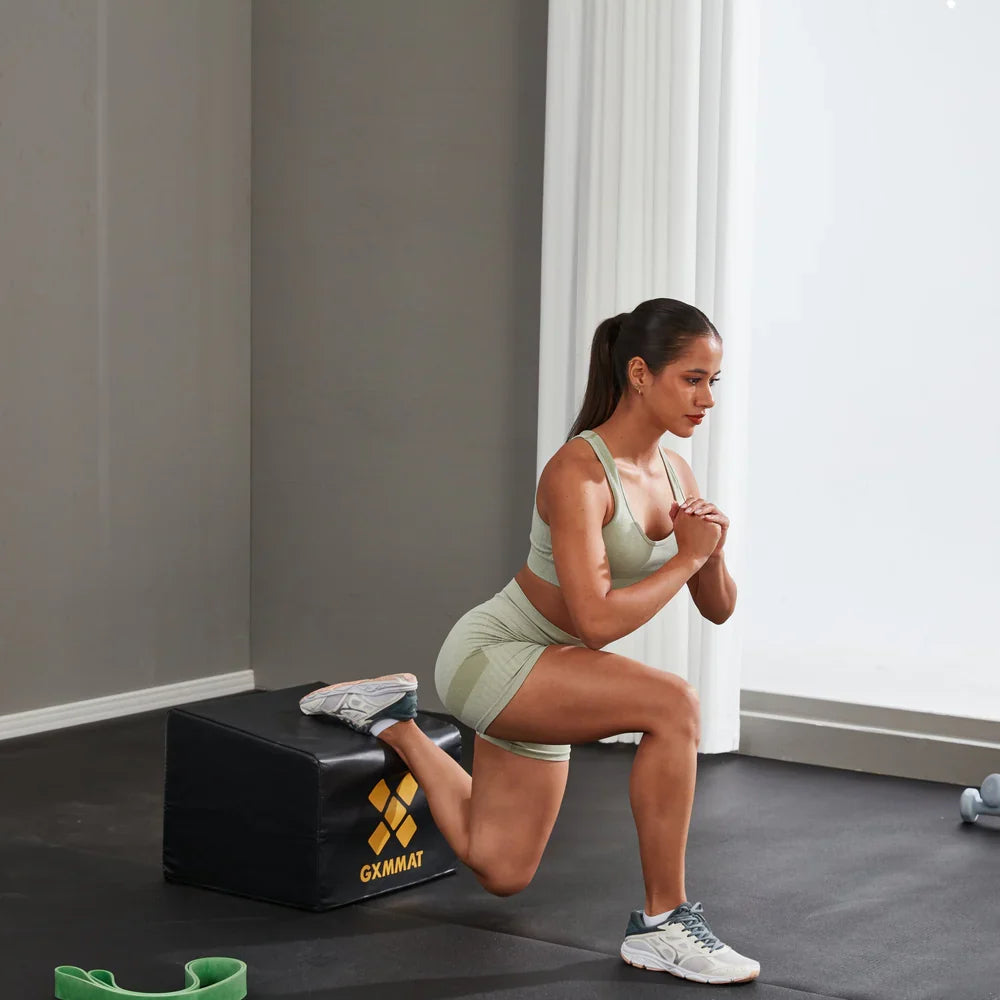
| Bulgarian split squat (rear foot elevated) | Yes, standard height | Yes, easier for beginners |
| Step-ups | Higher, harder | Lower, beginner-friendly |
| Elevated glute bridge (feet on bench) | Yes | Yes, longer pad |
| Decline push-ups, seated work | Yes | Yes |
How to do a barbell hip thrust
- Sit on a gym mat with your upper back against the bench, edge just below your shoulder blades.
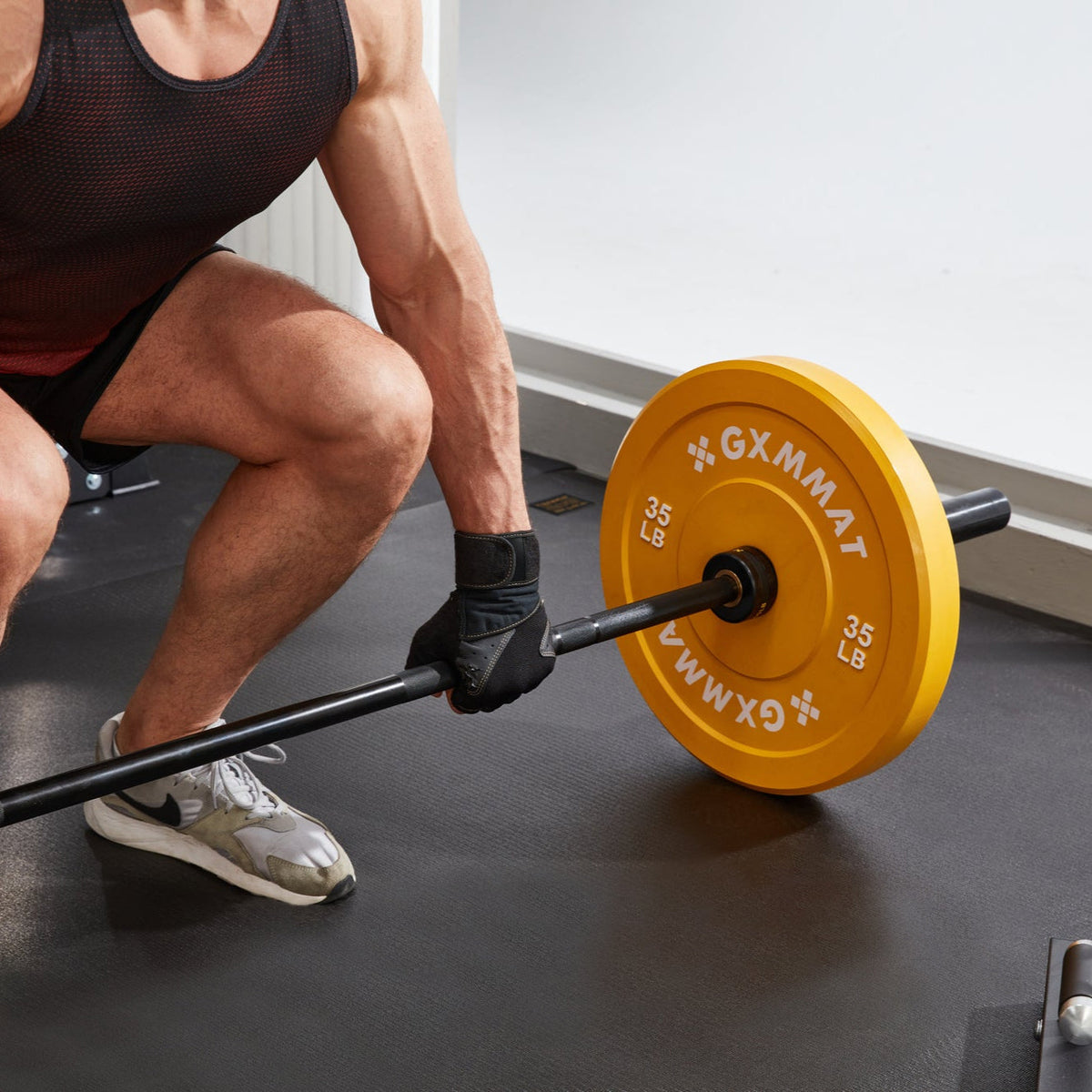
- Roll a loaded barbell over your legs until it sits in the crease of your hips. Use a bar pad for comfort. Full-size bumper plates make it easier to roll the bar into position.
- Plant your feet about hip-width apart so your shins are vertical at the top.
- Tuck your chin slightly, brace, and drive through your heels until your hips are fully extended. Squeeze your glutes for 1–2 seconds.
- Lower under control and repeat. Start with 3 sets of 8–12 reps.
Which one should you buy?
- Buy the Hip Thrust Bench if you're about average height or taller and barbell hip thrusts are your main goal.
- Buy the Glute Bench if you're shorter, new to hip thrusts, or want a longer, lower platform for bridges and step-ups.
FAQ
What height should a hip thrust bench be?
Most lifters do well with about 15–16", so the edge sits just below the shoulder blades when you're seated on the floor. Shorter lifters may prefer about 12".
Is a hip thrust bench worth it?
If you train glutes regularly, yes. A dedicated hip thrust bench doesn't slide or tip, it's padded where your back rests, and it sets you up quickly for barbell and single-leg hip thrusts.
Can you do hip thrusts on a regular bench?
Yes, if it's stable and the right height. Many flat benches slide or tip during heavy hip thrusts, so brace the bench against a wall or rack, or use a dedicated hip thrust box.
What's the difference between a hip thrust and a glute bridge?
A hip thrust is done with your upper back on a bench, which allows a bigger range of motion. A glute bridge is done lying on the floor with a shorter range of motion.
How much weight can the GXMMAT hip thrust bench hold?
The GXMMAT Hip Thrust Bench and Glute Bench are both rated to 500 lb.
Written by Yuvien Royer for GXMMAT. Specifications come from official GXMMAT product pages.