Barbell Collars: Do You Need Them and Which Type Is Best?
Quick answer: Yes, you should use barbell collars. They stop plates sliding off the sleeve, which keeps the bar balanced and protects you, your floor and your equipment. For a home gym, choose quick-release (lock-jaw style) collars over spring clips: they lock tighter, go on with one hand and don't pinch your fingers. Make sure they fit a 2" (50 mm) Olympic sleeve.
Key takeaways
- Collars matter most for squats, overhead work, deadlifts and any lift where the bar can tilt.
- Spring clips are cheap but loosen over time and can be hard to squeeze.
- Quick-release collars lock firmly with a lever and are the best all-round home gym choice.
- Check the size: Olympic bars use 50 mm sleeves, and standard 1" bars need different collars.
Why do you need barbell collars?
When a bar tilts even slightly, during a lopsided squat, a deadlift lockout or a bench press where one arm is weaker, plates creep outward. If plates slide off one side, the bar suddenly becomes unbalanced and can whip to the other side. Collars keep the load fixed, so:
- the bar stays balanced, which is safer when you train alone;
- plates don't rattle or slide, so training is quieter (helpful in apartments and garages);
- you don't drop a plate onto your floor, your rack or your feet.
Types of barbell collars
| Type | How it works | Pros | Cons |
|---|---|---|---|
| Spring clip | Squeeze the handles to open, release to clamp | Cheap, light | Loosens over time, pinches fingers, weaker grip |
| Quick-release / lock-jaw | Slide on, flip a lever to lock | Firm hold, one-handed, fast plate changes | Costs more than spring clips |
| Screw / competition collar | Clamp mechanism tightened onto the sleeve | Tightest hold, competition-grade | Heavy, slow, expensive |
For most home lifters, quick-release collars are the right balance of security, speed and price.
Magnetic vs non-magnetic collars
The GXMMAT Barbell Collar comes in two styles, in red or black:
- Magnetic ($49.99): magnetic collars are designed to stick to steel surfaces like rack uprights, so they stay within reach instead of getting lost on the floor.
- Non-magnetic ($39.99): the same job for less money, if you have a storage spot already.
Both styles fit standard 2" Olympic bars like the GXMMAT 7 ft 20 kg Olympic Bar, which has 50 mm sleeves.
How to use barbell collars correctly
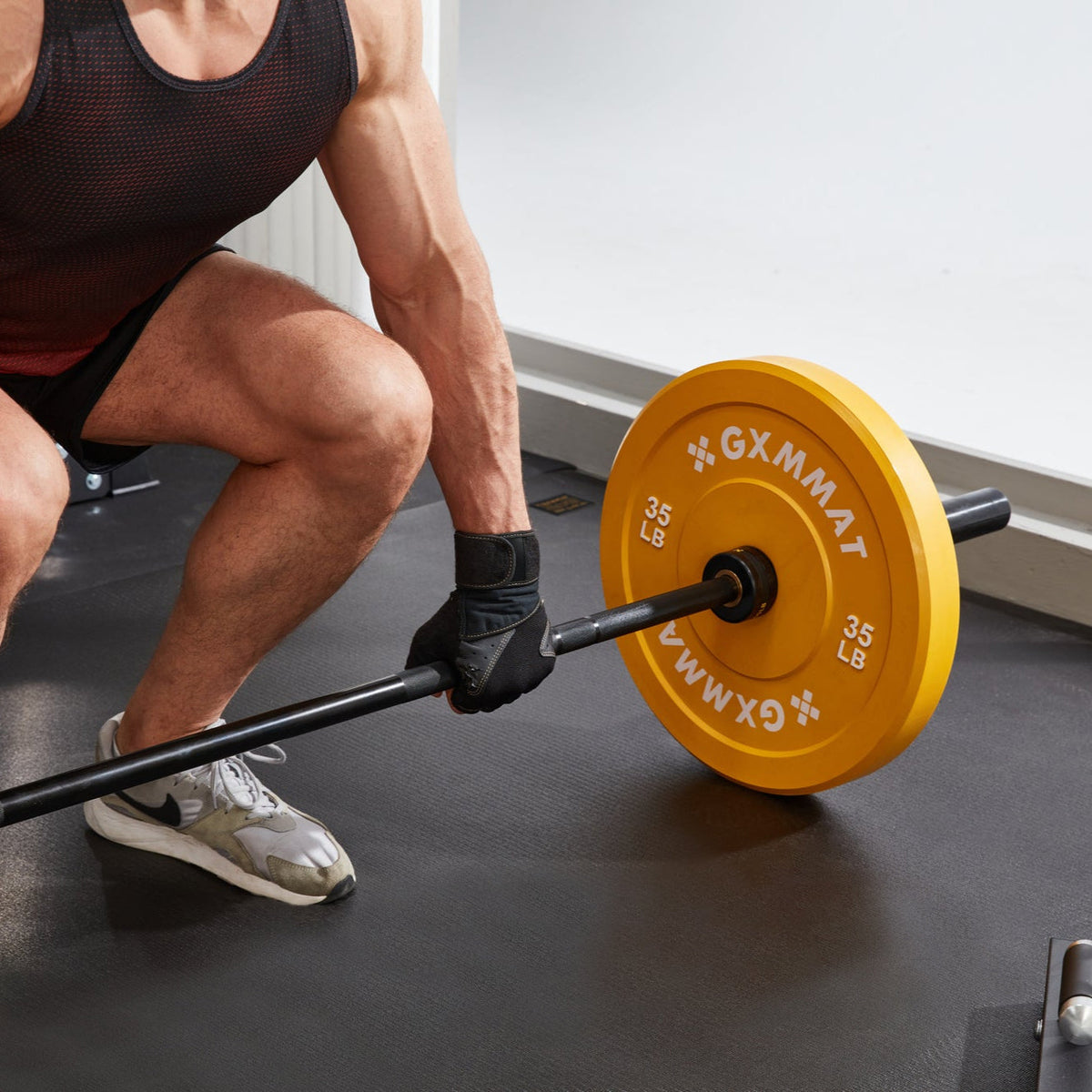
- Slide plates on and push them tight against the inner sleeve collar (the shoulder of the bar).
- Slide the collar on right up against the outermost plate. A gap lets plates shift.
- Lock it (flip the lever or release the clip) and give it a twist to check that it doesn't slide.
- Do the same on the other side, and check both before every working set.
Do collars count toward the weight on the bar?
Usually not, for training. Spring clips and most quick-release collars weigh well under a pound each. Competition collars are the exception: they weigh 2.5 kg (about 5.5 lb) each and are counted in competition totals.
Complete your barbell setup
- 230 lb bumper plate set: quiet, floor-friendly rubber plates.
- 17.5 lb change plates: 1.25, 2.5 and 5 lb plates for gradual progress.
- Horizontal plate rack: holds 330 lb with 5 dividers and rolls on wheels.
- Large exercise mat: protects the floor and reduces impact noise under your barbell area.
FAQ
Do you need collars on a barbell?
Yes, for most lifts. Collars stop plates sliding off when the bar tilts, which keeps the bar balanced and prevents dropped plates. They're especially important when training alone.
What size collars fit an Olympic barbell?
Olympic barbells have 2" (50 mm) sleeves, so you need collars made for 50 mm sleeves. Collars for standard 1" bars won't fit.
Are spring clips or quick-release collars better?
Quick-release collars are better for most home gyms. They lock more firmly, go on with one hand and don't loosen over time like spring clips.
What are magnetic barbell collars for?
Magnetic collars are designed to stick to steel surfaces such as rack uprights, so they're easy to store and always within reach.
Do barbell collars add weight?
Training collars usually weigh well under a pound and aren't counted. Competition collars weigh 2.5 kg each and are counted in competition.
Written by Yuvien Royer for GXMMAT.