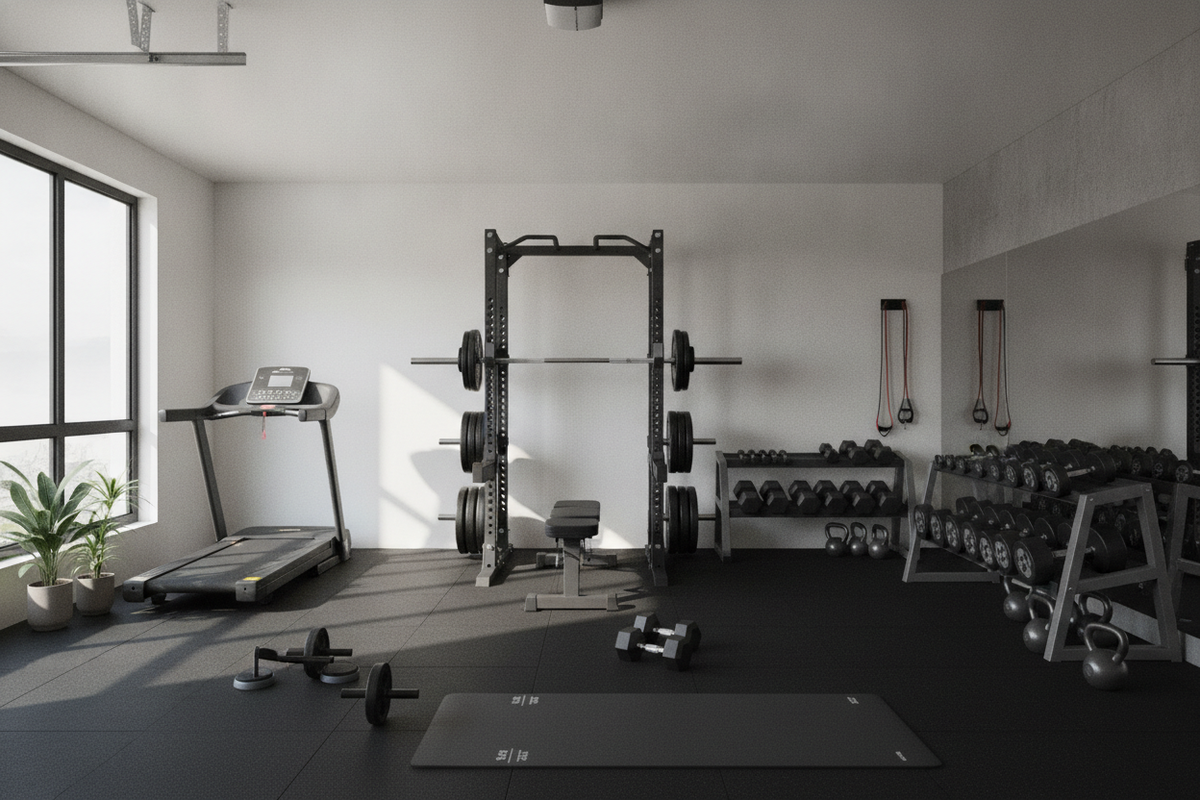
Glute Focused Leg Day: Movement Architecture, Progressive Tension Mechanics, and Floor Staging
Biomechanics of a Glute-Focused Leg Day
Designing an effective glute focused leg day requires an understanding of lower body biomechanics. While traditional quad-dominant sessions emphasize forward knee travel and deep knee flexion, a glute-biased training framework shifts mechanical leverage toward powerful hip extension and posterior chain loading. Following a detailed lower body glute guide helps organize these movement patterns for balanced structural development.
Hip Extension vs. Knee Dominance Mechanics
The primary distinction between standard lower body sessions and a glute-centric protocol lies in the primary axis of rotation. Movements emphasizing vertical tibia positioning reduce anterior shear at the knee while increasing tension across the hip extensors. When executing squats or split stances, maintaining a slightly forward torso inclination with a vertical shin angle places greater mechanical demand across the posterior chain compared to upright, knee-forward squatting patterns.
Primary Movement Planes and Muscle Engagement Patterns
Comprehensive training requires working through multiple planes of motion. While sagittal plane exercises like hip thrusts and deadlifts handle heavier progressive loads, integrating frontal and transverse plane movements targets hip abduction and external rotation. This balanced distribution stabilizes the pelvis during heavy compound movements and supports smooth force transfer throughout the kinetic chain.
Joint Alignment and Spinal Neutrality Considerations
Maintaining a neutral spine under load ensures mechanical forces are distributed appropriately through the hip musculature rather than the lumbar region. Establishing an active brace and coordinating pelvic tilt during hinge and thrust movements prevents unwanted lumbar hyperextension at the lockout phase of each repetition.
Core Movement Archetypes for Lower Body Glute Training
A well-rounded glute focused leg workout combines complementary movement archetypes to train muscles across varied muscle lengths. Contrasting these dedicated patterns with broader training protocols in a lower body leg guide ensures your overall split remains balanced without overtaxing overlapping muscle groups.
Horizontal Hip Thrusts and Bridge Variations
Horizontal loading patterns, such as barbell hip thrusts and glute bridges, provide peak tension when the hips reach full extension. Unlike standing barbell lifts where resistance decreases near the top of the movement, horizontal thrusts apply constant mechanical tension at the shortest muscle length, making them a cornerstone of any dedicated posterior routine.
Deep Hip Hinges and Romanian Deadlifts
Romanian deadlifts and stiff-leg hinge variations challenge the musculature at lengthened positions. Initiating the hinge by pushing the hips backward while maintaining soft knees maximizes eccentric tension across the glutes and hamstrings before driving the hips forward to return to an upright stance.
Unilateral Loading Patterns: Split Squats and Step-Ups
Single-leg variations, including rear-foot elevated split squats and controlled box step-ups, address bilateral strength discrepancies. In a home gym, pairing free weights with dedicated apparatus from a lower body collection allows lifters to train unilateral stability while progressively overloading each leg individually.
Structuring the Glute-Focused Leg Workout
A practical training session should be structured logically to maximize movement quality and maintain progressive tension throughout every working set.
Dynamic Activation and Glute Priming Framework
Before moving into heavy compound lifts, brief dynamic priming drills prepare the nervous system and mobilize joint capsules. Low-load movements such as bodyweight hinges, banded side-steps, and unweighted bridges increase joint warmth and reinforce proper hip hinge pathways.
Compound-to-Isolation Progression Sequence
Organize sessions by placing the most technically demanding, heavy compound movements at the start when energy reserves are highest:
- Primary Compound Lift: Barbell hip thrusts or heavy hinge variations focusing on controlled eccentric phases.
- Secondary Compound Movement: Unilateral split squats or Romanian deadlifts targeting single-leg control.
- Isolation and Accessory Work: Cable kickbacks, abductions, or seated band work to accumulate focused volume without excessive systemic fatigue.
Work-to-Rest Pacing and Density Strategies
Rest intervals should reflect the mechanical demands of each lift. Heavy compound sets benefit from longer recovery windows to restore force production capabilities, whereas unilateral and isolation accessories can be paced with shorter turnarounds to maintain session density.
Home Gym Floor Staging and Environmental Setup
Executing heavy hip thrusts and deadlifts in a home training environment requires proper floor staging to safeguard subfloors and ensure lifter safety under load.
Subfloor Protection Under Heavy Hip Thrusts and Deadlifts
Point-load stress generated by loaded barbells and utility benches can damage underlying concrete or wood subfloors. Laying a dedicated workout product creates a protective barrier that absorbs surface impacts and distributes mechanical load across a wider surface area.
Traction and Lateral Grip Requirements for Stance Stability
Foot slippage during split squats or heavy deadlifts compromises lifting mechanics and increases the risk of loss of balance. High-density training mats with textured non-slip surfaces provide the necessary friction to anchor the feet securely during multi-planar movements.
Bench, Barbell, and Free Weight Placement Zones
Organize your lifting perimeter logically. Position the utility bench securely against an anchored support or non-skid surface during hip thrusts to prevent horizontal drift, while keeping clearance zones clear around barbell loading collars for unhindered movement.
Flooring Care, Surface Maintenance, and Gear Longevity
Proper surface maintenance protects home gym equipment and ensures a hygienic, durable training environment over time.
Preventing Indentation Under Heavy Point-Load Resistance
Extended contact with narrow bench feet or heavy plate edges can create localized depressions on softer surfaces. Choosing dense, resilient composite materials helps mats rebound to their original flat state after intense training sessions.
Sweat-Resistant Cleaning and Surface Maintenance Protocols
Keep training surfaces clean by wiping down mats with a mild soap-and-water solution or neutral cleaner after high-intensity sessions. Non-porous surfaces prevent moisture penetration, maintaining grip performance and extending the lifespan of your flooring setup.