
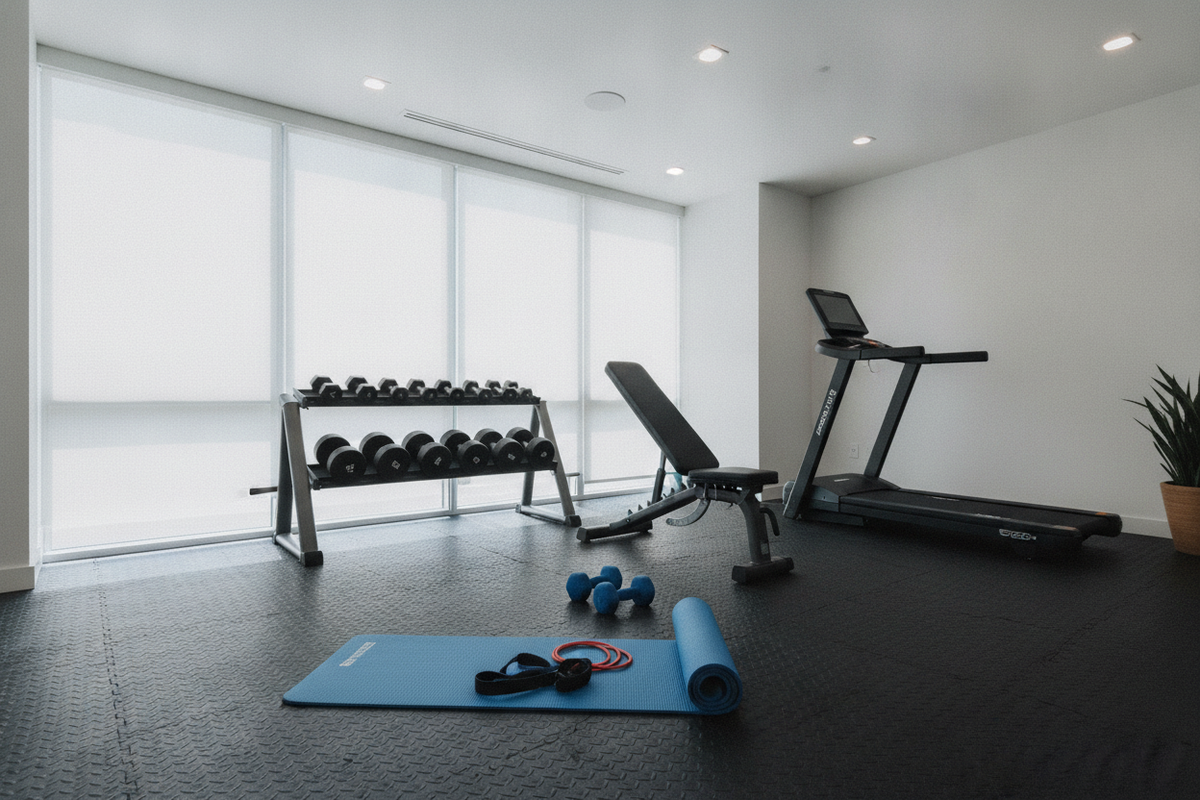
Floor Exercises for Legs: Movement Blueprints, Muscle Isolation Mechanics, and Home Mat Staging
The Biomechanics of Floor-Based Leg Training
Executing a lower body session directly on the ground changes the mechanical demands placed on the hips, knees, and torso. While traditional standing compound movements require balance and introduce downward vertical compression, performing a leg workout on the floor removes axial spinal load. This allows trainees to concentrate strictly on muscular contraction, joint alignment, and deliberate motor control.
Ground-based positioning creates external stability. Because your back, pelvis, or forearms rest against a firm surface, the body does not need to constantly adjust for balance in three-dimensional space. This stability helps isolate specific muscle groups, such as the gluteus medius, inner adductors, and hamstrings, without compensatory shifting from the lower back. Integrating structured floor exercises for legs into your weekly routine provides targeted muscular fatigue while keeping joint impact minimal.
Core Movement Planes for Lower Body Floor Workouts
An effective lower body floor workout targets muscles across multiple planes of motion. Relying on only one position limits muscle recruitment and neglects key stabilizing structures around the pelvis. Structuring your routine around four primary body orientations ensures balanced lower-body engagement:
- Supine (Face Up): Ideal for hip extension, hamstring bridging, and posterior chain recruitment. Ground support keeps the lumbar spine stable throughout the movement.
- Lateral (Side-Lying): Critical for hip abduction and adduction. Side-lying drills target the outer glutes and inner thighs to build lateral pelvic stability.
- Quadruped (All Fours): Positions the torso parallel to the ground, allowing full hip extension and rotational control against gravity without overarching the lumbar spine.
- Prone (Face Down): Excellent for direct hamstring curls and glute activation drills with minimal hip flexion involvement.
For more variations and sequencing concepts, exploring a structured floor leg workout guide can help you integrate these orientations into a seamless flow.
5 Essential Floor Exercises for Legs and Glutes
To construct a balanced leg workout floor routine at home, combine exercises that address hip extension, abduction, adduction, and knee flexion. The following movements form a solid foundation for any floor leg workout.
1. Single-Leg Glute Bridge (Supine)
Lie on your back with knees bent and feet flat on your mat, hip-width apart. Extend one leg straight or tuck the knee toward your chest. Press the heel of the working foot firmly into the ground to elevate your hips until your thighs and torso form a straight line. Pause at peak contraction, focusing on squeezing the glute before lowering slowly under control. This exercise builds unilateral hip extension power while addressing strength imbalances between sides.
2. Side-Lying Hip Abduction (Lateral)
Lie on your side with your bottom arm supporting your head and hips stacked vertically. Keep the top leg straight and slightly internally rotated so the heel leads the upward drive. Lift the leg smoothly without letting the pelvis roll backward, then return slowly to the starting position. This movement directly targets the gluteus medius, an essential stabilizer for knee tracking and gait control.
3. Side-Lying Inner Thigh Lift (Lateral)
While lying on your side, cross your top leg over and place that foot flat on the floor in front of your bottom knee. Keep your bottom leg extended straight, flex the foot, and lift the inner edge of the lower leg toward the ceiling. This floor exercise for thighs isolates the adductor group, which is often underworked during standard bilateral squats.
4. Quadruped Donkey Kick with Isometric Hold (Quadruped)
Set up on hands and knees with wrists aligned beneath shoulders and knees beneath hips. Keeping a 90-degree bend at the knee, drive one heel toward the ceiling until the thigh aligns with the torso. Avoid arching your lower back by bracing the midsection. Hold the top contraction for two seconds to maximize glute tension before returning to the start position.
5. Prone Hamstring Frog Pumps (Prone)
Lie face down, bend your knees, and press the soles of your feet together with knees spread wide. From this position, engage your glutes and hamstrings to lift your knees slightly off the floor. The short range of motion maintains constant tension on the posterior chain while eliminating momentum.
Programming Frameworks: Tempo, Volume, and Progressive Tension
Because bodyweight floor leg exercises rely on leverage rather than heavy external loads, progression depends on training density, tempo manipulation, and volume. To continue driving adaptations with a leg exercise on floor regimen, apply these programming principles:
- Extended Eccentric Tempos: Lowering the working limb over three to four seconds increases time under tension and improves muscular control.
- Isometric Pauses: Pausing for two to three seconds at peak contraction eliminates elastic rebound and forces the target muscle to work harder.
- Resistance Bands and Ankle Weights: Adding looped mini-bands around the thighs or securing soft ankle weights increases progressive resistance as basic movements become easier.
- High-Repetition Accumulation: Bodyweight lower body floor exercises respond well to higher repetition ranges, such as 15 to 25 controlled reps per set, to induce muscular fatigue.
Trainees looking to contrast bodyweight floor routines with comprehensive strength approaches can read our legs lower body guide. If you eventually decide to incorporate dedicated resistance hardware into your home gym space, you can also browse our lower body collection for equipment designed for heavier training loads.
Floor Staging and Surface Protection for Mat-Based Training
A successful floor leg workout at home requires an appropriate surface setup. Hardwood, concrete, and thin residential carpeting often create uncomfortable pressure points on the knees, hip bones, elbows, and wrists during side-lying or quadruped movements.
Selecting an expansive, high-density exercise workout product ensures your training area provides sufficient joint cushioning without sacrificing stability. A mat that is too soft can cause wrist fatigue or unstable hip alignment, while a firm, resilient surface supports clean movement mechanics and protects your subfloor from sweat and equipment wear.
Maintenance and Hygiene for Dedicated Floor Workout Zones
Regular floor routines bring your skin, clothes, and hands into direct contact with your exercise mat. Maintaining a hygienic surface preserves the material and ensures a clean home workout space:
- Post-Workout Wipe-Down: Use a mild cleaning solution or gentle mat wipe after each session to remove surface sweat and body oils.
- Air Drying: Allow the mat surface to dry completely before rolling or storing it to prevent trapped moisture and odor buildup.
- Shoe Policy: Perform floor workouts barefoot or in clean grip socks to protect the mat texture from abrasive debris and outdoor dirt.
Frequently Asked Questions About Floor Leg Exercises
Can floor leg exercises build meaningful lower-body strength?
Yes. By utilizing deliberate tempos, isometric holds, high volume, and progressive resistance tools like bands or ankle weights, floor movements effectively build muscular endurance, pelvic stability, and localized strength.
How often can I perform floor leg workouts?
Because ground-based bodyweight training generates lower joint impact and spinal fatigue than heavy standing lifts, these routines can generally be performed three to four times per week, provided you allow adequate recovery between sessions.
What should I do if my knees hurt during quadruped movements?
Ensure you are working on a dense, supportive exercise mat rather than a thin yoga mat or bare hard floor. You can also fold a towel under your support knee for extra padding, or shift to prone and supine exercises that do not require kneeling.


