Bursa Exercises Hip: 5 Low-Compression Movement Blueprints, Rehabilitation Mechanics, and Floor Staging
Biomechanical Foundations of Lateral Hip Irritation and Movement Modification
Lateral hip discomfort often stems from repetitive mechanical friction across the greater trochanter, where the iliotibial band and gluteal tendons glide over fluid-filled bursal cushions. When pelvic stability falters or the hip collapses inward during gait, these structures experience heightened tensile pull and compressive loading. Navigating this irritation requires an intentional shift away from aggressive stretching toward progressive load management, active pelvic leveling, and joint-friendly strengthening drills.
Rather than complete immobilization, which can lead to localized stiffness and diminished gluteal capacity, targeted movement helps restore neuromuscular control. Modifying exercise angles, avoiding extreme cross-body adduction, and controlling the range of motion allow the hip abductors and rotators to regain strength without aggravating sensitive connective tissues.
Compression Versus Stability: Why Form and Staging Dictate Recovery
Direct contact on unyielding surfaces is one of the most common triggers for external hip sensitivity during rehabilitation routines. When performing side-lying or floor-based movements, pressing the lateral hip against hard flooring introduces external compression right over the trochanteric area. This mechanical stress can undermine the therapeutic benefit of the exercise.
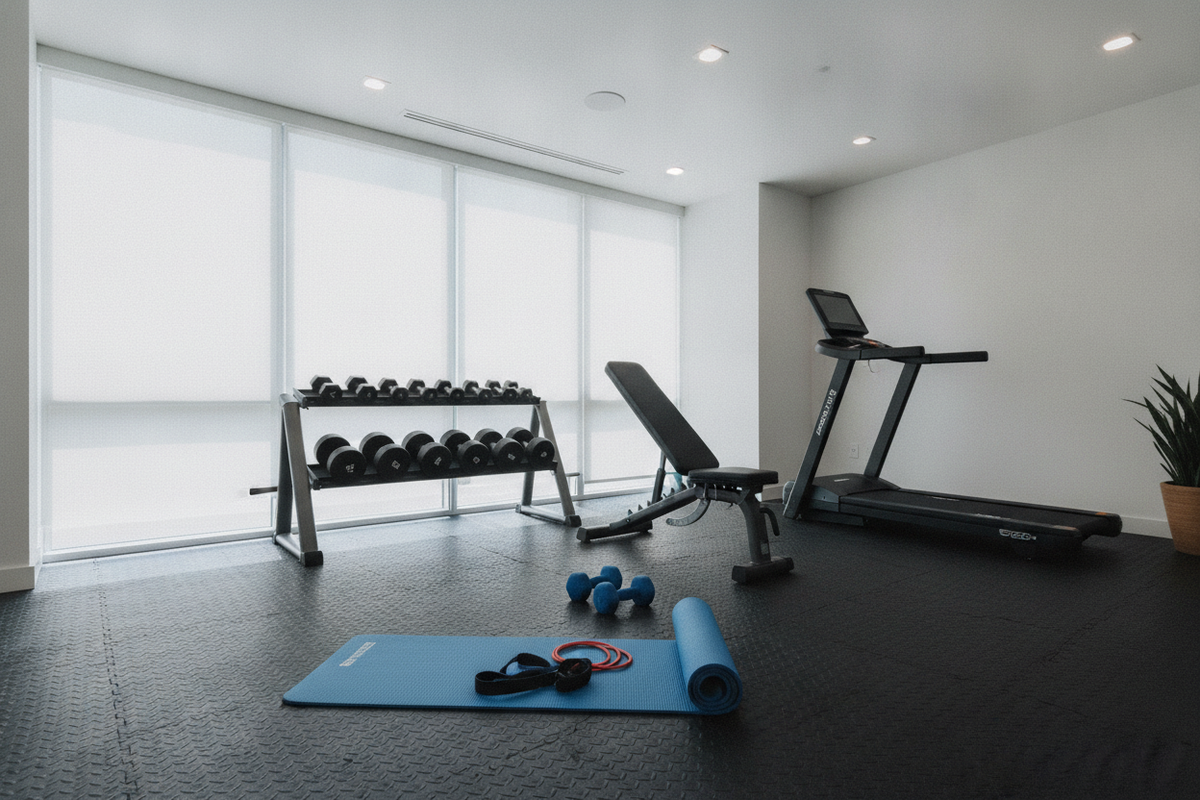
Structuring a protective workout space with a dedicated exercise mat helps disperse point pressure away from bony landmarks. A resilient, cushioned surface allows you to perform foundational recruitment drills in comfort, maintaining proper pelvic alignment without bracing against floor pain.
5 Low-Compression Bursa Exercises for Hip Stability and Relief
A structured routine moves from non-weight-bearing isometrics to controlled, dynamic standing drills. The following five exercises are designed to activate the gluteus medius, gluteus maximus, and deep hip stabilizers while minimizing compressive shear across the outer hip.
1. Isometric Supine Glute Bridges with Neutral Knee Alignment
Supine bridges strengthen the posterior chain without imposing lateral shear stress on the outer hip. Lying on your back with your knees bent and feet planted flat hip-width apart, gently engage your core and press through your heels to raise your hips into a straight line from knees to shoulders. Maintain equal spacing between your knees to avoid inward collapse. Hold at the top for three to five seconds before slowly lowering back down.
2. Quadruped Fire Hydrants and Gentle Lateral Openings
Assuming an all-fours position removes direct contact pressure from the lateral hip while engaging the core and hip abductors. Keeping your hands beneath your shoulders and knees under your hips, lift one bent leg out to the side in a smooth arc without twisting your lumbar spine. Focus on pure hip abduction within a comfortable range of motion, pausing briefly at the top before returning under control.
3. Clamshells with Cushioned Pelvic Staging
Side-lying clamshells target the deep external rotators and gluteus medius. When setting up, position yourself on a supportive, cushioned surface or place a soft pad beneath the resting hip. Bend your knees at a comfortable angle with feet stacked, and lift the top knee upward while keeping your pelvis rolled slightly forward. Moving within a controlled arc ensures the gluteus medius does the work rather than the tensor fasciae latae.
4. Standing Hip Abductions with Wall Anchoring
Standing exercises train both dynamic movement on the working side and isometric pelvic stabilization on the stance leg. Stand tall next to a sturdy wall for balance, keep your toes pointed straight ahead, and slowly sweep the outside leg away from your centerline. Avoid leaning your torso to the side; keep your shoulders and pelvis level throughout the repetition to maximize stabilizer recruitment.
5. Supported Figure-Four and Kneeling Hip Flexor Openers
Gentle mobility work maintains functional range across the hip capsule without requiring deep cross-body pulling. While seated tall in a chair or resting supine, rest an ankle over the opposite thigh and gently hinge forward from the hips until a mild, comfortable opening is felt across the posterior glute. Avoid pulling aggressively on the knee to protect the lateral bursal interface from excessive tension.
Movement Modifications and Exercises to Avoid During Acute Flares
Navigating lateral hip discomfort requires recognizing which movement patterns create unnecessary joint friction. Extreme adduction, deep cross-legged sitting, and aggressive IT band foam rolling directly over the bony prominence can heighten irritation. Evaluating your gym equipment choices—similar to assessing whether a hip machine good guide aligns with current movement tolerance—ensures you avoid overloading sensitive hip structures during training sessions.
Cardio Adaptations and Low-Impact Conditioning
High-impact running and deep repetitive stair-climbing can introduce repetitive shock vectors that challenge irritated hip tissues. Swapping high-impact sessions for smooth-cadence stationary cycling, incline treadmill walking with short strides, or rhythmic stepping drills executed on a dedicated large exercise mat for cardio 6x12 provides conditioning without harsh landing forces.
Home Gym Floor Staging: Protecting Sensitive Contact Points
Executing physical therapy exercises on bare concrete, thin carpeting, or hard tile transmits excessive ground reaction forces directly into joint contact points. This makes maintaining proper positioning uncomfortable and discourages consistent daily practice.
Upgrading your workout area with a resilient large exercise mat provides broad spatial coverage and multi-point cushioning. This expanded foundation allows you to transition smoothly between supine, quadruped, and standing stability drills while shielding hips, knees, and wrists from unyielding subfloors.
Floor Hygiene and High-Density Mat Maintenance
Maintaining a dedicated rehabilitation surface requires simple, consistent floor care. Wipe down high-density surfaces with a mild soap-and-water solution or gentle exercise mat cleaner after each session. Keeping the mat free of dust and moisture preserves its non-slip traction, ensuring stable footing during single-leg balance and lateral loading exercises.
Weekly Progression Framework: Rebuilding Hip Resilience
Sustainable hip health depends on structured, gradual progression. Begin with static holds and non-weight-bearing recruitment to wake up dormant stabilizers before progressing into standing dynamic movements and loaded patterns, similar to the balanced rehabilitation concepts detailed in our pain physical therapy guide.
- Phase 1 (Active Calming): Focus on supine glute bridges, seated posture resets, and quadruped holds with zero joint flare.
- Phase 2 (Controlled Loading): Introduce side-lying clamshells on cushioned surfaces and standing wall abductions.
- Phase 3 (Functional Integration): Progress toward bodyweight squats with neutral knee alignment, single-leg balancing, and step-downs.
By pairing low-compression movement selection with high-density floor staging, you can systematically rebuild lateral hip stability, protect joint interfaces, and cultivate durable lower-body strength.