Build Concrete Legs: The Ultimate Lower Body Workout for Men
Most guys treat leg day like a visit to the dentist: necessary, but dreaded. You see it in every gym—impressive upper bodies balancing precariously on toothpick legs. But here is the reality: ignoring your legs limits your total body potential. A proper lower body workout for men isn't just about filling out your jeans; it is the primary driver for systemic growth, hormonal release, and athletic power.
If you want a physique that commands respect, you have to build it from the ground up. This guide strips away the fluff and focuses on the biomechanics and programming that actually drive hypertrophy and strength.
Key Takeaways
- Compound First: Isolate later. Your workout must center around multi-joint movements like squats and deadlifts to maximize motor unit recruitment.
- Frequency Matters: Hitting legs once a week is rarely enough for natural lifters. Aim for a frequency of 1.5 to 2 times per week.
- Progressive Overload: You cannot grow if you do not add weight, reps, or improve technique over time.
- Mobility is Strength: Tight hips limit depth. Limited depth reduces muscle activation. Prioritize mobility to unlock full range of motion.
The Physiology of Leg Growth
Before we touch a barbell, you need to understand the mechanism. The lower body houses the largest muscle groups in your anatomy: the gluteus maximus, quadriceps, and hamstrings. Training these muscles under heavy loads triggers a systemic testosterone and growth hormone release that benefits your entire body, including your chest and arms.
Many lower body workouts men try fail because they focus on "the pump" rather than mechanical tension. Leg extensions are fine, but they don't produce the neurological demand required for serious mass. We need to create significant structural stress to force the body to adapt.
The Pillars of Lower Body Training
1. The Squat (The King)
There is no substitute. Whether it's high-bar, low-bar, or front squat, this movement recruits the entire posterior chain and anterior chain simultaneously. The science is simple: squats allow for the heaviest load over the longest range of motion.
Coach's Tip: Don't obsess over "ass to grass" if your lower back rounds (butt wink). Go as deep as your mobility allows while maintaining a neutral spine. That tension is where the growth happens.
2. The Hinge (Deadlifts and RDLs)
While squats dominate the quads, the hinge pattern targets the posterior chain—specifically the hamstrings and glutes. This is crucial for knee health and preventing injuries.
Romanian Deadlifts (RDLs) are particularly effective for hypertrophy because they keep constant tension on the hamstrings, unlike a conventional deadlift where the weight settles on the floor.
3. Unilateral Work (Lunges/Split Squats)
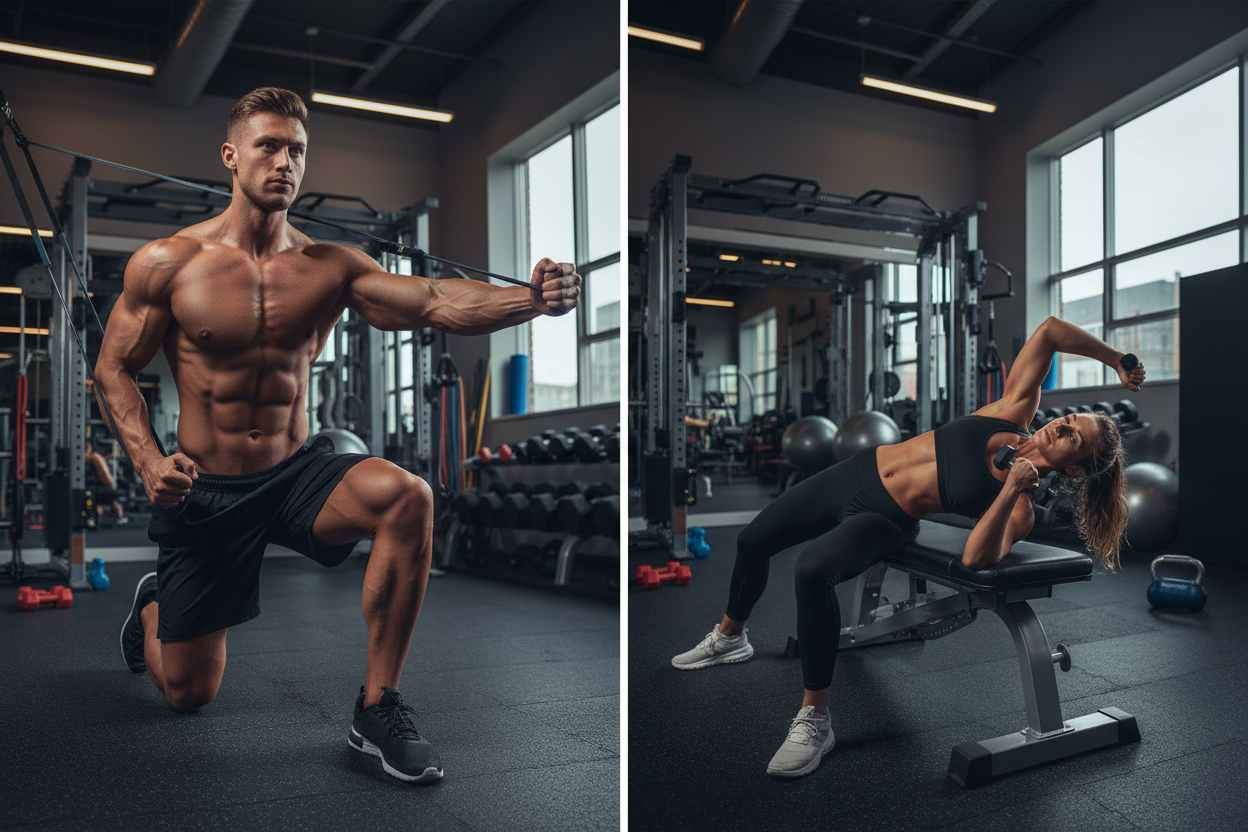
Bilateral lifts (two legs) hide imbalances. Unilateral work exposes them. Incorporating Bulgarian Split Squats or walking lunges ensures that your dominant leg isn't doing all the work. This also improves hip stability and core strength.
Structuring Your Session
Here is a no-nonsense structure applied to lower body workouts men can use for immediate results.
- Warm-up: 5-10 mins dynamic stretching (Leg swings, goblet squats).
- Primary Compound (Heavy): Barbell Squat - 3 sets of 5-8 reps. Focus on strength.
- Secondary Compound (Hypertrophy): Romanian Deadlift - 3 sets of 8-12 reps. Focus on the stretch.
- Unilateral Movement: Bulgarian Split Squats - 3 sets of 10-12 reps per leg. Focus on pain tolerance.
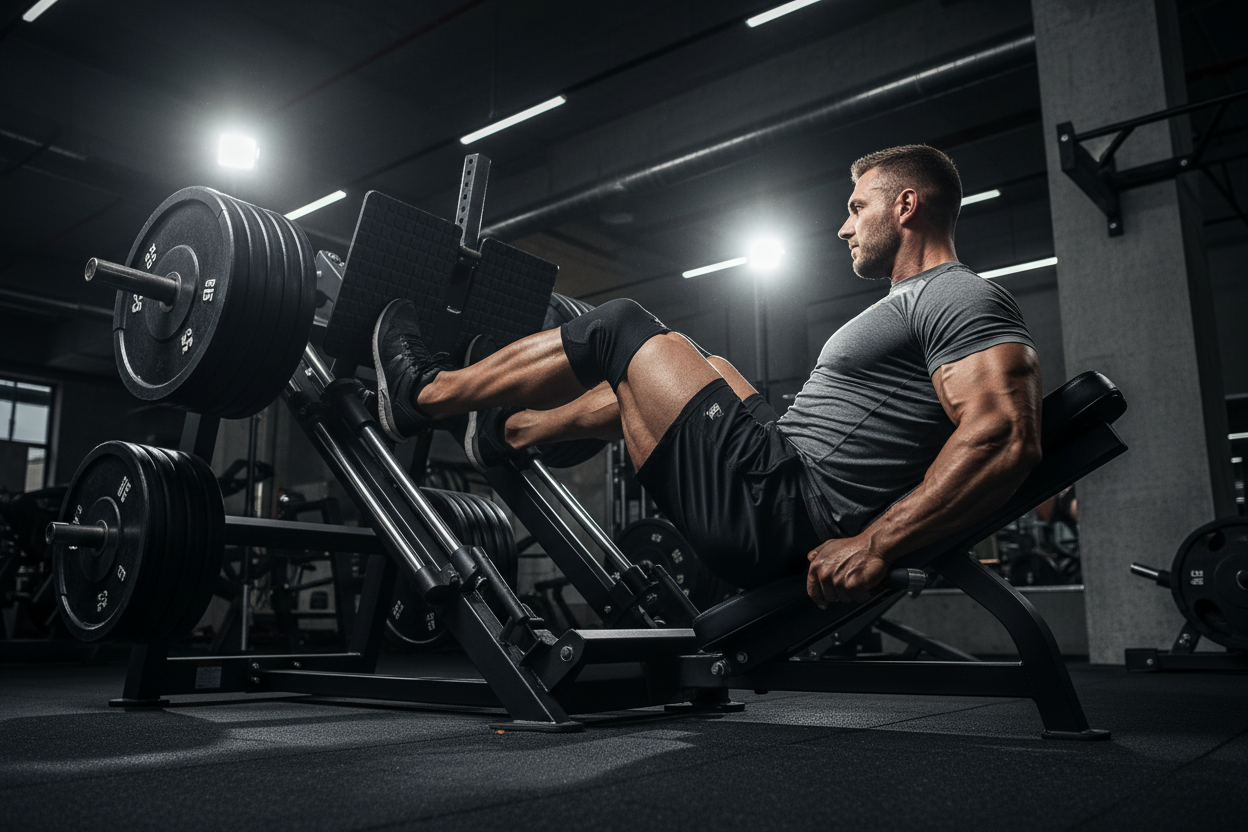
- Accessory: Leg Press or Leg Extension - 3 sets of 15-20 reps. Focus on metabolic stress (the burn).
- Calves: Standing Calf Raise - 4 sets of 15-25 reps.
My Personal Experience with lower body workout for men
I’ve tried every split routine in the book, from 5x5 stronglifts to high-volume bodybuilding programs. But I remember the specific moment I realized I was training wrong. I was doing a heavy set of leg presses, stacking plates until the machine was full, thinking I was strong.
Then I switched to deep, high-bar squats. I stripped the weight down to barely two plates. The humbling part wasn't the weight; it was the wobble. In the hole (the bottom of the squat), my knees caved, and my core felt like jelly. I realized my "strength" on the leg press was an illusion.
The worst part? The "waddle" the next day. I'm not talking about general soreness. I mean the specific inability to engage the clutch in my car without using my hand to push my knee down because my quads were completely fried. That specific, deep muscle exhaustion is the signal that you've actually done the work. If you can walk down the gym stairs normally after leg day, you didn't go hard enough.
Conclusion
Building legs takes grit. It requires a willingness to endure discomfort that upper body training rarely demands. But the payoff is a balanced, powerful physique that functions as well as it looks. Stick to the compounds, track your numbers, and don't skip the unilateral work.
Frequently Asked Questions
How often should men train their lower body?
For most natural lifters, training legs twice a week is optimal. This allows you to split volume between a "Squat focus" day and a "Hinge/Deadlift focus" day, ensuring recovery while hitting the frequency sweet spot for hypertrophy.
Can I build big legs with just dumbbells?
Yes, to a point. Movements like Goblet Squats, Dumbbell RDLs, and Walking Lunges are incredibly effective. However, eventually, grip strength becomes a limiting factor before your legs are fully fatigued. You may need to increase reps or decrease rest times to compensate for the lower absolute load.
What if squats hurt my knees?
Knee pain during squats is often a technique or mobility issue, not an exercise issue. It usually stems from poor ankle mobility or weak glutes. Try switching to Box Squats or Reverse Lunges, which place less shear force on the knee joint, while you work on your mobility.