Fat Loss Muscle Building Diet Plan: Home Guide
Finding the right balance between shedding unwanted tissue and developing strength often feels complicated, yet a structured fat loss muscle building diet plan provides the clear roadmap lifters need. Many people assume that changing body composition requires choosing between gaining size or cutting down, but combining deliberate nutrition with focused resistance work makes simultaneous changes practical. Through thoughtful adjustments to your daily food choices and exercise habits, you can encourage your body to tap into stored fat while preserving and shaping lean tissue.
Can you lose fat and build muscle on the same diet plan?
Yes, achieving body recomposition on a single eating schedule is entirely possible when you balance daily energy needs with consistent strength training. Rather than forcing severe calorie restriction, an effective fat loss and muscle gain meal plan creates a mild caloric deficit that nudges your metabolism to mobilize stored fat while supplying sufficient building blocks for lean muscle. When paired with regular lifting sessions that demand progressive overload, this approach signals your muscles to adapt and grow rather than break down during daily tasks.
Sustaining this dual outcome depends on maintaining an intentional energy balance over weeks and months. Severe dietary cuts cause fatigue, reducing your capacity to lift challenging weights on your exercise mat. Conversely, a measured nutrition plan for fat loss and muscle gain ensures steady energy levels throughout the day, helping you perform demanding dumbbell exercises without sacrificing recovery or training intensity.
Building Blocks of a Fat Loss Muscle Building Diet Plan
A reliable diet plan for fat loss and muscle gain relies on wholesome staples that digest smoothly and keep appetite steady. To preserve active tissue during a caloric deficit, your daily protein intake must remain dependable across every meal. Distributing quality protein through the day supports muscle protein synthesis and keeps hunger manageable between training blocks. Readers exploring daily plate composition can review our building muscle diet guide for deeper meal structuring ideas.
Alongside consistent protein intake, integrating complex carbohydrates provides the sustained fuel required for challenging resistance training. Sources like oats, brown rice, sweet potatoes, and quinoa replenish muscle glycogen without creating abrupt energy crashes. Pairing these starches with healthy fats—such as olive oil, avocados, nuts, and seeds—supports cellular function and helps slow digestion for lasting satiety. Emphasizing unprocessed whole foods simplifies your fat loss muscle building diet plan, making it easier to maintain moderate portions without feeling deprived.
Prioritizing Protein for Lean Tissue Retention
Maintaining lean muscle while body fat decreases requires regular supplies of amino acids. High-protein staples such as poultry, fish, tofu, Greek yogurt, and eggs should anchor each plate. Spreading protein intake evenly from morning until evening prevents prolonged periods where muscle tissue might be metabolized for basic energy needs.
Balancing Complex Carbohydrates and Quality Fats
Carbohydrates are your primary source of workout energy, while healthy fats support overall bodily processes. In a balanced meal plan to gain muscle lose fat, complex carbohydrates are best scheduled around your most active hours. Healthy fats can be moderated slightly on high-activity days to keep overall calories in check while still offering vital nutrients and culinary satisfaction.
What should you eat before and after a home lifting workout?
Timing your meals around training sessions maximizes physical output and accelerates post-workout recovery. A light pre-workout meal eaten an hour or two before exercise delivers quick-burning complex carbohydrates and easily digestible protein to prime your muscles. When preparing for intense metabolic circuits or dumbbell conditioning, consult our weight loss build guide to match your pre-session nutrition with higher training demands.
After you complete challenging sets with free weights, post-workout recovery becomes the immediate nutritional priority. A balanced meal containing lean protein and carbohydrates encourages rapid replenishment of spent energy stores while curbing post-exercise appetite spikes. Thoughtful meal timing keeps your metabolism working efficiently, turning a basic build muscle burn fat meal plan into an effective daily routine that protects hard-earned lean muscle.
Fueling Up: The Pre-Workout Meal
A quality pre-workout meal prevents early fatigue during demanding dumbbell exercises. Combining quick-digesting carbohydrates, like fruit or oatmeal, with a moderate serving of protein ensures your muscles have immediate fuel ready as you step onto your workout surface.
Rebuilding Tissue: Post-Workout Recovery
Once your workout concludes, prompt post-workout recovery supports tissue repair and reduces muscular soreness. Enjoying a combination of lean protein and starches helps direct nutrients into active tissues, keeping your build muscle lose fat meal plan working smoothly long after your weights are put away.
Sample Day for a Fat Loss and Muscle Gain Meal Plan
Putting these nutritional concepts into practice is straightforward when you organize your day around steady whole foods. A practical fat loss muscle building diet plan keeps preparations simple and repeatable across busy weekdays:
- Breakfast: Scrambled eggs or egg whites served with rolled oats, berries, and a sprinkle of chia seeds for balanced protein intake and dietary fiber.
- Lunch: Grilled chicken breast or baked tempeh with quinoa, steamed broccoli, and sliced avocado drizzled with lemon juice.
- Mid-Day Snack: Plain Greek yogurt paired with a handful of raw almonds or a crisp apple to keep hunger at bay before evening movement.
- Dinner: Pan-seared white fish or lean ground turkey alongside roasted sweet potato wedges and a generous leafy green salad with olive oil.
This layout serves as a flexible template for anyone following a meal plan to gain muscle lose fat. For additional strategies on balancing training volume with calorie management, our nutrition plans fat guide explains how to adjust portions throughout different phases of your fitness journey.
Why is home gym setup important for workout consistency?
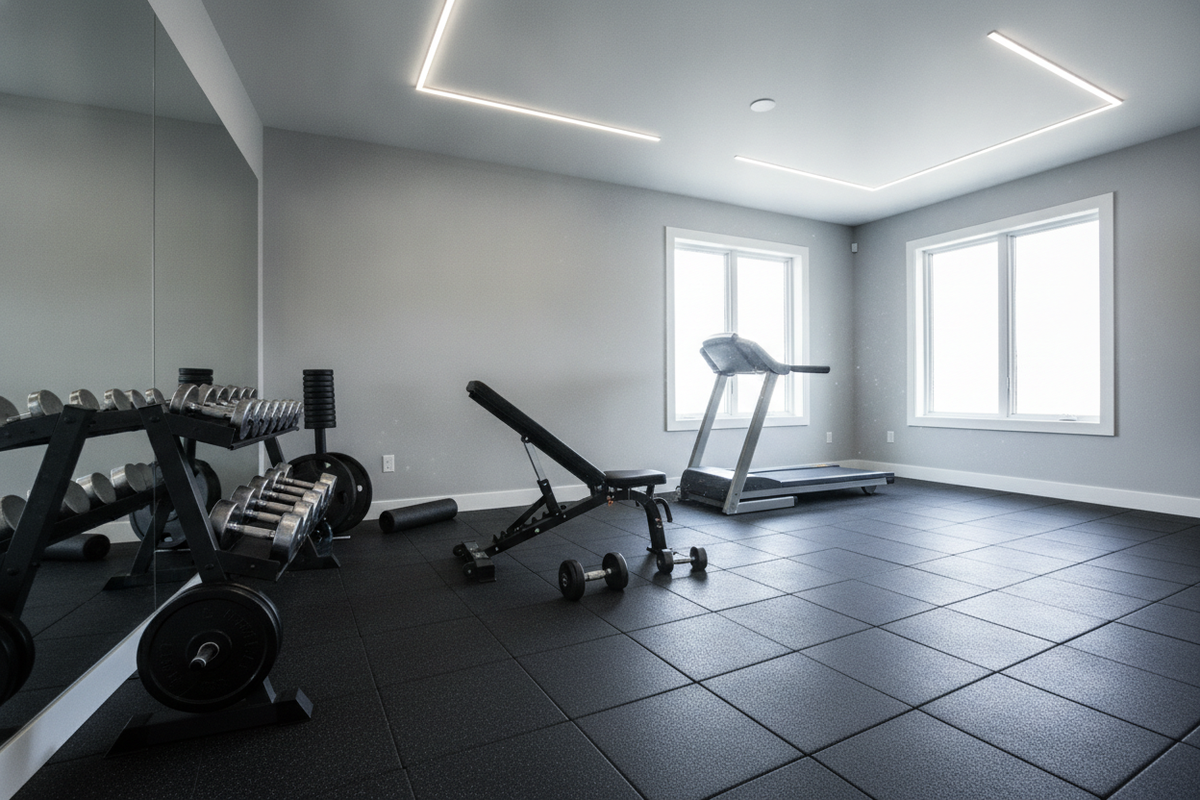
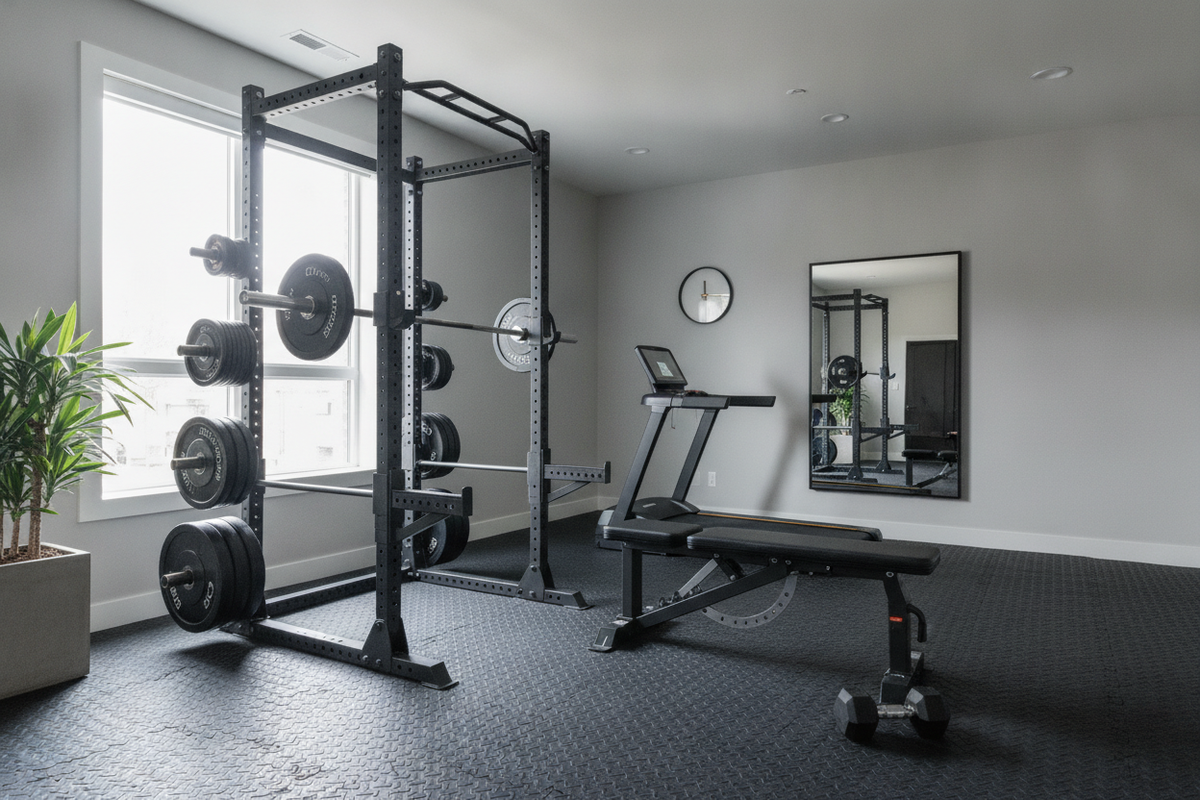
A reliable home gym environment removes daily friction, making it simple to complete scheduled resistance training sessions that drive body recomposition. When your weights and equipment are organized in an inviting layout, you are far more likely to stick with your training program week after week. Setting up a dedicated training ground with supportive gym flooring gives you the stability and confidence needed to lift heavier weights and perform floor-based movements safely.
In my experience, having a stable, non-slip exercise mat permanently rolled out makes it far easier to start a workout on days when motivation runs low. High-quality gym flooring absorbs the repeated impact of free weights, shields your household subfloors from scuffs, and creates an slip-resistant workout surface for explosive bodyweight drills. Combining this dedicated space with a structured fat loss muscle building diet plan ensures that every calorie consumed goes toward building functional lean muscle rather than lingering as unused energy.
Weekly Preparation and Batch Cooking
Sticking to your fat loss and muscle gain meal plan is vastly simpler when wholesome ingredients are ready in your refrigerator. Setting aside time for batch cooking proteins like chicken breasts, roasting trays of vegetables, and cooking large pots of grains prevents impulsive takeout orders. Lifters seeking streamlined kitchen organization can explore our meal plan muscle guide for organized weekly prep ideas.
Optimizing Your Workout Surface for Daily Training
Performing lunges, deadlifts, and dumbbell exercises requires dependable traction underfoot. Choosing dense gym flooring or a large exercise mat transforms any garage, spare room, or basement into a durable home gym. A stable workout surface cushions joints during plyometrics while offering the firm base needed to apply progressive overload on key strength movements.
Refining Your Fat Loss Muscle Building Diet Plan Over Time
Achieving body recomposition is an ongoing process of monitoring your energy balance, recovery quality, and physical changes. If strength gains begin to stall during resistance training, a minor increase in complex carbohydrates around workout windows can restore workout energy without derailing fat reduction. Conversely, if weight loss halts over several weeks, trimming a small portion of cooking oils or liquid calories can gently restore the necessary caloric deficit.
Ultimately, a successful diet plan for fat loss and muscle gain is not about rigid restriction; it is an organized framework of nutrient-dense whole foods designed to support demanding workouts. When you unite disciplined meal timing, balanced whole foods, and regular lifting sessions on a dependable home gym exercise mat, your fat loss muscle building diet plan becomes a sustainable lifestyle that builds strength and burns fat year-round.