Ego Lifting Ruined Your Dumbbell Shoulder Flexion (Here Is the Fix)
I’ve spent the last decade in garage gyms, and if there’s one thing that makes me want to throw my 45-lb bumpers through a window, it’s watching someone turn dumbbell shoulder flexion into a full-body rhythmic dance. You’ve seen it: the heavy lean back, the violent pelvic thrust, and the dumbbells swinging up like a pair of rusted pendulums. It’s a common sight when someone tries to manhandle a pair of 50s when they should be using 20s.
Most of us start this way because we want to look strong in front of the mirror. But swinging a heavy dumbbell with zero control doesn't build shoulders; it just keeps your chiropractor’s boat payment on schedule. If you want actual anterior deltoid growth, you have to kill the momentum and master the mechanics of shoulder flexion with dumbbell resistance.
Quick Takeaways
- Stop the swing: If your torso moves more than an inch, the weight is too heavy.
- Range of motion: Stop at eye level; going higher just recruits your traps.
- Stability is king: Lean against a wall to force the delts to do the work.
- Frequency: Treat these as finishers, not your primary heavy lift.
The Pendulum Problem in Most Home Gyms
The biggest issue I see in home gyms is the 'pendulum swing.' When you’re training in a solo environment, there’s no one to call you out on your garbage form. You grab the weights, you get a little tired, and suddenly you’re using a massive hip hinge to launch the dumbbells upward. This turns a precision isolation movement into a sloppy, low-back-intensive mess.
You aren't actually getting stronger when you do this. You're just getting better at using physics to bypass the muscle you’re trying to grow. When you swing the weight, the tension on the front delt is virtually zero at the start of the rep, which is where you need it most. If you can't hold the weight at the top for a full second without your lower back screaming, you’re ego lifting. Period.
What Real Dumbbell Shoulder Flexion Actually Looks Like
True shoulder flexion is a specific biomechanical action where the humerus moves forward and upward. For isolation, we want the anterior deltoid to be the primary mover. The sweet spot for this is from the starting position (dumbbells at your thighs) up to about 90 degrees (parallel to the floor). Once you go past that 90-to-110-degree mark, your scapula starts upwardly rotating and your upper traps take over the heavy lifting.
To keep the tension where it belongs, think about pushing the dumbbells 'away' from you rather than just 'up.' This slight change in intent keeps the front delt engaged throughout the entire arc. If you feel a pinch in the top of your shoulder, you’re likely internally rotating too much—keep your palms facing each other or slightly upward to clear the subacromial space. This is how you turn a mediocre front raise into a surgical tool for delt growth.
Three Cues to Stop Cheating Your Front Raises
First, lock your ribcage down. Imagine you’re about to get punched in the gut. This bracing prevents that classic 'lean back' that everyone uses to cheat the weight up. If your ribs flare, you’ve already lost the battle. Second, pin your shoulder blades back and down—not aggressively, but enough to create a stable platform. This ensures the humerus is moving in the socket without the whole shoulder girdle shrugging up to your ears.
Third, use the 'Wall Hack.' Stand with your back against a stud or a power rack upright. If your head, shoulders, or glutes leave the wall during the rep, you’re cheating. It is incredibly humbling. You might find that the 35s you usually 'crush' are suddenly impossible, and you have to drop down to 15s. That’s fine. When you integrate these cues into a dumbbell shoulder workout at home, you’ll realize that quality reps beat heavy, ugly volume every single time.
Programming Flexion Without Wrecking Your Recovery
The anterior deltoid is a workhorse, but it’s also the most overused muscle in the upper body. It’s the primary mover in your bench press, your overhead press, and even your dips. If you’re already smashing heavy sets of five on the OHP, you don't need twelve sets of isolated shoulder flexion. You’ll just end up with 'hunched-forward' posture and angry tendons.
I recommend programming these as a high-rep finisher. Think 3 sets of 12-15 reps with a slow, 3-second eccentric (the way down). This builds time under tension without requiring massive loads that stress the joint. You should also consider how this fits into your broader dumbbell chest and shoulder routine. If you’ve already done heavy incline presses, your front delts are cooked. Use the isolation work to flush the muscle with blood, not to set a PR.
Why Your Floor Is Messing Up Your Standing Isolation Lifts
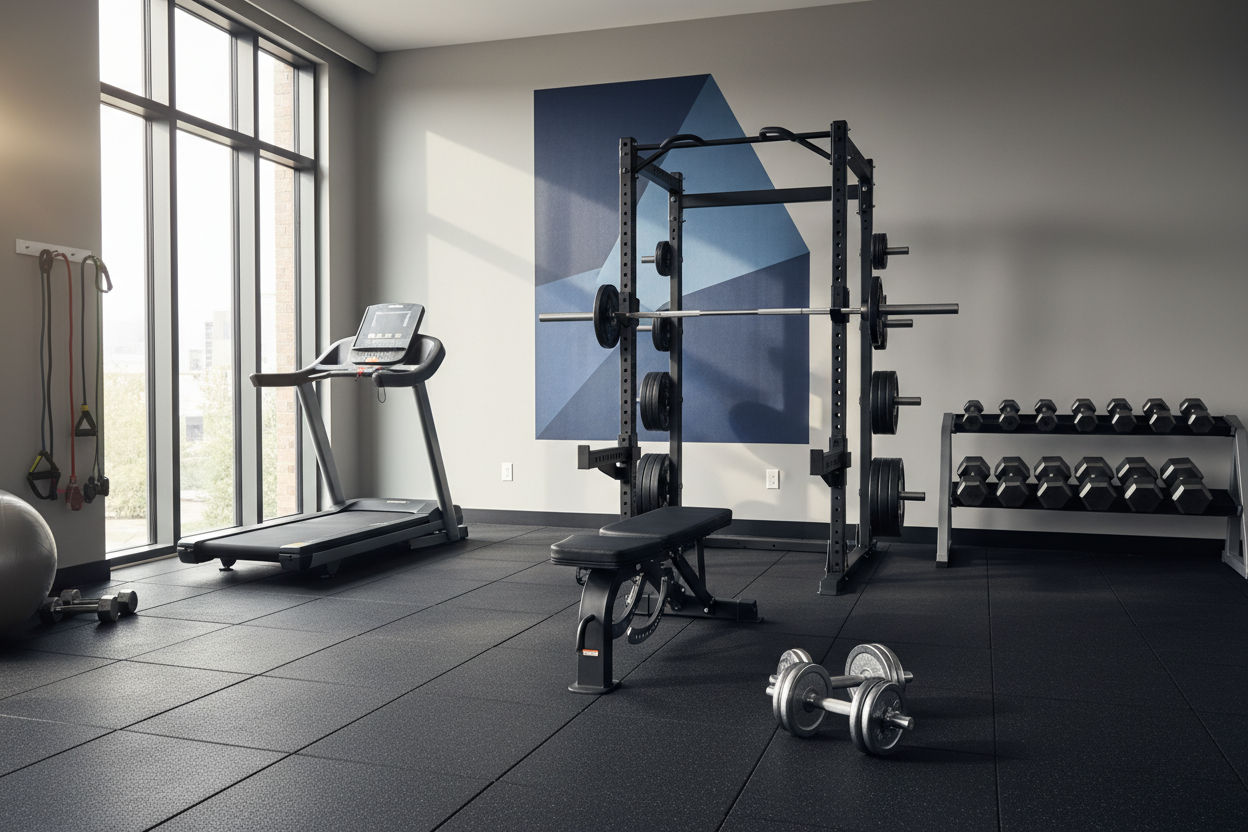
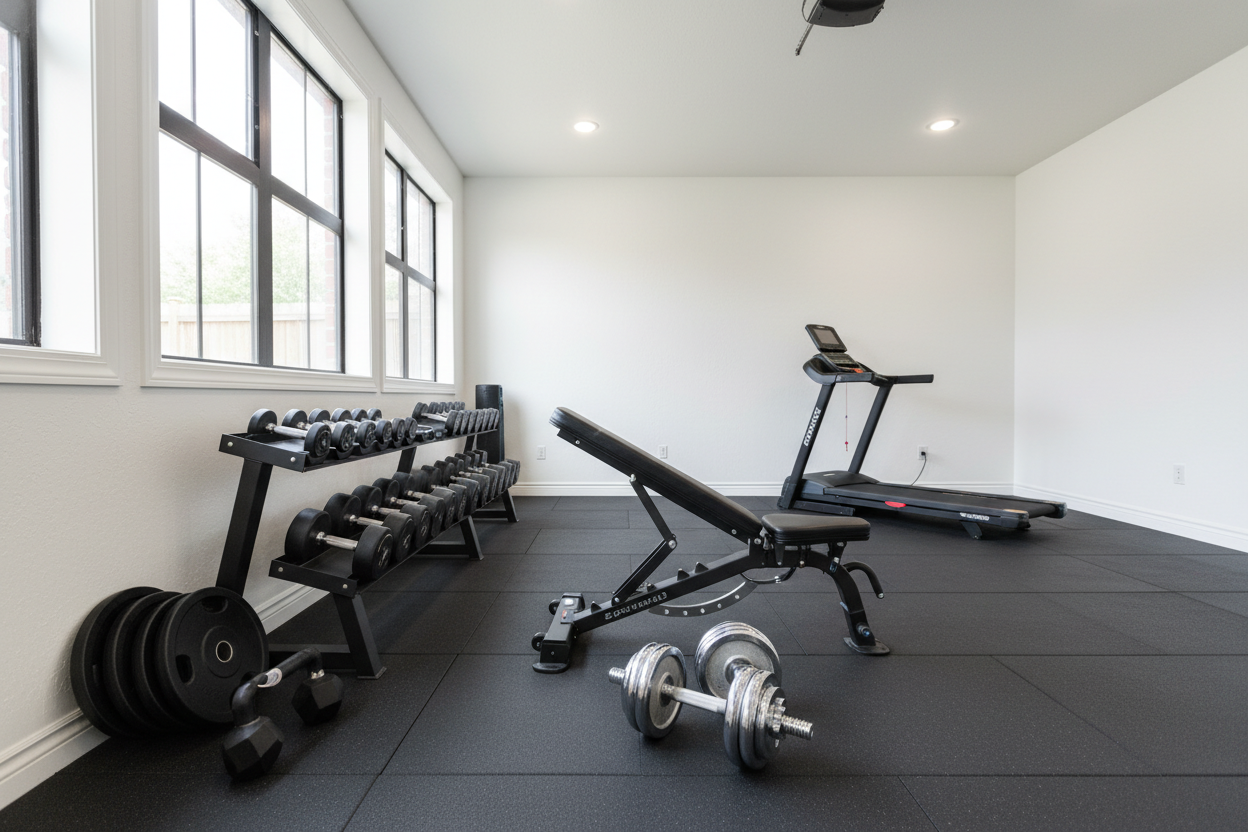
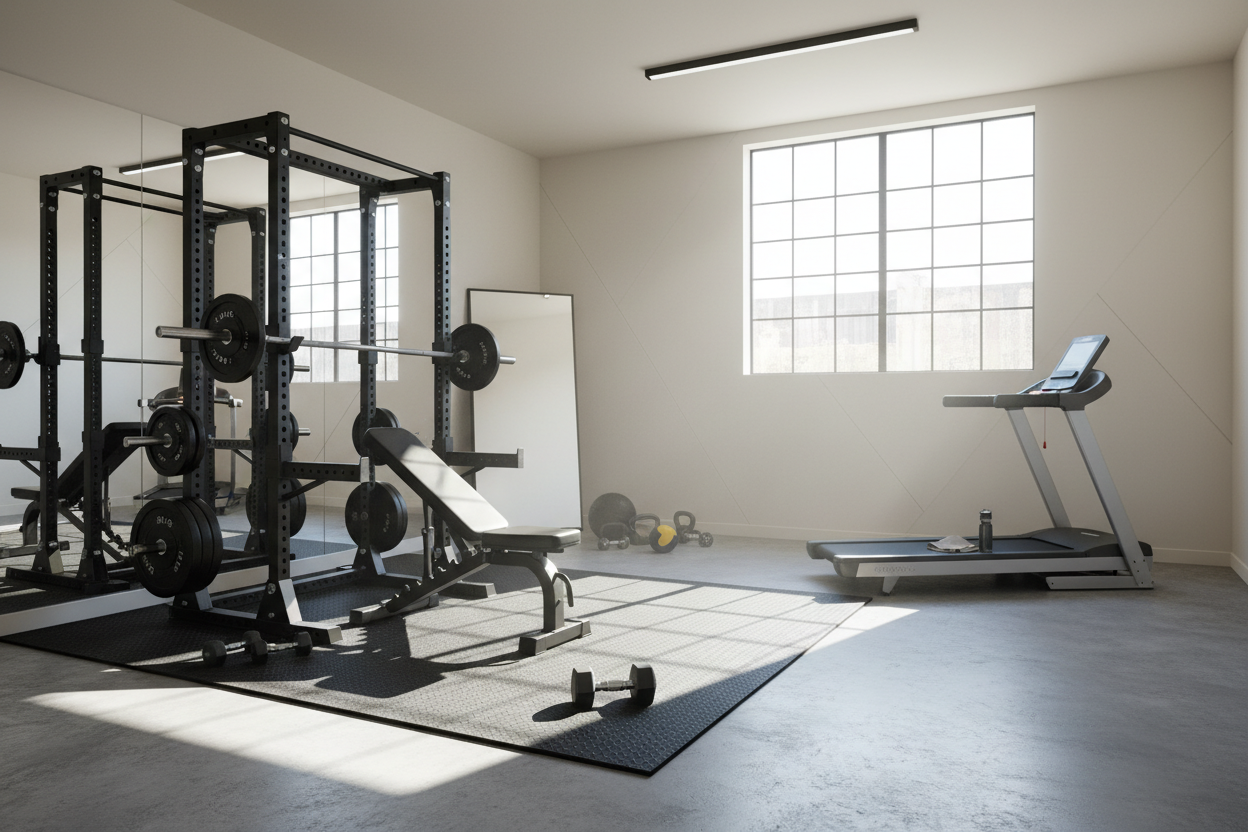
If you’re lifting on those cheap, squishy foam puzzle mats you found at a big-box store, your balance is garbage. Standing isolation work requires a 'rooted' connection to the floor. When your feet are sinking into soft foam, your core has to work overtime just to keep you upright, which distracts from the lift. You need a dense, high-traction surface that doesn't compress under load.
I personally prefer lifting barefoot or in flat shoes on a high-density surface. A large yoga mat that actually has some grip and density can provide the stability you need for proper foot drive. When you can grip the floor with your toes and stay grounded, your bracing improves, and your ability to isolate the shoulder becomes much easier. Don't let a $20 floor choice ruin a $2,000 physique.
Personal Experience: The 50-lb Mistake
Years ago, I was convinced I needed to 'front raise' the 50-lb dumbbells to get big shoulders. I’d swing them up, catch them at the top with a massive arch in my back, and let them crash down. My shoulders stayed small, but my lower back was constantly tight. I finally swallowed my pride, grabbed a pair of 20-lb cast iron hex dumbbells, and stood against a wall. I couldn't even get 8 clean reps. After six weeks of strict, humble lifting, my front delts actually started to pop. The weight on the bar (or the dumbbell) is just a tool—don't let it become your master.
FAQ
Should I do these alternating or both at the same time?
Alternating allows you to focus more on the mind-muscle connection for each side, but it also makes it easier to lean and cheat. Doing both together forces more core stability. Start with alternating to master the form, then move to bilateral sets.
Why do I feel this more in my neck than my shoulders?
You’re likely shrugging the weight up. Your upper traps are trying to help. Lower the weight and focus on keeping your shoulder blades 'tucked' into your back pockets throughout the move.
Can I do these seated?
Absolutely. Seated raises on a bench with a high back are actually the best way to completely eliminate leg and hip momentum. It’s the ultimate 'ego-killer' for shoulder training.