The 15-Minute Dumbbell Trapezius Workout I Actually Feel Working
I spent years chasing a thick upper back by stacking every 45-lb plate in the gym onto a barbell for shrugs. My reward? A neck that felt like it was permanently stuck in a vice and traps that looked exactly the same as when I started. It wasn't until I stripped the weight back and focused on a targeted dumbbell trapezius workout that I actually saw the 3D 'mountain' look start to develop.
Quick Takeaways
- Stop shrugging vertically; a slight forward lean hits the fibers more effectively.
- The trapezius has three distinct sections—you need three distinct movements to grow them.
- Mid and lower traps are the secret to that 'thick' back look and better posture.
- Control and pauses beat momentum and ego-lifting every single time.
Why You Can't Just Shrug Your Way to Big Traps
Most guys treat their traps like an afterthought, hitting a few sets of heavy shrugs at the end of a shoulder session. The problem is that the trapezius isn't just one muscle you can pump up with a single movement. It’s a massive, diamond-shaped slab of meat divided into the upper, middle, and lower sections. When you stand perfectly vertical and shrug your shoulders toward your ears, you’re mostly hitting the upper traps and the levator scapulae. This is why so many lifters end up with neck pain instead of big traps.
The upper fibers actually run at an angle, not just straight up and down. To fully engage them, you need a line of pull that matches that anatomy. Furthermore, the middle and lower traps are responsible for retracting and depressing your shoulder blades. If you neglect these, your back will look flat from the side, and your shoulders will eventually start rounding forward. To build a complete yoke, you have to move beyond the basic 'up-and-down' motion and start working in different planes of motion.
The Full-Spectrum Dumbbell Trapezius Workout
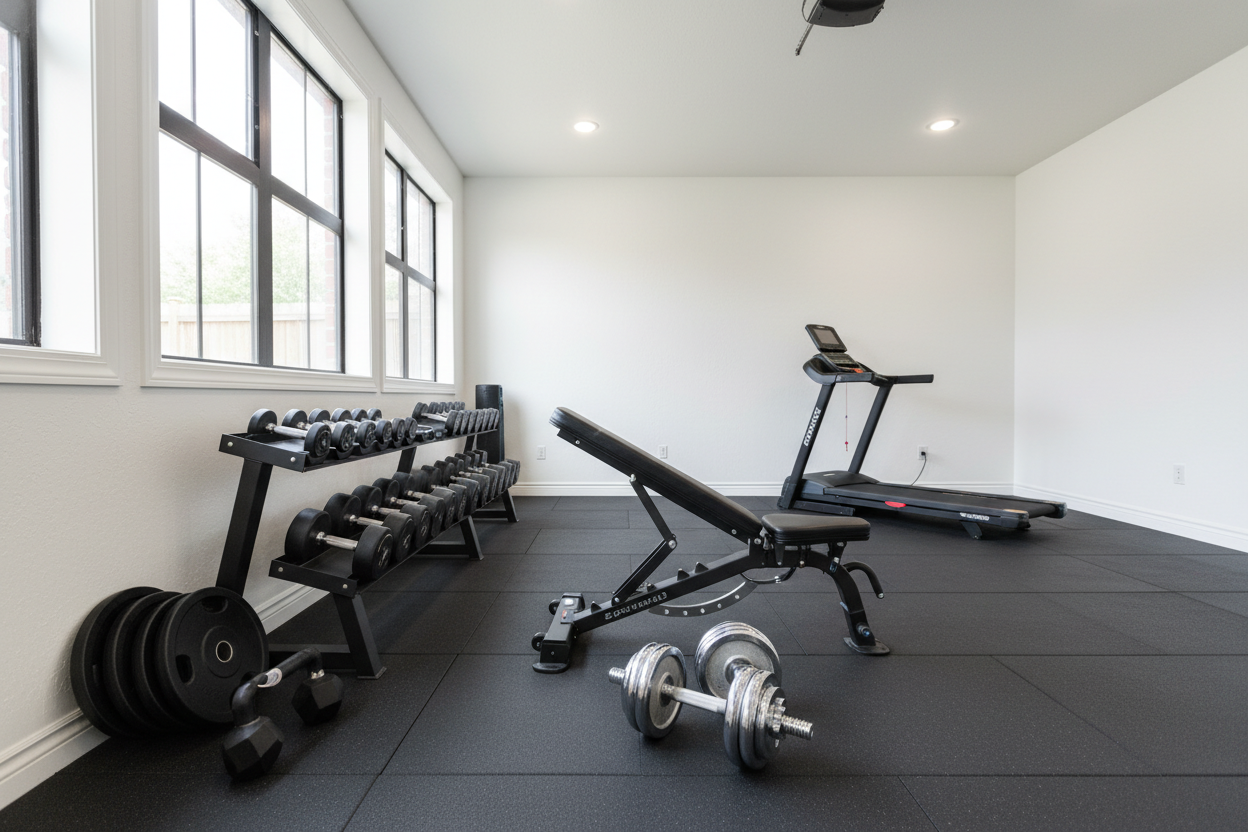
This routine is designed to be a finisher or a standalone session when you’re short on time. We aren't just moving weight; we are manipulating the angle of the dumbbells to force every fiber of the trap to fire. You’ll need an adjustable bench and a pair of moderate-weight dumbbells—leave the ego-lifter 100s on the rack for this one. We’re aiming for a 3-movement circuit that targets thickness, width, and stability.
Movement 1: Chest-Supported Dumbbell High Rows
Set your adjustable bench to a 45-degree incline. Lay chest-down with your head clearing the top of the bench. Let the dumbbells hang with a neutral grip, then row them up while flaring your elbows out to about 70 or 80 degrees. Unlike a standard row where you pull to your hips, you’re pulling these toward your upper chest/chin area.
This specifically targets the middle traps. By supporting your chest, you eliminate the temptation to use your lower back to swing the weight. Focus on squeezing your shoulder blades together at the top of the rep like you’re trying to pinch a pen between them. I usually aim for 3 sets of 12-15 reps here. The pump in the center of your back should be immediate.
Movement 2: The Forward-Lean Pause Shrug
This is the correction to the classic shrug. Stand with your feet shoulder-width apart and hinge forward at the hips about 15 degrees. This slight lean shifts the tension away from your neck and directly onto the meat of the upper traps. Instead of just 'shrugging,' think about pulling the dumbbells back and up toward the 'corner' where the wall meets the ceiling behind you.
The key here is the pause. Hold the contraction at the top for a full two seconds. If you can’t hold it, the weight is too heavy. By adding that lean and the pause, you’re forcing the muscle to work through its full contractile range. I’ve found that 3 sets of 10-12 reps with a 2-second hold does more for growth than 20 reps of heavy, bouncy shrugs.
Movement 3: Prone Dumbbell Y-Raises
Now we hit the lower traps, the most neglected part of the upper back. Stay on that 45-degree bench, chest-down. Grab a pair of very light dumbbells—seriously, 5-lb or 10-lb plates are usually enough. With your palms facing each other, raise your arms up and out at a 45-degree angle, forming a 'Y' shape with your body.
Keep your arms straight and focus on sliding your shoulder blades down toward your back pockets as you lift. This movement is humble pie; it feels easy for two reps and then your lower traps start screaming. This is essential for shoulder health and creates that 'tucked' look that makes your traps pop. Aim for 3 sets of 15 reps. Don't worry about the weight; worry about the quality of the movement.
Where to Slot This Into Your Weekly Routine
I personally like to run this circuit at the end of a back day. Your traps are already warmed up from rows or pull-ups, and you can finish them off without needing to spend another hour in the gym. However, some people prefer pairing traps with shoulders. If you do that, just be mindful of your grip. If you’ve already done heavy presses and laterals, your hands might give out before your traps do.
One thing to watch out for is your recovery. If you are planning a heavy dumbbell lower body workout the next day, realize that fried traps and a tired grip can make holding heavy weights for lunges or RDLs a nightmare. I usually give myself at least 24 hours between this trap circuit and any heavy leg day that requires high-intensity grip work.
Don't Let Heavy Dumbbells Wreck Your Garage Floor
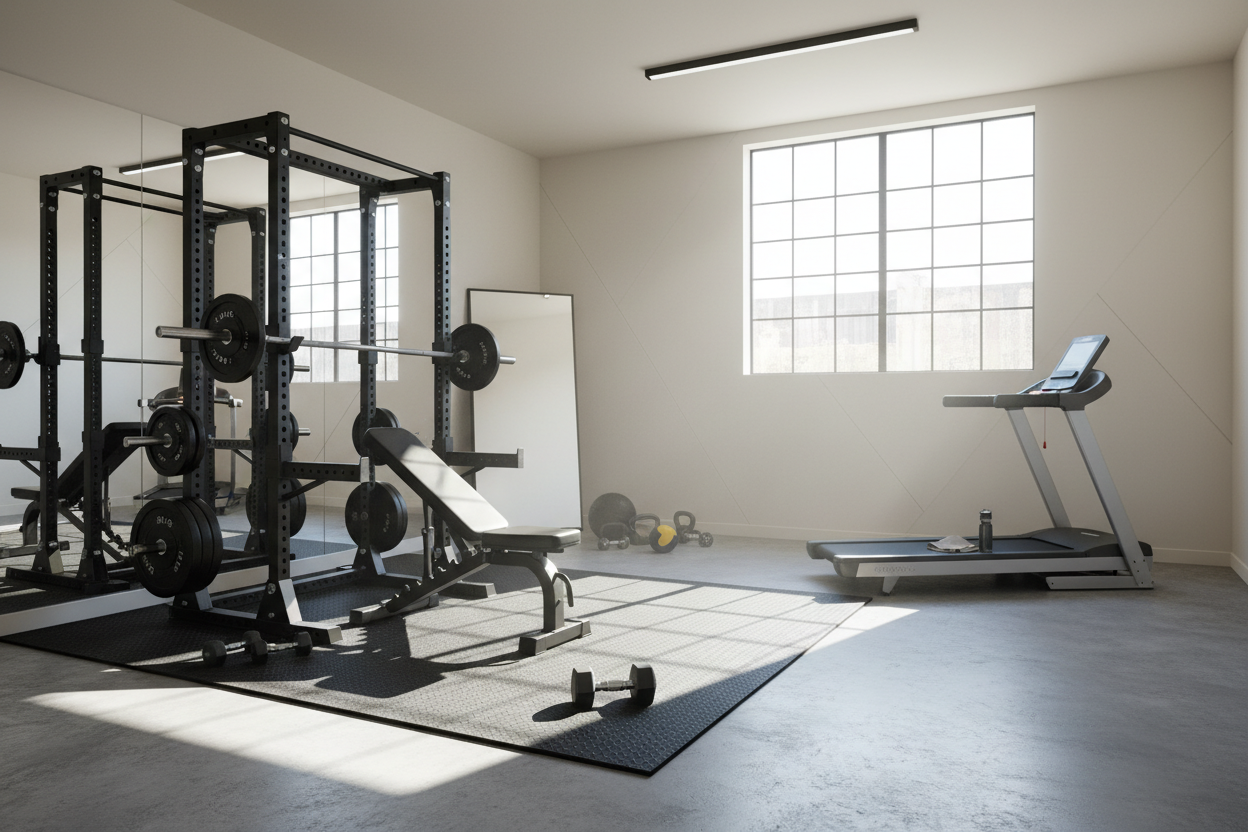
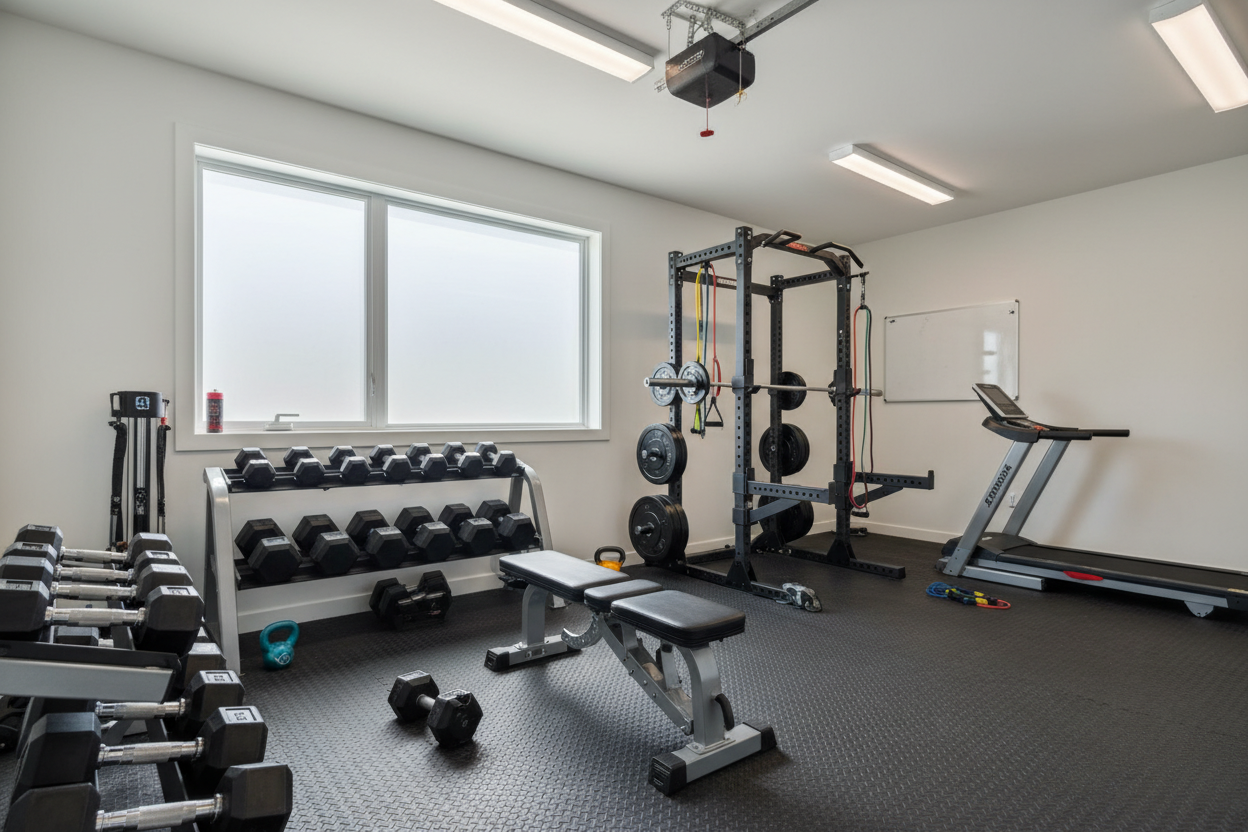
If you're training in a home gym like I am, you know the sound of a heavy dumbbell hitting bare concrete. It’s the sound of a foundation cracking and your resale value dropping. Even when you aren't intentionally dropping weights, the end of a high-rep trap set often results in a 'controlled drop' that can still do damage over time.
I highly recommend investing in a large exercise mat for home gym setups. It deadens the noise so you aren't waking up the neighbors during 6 AM sessions and provides a much-needed buffer for your floor. Plus, it gives you a stable, non-slip surface for those forward-lean shrugs where foot positioning is everything. Trust me, your concrete (and your spouse) will thank you.
FAQ
How often should I train traps?
Traps recover relatively quickly, but they get a lot of indirect work. Twice a week is the sweet spot for most people. If you do more, you risk that 'perma-stiff' neck feeling.
Do I need lifting straps for this workout?
For the forward-lean shrugs, yes, straps can be helpful so your grip doesn't fail before your traps. For the high rows and Y-raises, you should be able to hold the weight naturally.
Can I do this with a barbell?
You can, but dumbbells allow for a more natural range of motion and better angles. The 'Y-raise' is almost impossible to replicate effectively with a standard barbell.