Easy Way to Build Muscle: Workout and Room Setup
Finding an easy way to build muscle does not require complicated workout schedules or dozens of niche training accessories. Most lifters make their best progress by mastering basic movement patterns, challenging their muscles consistently, and establishing a dedicated workout environment. When you remove friction from your weekly routine and focus on fundamental strength training, building muscle becomes a straightforward process of repeated effort and gradual progression.
What is the easiest way to build muscle for beginners?
The easiest way to build muscle for beginners is to focus on a few basic compound lifts, practice progressive overload, and allow adequate rest between sessions. Many people assume that building muscle requires spending hours in the gym six days every week, but overcomplicating your schedule often leads to fatigue rather than steady muscle growth. Instead, an effective workout routine centers on multi-joint movements that engage multiple muscle groups at once, allowing you to stimulate significant muscle mass in fewer weekly sessions.
To establish an easy way to build muscle, consistency is far more important than novelty. Jumping between different workout programs every week makes it difficult to track your strength or know whether your muscles are truly adapting. Sticking to a dependable schedule, such as the principles covered in the 3 day rule for building muscle, gives your body the predictability it needs to adapt. When you practice lifting weights with proper form week after week, your neuromuscular coordination improves, laying the foundation for long-term development.
Essential compound lifts for straightforward gains
Prioritizing compound lifts is the most time-efficient choice for anyone seeking an easy way to build muscle. Multi-joint exercises recruit large muscle groups and prompt more overall physical adaptation than isolation movements like wrist curls or leg extensions. If your goal is to build muscle across your entire body without spending hours wandering between machines, base your sessions around a handful of trusted movements.
- Squats and deadlifts: These two powerhouse movements target the quads, hamstrings, glutes, and lower back. Incorporating squats and deadlifts ensures complete lower-body engagement while demanding stability through your core and spine.
- Barbell exercises: Classic barbell exercises like the barbell row and flat bench press allow you to load significant resistance smoothly while tracking strength increases in small increments.
- Overhead press: Pressing weight vertically builds upper-body shoulder strength and core stability, serving as a reliable benchmark for upper-body power.
- Dumbbell bench press: The dumbbell bench press offers a comfortable pressing path for your shoulders and challenges each arm independently, correcting side-to-side imbalances.
You can read more about structured exercise selection in this planet fitness workout plan to see how foundational movements translate into practical training sessions. Relying on these core exercises keeps your sessions direct and productive.
How to accelerate muscle growth without burning out?
You can learn how to accelerate muscle growth without burning out by balancing moderate training frequency with sufficient recovery days and nutritious meals. Lifters eager for fast changes often add excessive volume too quickly, assuming more work always yields faster muscle growth. However, muscles grow and repair during recovery days, not during the workout itself. Pushing past your recovery capacity can lead to lingering fatigue, stalling your ability to build muscle.
To truly understand how to accelerate muscle growth, you must apply progressive overload in manageable steps. Progressive overload simply means asking your muscles to do slightly more work over time. That can mean adding a pound or two to the bar, performing an extra repetition with the same weight, or completing your sets with improved control and proper form. Tracking these small milestones in a notebook creates steady momentum. When you know how to accelerate muscle growth systematically, you avoid the trap of lifting heavy weights with erratic technique.
How to get big fast in the gym with focused training
Lifters frequently ask how to get big fast in the gym, but real speed comes from eliminating wasted effort rather than rushing your sets. Many people spend half their gym time looking at their phones, wandering between open stations, or attempting complex exercises that offer low returns. If you want to know how to get big fast in the gym, streamline your workout routine so every working set carries clear purpose and effort.
The desire for rapid results often leads people to search for how to get big quick in the gym through extreme routines. Yet the lifters who make the quickest progress are those who master a basic plan and stick to it without interruption. When you understand how to get big fast in the gym, you prioritize deliberate warmups, execute compound lifts with intent, and give every set your complete focus. Searching for how to get big quick in the gym usually leads to burnout, whereas structured strength training yields visible muscle mass over time.
Floor protection and equipment placement for lifting
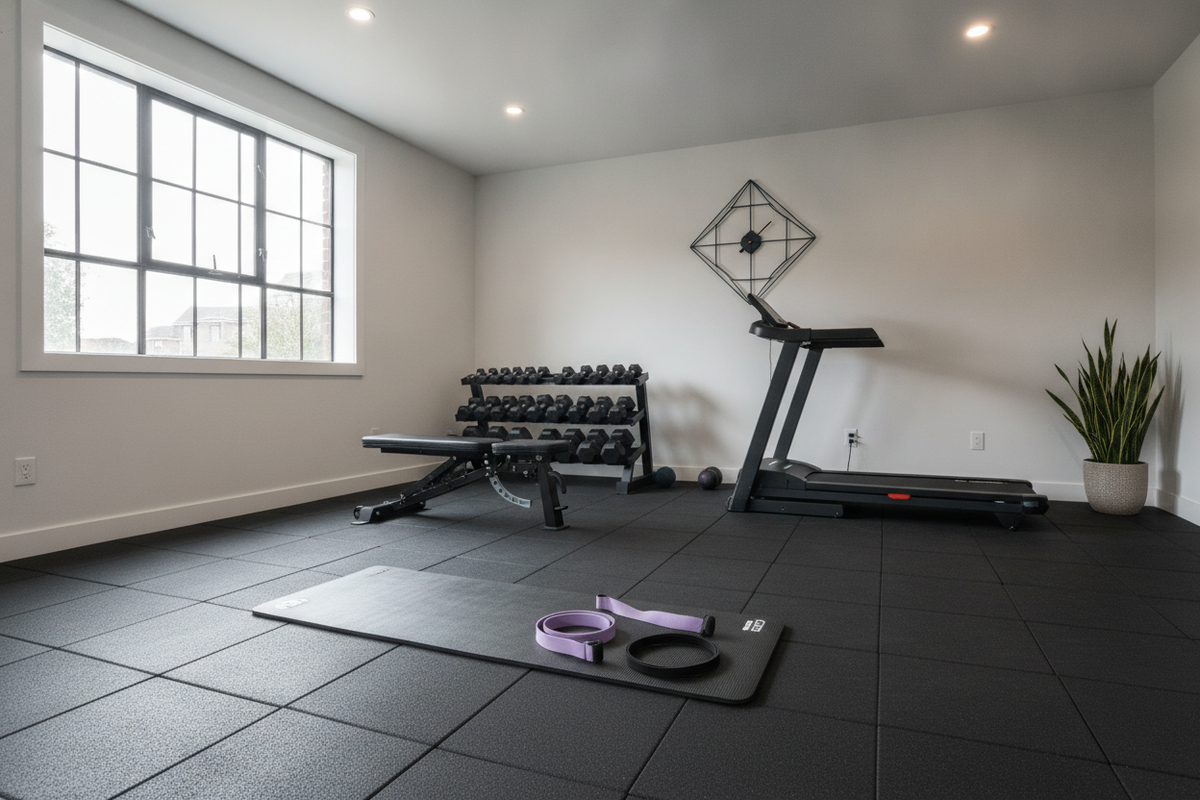
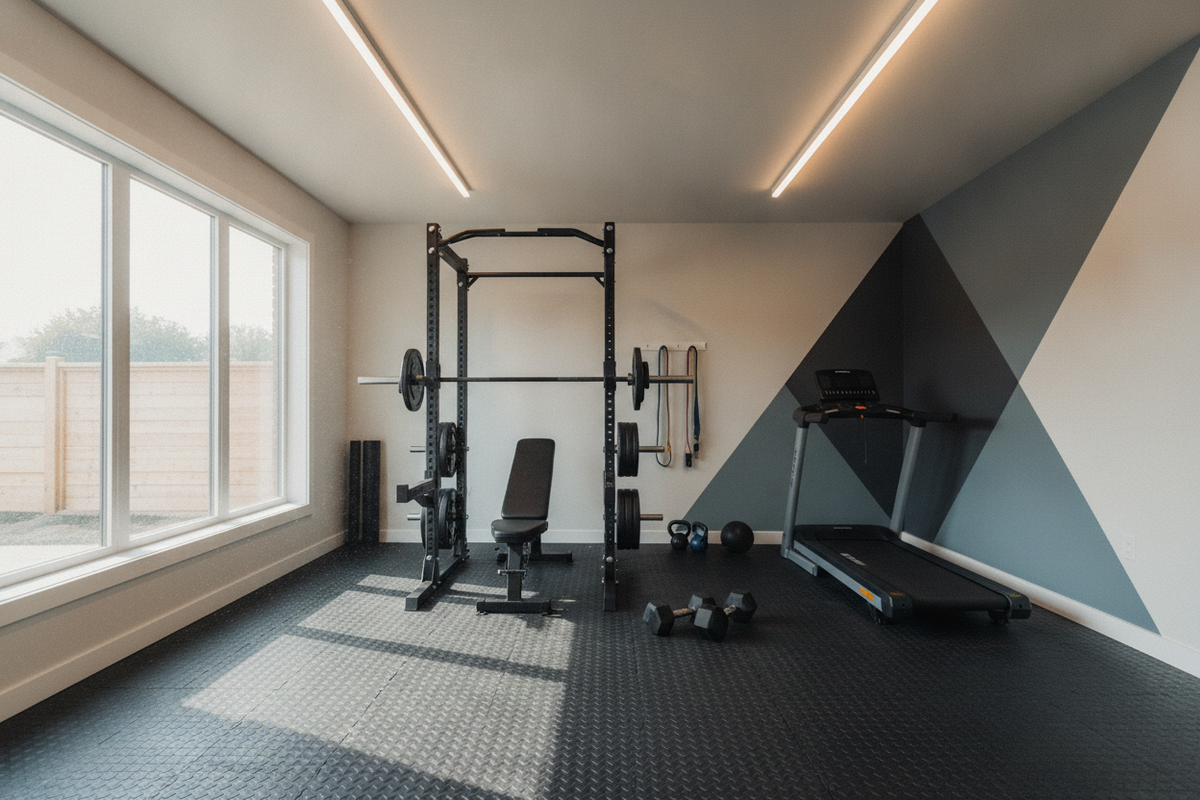
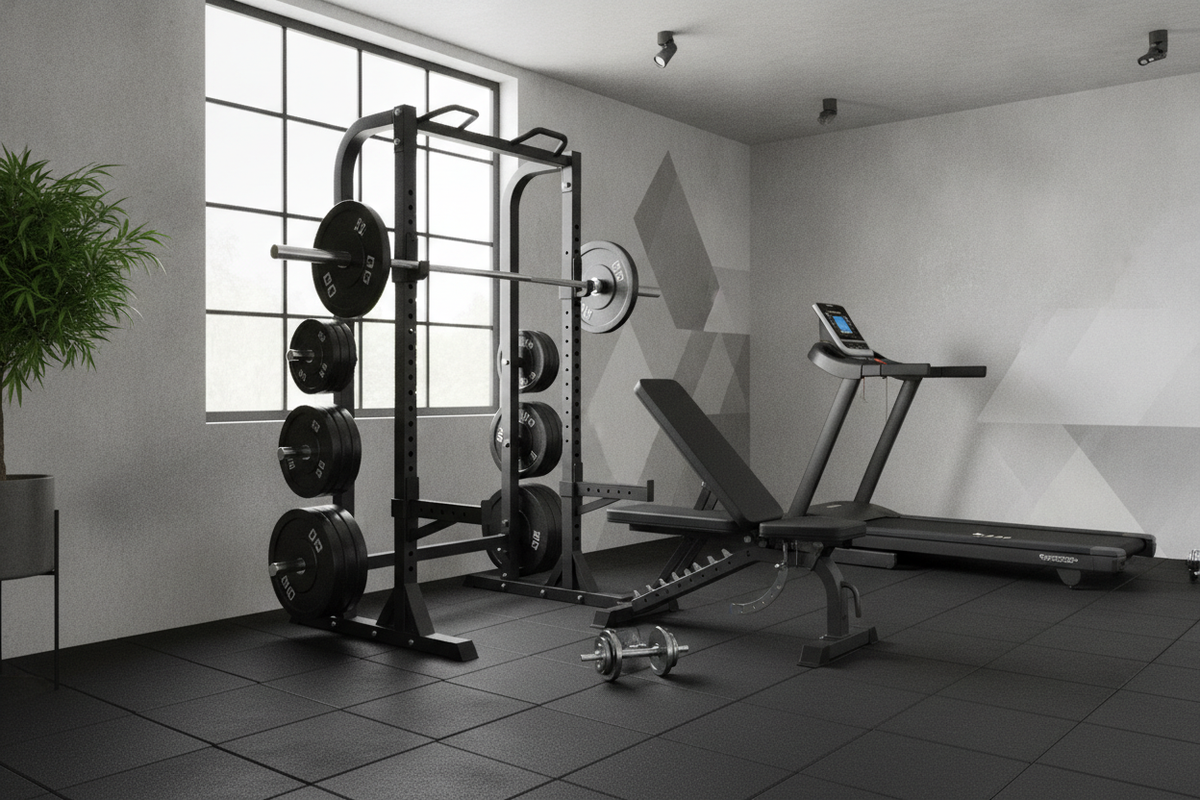
An easy way to build muscle at home requires a space that supports heavy lifting weights without damaging your home or risking slips. Setting up an appropriate home gym setup starts from the ground up. Whether you are using a compact corner in a spare bedroom or a full garage bay, floor protection is essential for keeping your equipment stable and your subfloors safe from dropped dumbbells and heavy plates.
High-quality gym flooring provides the necessary base for heavy training. Dense rubber mats and a durable exercise mat absorb vibrations, deaden sound, and provide steady traction and grip during deep squats or overhead press sets. When you are lifting weights, any shifting underfoot can disrupt your balance and compromise proper form. Placing dense rubber mats beneath your squat stand or power rack ensures that the frame sits level and will not slide across smooth concrete or hardwood.
Smart equipment placement also makes your training smoother. Keep your weights, barbell, and adjustable bench within arm's reach of your primary lifting zone. For practical ideas on setting up your lifting area for force output, explore this floor anchoring and movement execution guide. Thoughtful equipment placement means you spend less time rearranging gear and more time executing your workout routine.
Workout area care and equipment placement
Maintaining your exercise space helps protect both your body and your investment. Dust, sweat, and chalk can accumulate on gym flooring over time, reducing surface traction and grip. Regularly wiping down dense rubber mats with a mild soap and water solution keeps the surface clean and slip-resistant. Avoid harsh chemical solvents that can degrade rubber compounds over time.
In a home gym setup, check your equipment placement periodically. Bolts on weight benches and squat racks can loosen slightly after months of supporting heavy weights, so a quick inspection every few weeks ensures everything remains secure. Rolling up your exercise mat when not in use or wiping down barbell exercises gear keeps your space tidy and inviting for your next lifting session.
Simple adjustments to keep making gains
Finding an easy way to build muscle is ultimately about sustaining high-quality habits over months and years. Building muscle is an adaptive response to mechanical tension, regular nutrition, and restorative rest. If your progress stalls, you rarely need a radical overhaul of your strength training plan; small adjustments in training frequency or getting extra sleep on recovery days are usually enough to restart muscle growth.
By pairing focused compound lifts like squats and deadlifts or the dumbbell bench press with an organized home gym setup on supportive gym flooring, you eliminate distractions and build a routine you can maintain. Building muscle mass does not have to be an overwhelming puzzle. Treat consistency as your anchor, manage your recovery days wisely, and follow this easy way to build muscle for dependable, long-term results.