Easy Exercise for Buttocks: Home Mat Workout
Finding an easy exercise for buttocks development does not require specialized gym machines or heavy barbells. For anyone starting a home workout, focusing on gentle, controlled floor exercises allows you to build lower body strength without placing unnecessary stress on your hips or lower back. When beginning a new fitness habit, your main priority is learning how to contract the glute muscles deliberately through a full, comfortable range of motion.
Many beginners attempt demanding standing movements like deep barbell squats or walking lunges, only to find that their knees and lower back take on most of the strain. In contrast, beginning with bodyweight exercises on the floor keeps movement patterns clean, repeatable, and accessible. Ground-based training removes balance challenges, letting you focus entirely on muscle engagement and joint comfort.
Why Low-Impact Floor Work Builds Better Glute Engagement
Floor-based routines are effective because they eliminate heavy spinal loading while isolating the target muscles. When you lie down or work from a kneeling position, your torso remains supported, which minimizes compensatory leaning or arching that often occurs during standing leg workouts.
Starting with floor exercises creates direct glute activation before you introduce complex standing drills. By practicing on the ground, you can develop a clear mind-muscle connection. This awareness ensures that the glute muscles perform the actual work rather than allowing your hamstrings or lower back to take over the movement.
Joint comfort is another key advantage of floor-based lower body training. Standing lifts can place substantial compressive force on knees and ankles, especially if stabilizing muscles are still adapting. Floor routines keep your joints in stable positions, allowing you to build foundational strength safely at your own pace during every beginner workout.
What Is the Most Effective Easy Exercise for Buttocks at Home?
The standard glute bridge is widely considered the most effective easy exercise for buttocks conditioning at home because it isolates hip extension while keeping your back completely supported. To perform a glute bridge, lie face up on your back with your knees bent and your feet flat on the floor, roughly hip-width apart. Before lifting, gently engage a slight posterior pelvic tilt so your lower back rests flush against the surface.
From this starting position, press downward through your heels to raise your hips until your thighs and torso form a straight diagonal line. Squeeze your glute muscles firmly at the top of the lift for a full second, making sure not to hyperextend your lower spine. Lower your hips back down slowly under control to maintain constant muscular tension.
As you gain strength, glute bridges can be modified into a floor hip thrust variation. You can pause for two to three seconds at peak hip extension, or perform single-leg variations. These simple adjustments teach your hips to extend fully without placing shear stress on your knees.
Key Movements: Exercise to Shape Buttocks Without Weights
A well-rounded routine targets the hips from several angles to build balanced tone and stability. You only need a few dependable movements to create a productive training session.
Donkey Kicks from a Kneeling Position
Donkey kicks are another accessible option for targeting hip extension. Begin in a kneeling position on all fours, placing your wrists directly under your shoulders and your knees directly beneath your hips. Keep your core gently braced and your gaze directed toward the floor to maintain a neutral neck.
Keeping a 90-degree bend in your working knee, lift that leg upward behind you until the sole of your foot points toward the ceiling. Focus on moving only from the hip joint, avoiding any rotation through your pelvis or sagging in your lower back. Helpful form cues include maintaining an even rep tempo and lifting smoothly without kicking with momentum. Donkey kicks help activate dormant glute muscles after long hours of seated work.
Clamshells for Hip Stability and Outer Glutes
To target the gluteus medius along the outer hip, clamshells are an essential addition to any beginner workout. Lie on your side with your knees bent at roughly a 45-degree angle and your feet stacked together. Resting your head on your lower arm helps keep your neck relaxed.
Keeping your heels pressed together, rotate your top knee upward as high as comfortable without rolling your pelvis backward. Pause briefly at the top, then slowly lower your knee to the starting position. Clamshells build lateral hip stability, which supports knee alignment during daily walking and stair climbing. To see how these movements fit into broader lower-body programming, our buttocks firming exercise guide details how adjusting angles shifts muscular tension across the hips.
Setting Up Your Floor Space: Cushioning and Floor Grip
Floor routines are only as sustainable as the surface underneath your body. Practicing on bare hardwood, laminate, or tile can cause immediate discomfort on your tailbone, wrists, and knees. Setting up a dedicated cushioned exercise mat provides the dense padding needed to support sensitive pressure points during every repetition.
When you perform donkey kicks or other drills from a kneeling position, adequate dense padding protects your joints so you can focus on lifting with the glutes instead of shifting your body weight to avoid knee soreness. Similarly, executing glute bridges requires dependable floor grip so your feet do not slide outward while pressing upward.
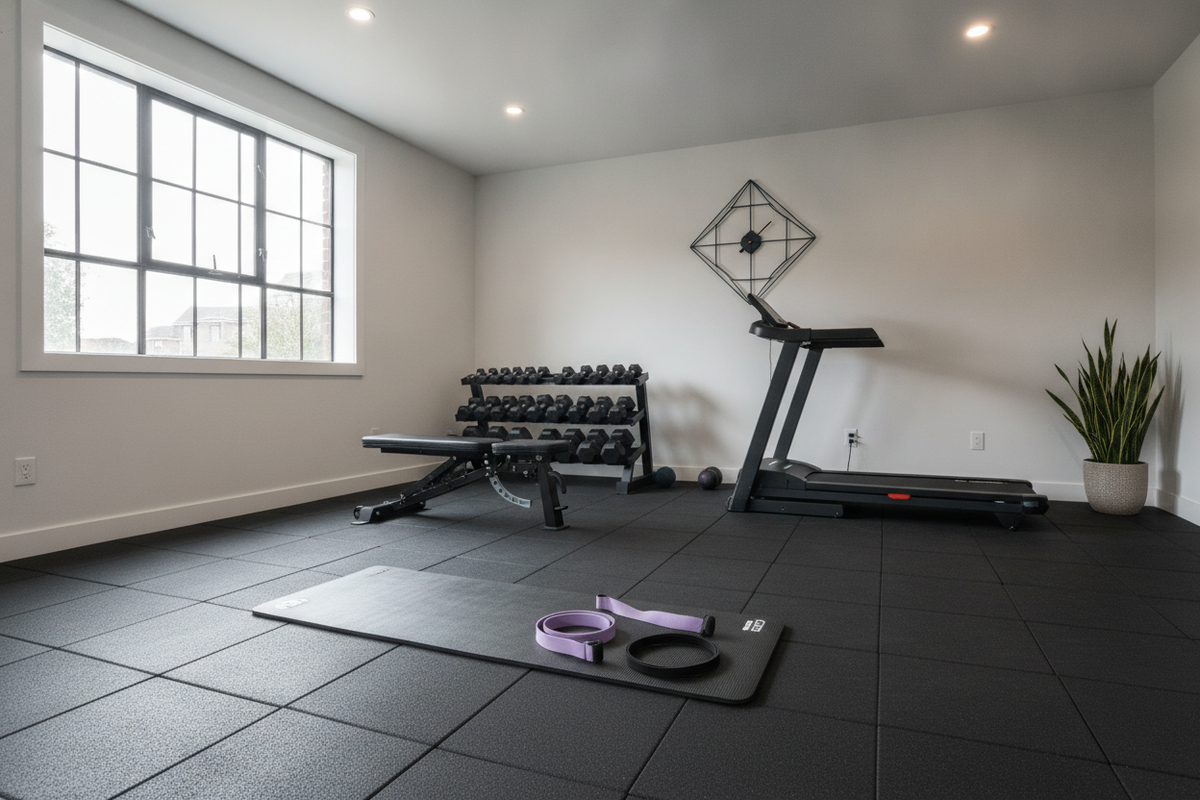
A stable, non-slip surface also supports balance during side-lying clamshells. For individuals who want room to transition smoothly between lying, kneeling, and stretching without constantly adjusting their position, choosing a spacious large exercise mat gives your lower body complete freedom to move. If you are creating a dedicated home fitness corner, a 6x10ft workout mat and gym flooring provides broad protective flooring that safeguards hard surfaces while offering reliable floor grip for all your bodyweight exercises.
Can Beginner Floor Exercises Really Shape Your Buttocks?
Yes, beginner floor exercises can effectively shape your buttocks because they create targeted muscular tension and promote full hip extension without placing excessive strain on connective tissues. When performed with deliberate control, low-impact movements consistently recruit both the gluteus maximus and gluteus medius.
Many people assume that visible muscle tone requires heavy weights, but bodyweight movements offer plenty of stimulus for beginners when executed with disciplined rep tempo and focused muscle contraction. Floor work allows you to concentrate fully on the target area, often leading to better glute activation than heavy lifts where surrounding muscles compensate.
Combining several buttocks exercises creates balanced development. Pairing a glute bridge for central hip extension with clamshells for hip stability ensures that both the upper and lower glute regions receive balanced stimulation.
How Often Should You Perform Easy Exercise for Buttocks Routines?
Performing these floor routines two to three times per week provides the best balance between muscle stimulation and tissue recovery for beginners. Glute muscles respond well to regular, moderate activity that allows for consistent practice without causing excessive fatigue or stiffness.
Because gentle bodyweight movements avoid heavy joint impact, your body recovers relatively quickly between sessions. Spacing your workouts with an alternating schedule gives your muscles roughly 48 hours to rebuild. If you ever experience tenderness in your hips or lower back, take an extra rest day to ensure full joint comfort before your next session.
Simple Weekly Schedule for Beginners
Establishing an effective weekly plan does not require complex programming. A straightforward home workout routine takes only fifteen to twenty minutes per session. Here is a practical schedule you can follow:
- Monday: Glute bridge (3 sets of 12 reps), donkey kicks (3 sets of 10 reps per side), finished with a 20-second glute bridge isometric hold.
- Wednesday: Clamshells (3 sets of 12 reps per side), floor hip thrust variations with a two-second pause at the top (3 sets of 10 reps), and kneeling leg extensions (2 sets of 10 reps per leg).
- Friday: A balanced circuit consisting of 10 glute bridges, 10 donkey kicks per leg, and 12 clamshells per side, repeated for 3 total rounds.
- Weekends: Light walking, gentle stretching, and active recovery on your protective flooring.
Focusing on disciplined form cues, such as maintaining a stable pelvic tilt and moving at an unhurried rep tempo, makes each session productive. By pairing reliable exercise techniques with supportive mat cushioning, you can build lasting lower body strength comfortably right at home.