Best Exercise for Firming Buttocks: Tension Profiles, Movement Blueprints, and Home Floor Staging
Finding the best exercise for firming buttocks requires understanding how different resistance angles stimulate the gluteal muscle group. Rather than relying on random bodyweight repetitions, creating a firm, toned posterior chain depends on applying progressive mechanical tension across multiple planes of motion. When structured properly alongside a stable home training environment, targeted lower-body movements build functional strength, reinforce hip stability, and sculpt the muscle tissue effectively.
The Biomechanics of Glute Firming: Tension Angles and Muscle Architecture
The posterior hip complex consists of three primary muscles: the gluteus maximus, gluteus medius, and gluteus minimus. To select the best exercise to firm buttocks, you must address the primary functional roles of each muscle:
- Gluteus Maximus: The largest muscle in the group, responsible for powerful hip extension, external rotation, and posterior pelvic tilt. It responds best to heavy compound extension movements across both shortened and lengthened muscle states.
- Gluteus Medius and Minimus: Positioned along the upper and lateral hip, these muscles stabilize the pelvis during single-leg movement and control hip abduction and internal/external rotation. Developing these creates upper glute tone and supports knee alignment.
Glute exercises generally fall into two mechanical tension categories: shortened-position movements (where peak resistance occurs when the hips are fully extended) and lengthened-position movements (where peak resistance occurs when the glutes are stretched). Achieving balanced firming and toning requires incorporating both tension profiles into your training schedule.
Top Movement Categories for Tightening and Shaping the Buttocks
To establish a well-rounded foundation, select movements from distinct movement patterns that challenge the hips under varying resistance angles. Combining these variations provides a comprehensive stimulus across the entire lower body, which also acts as an effective exercise to tighten buttocks and thighs.
Horizontal Hip Extension: Hip Thrusts and Glute Bridges
The barbell or dumbbell hip thrust is widely regarded as the best exercise to tighten buttocks because it creates maximum tension at full hip extension (the shortened position). Unlike standing squats where tension decreases at lockout, horizontal hip thrusts maintain continuous muscular contraction at the peak of the movement, directly challenging the gluteus maximus without placing excessive compression on the lower spine.
Vertical and Diagonal Hinges: Romanian Deadlifts and Deficit Hinges
Hinge variations place the glutes under high mechanical tension in the stretched (lengthened) position. Romanian deadlifts (RDLs) emphasize pure hip flexion and extension with minimal knee bend. This deep stretch stimulates muscle remodeling along the lower glute tie-in and posterior chain, making it one of the core foundational best exercises for shaping buttocks.
Unilateral Stride Patterns: Split Squats and Step-Ups
Single-leg movements, such as rear-foot elevated split squats (Bulgarian split squats) and walking lunges, challenge the gluteus maximus while forcing the gluteus medius to actively stabilize the pelvis. By training each side independently, unilateral exercises eliminate strength imbalances and increase muscle fiber recruitment across the hips.
Lateral and Rotational Patterns: Abductions and Clamshells
Cable, banded, or side-lying hip abductions target the gluteus medius and minimus. These isolation exercises add volume to the upper lateral glutes without adding fatigue to the lower back or quads, refining hip definition and building overall pelvic stability.
Step-by-Step Movement Blueprints and Form Execution
Proper execution ensures maximum glute engagement while reducing unnecessary strain on the lower back and knees. Focus on the following alignment cues during your sessions:
The Hip Thrust
- Sit on the floor with your upper back supported against a stable bench or sturdy platform, placing the edge just below your shoulder blades.
- Position your feet flat on a non-slip floor surface, roughly shoulder-width apart, with your shins vertical at the top of the movement.
- Drive through your heels, extending your hips upward until your thighs and torso form a straight line parallel to the ground.
- Maintain a neutral chin tuck and perform a slight posterior pelvic tilt at the top, squeezing the glutes firmly for a brief pause before lowering under control.
The Romanian Deadlift (RDL)
- Stand tall holding dumbbells or a barbell in front of your thighs, feet hip-width apart and knees soft.
- Push your hips backward as if reaching for a wall behind you, keeping the weights gliding close along your shins and thighs.
- Maintain a neutral spine and flat back throughout the descent, stopping once you feel a full stretch in your hamstrings and glutes without rounding your lower back.
- Drive your hips forward to return to the standing starting position, contracting the glutes at completion.
The Rear-Foot Elevated Split Squat
- Place the top of one foot behind you on a bench or low platform while stepping the lead foot forward into a lunge stance.
- Hinge your torso slightly forward at a slight diagonal angle to direct resistance into the lead glute rather than solely into the quadriceps.
- Lower your back knee toward the floor under control until your front thigh is nearly parallel to the floor.
- Drive through the entire front foot to return upward, maintaining stable hip and knee tracking.
Structuring a Balanced Glute-Firming Routine Architecture
Consistency and progressive overload determine how well your muscles respond over time. Rather than performing random workouts, structure your training around dedicated lower-body sessions. Integrating a planned targeted exercise for firm buttocks routine ensures steady development.
- Frequency: Train the glutes two to three times per week, allowing adequate recovery between sessions for muscular repair.
- Exercise Selection: Include one primary horizontal hip extension (e.g., hip thrust), one lengthened hinge (e.g., Romanian deadlift), one unilateral movement (e.g., split squat), and one lateral isolation exercise (e.g., banded abduction) across your weekly training splits.
- Tempo and Mind-Muscle Connection: Use controlled eccentrics (lowering phases of two to three seconds) and pause at peak contraction to maximize tension without needing excessively heavy weights.
Home Gym Floor Staging and Joint Protection
Performing floor-based hip thrusts, kneeling kickbacks, and heavy dumbbell hinges requires a secure, shock-absorbing training surface. Hard subfloors such as concrete, tile, or thin wood can cause joint discomfort and elevate slip hazards during dynamic movements.
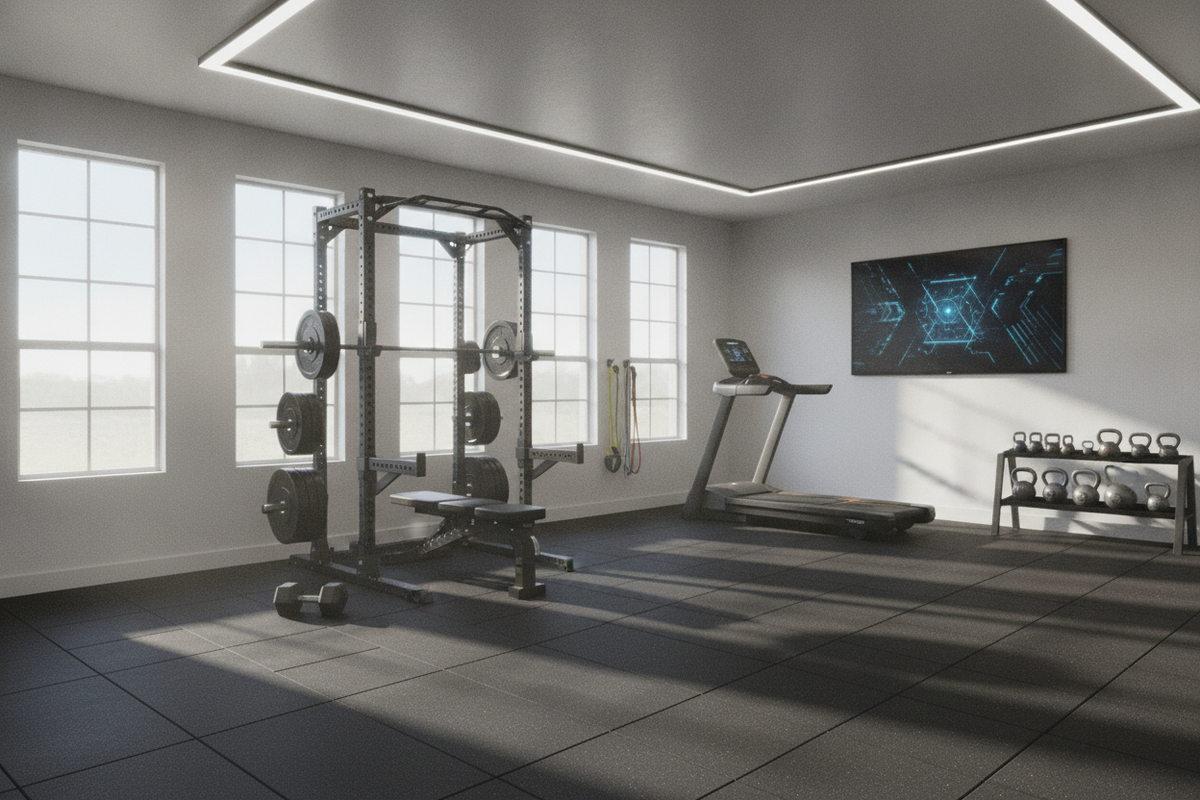
Setting up a high-density, supportive exercise mat cushions the hips, knees, and spine during bodyweight and weighted floor drills. For dedicated home gym areas that accommodate barbell movements, benches, and free weights, utilizing a seamless large exercise mat provides reliable traction underfoot, preventing bench slippage during heavy hip thrusts while shielding your subfloor from dropped equipment. If you require full-room coverage for multi-directional lunges and comprehensive strength training, installing a 6x10ft home gym flooring mat delivers a resilient, non-slip foundation that keeps your setup organized and joint-friendly.
Frequently Asked Questions About Glute Firming Exercises
Can you firm your buttocks with bodyweight exercises alone?
Bodyweight exercises such as single-leg glute bridges, step-ups, and paused squats are effective for building initial muscle tone and neuromuscular control. However, adding external resistance (dumbbells, resistance bands, or barbells) provides continuous progressive overload, which leads to superior firming and shaping results over time.
How often should you train the glutes for optimal firming?
Training the glutes two to three times per week with varied exercises provides an ideal balance of mechanical stimulus and recovery. Spacing sessions with at least 48 hours of rest between intense workouts allows muscle tissue to rebuild stronger.
Why is flooring traction important during glute training?
Proper foot traction is essential during exercises like hip thrusts, split squats, and deadlifts. A non-slip workout surface keeps your feet firmly planted, preventing dangerous foot sliding and allowing you to drive force directly through your heels into your target muscles.