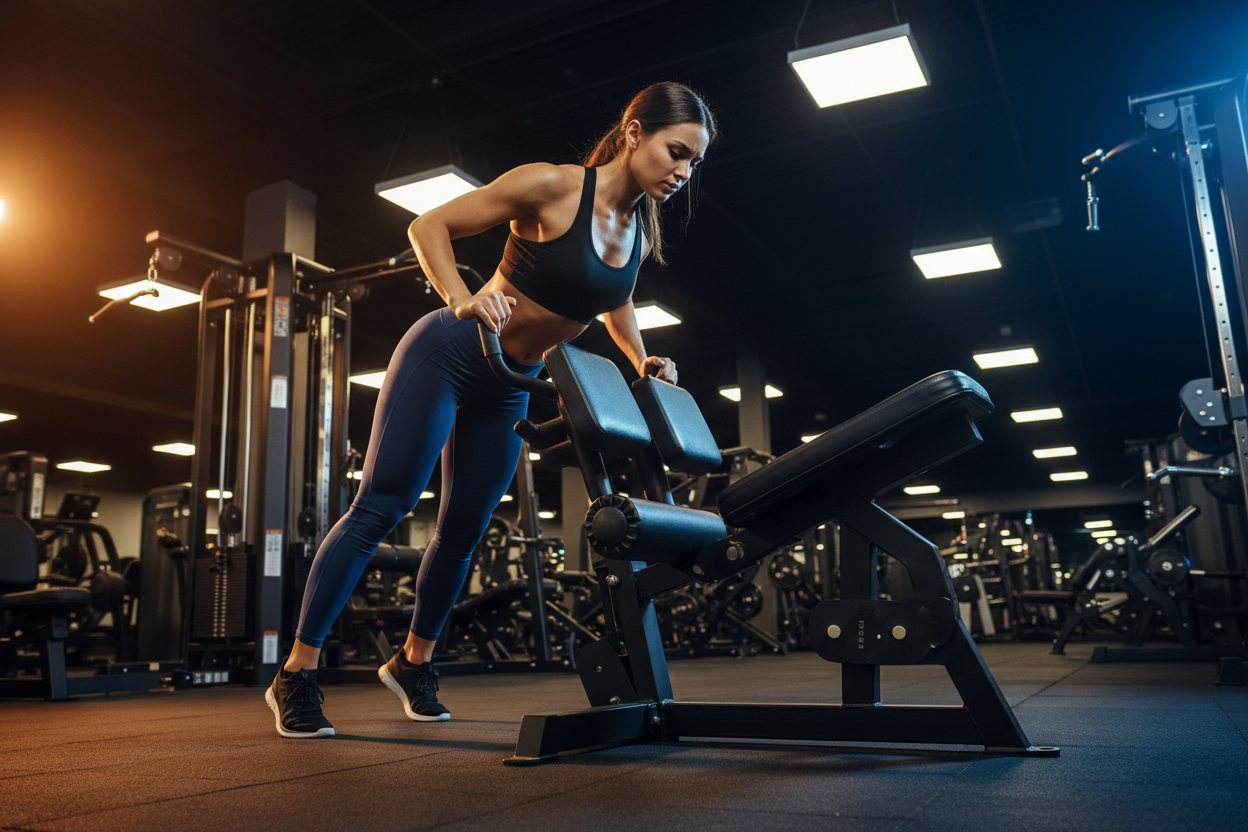
How to Sculpt Steel Glutes With Targeted Exercise for Firm Buttocks
You have done the squats. You have climbed the stairs. Yet, the results in the mirror don't match the effort you feel in your legs. The problem usually isn't a lack of effort; it is a lack of specific activation. Most general leg workouts are quad-dominant, meaning your thighs take over before your glutes even wake up.
To actually change the shape of your posterior, you need a strategy rooted in biomechanics, not just sweating. This guide breaks down the science of hypertrophy and the specific exercise for firm buttocks that targets the muscle fibers responsible for that lifted, sculpted look.
Quick Summary: The Glute Blueprint
If you are looking for the fastest way to results, here are the core principles of glute training:
- Prioritize Hip Extension: Exercises like hip thrusts isolate the glutes better than squats.
- Work All Three Heads: You must target the Gluteus Maximus, Medius, and Minimus for a round shape.
- Progressive Overload: You must increase weight or reps over time; high reps with light weight won't build significant firmness.
- Mind-Muscle Connection: If you don't feel the squeeze at the top, other muscles are stealing the work.
Understanding Glute Anatomy
Before we look at the specific exercise to firm buttocks, you need to understand what you are building. The glutes are the largest muscle group in the body, but they are lazy. Without direct intention, your hamstrings and lower back will do the heavy lifting.
To truly master firming buttocks, you must understand the three main players:
- Gluteus Maximus: The powerhouse. This gives you the size and the "shelf."
- Gluteus Medius: The upper/side glute. This creates the width and the "shelf" appearance near the waist.
- Gluteus Minimus: The deep stabilizer.
The King of Moves: The Barbell Hip Thrust
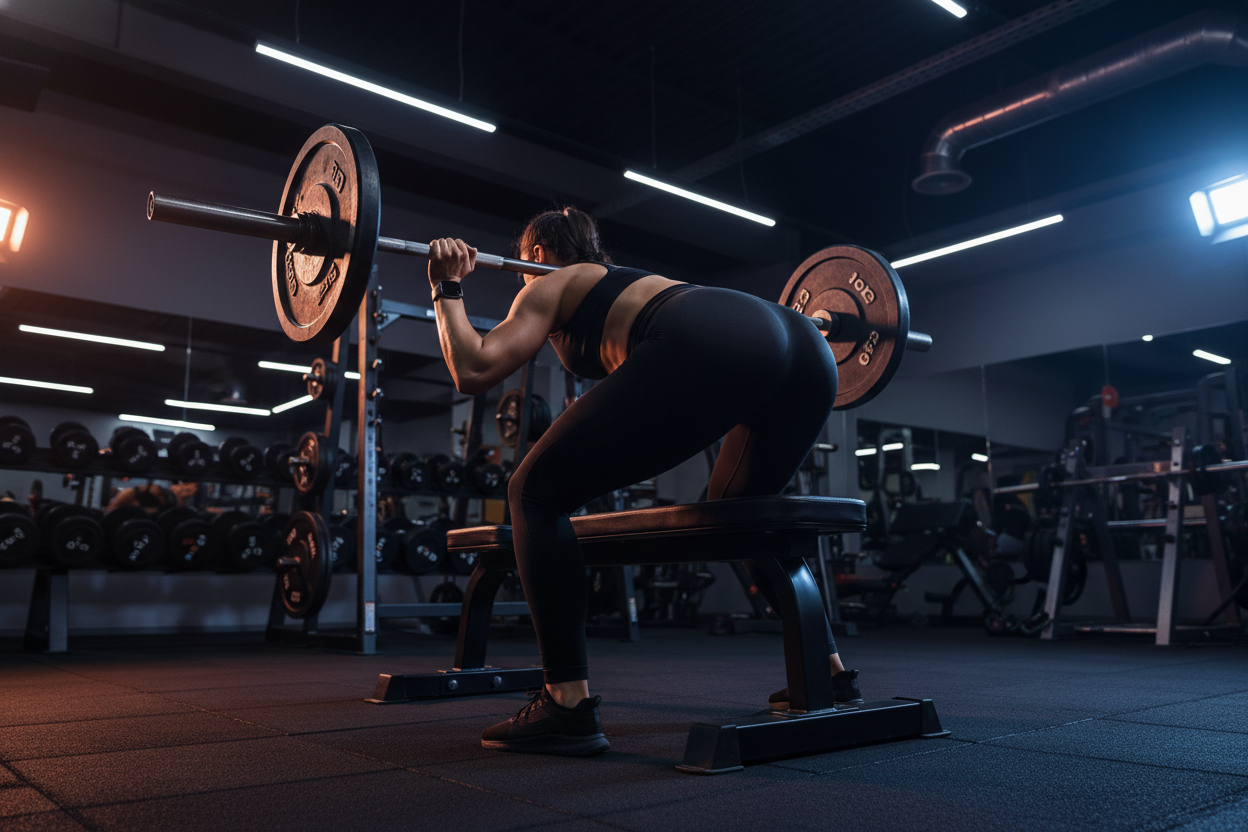
If you ask any strength coach what exercise tightens your buttocks the most effectively, the answer is almost universally the Hip Thrust. Unlike squats, which place maximum tension on the glutes at the bottom of the movement (the stretch), the hip thrust places maximum tension at the top (the contraction).
This is crucial because the glutes are most active at full hip extension. To perform this exercise firm buttocks technique correctly, keep your chin tucked and your ribs down. Drive through your heels. If you arch your back, you are training your spine, not your glutes.
Lengthened Position: Deep Squats and Lunges
While the thrust is king for contraction, you still need exercises to sculpt buttocks through a full range of motion. This is where the squat comes in. However, to shift the focus from quads to glutes, you need depth.
Stopping at parallel isn't enough. You need to go as deep as your mobility allows. This stretches the glute fibers under load, causing micro-tears that repair into stronger, firmer tissue. This is a foundational exercise for tightening buttocks that builds the base of the muscle.
The "Shelf" Builders: Abduction Movements
Many people ask how to firm glutes to get that round look from the back. The secret lies in abduction—moving your leg away from the midline of your body. This targets the Gluteus Medius.
Seated Abductions and Cable Kickbacks
Use the abduction machine, but lean forward slightly to engage the glutes rather than the hip flexors. For cable kickbacks, keep your leg straight and kick back at a 45-degree angle. These serve as excellent finishing exercises to tighten glutes after your heavy lifting is done.
Common Mistakes When Trying to Firm Up
If you are performing an exercise to firm up buttocks but seeing no changes, check these variables:
- Too much cardio: Excessive running can break down muscle tissue.
- Not enough food: Muscle requires calories to become firm and dense. You cannot starve your way to a sculpted shape.
- Lack of weight: Firm butt exercises require resistance. If the last rep feels easy, the set didn't count.
My Training Log: Real Talk
I want to be honest about what this training actually feels like, beyond the textbook definitions. When I first started prioritizing hip thrusts over squats to fix a muscle imbalance, the hardest part wasn't the weight—it was the setup.
I remember dragging a bench to the wall so it wouldn't slide backward. I remember the specific, annoying pain of the barbell digging into my hip bones because the gym's foam pad was too thin. I eventually had to buy my own high-density squat pad and carry it in my gym bag.
There is also a humbling moment when you realize your glutes have been "asleep" for years. During my first month of targeted exercises to sculpt buttocks, my hamstrings would cramp violently because they were trying to do the work for my glutes. It took weeks of poking my own glutes during sets (tactile cueing) to finally feel that deep, cramping burn in the actual glute muscle. Once you feel that specific burn—not in the thigh, not in the back, but deep in the hip—you know you've finally cracked the code.
Conclusion
Building a strong posterior chain isn't about doing endless bodyweight pulses. It requires a strategic mix of heavy compounds like hip thrusts and targeted isolation work. By focusing on progressive overload and mastering the mind-muscle connection, you can turn any exercise for firm buttocks into a powerful tool for physique change. Stop guessing, start loading the bar, and stay consistent.
Frequently Asked Questions
How long does it take to see results from glute exercises?
With consistent training (2-3 times per week) and proper nutrition, you can expect to feel firmness within 4 weeks and see visible structural changes in 12 to 16 weeks. Building muscle is a slow biological process.
Can walking be considered an exercise to firm buttocks?
Walking activates the glutes, especially on an incline, but it is generally not enough to create significant firmness or shape change. To firm the muscle, you need higher levels of resistance than walking provides.
What is the single best exercise tightens your buttocks?
If you could only pick one, the Barbell Hip Thrust is scientifically shown to have the highest glute activation levels because it maintains tension on the muscle at its shortest (contracted) position.