Ditch the Spreadsheets: A Real-World Guide to Building Muscle
I remember staring at a fifteen-tab spreadsheet at 2 AM, trying to figure out if I should do three sets of eight or four sets of twelve for my accessory work. My local gym had just hiked their rates to eighty bucks a month, and I was still the same weight I’d been since high school despite all my 'research.' That’s the optimization trap. This guide to building muscle isn’t about finding a secret algorithm; it’s about trading your calculator for a heavy set of iron and some grit.
Quick Takeaways
- Consistency beats 'optimal' programming every single time.
- You cannot build a house without bricks; eat in a caloric surplus.
- Tension is the primary driver of growth, whether from a barbell or your own body weight.
- Stable flooring is a safety requirement, not a luxury.
- Sleep is your most powerful recovery tool—use it.
Stop Trying to be 'Optimal' (It's Keeping You Small)
We’ve all seen the 'science-based' influencers arguing over whether a fifteen-degree incline is 3% better for the clavicular head of the pec. While they’re arguing, the guy at the local park is getting jacked doing dips on a rusty fence. Analysis paralysis is a gains-killer. If you spend more time tweaking your rest intervals than you do actually straining under a load, you’re missing the forest for the trees. This is a practical build muscle guide for people with actual jobs and limited time.
The reality is that your body doesn't care about the latest peer-reviewed study if you aren't showing up four days a week. Most people fail because they change their routine every time a new video drops on YouTube. They never stay with one program long enough to see the linear progression play out. You need to pick a proven method—5/3/1, Starting Strength, or a basic PPL—and run it until it stops working. Stop looking for the 'perfect' workout and start looking for a way to make your current workout harder than it was last week.
The Muscle Building Basics You Actually Can't Ignore
If you want to grow, you have to respect the muscle building basics. First, you need a caloric surplus. You can’t manifest muscle out of thin air. You need to eat about 200 to 500 calories above your maintenance level. If the scale isn't moving over a two-week period, you aren't eating enough. It isn't rocket science; it's thermodynamics. Keep your protein high—around one gram per pound of body weight—and let the carbs fuel your sessions.
Second, you need mechanical tension. This means moving weights that feel heavy for you. These are the essential steps to build muscle: pick a weight where the last two reps of your set are a genuine struggle. If you finish a set of ten and feel like you could have done twenty, you’re just exercising, not training. Finally, you need deep, boring sleep. Your muscles don't grow in the gym; they grow while you're passed out. Aim for seven to nine hours. If you’re sleeping five hours a night and wondering why your bench press is stalled, you have your answer.
Equipment Reality: You Don't Need Heavy Iron on Day One
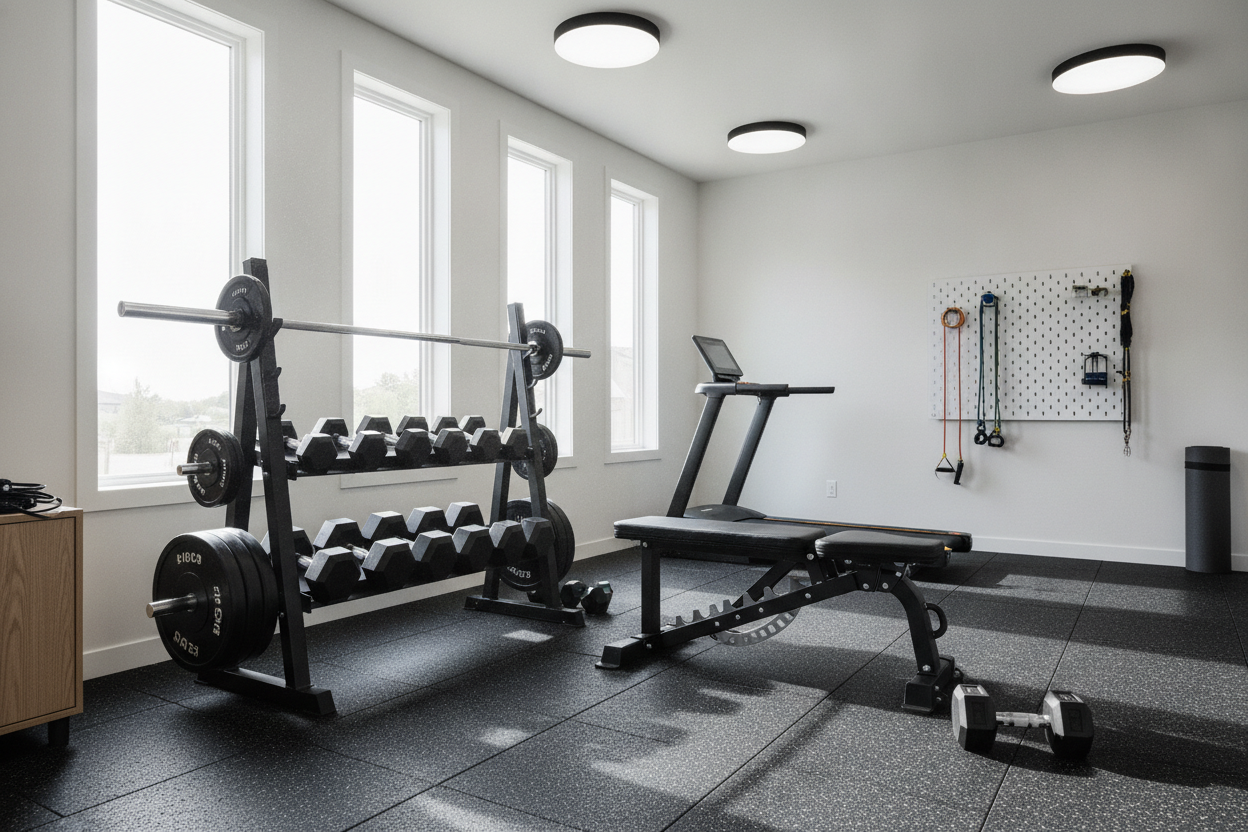
I’ve seen people drop three grand on a commercial-grade power rack before they could even do ten strict push-ups. Your muscle fibers are blind; they don't know if the tension is coming from a $900 Ohio Bar or a pair of rings hanging from a tree. Before you clutter your garage with gear that might end up as a laundry rack, understand that calisthenics are a legitimate guide to gaining muscle mass for beginners. You can build a massive amount of foundational strength just by mastering your own weight.
If you’re just starting out, don't feel pressured to buy a full rack of dumbbells. You can generate incredible fatigue with high-rep bodyweight movements and tempo variations. I often point people toward a bodyweight guide to beginner muscle building because it removes the 'I don't have the gear' excuse. Once you can knock out twenty dips and fifteen pull-ups, then start looking at the heavy iron. By then, you’ll have earned the right to spend the money, and your connective tissue will be ready for the load.
Fix Your Floor Before You Fix Your Routine
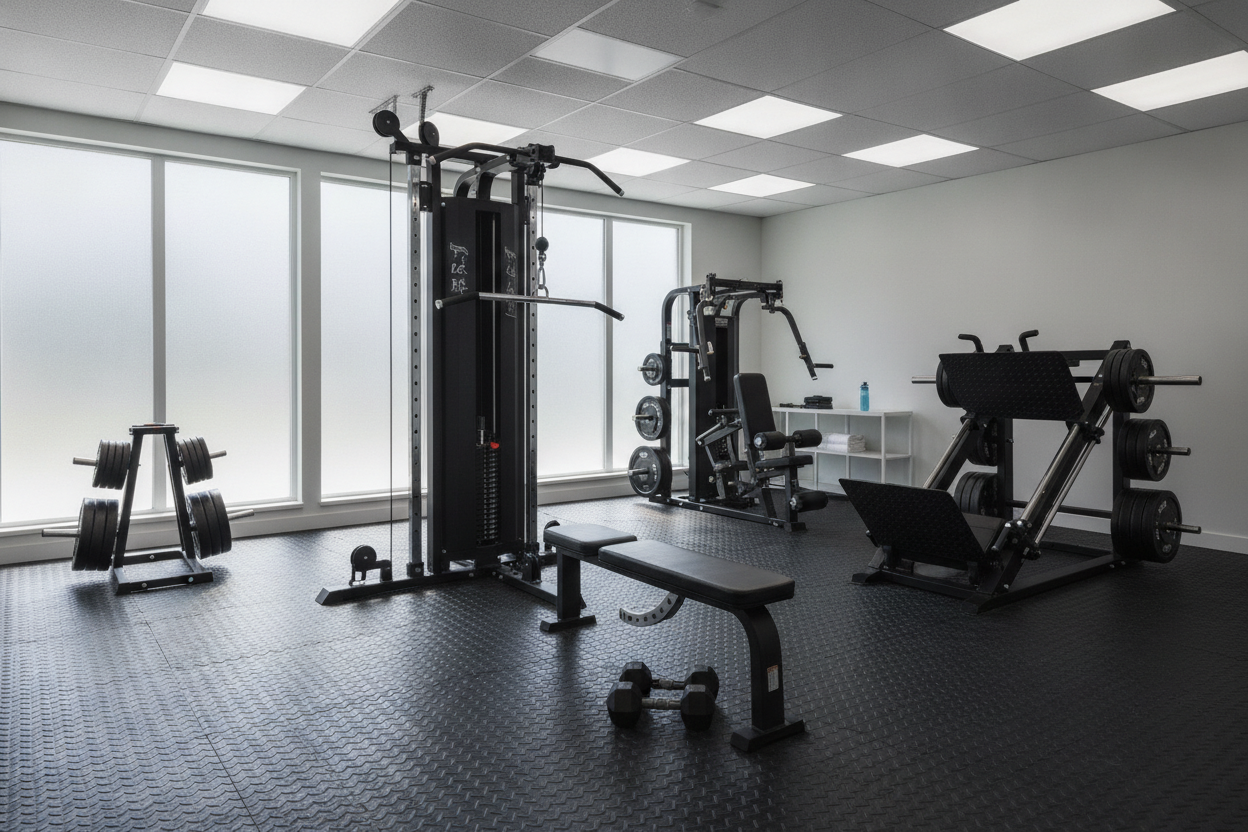
One of the most overlooked steps to gain muscle is the surface you're standing on. I spent years trying to squat on a slippery rug in my spare room, and I couldn't figure out why my knees always felt 'off.' When your feet are sliding or your heels are sinking into plush carpet, you’re bleeding force transfer. You need a stable, high-traction foundation to safely move heavy loads. If your base is unstable, your nervous system will actually throttle your power output to keep you from falling over.
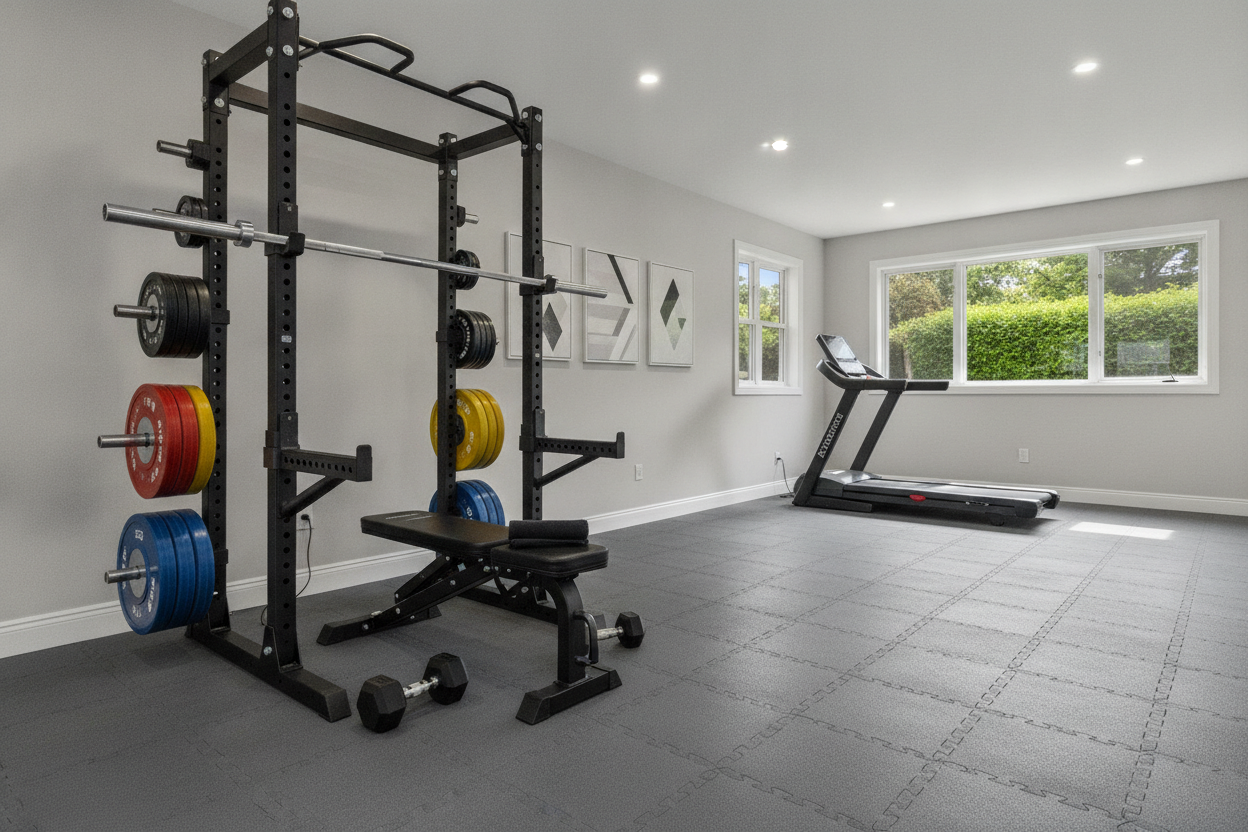
I eventually wised up and invested in proper flooring. Using something like Gxmmat New Upgraded Exercise Mats changed my training immediately. These mats are dense enough to handle a heavy rack but offer enough grip that my feet stay glued during heavy presses. Whether you're doing lunges or deadlifts, a dedicated training surface protects your joints and your floor. Don't be the guy trying to hit a PR on a yoga mat; get something that can actually handle the abuse of a real workout.
Simple Application: Stop Overthinking Your Chest
Chest day is the ultimate example of over-complicating things. I see guys doing low-to-high cables, high-to-low cables, and three different types of flyes before they’ve even touched a barbell. If you want a bigger chest, you need to get strong at pressing. Period. This guide to gaining muscle emphasizes the basics: a flat press, an incline press, and some form of dip. Master the mechanics of those three movements, and your chest will have no choice but to grow.
If you really want to understand the 'why' behind the movement, you can check out a guide to chest muscle anatomy and training. It’ll show you how the fibers run, but don't let the anatomy distract you from the effort. Progressive overload—adding five pounds to the bar or doing one more rep than last time—is the only thing that guarantees results. You don't need a dozen angles; you need three movements and a hell of a lot of intensity.
Your Blue-Collar Muscle Gain Guide
At the end of the day, the ultimate guide to building muscle mass is the one you can actually stick to for the next five years. It’s a blue-collar process. You show up, you punch the clock, you do the boring work, and you go home. There are no shortcuts, no 'bio-hacks,' and no magic supplements that replace hard sets of squats and rows. This muscle gain guide is built on the reality that growth is slow, painful, and repetitive.
Stop looking for the new thing and start perfecting the old things. The most successful lifters I know aren't the ones with the flashiest gear or the most complex spreadsheets. They’re the ones who haven't missed a Monday workout in three years. They eat their steak, they lift their weights, and they sleep like they’re dead. That’s the secret. It’s not exciting, but it’s the only way that actually works.
Personal Experience: The $40 Mistake
Early in my home gym days, I bought a 'standard' 1-inch barbell from a big-box store because it was $40 and came with weights. I thought I was being smart. The first time I tried to load it with 150 pounds for rows, the bar started to visibly bow. It felt like I was lifting a pool noodle. I ended up selling it for ten bucks on Craigslist and buying a real Olympic bar. The lesson? Cheap gear isn't just a waste of money; it’s a distraction from the work. Buy once, cry once, and then get to training.
FAQ
How many days a week should I train?
Three to five days is the sweet spot. Any less and it's hard to get enough volume; any more and most naturals can't recover. The best schedule is the one you won't skip when you're tired.
Do I need protein shakes?
They are convenient, but not mandatory. If you can get 150-200g of protein from chicken, eggs, and beef, you don't need the powder. Use it to fill the gaps, not as a primary food source.
How long until I see a difference?
You'll feel stronger in three weeks, but you won't look different in the mirror for at least eight to twelve. Building muscle is a game of months and years, not days and weeks. Stay the course.