The Only 4 Examples of Resistance Machines I Keep in My Garage
I remember the night I almost quit my garage gym. I was staring at a pair of 100-pound dumbbells, my lower back was throbbing from a heavy squat session, and the thought of trying to set up a chest fly on a wobbly bench made me want to go back to a commercial club. That is when I realized that a pure barbell-and-plate setup isn't a badge of honor; it is a bottleneck.
Buying examples of resistance machines for a home setup is a high-stakes game. You have limited square footage and a finite budget. You cannot afford to waste space on a machine that only does one thing poorly. I have spent years swapping out gear, and I have narrowed the field down to the four units that actually earn their keep.
- Leg Press: Essential for safe lower body volume when training solo.
- Lat Pulldown/Low Row: The only way to get true vertical pulling tension.
- Functional Trainer: The most versatile cable system for accessory work.
- Pec Fly/Rear Delt: Superior isolation for chest and shoulders without joint strain.
Wait, What Actually Counts as a Resistance Machine?
Before we spend your hard-earned money, let's define what we are talking about. A resistance machine is any piece of equipment that guides the weight along a fixed or semi-fixed path using pulleys, cams, or pivots. Unlike a barbell, which requires you to stabilize the load in three dimensions, these machines handle the stabilization for you.
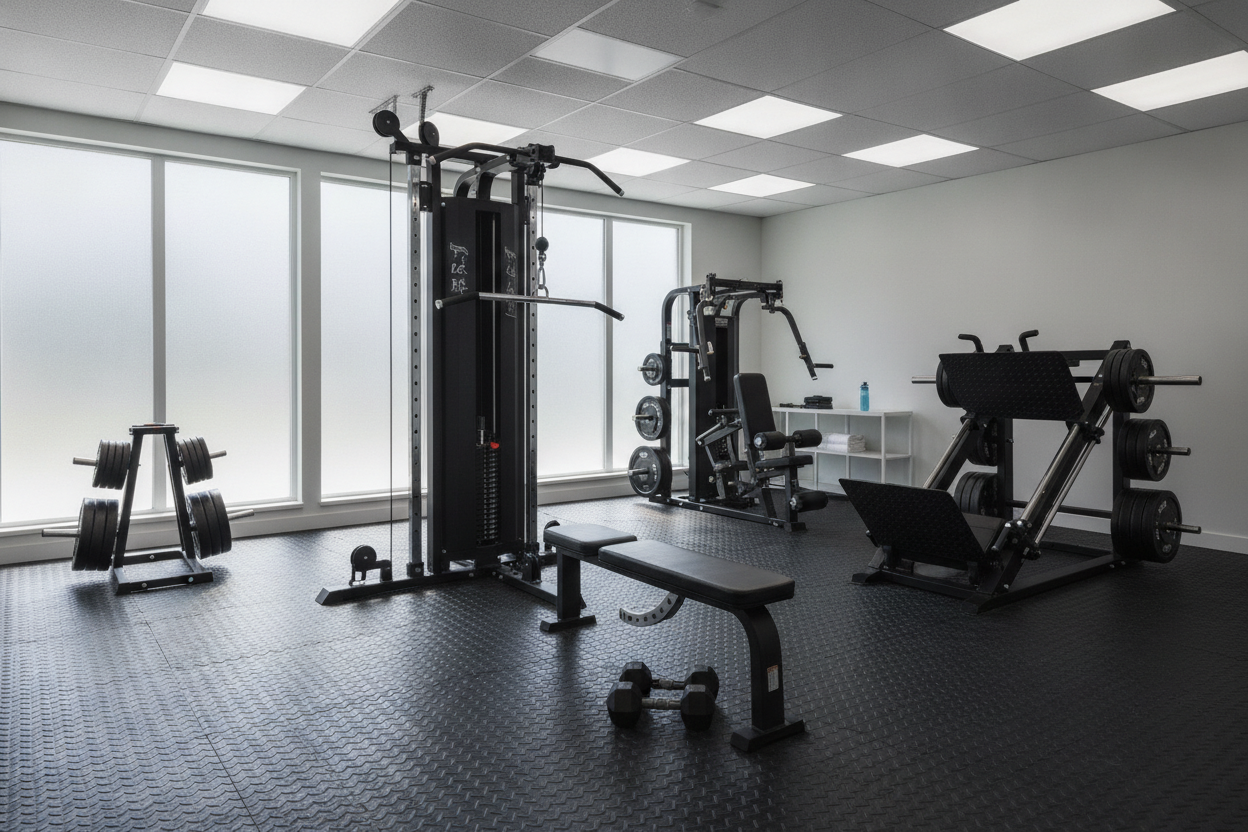
Common resistance machine examples include the seated chest press, leg extension, and the Smith machine. In a garage gym context, we usually look for 'selectorized' units (those with a pin and a weight stack) or 'plate-loaded' units (where you manually add your Olympic plates). The goal is to find machines that allow you to push closer to muscular failure without the risk of a 400-pound bar pinning you to the floor.
1. The Leg Press: Saving Your Lower Back on Heavy Days
A 45-degree plate-loaded leg press is the first big machine I added. It takes up a massive 8-foot by 4-foot footprint, which is a tough pill to swallow. However, if you want to grow massive legs without compressing your spine every single workout, it is mandatory. I personally use one with a 1,000-lb capacity and industrial-grade linear bearings.
The beauty of this machine is the safety. Most high-end models have adjustable safety stops. When my quads are screaming on the 12th rep and I cannot lock out, I just let the carriage settle onto the stops. You cannot do that with a back squat unless you want to destroy your rack and your pride. Look for a unit with a large footplate so you can vary your stance to target different parts of the leg.
2. The Lat Pulldown and Low Row Combo
You can do pull-ups until you are blue in the face, but you will eventually hit a plateau. A dedicated lat pulldown and low row combo unit allows you to use more weight than your bodyweight and hit the muscles from a perfect 90-degree vertical angle. I prefer a 1:1 pulley ratio for these, meaning 100 lbs on the stack feels like 100 lbs in your hands.
While dumbbells for resistance training are the gold standard for most movements, they suck for high-tension vertical pulls. A dedicated stack keeps your ego in check and your lats wide. This machine is the backbone of back development. If you get a model with a footplate for low rows, you have effectively covered your entire posterior chain accessory work in one 15-square-foot area.
3. The Functional Trainer (Yes, It Counts)
If you only have room for one machine, this is it. A functional trainer consists of two independent weight stacks with adjustable pulleys. It is technically a cable machine, but it fits perfectly into the category of resistance machine examples because it provides a guided, tension-heavy path for the weight. My unit has two 200-lb stacks and a 2:1 ratio, which makes the movement feel incredibly smooth.
I use this for everything: face pulls, tricep extensions, cable crossovers, and even belt squats. Because the pulleys swivel, you aren't locked into a single plane of motion like a standard chest press, but you still get the benefit of constant tension. It bridges the gap between the chaotic freedom of a dumbbell and the rigid path of a plate-loaded machine.
4. The Pec Fly and Rear Delt Station
This might seem like a luxury, but hear me out. Heavy dumbbell flyes are arguably one of the most dangerous exercises for your shoulders because the resistance curve is all wrong—it is hardest at the bottom where your joints are most vulnerable. A selectorized pec fly machine fixes this by providing a cam system that keeps the tension consistent throughout the entire movement.
I opted for a dual-purpose machine that also does rear delt flyes. It has a small footprint, maybe 3 feet by 4 feet, and it is the only way I can truly isolate my chest after a heavy bench session. The ability to sit down, pin a weight, and just fly until the muscle gives out is something you just cannot replicate safely with free weights.
Which of These Should You Actually Buy First?
If you are starting from scratch, do not buy all four at once. Start with the Functional Trainer. It is the most versatile and will allow you to perform hundreds of different movements. Once you have your cables sorted, look for a Lat Pulldown. The Leg Press should be your third purchase, primarily because of the cost and the floor space it demands.
If you are still looking for more resistance exercise examples at home, remember that machines are meant to supplement your heavy compound lifts, not replace them. Use your barbell for the heavy lifting and use these machines to finish the job without wrecking your joints.
My Biggest Equipment Mistake
I once bought a cheap Power Tower with a built-in cable system from a local sporting goods store. It cost $300 and felt like it was made of soda cans. The cables jumped off the plastic pulleys every time I went over 50 lbs, and the whole thing rocked like a boat in a storm. I ended up giving it away for free just to get the space back. If you are going to buy a machine, buy one that uses 11-gauge steel and real bearings. If it feels flimsy in the store, it will feel like a toy in your gym.
FAQ
Are plate-loaded machines better than selectorized stacks?
Plate-loaded machines are usually cheaper and take up less room because you don't have a giant metal stack shroud, but selectorized stacks are much faster for drop sets and feel smoother due to the guide rods.
How much floor space do I need for a leg press?
Plan for at least an 8-foot by 5-foot area. You need room to load the plates on the sides and room to get in and out of the seat without hitting a wall.
Can I build a pro-level back without a lat pulldown?
You can get close with weighted pull-ups and heavy barbell rows, but you will miss out on the specific isolation and high-volume vertical pulling that only a machine provides.