Building Powerful Pecs: A Comprehensive Guide to Chest Muscle Anatomy and Training
The chest is one of the most visually dominant muscle groups, often symbolizing strength and athletic prowess. For fitness enthusiasts, understanding chest anatomy is crucial not only for building muscular chests but also for ensuring safe, balanced development. By mastering chest anatomy exercises and recognizing how the three primary chest muscles work in synergy, you can create a purposeful chest anatomy workout tailored to your bodybuilding goals.
Understanding the 3 Chest Muscles
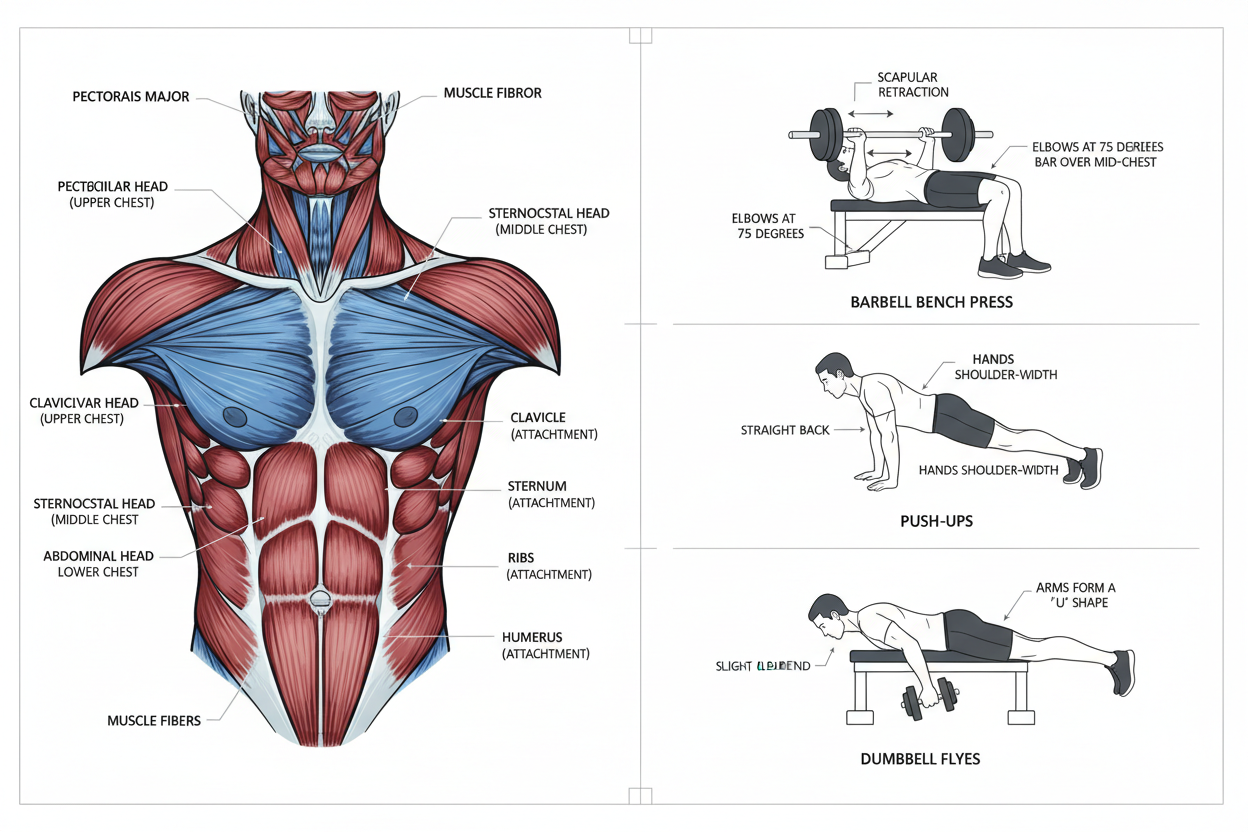
The chest is composed mainly of three anatomical sections: the pectoralis major (sternal head), pectoralis major (clavicular head), and the pectoralis minor. The sternal head accounts for the bulk of the chest mass, especially the mid and lower regions. The clavicular head, located in the upper chest, plays a crucial role in aesthetics and symmetry. Meanwhile, the pectoralis minor, a smaller muscle beneath the major, assists with scapular movement and stability, which supports overall shoulder health during pressing exercises.
The Science Behind Chest Anatomy Exercises
Chest muscle anatomy exercises are designed to target these muscle segments with different angles and loading patterns. For the sternal head, horizontal pushing movements such as the flat bench press and push-ups are effective. Incline pressing variations work the clavicular head more intensely, while dip variations and decline presses can emphasize the lower portion of the pectoralis major.
Compound Movements
Compound exercises like the barbell bench press, incline dumbbell press, and parallel bar dips are proven to recruit and strengthen multiple muscle fibers in the chest while engaging supportive muscles such as triceps and anterior deltoids. For bodybuilding chest muscles, these lifts form the bedrock of most workout programs, increasing size and density through progressive overload.
Isolation Techniques
To enhance muscle definition and correct imbalances, isolation moves such as cable flyes or pec-deck machines can be incorporated. These allow you to focus directly on chest contraction without significant interference from other muscle groups. Executing these moves with proper form helps in sculpting muscular chests by emphasizing the stretch and squeeze phases.
Structuring a Chest Anatomy Workout
A balanced chest muscle anatomy workout starts with heavy compound lifts when energy and focus are at peak levels. Following this, lighter isolation moves keep tension on the targeted area, ensuring every fiber is stimulated. An example routine might include:
- Barbell Bench Press – 4 sets of 6–8 reps
- Incline Dumbbell Press – 3 sets of 8–10 reps
- Cable Flyes – 3 sets of 12–15 reps
- Parallel Bar Dips – 3 sets to near failure
Warm-Up and Mobility
Preparing the shoulders and chest with dynamic stretches and light presses reduces injury risk and improves lifting performance. This is especially important for those pursuing chest anatomy bodybuilding, as heavy training can place significant stress on the joints and connective tissues.
My Experience with Chest Training
Early in my training journey, I focused almost exclusively on flat bench pressing. While my pressing strength improved, my upper chest lagged, leading to an uneven physique. By introducing incline presses and targeted isolation work, I noticed more balanced growth across all three chest muscles. The increased attention to the pectoralis minor also improved my posture during lifts, making my pressing mechanics more efficient and safe.
Evidence-Based Tips for Long-Term Progress
- Train the chest 1–2 times per week to allow proper recovery while maintaining volume.
- Apply progressive overload: gradually increase weight or repetitions over time.
- Maintain varied angles to target different regions of the chest muscles.
- Monitor shoulder health with rotator cuff strengthening and mobility drills.
- Prioritize technique over maximal loads to reduce injury risk.
Conclusion
Building muscular chests requires more than simply pressing a barbell week after week. An informed approach, grounded in chest muscle anatomy and evidence-based training strategies, ensures complete development of all three chest muscles. Whether your goal is aesthetic symmetry or functional strength, a structured chest anatomy workout combined with disciplined recovery will help you achieve peak performance and longevity in your training.