Circuit Leg Exercises: Movement Sequencing, High-Density Interval Frameworks, and Home Floor Staging
Executing effective circuit leg exercises requires more than stringing random movements together until muscular exhaustion sets in. Lower-body circuit training demands an intentional balance between movement planes, structural loading patterns, and transition logistics. When designed correctly, a well-structured leg circuit delivers dense training volume while reinforcing movement quality and joint stability.
Biomechanical Movement Taxonomy for Lower-Body Circuits
A comprehensive lower-body circuit workout balances multiple biomechanical functions rather than overloading a single muscle group. Rotating through distinct movement archetypes distributes localized fatigue, allowing you to sustain steady output across successive rounds.
Knee-Dominant and Quad-Focused Patterns
Knee-dominant movements primarily load the anterior chain, emphasizing the quadriceps and patellar tracking mechanics. Foundational variations include:
- Goblet Squats: Holding a single weight at chest level reinforces an upright torso, encourages deep hip flexion, and keeps center-of-mass balance steady.
- Tempo Bodyweight Squats: Controlling the descent over several seconds increases time under tension without requiring external loading.
- Front-Racked Split Squats: Placing the load in front shifts emphasis onto the lead quad while demanding active core stabilization.
During high-cadence circuits, maintain consistent foot pressure through the tripod of each foot (heel, base of the big toe, base of the pinky toe) to prevent knee collapse or heel elevation.
Hip-Dominant and Posterior Chain Drills
Hip-dominant exercises recruit the glutes, hamstrings, and erector spinae. In a rapid circuit format, these movements offset the anterior demand of squats and lunges:
- Romanian Deadlifts (RDLs): Hinges focus on horizontal hip displacement rather than vertical knee travel, stretching and loading the hamstrings under control.
- Glute Bridges and Hip Thrusts: These floor-based drills isolate hip extension without placing axial compression on the spine.
- Kettlebell Swings: A ballistic hinge pattern that challenges posterior power and hip snap mechanics during conditioning intervals.
Maintaining a neutral spine and active lats during hinge variations ensures that the posterior chain carries the load rather than the lumbar region.
Unilateral and Multi-Planar Movements
Real-world athleticism and functional balance rely heavily on single-leg strength and lateral stability. Integrating unilateral drills helps address bilateral imbalances and activates smaller hip stabilizers:
- Reverse Lunges: Stepping backward tends to be friendlier on the patellar tendon than forward lunges while maintaining quad and glute engagement.
- Lateral (Side) Lunges: Moving in the frontal plane opens up adductor mobility and challenges the gluteus medius.
- Walking Lunges: Demands dynamic deceleration and balance as you travel across your training surface.
- Step-Ups: Emphasizes unilateral hip extension while minimizing spinal compression.
Designing High-Efficiency Leg Circuit Frameworks
Structuring a lower body circuit training session involves managing density, fatigue accumulation, and exercise order. For additional bodyweight conditioning ideas, review our lower body leg guide to explore no-equipment sequencing templates.
Work-to-Rest Ratios and Session Pacing
Pacing dictates the physiological response of a leg workout circuit. Depending on your training goals, several time-based and repetition-based structures can be employed:
- Continuous Flow (40s Work / 20s Rest): Provides balanced density suitable for general conditioning and moderate load endurance.
- Short-Burst Density (30s Work / 15s Rest): Heightens interval intensity, best paired with low-complexity or bodyweight movements.
- Repetition Blocks with Fixed Rest: Performing 10 to 12 repetitions per station followed by 60 to 90 seconds of rest at the end of each round allows for heavier loading.
Station Transition Strategy and Fatigue Management
To preserve technical form under fatigue, place complex, heavily loaded compound movements at the start of each circuit round. Follow these with unilateral drills, and finish with floor-based glute bridges or calisthenic finishers. This top-down hierarchy ensures that balance-critical exercises are completed before peripheral fatigue sets in.
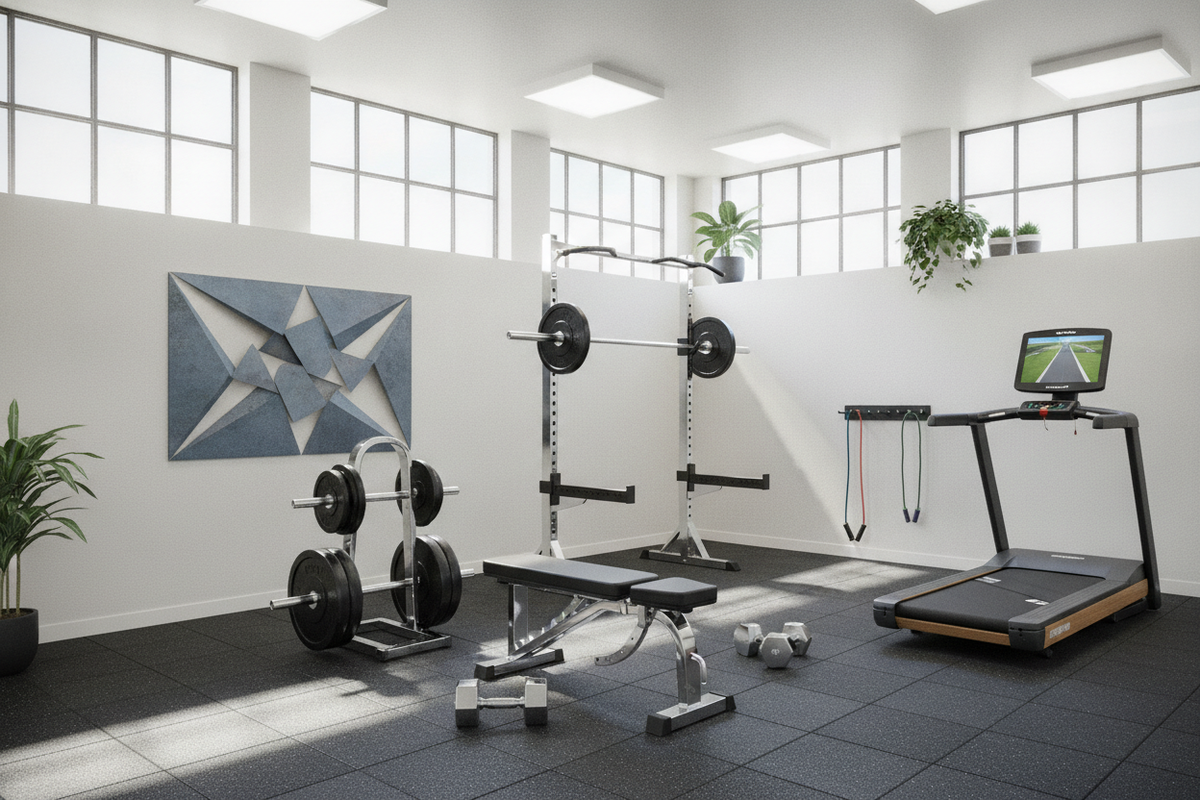
Equipment Staging and Home Gym Floor Protection
Lower-body circuits involve rapid directional changes, dynamic foot placement, and loaded equipment transitions. Proper setup of your training environment is essential to protect both your body and your home floor.
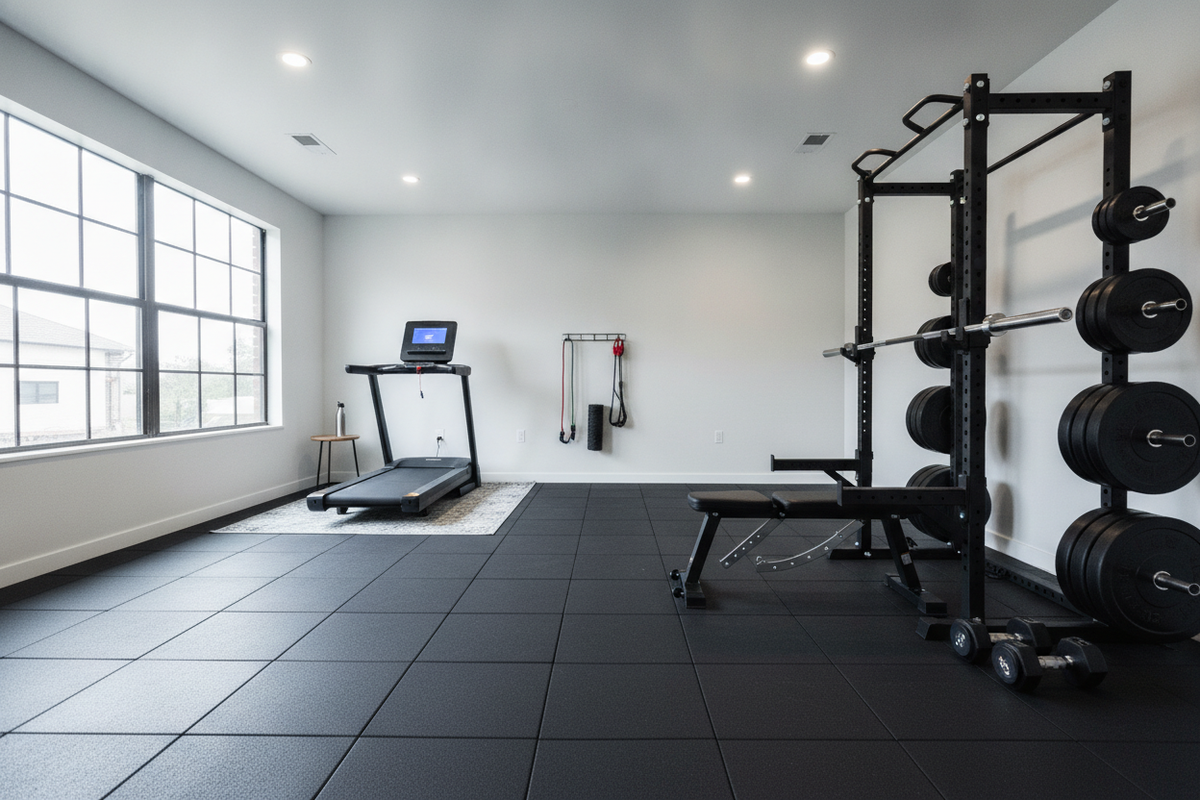
For dedicated workout spaces, choosing durable surface protection from our exercise gym collection helps establish a reliable boundary for high-tempo circuit training.
Traction, Cushioning, and Dynamic Footwork Stability
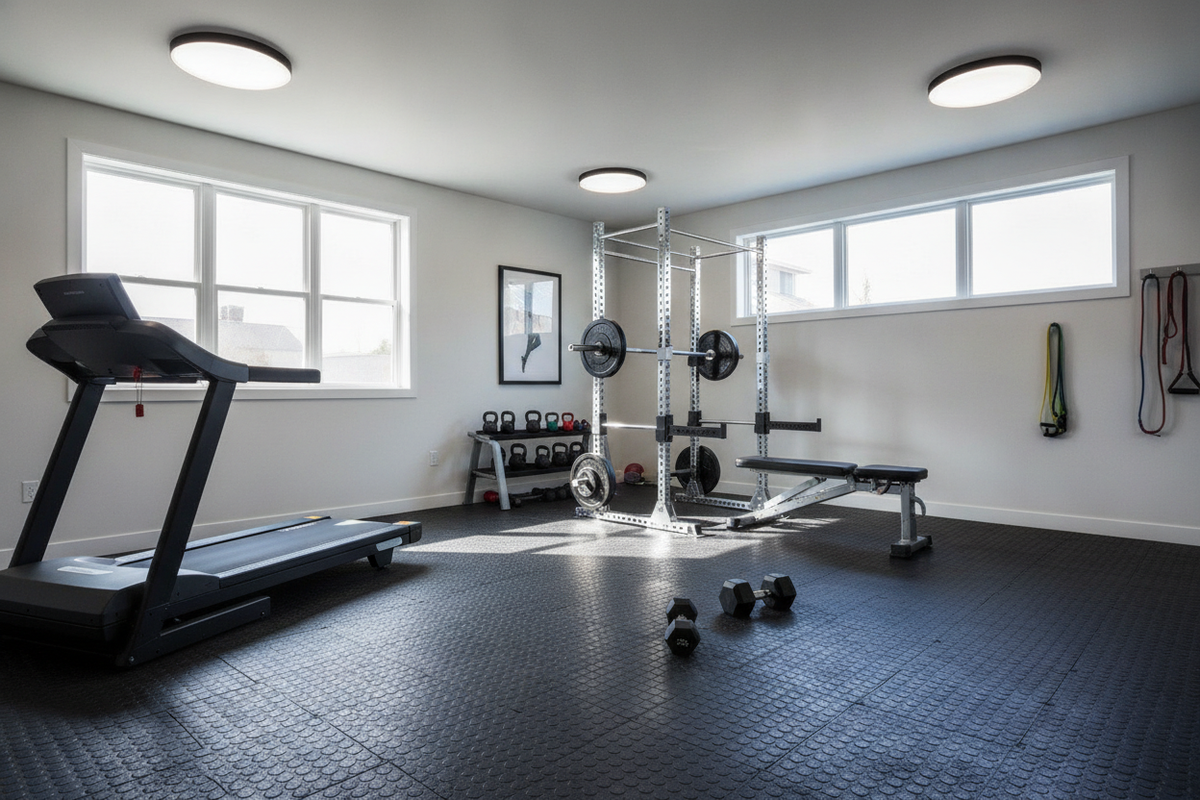
Dynamic lower-body movements like lateral lunges, jump squats, and split squat switches demand dependable traction. A high-density mat surface prevents foot slippage caused by perspiration and provides impact dampening during plyometric landings. Selecting a dedicated exercise gym workout product offers ample room to transition smoothly from standing lunges to floor-based posterior work without stepping off the padded boundary.
Station Layout, Weight Storage, and Mat Maintenance
To maximize efficiency during timed intervals, organize your training area thoughtfully:
- Clear Transition Zones: Position dumbbells or kettlebells along the perimeter of the mat rather than directly in foot-traffic paths.
- Floor Protection: Avoid dropping free weights directly onto bare subfloors by staging loaded exercises over high-density matting.
- Sweat Management and Cleaning: Wipe down textured exercise surfaces with mild soap and water after intense sessions to maintain friction and material integrity.
Progressive Overload and Long-Term Lower-Body Programming
Sustaining progress with leg exercises circuit training requires systematic overload methods. To explore foundational strength splits alongside circuit work, consult our companion lower body leg guide for gym-focused periodization concepts.
You can progress lower-body circuits without compromising movement technique by manipulating key variables:
- Volume and Density: Add an extra round to the circuit or decrease rest periods by 5 to 10 seconds.
- Time Under Tension: Slow down the eccentric (lowering) phase of squats and lunges to increase muscular demand.
- Progressive Loading: Gradually introduce heavier dumbbells or kettlebells to compound stations once unweighted form is fully dialed in.
- Movement Complexity: Transition from static reverse lunges to dynamic walking lunges or elevate the rear foot for Bulgarian split squats.
By combining thoughtful biomechanical sequencing, structured interval pacing, and a secure, non-slip training surface, circuit leg exercises deliver an efficient and durable lower-body training stimulus.