30 Minute Full Body Gym Workout: Consolidated Movement Architecture, Station Staging, and Floor Protection
The Mechanics of a High-Density 30-Minute Full-Body Workout
Executing a productive 30 minute full body gym workout requires eliminating logistical friction. In typical gym settings, trainees spend significant portions of their training window walking between selectorized machines, waiting for popular squat racks, or reorganizing scattered accessories. When time is strictly limited, these small delays accumulate quickly, undermining session momentum and overall training volume.
A successful approach to a 30-minute full-body workout gym session centers on compound movement patterns rather than isolated single-joint movements. By prioritizing multi-joint mechanics—such as knee-dominant squatting, hip-hinging, horizontal and vertical pressing, and pulling—you engage large muscle groups simultaneously. For deeper context on foundational movement choices, reviewing a full body workout guide helps streamline exercise selection.
The structural key to compressed training is the single-station consolidation principle. Rather than traversing the entire facility, you claim and stage a single perimeter footprint where an entire sequence can be executed without leaving the zone.
Consolidated Station Architecture: Dumbbells, Benches, and Dedicated Mats
Setting up an efficient station is the practical backbone of a high-density 30 minute full body workout at gym facilities. An ideal compact footprint requires minimal equipment while supporting multiple exercise configurations:
- Adjustable Dumbbells or Kettlebells: A versatile pair of free weights allows seamless transitions between pressing, pulling, and lower-body loading without re-racking plates.
- Flat or Adjustable Utility Bench: Provides horizontal support for presses, chest-supported rows, or step variations.
- High-Density Protective Mat: Creates a dedicated surface boundary that offers traction and demarcates your workspace.
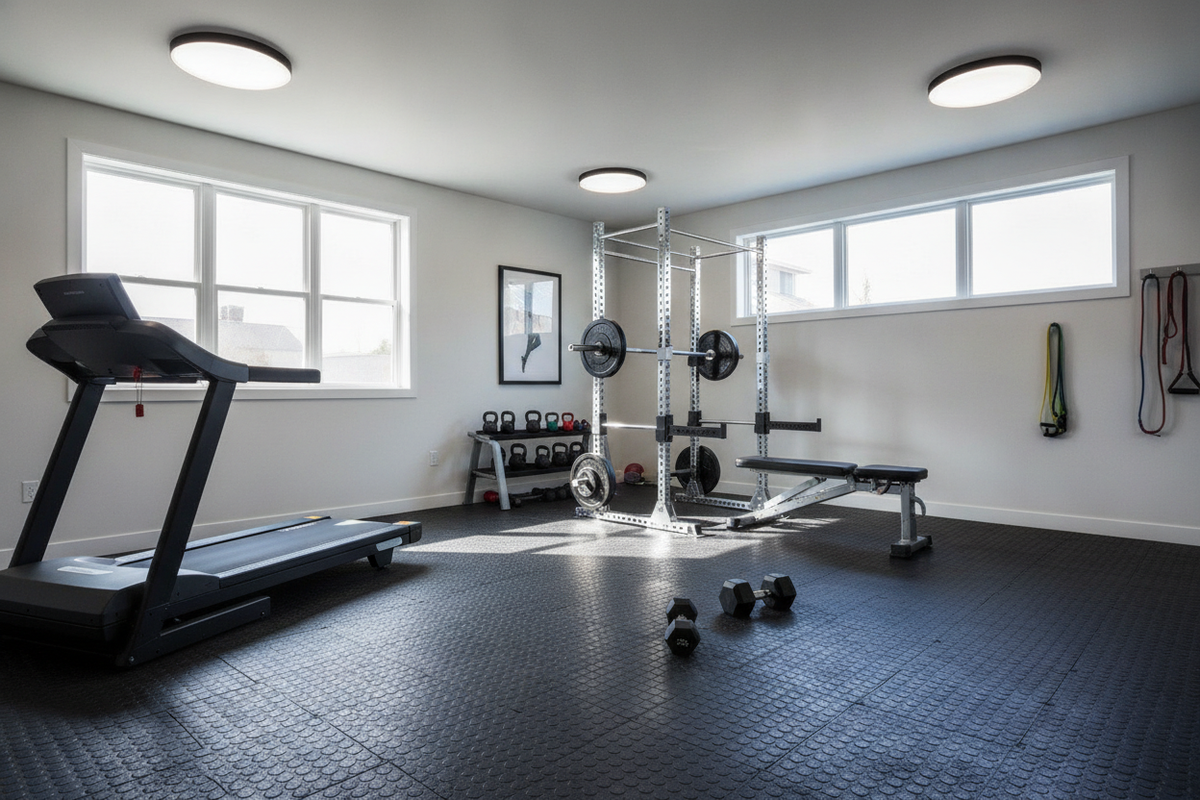
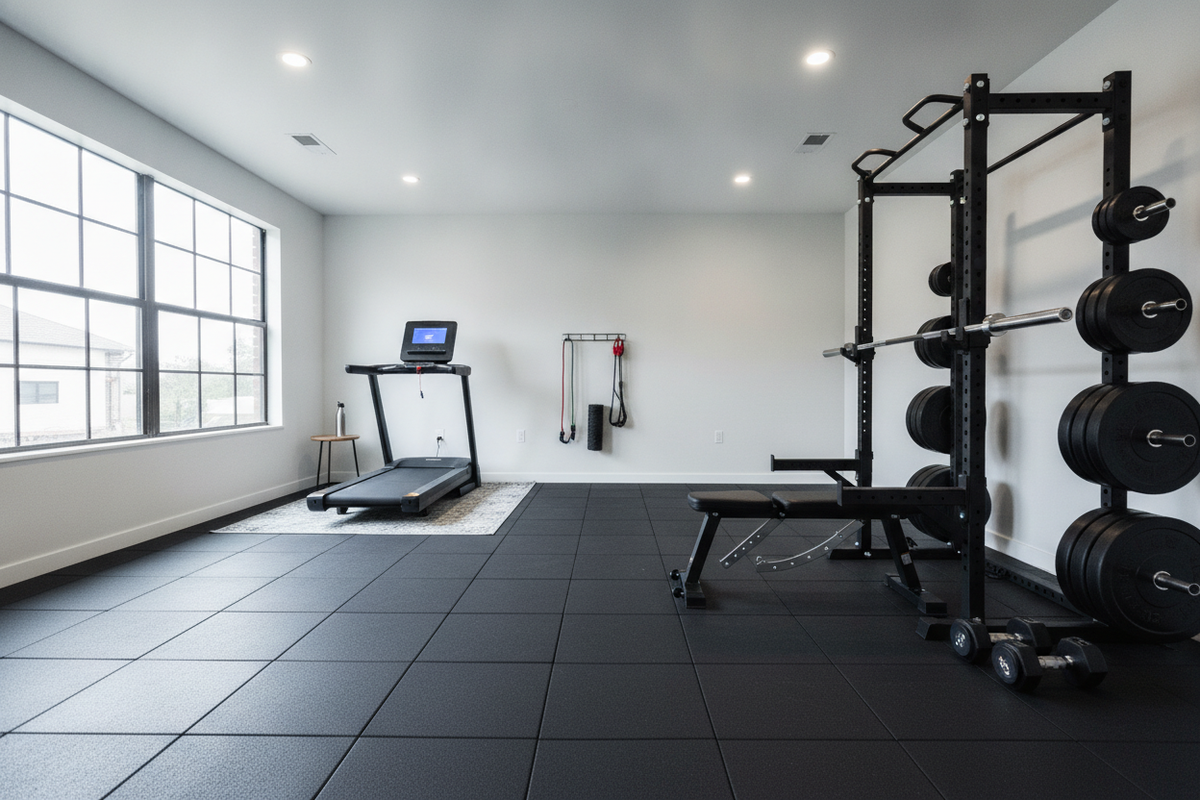
Using a durable gym workout product beneath your station provides stable underfoot grip during multi-directional movement patterns. Free-weight training places concentrated localized pressure on floors, whether in a commercial facility or a residential space. A supportive mat surface creates steady contact for your footwear while preventing metal weights from making direct contact with rigid subfloors.
The 30-Minute Movement Blueprint: Paired Movement Blocks
To maximize density without creating excessive local fatigue, structure the session into non-competing pairs. This arrangement allows one muscle group to recover while the opposing or complementary pattern is active, keeping downtime low without sacrificing form.
Block A: Knee-Dominant Lower Body and Horizontal Upper Pull
Begin with a paired superset combining a goblet squat and a supported bent-over dumbbell row. Holding a single dumbbell or kettlebell in the anterior position reinforces an upright torso while loading the lower body. Immediately following the squat, transitioning into bent-over rows targets the upper back and lats without requiring any equipment adjustments.
Block B: Hip-Hinge Lower Body and Vertical Upper Press
The second pairing combines a Romanian deadlift with a seated or half-kneeling overhead press. The deadlift emphasizes the posterior chain—including the hamstrings and glutes—while the overhead press targets the shoulders and triceps. Performing the press from a seated or kneeling position on a supportive mat isolates upper-body mechanics and reduces spinal arching.
Block C: Multi-Planar Core and Loaded Carries
Conclude the session with integrated trunk stability work, such as dumbbell farmer carries or mat-based plank variations. If floor space permits, short walking carries challenge grip strength and core posture. In tighter quarters, stationary holds or high-plank shoulder taps deliver equivalent trunk demand. Trainees looking to explore complementary programming layouts can consult a dedicated workout resource for broader template ideas.
Flooring Staging and Room Protection for Compressed High-Density Training
When executing a compressed 30 minute full body gym workout, pace and intensity naturally rise. Transitions between standing movements, seated lifts, and ground-based core work happen in quick succession, making floor stability essential.
Traction requirements shift dynamically between exercises. Standing squats and deadlifts demand firm, non-slip friction against the floor to prevent footwear slippage under load. Conversely, kneeling presses and prone floor exercises require sufficient cushioning to distribute pressure across sensitive joints like knees, elbows, and wrists.
Using a high-traction, broad-coverage gym workout product provides a uniform base for every phase of the routine. Beyond personal stability, reliable flooring protects residential subfloors or gym tiles from the repeated impact of resting heavy dumbbells between fast sets. Routine cleaning with neutral, non-abrasive surface cleaners preserves mat texture and grip over prolonged use.
Strategic Progression and Session Execution Guidelines
Pacing a high-density workout is about controlled rhythm rather than frantic rushing. Working within a 30-minute constraint can tempt lifters to compromise technique for speed, which increases mechanical breakdown. Applying structured execution principles keeps sessions productive and sustainable:
- Standardize Rest Intervals: Keep transitions between paired movements steady, taking brief rests as needed to maintain clean posture throughout every repetition.
- Integrate Movement-Specific Warm-Ups: Spend the first few minutes performing unweighted dynamic mobility drills directly related to the day's movement patterns before adding external loads.
- Track Progressive Resistance: Gradually increase dumbbell weight or repetition control over successive weeks rather than constantly changing exercises.
For individuals interested in dynamic conditioning formats alongside traditional strength work, exploring an alternative workout full body guide offers additional perspectives on hybrid training density. By combining consolidated equipment staging, thoughtful exercise pairings, and dependable floor protection, a focused 30-minute routine provides a complete and sustainable approach to strength training.