Torch Your Lower Body: The Ultimate No-Equipment Leg Circuit
Most people operate under the misconception that building strong, defined legs requires a squat rack and hundreds of pounds of iron. While heavy resistance training has its place, you can generate an incredible amount of metabolic stress and muscle fatigue using nothing but gravity and intensity. If you are short on time or traveling without access to a gym, a high-intensity 20 min legs session is often superior to a lackluster hour spent scrolling through your phone between sets on leg press machines.
The secret lies in density training. By reducing rest periods and increasing the volume of work within a short window, you force your body to adapt. This approach improves cardiovascular endurance while simultaneously tearing down muscle fibers in the quads, hamstrings, and glutes to stimulate growth. You don't need equipment; you need effort.
Why Short Duration Works for Leg Hypertrophy
Time isn't the primary driver of muscle growth; tension and fatigue are. When you remove external heavy weights from the equation, you must replace mechanical tension with metabolic stress. This means keeping the muscles under tension for longer periods without rest.
A focused 20 minute bodyweight leg workout eliminates the "fluff." There is no time for sitting around. By moving continuously from one exercise to the next, you accumulate lactate in the muscles, which triggers a hormonal response favorable for fat loss and muscle maintenance. This style of training also improves your lactate threshold, meaning you will eventually be able to work harder for longer periods.
My Experience with Hotel Room Leg Days
I learned the hard way that bodyweight training isn't "easy" training. A few years ago, during a month-long trip where I had absolutely no gym access, I was terrified of losing my squat strength. I decided to commit to daily, high-volume calisthenics. The first time I attempted a continuous circuit of lunges and jump squats, I was humbled within eight minutes. My legs were shaking uncontrollably, not from heavy loads, but from the sheer volume and lack of rest. That trip changed my perspective entirely. I returned to the gym with better conditioning and surprisingly maintained nearly all my strength because my joints felt healthier and my movement patterns were more ingrained.
The 20-Minute Protocol
To get the most out of this session, we will use an interval structure. Perform each exercise for 45 seconds, followed by a 15-second transition period. Complete the full circuit of five exercises, rest for 60 seconds, and repeat for a total of four rounds. This totals exactly 20 minutes.
1. Tempo Air Squats
The standard squat is the king of lower body movement, but rushing through them cheats you out of gains. Stand with feet shoulder-width apart. Lower your hips back and down as if sitting in a chair. The key here is tempo: take three full seconds to lower yourself, pause for one second at the bottom, and explode up. This increases time under tension, making your bodyweight feel significantly heavier.
2. Alternating Reverse Lunges
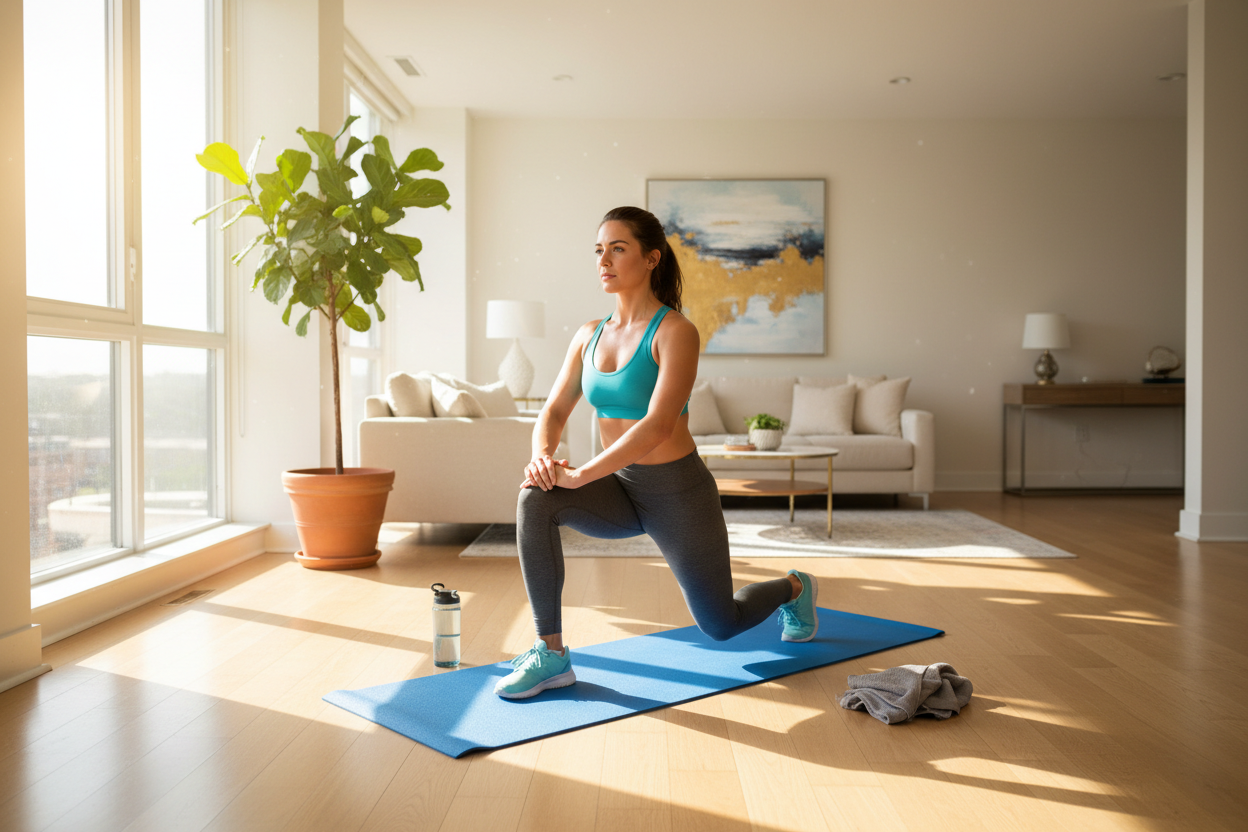
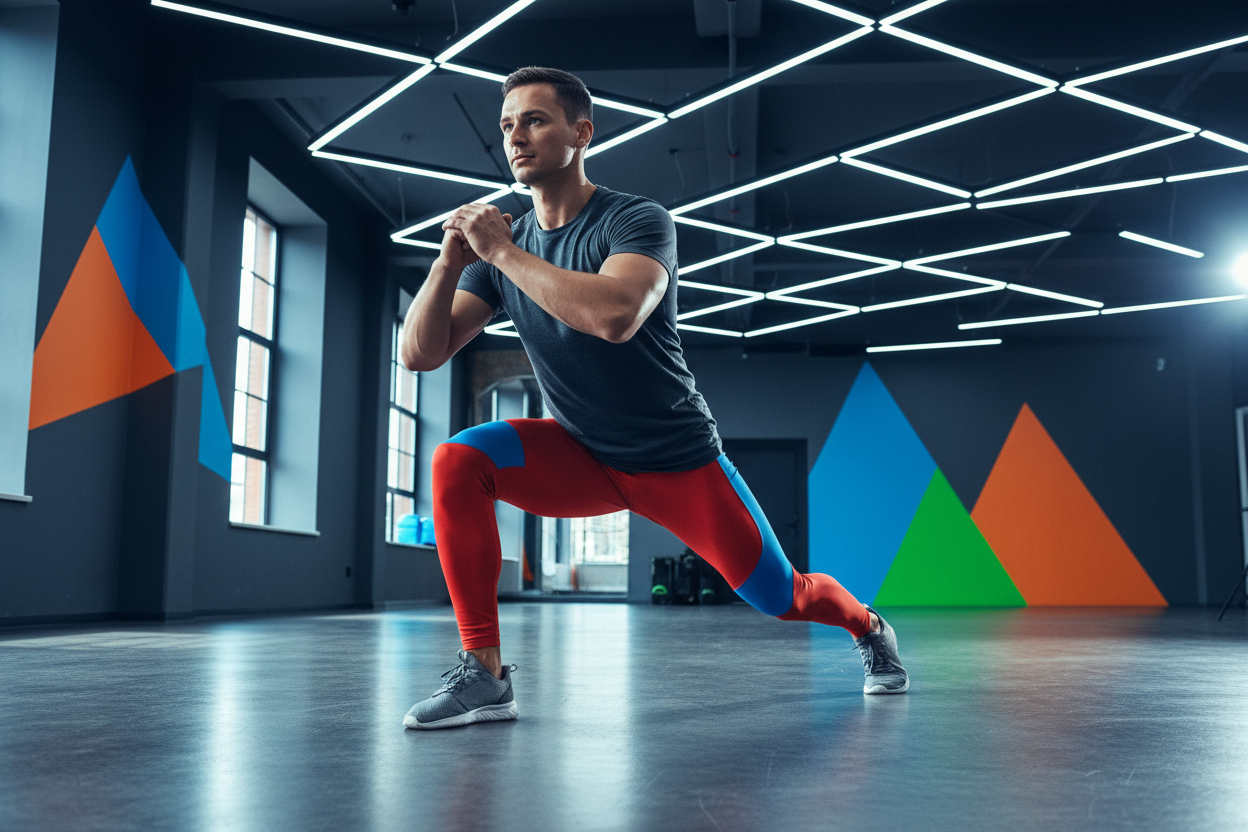
Forward lunges can sometimes aggravate the knees if you lack deceleration strength. Reverse lunges are generally safer and target the glutes and hamstrings effectively. Step back far enough that your front shin remains vertical. Drop the back knee until it hovers an inch off the floor. Keep your torso slightly leaned forward to engage the glutes. Alternate legs smoothly for the full 45 seconds.
3. Single-Leg Glute Bridges
Many leg workouts neglect the posterior chain, leading to imbalances. Lie on your back, knees bent, feet flat. Lift one leg into the air. Drive through the heel of the planted foot to lift your hips toward the ceiling. Squeeze your glute hard at the top. Switch legs at the 22-second mark. This exercise is vital for counteracting the effects of sitting all day.
4. Lateral Lunges (Side Lunges)
We move primarily in the sagittal plane (forward and backward), but athletic legs need lateral strength. Step out wide to the side, keeping one leg straight while bending the other knee and pushing your hips back. Keep your chest up and the heel of the bent leg glued to the floor. This targets the adductors (inner thigh) and builds stability in the hips.
5. Plyometric Squat Jumps
The final movement of the circuit is designed to empty the tank. Perform a standard squat, but instead of standing up, explode upward so your feet leave the ground. Land softly and immediately descend into the next rep. If the impact is too much for your joints, replace this with "Pulse Squats," where you stay at the bottom range of the motion and pulse up and down a few inches.
Scaling the Intensity
If you are a beginner, the pacing of a 20 minute bodyweight leg workout might feel overwhelming. It is perfectly acceptable to extend the rest periods. You might perform 30 seconds of work and 30 seconds of rest. The goal is completion, not perfection on day one.
For advanced athletes who feel bodyweight isn't enough, you simply need to adjust the mechanics. Try not locking out your knees at the top of squats or lunges. By keeping a slight bend in the knee, you prevent the muscle from resting, maintaining constant tension. This creates a hypoxic environment in the muscle tissue (lack of oxygen), which leads to that intense burning sensation and subsequent adaptation.
Cool Down and Mobility
After hammering your legs for 20 minutes, your muscles will be tight. Do not immediately sit down. Walk around for two minutes to let your heart rate come down gradually. Follow this with static stretching, focusing on the hip flexors and quads. Tight hip flexors are a common side effect of intense leg training and can lead to lower back pain if not addressed.
Consistency is the final piece of the puzzle. You can do this routine anywhere—your living room, a park, or a hotel room. There are no barriers to entry, only the willingness to endure the burn.
Frequently Asked Questions
Can I really build muscle with just 20 minutes of bodyweight training?
Yes, especially if you are a beginner or intermediate trainee. By minimizing rest time and focusing on high repetitions and slow eccentric movements, you create enough metabolic stress to signal muscle hypertrophy without heavy weights.
How often should I do this leg workout?
Because bodyweight exercises generally cause less central nervous system fatigue than heavy lifting, you can perform this routine 2 to 3 times per week. Ensure you have at least one rest day between sessions to allow for tissue repair.
What should I do if I feel knee pain during lunges?
Check your form to ensure your front heel stays flat on the ground and your knee tracks over your toes, not collapsing inward. If pain persists, switch to reverse lunges or static split squats, which offer more stability and less impact force than dynamic lunges.