No Gym Required: How to Build Serious Leg Strength in Your Living Room
You do not need a squat rack, a leg press machine, or a monthly membership fee to develop powerful, athletic legs. While heavy barbells are fantastic tools, your body weight combined with gravity and intensity techniques can drive significant muscle growth. The key to developing leg strength at home lies not in how much iron you can load onto a bar, but in how effectively you can manipulate leverage, tempo, and range of motion to challenge your muscles.
Many people assume that home workouts are reserved for cardio or endurance, but that is a misconception. If you understand biomechanics, you can stimulate the same muscle fibers used in heavy lifting. By shifting your focus to unilateral (single-leg) movements and controlling the eccentric (lowering) phase of every rep, you force your legs to work harder than they would during a standard two-legged squat. This guide breaks down exactly how to construct a routine that delivers results.
The Reality of Training Without Weights
I remember a specific period a few years ago when I was traveling extensively for work. I had no access to my usual gym, and frankly, I was worried my progress would stall. I had spent years squatting heavy, and I assumed bodyweight movements would feel like a walk in the park. One evening in a cramped hotel room, I decided to attempt a slow-tempo pistol squat routine. By the third set, my quads were burning more intensely than they ever had under a barbell. That session was a humbling reminder that building leg strength at home is entirely possible if you leave your ego at the door and focus on mechanical disadvantage.
To replicate the stimulus of heavy weights, you must apply the principle of progressive overload differently. In the gym, you add weight. At home, you increase the difficulty by reducing stability or increasing the time under tension. This forces the nervous system to recruit more motor units to stabilize and move your body, leading to strength gains and hypertrophy.
Mastering the Squat Pattern
The squat is fundamental. However, doing hundreds of standard air squats will eventually become an endurance test rather than a strength builder. To turn this into an effective exercise for leg strength at home, you need to progress to single-leg variations. The Bulgarian Split Squat is arguably the most effective movement you can do with zero equipment.
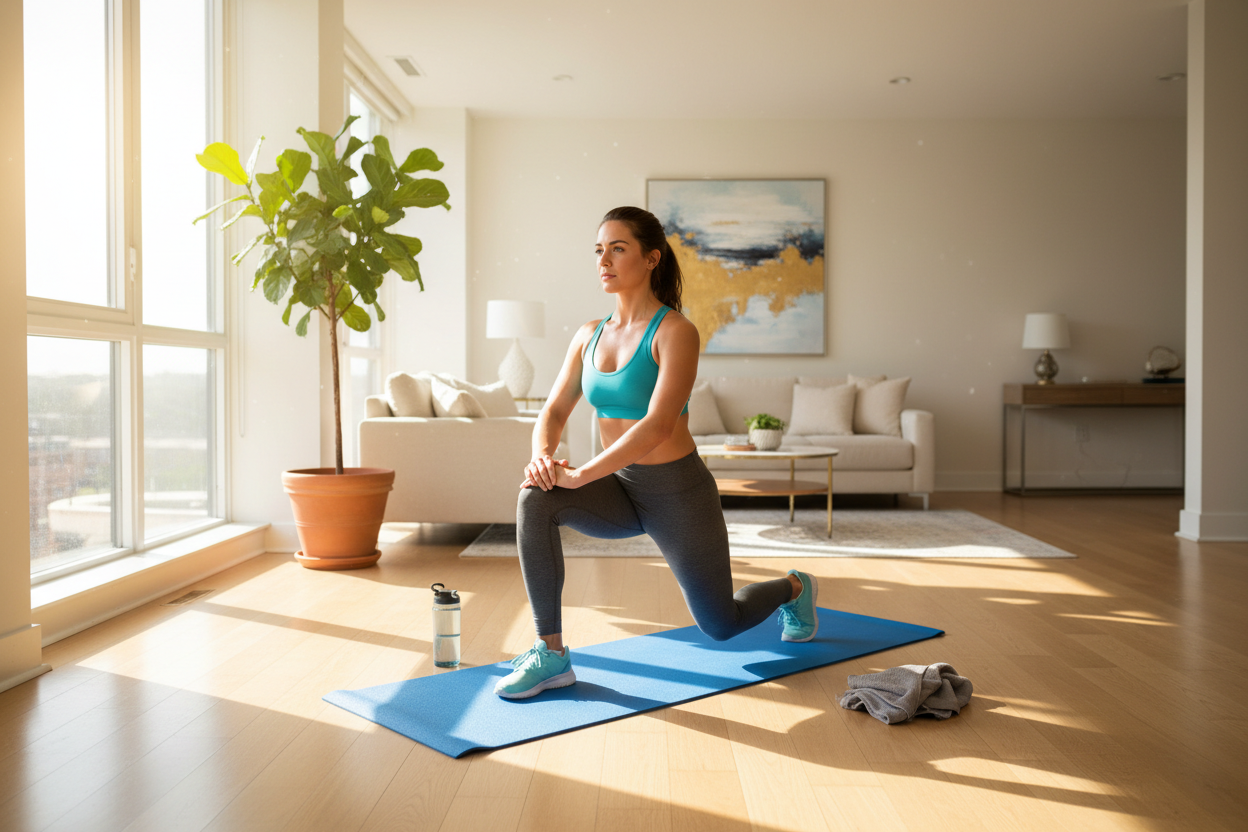
To perform this, place one foot behind you on a couch, chair, or bed. Step your front foot out far enough so that you can lower your hips straight down. Keep your torso slightly leaned forward to engage the glutes or upright to target the quads. Lower yourself slowly until your back knee hovers just above the floor, then drive back up through the front heel. Because you are balancing on one leg, your stabilizers work overtime, and the load on the working quad is doubled relative to your body weight.
If you are looking for varied strength leg exercises at home, the Pistol Squat is the advanced cousin of the split squat. It requires immense mobility and balance. If you cannot do a full pistol squat yet, start by sitting back onto a chair on one leg and standing back up without using momentum. This builds the requisite strength in the hips and quads without compromising your knees.
Targeting the Posterior Chain
Most home workouts neglect the hamstrings and glutes, leading to knee issues and posture imbalances. You need specific exercises to build leg muscles at home that target the back of your legs. The Single-Leg Romanian Deadlift (RDL) is your best friend here. Stand on one leg with a slight bend in the knee. Hinge at your hips, sending your free leg back while lowering your torso toward the ground. Keep your back perfectly flat.
The goal isn't to touch the floor; the goal is to feel a deep stretch in the hamstring of the standing leg. Once you feel that tension, squeeze your glutes to return to a standing position. This movement teaches you to hinge properly and strengthens the posterior chain without putting compressive load on your spine. If you find this too easy, hold a water jug or a backpack filled with books in the opposite hand of the working leg to increase the challenge.
Another essential movement is the Glute Bridge or Hip Thrust. Lie on your back with your knees bent and feet flat on the floor. Drive your hips toward the ceiling, squeezing your glutes at the top. To make this a true strength builder, switch to a single-leg variation. Drive through one heel while keeping the other leg in the air. This isolates the glute max and helps correct strength asymmetries between your left and right sides.
Explosive Power and Plyometrics
Strength isn't just about grinding out slow reps; it is also about power production. Integrating plyometrics is a fantastic way to recruit fast-twitch muscle fibers. Jump Squats are a staple here. Perform a standard squat, but explode upward from the bottom position, jumping as high as you can. Land softly and immediately transition into the next rep.
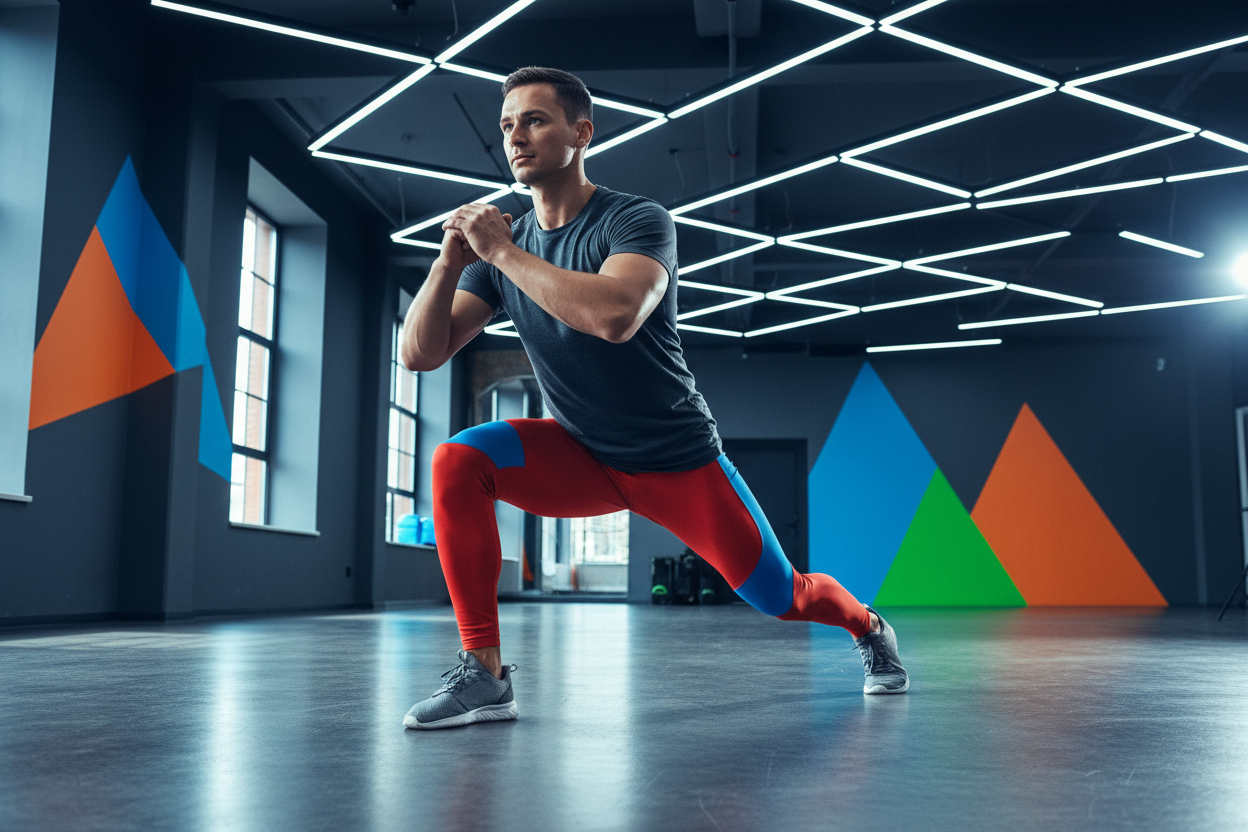
For a more advanced challenge, try alternating Jump Lunges. Start in a lunge position, jump explosively, switch your legs in mid-air, and land in a lunge on the opposite side. These are grueling and will spike your heart rate while taxing your leg muscles. Be careful with volume here; plyometrics are high-impact, so keep the reps lower and focus on maximum height and safe landing mechanics.
Structuring Your Home Leg Workout
Randomly selecting exercises won't yield optimal results. You need a structure that prioritizes heavy compound movements followed by accessory work. A solid routine for leg exercises at home for strength should look something like this:
- Warm-up: 5 minutes of dynamic stretching (leg swings, bodyweight lunges).
- Primary Compound (Unilateral): Bulgarian Split Squats - 3 to 4 sets of 8-12 reps per leg. Focus on a 3-second lowering phase.
- Posterior Chain: Single-Leg RDLs - 3 sets of 10-12 reps per leg. Focus on the stretch.
- Accessory Movement: Single-Leg Glute Bridges - 3 sets of 15 reps per leg.
- Finisher (Burnout): Jump Squats or Wall Sits - 2 sets to failure.
Rest for 60 to 90 seconds between sets. Since you aren't waiting for equipment, you can keep the intensity high. If you find the rep ranges becoming too easy, slow down your reps even more or reduce the rest time. Consistency is the primary driver of adaptation.
Consistency Wins Over Equipment
The biggest hurdle to progress isn't a lack of equipment; it is the belief that bodyweight training is inferior. When you execute these movements with proper intent and intensity, you create a stimulus that forces your body to adapt. Your muscles do not know if you are holding a metal disc or simply leveraging gravity against your own body mass; they only understand tension.
By committing to these principles and regularly pushing your limits, you can achieve impressive results. Whether you are recovering from an injury, traveling, or simply prefer the privacy of your living room, these methods provide a clear path to success. Start today, focus on your form, and watch your lower body transform.
Frequently Asked Questions
How often should I train my legs at home to see results?
For most people, training legs twice a week is the sweet spot. This frequency allows for enough volume to stimulate muscle growth while providing adequate rest days for recovery. If you are doing lower-intensity workouts, you might increase this to three times a week, but ensure you listen to your body to avoid overuse injuries.
Can I really build muscle mass without heavy weights?
Yes, hypertrophy (muscle growth) occurs when you fatigue muscle fibers through tension and metabolic stress. By using unilateral exercises like pistol squats or split squats, you effectively double the load on the target muscle compared to bilateral movements. Combining this with high reps, slow tempos, and short rest periods creates a potent muscle-building stimulus.
What if I have bad knees? Can I still do these exercises?
Many home leg exercises can be modified to be knee-friendly. Focus on posterior chain movements like glute bridges and Romanian deadlifts, which place less stress on the knee joint. For squat patterns, limit your range of motion to what is pain-free and ensure your shin remains relatively vertical to reduce shear force on the knee.