Chasing Flexibility? Joints Need Stability Before They Can Stretch
I spent the better part of my thirties yanking on my hamstrings like I was trying to pull-start a lawnmower. I’d spend twenty minutes every night on the floor, groaning through static stretches, only to wake up the next morning feeling like my legs were made of cured oak. It was a cycle of frustration that many lifters know all too well when trying to improve flexibility joints.
The reality is that your body isn't stupid. If you’re constantly tight despite stretching, it’s not because your muscles are physically too short. It’s because your nervous system has pulled the emergency brake. Until you prove to your brain that your joints are stable, it will never give you the keys to a full range of motion.
Quick Takeaways
- Tightness is usually a protective reflex, not a muscle length issue.
- Joint stability must be established before the brain allows for deeper flexibility.
- Static stretching often yields zero results because it ignores the joint capsule.
- Your environment matters—hard concrete floors trigger muscle guarding.
The 'Tight Muscle' Myth (And What's Actually Going On)
Most lifters treat their bodies like a collection of rubber bands. They think if they just pull hard enough and long enough, the band will eventually stay stretched out. But your muscles are controlled by your nervous system. If your brain senses that a joint is unstable or unsupported, it will lock down the surrounding musculature to prevent an injury.
This is why you can spend an hour on a foam roller and still feel stiff during your first warm-up set of squats. You're attacking the symptom, not the cause. When you understand Why Flexibility and Stretching Feel Like a Waste of Time (And the Fix), you realize that the 'tightness' you feel is actually a high-tension security system. Your brain is essentially saying, 'I don't trust you in this position, so I'm making it impossible for you to get there.'
I’ve seen guys with 500-pound deadlifts who can’t touch their shins. They don't have short muscles; they have a nervous system that is terrified of lumbar flexion because they've never built the stability to handle it. Inflexible joints are often just joints that are screaming for better motor control.
Why Chasing Flexibility? Joints Need to Feel Safe First
To understand the flexibility of joints, you have to look at the joint capsule itself. This is the connective tissue envelope that surrounds the joint. It’s packed with sensory receptors that feed information back to your brain. If that capsule is 'junked up' or if the joint isn't centrated properly, the brain perceives a threat.
Think of it like a high-end sports car with a speed limiter. You can put the best fuel in the tank (stretching), but if the onboard computer thinks the tires are loose, it won't let you go over 40 mph. To unlock joint flexibility, you have to convince the computer—your cerebellum—that everything is bolted down tight. This is achieved through loaded carries, isometric holds, and proper bracing techniques.
I used to have a nagging 'tightness' in my lead shoulder during bench press. I stretched my pecs until I was blue in the face. It wasn't until I started doing heavy kettlebell carries and serratus wall slides that the tightness vanished. My brain finally felt the shoulder was stable enough to allow the humerus to move freely in the socket. No amount of passive stretching could have convinced my nervous system to let go of that protective tension.
The Difference Between Muscle Length and Joint Flexibility
There is a massive distinction between being able to passively move a limb and having the active range of motion required for a lift. You might be able to lie on your back and pull your knee to your chest, but if you can’t maintain that hip depth during a weighted squat, you don't have functional flexibility. One is just 'slack' in the system; the other is controlled mobility.
True joint flexibility requires the muscle to be able to produce force at its end-range. If you only train in the middle 50% of a movement, your brain will eventually 'forget' how to stabilize the end-ranges. This is why many veteran lifters feel like they are getting stiffer every year. They are getting stronger in a limited window, and the body is locking out the rest to keep them safe.
How Inflexible Joints React to Terrible Gym Flooring
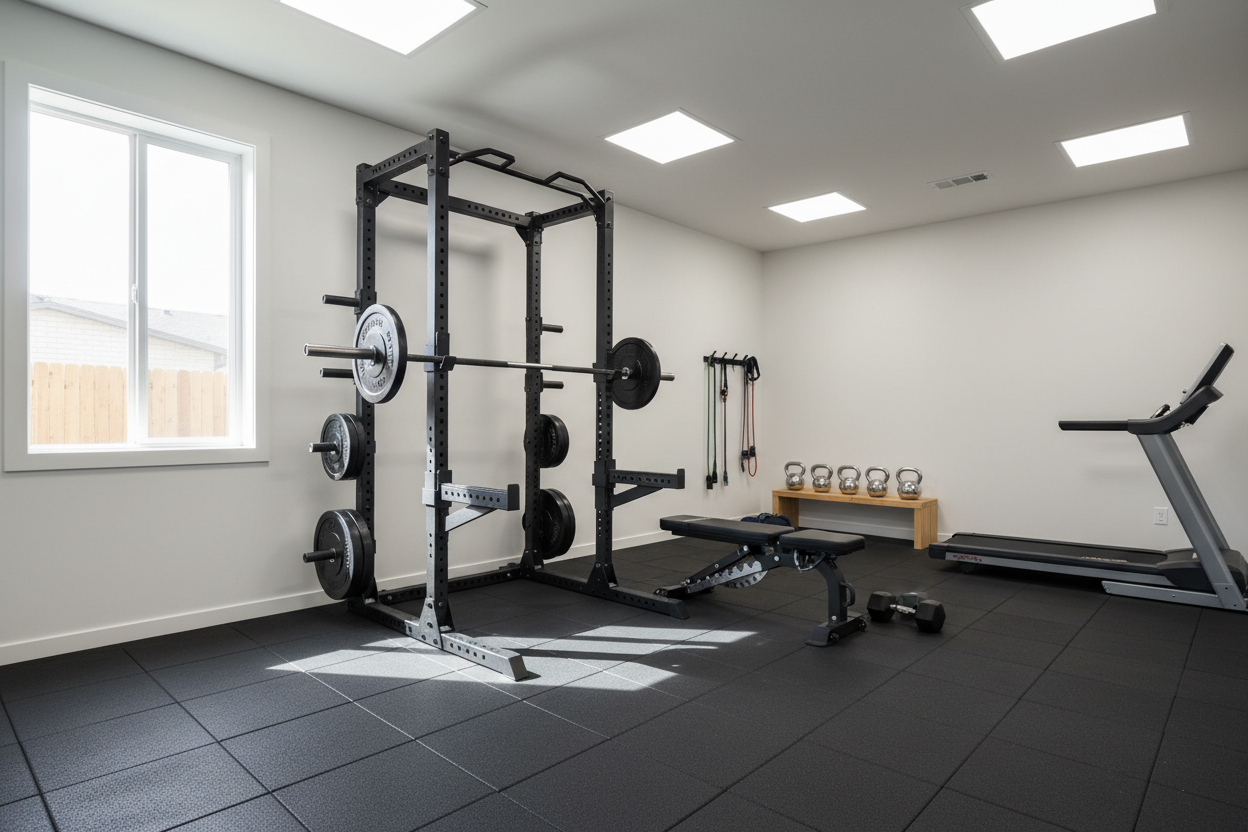
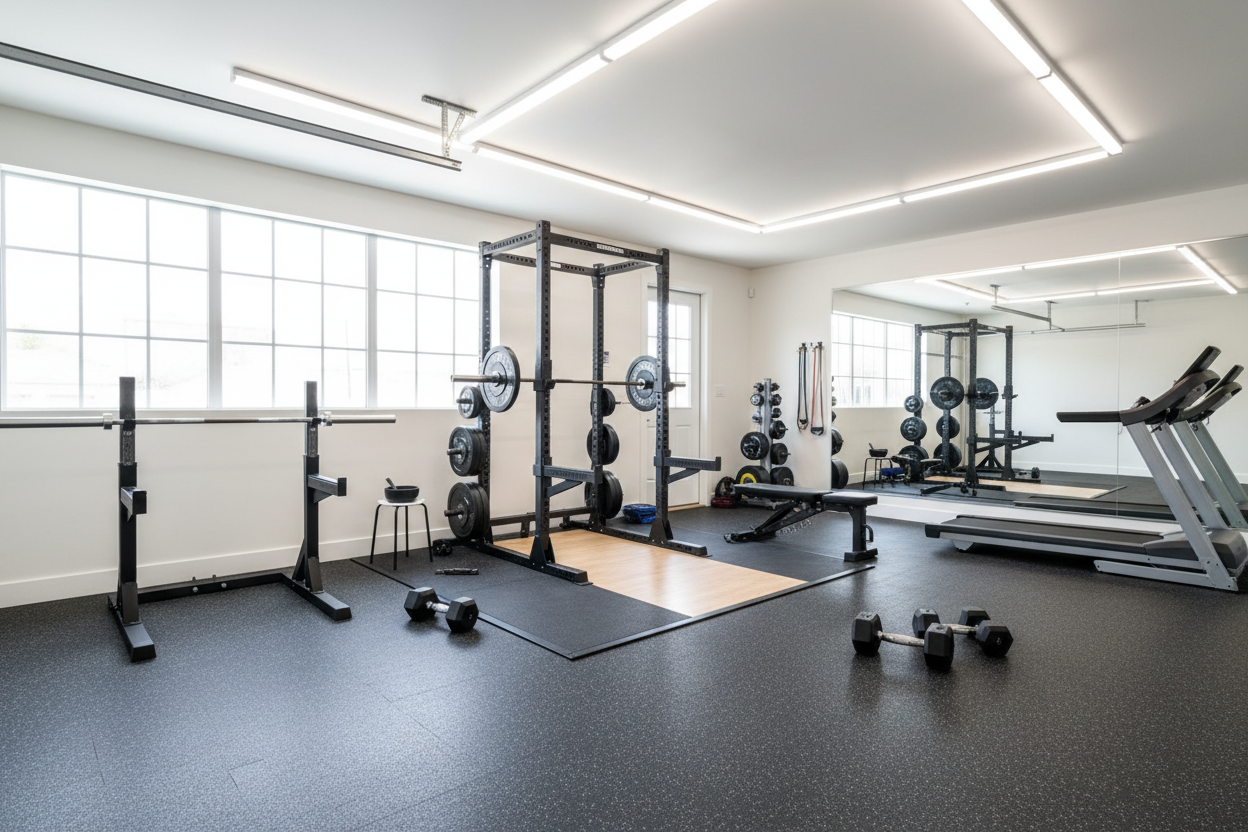
One of the most overlooked factors in mobility work is the surface you're training on. If you're trying to mobilize your hips or ankles on a cold, hard concrete garage floor, your body is going to fight you every step of the way. Hard surfaces trigger a subconscious bracing effect. Your skin and fascia detect the hard pressure, and your muscles reflexively contract to protect your bones.
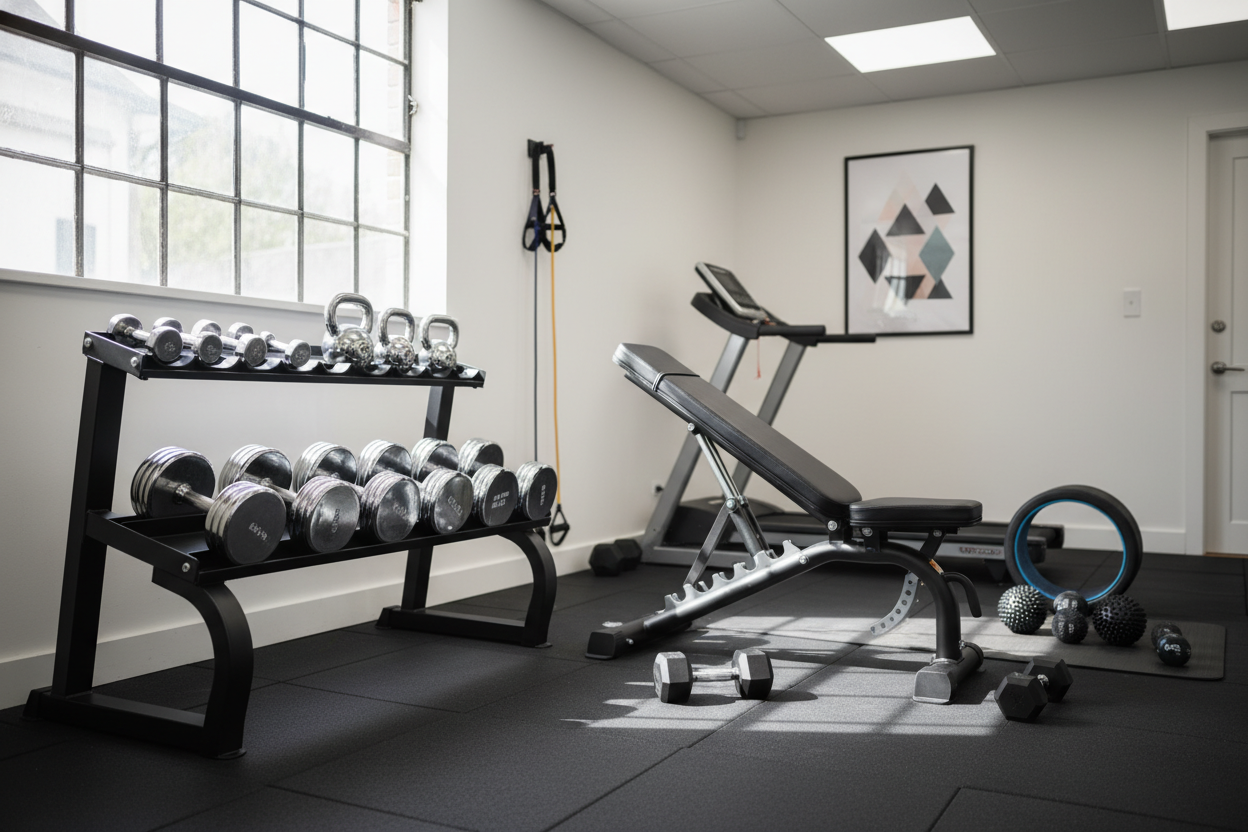
I learned this the hard way when I moved my training to a cold garage. My mobility progress hit a wall until I invested in a high-density 6X8Ft Exercise Mat. Having a dedicated 7mm thick surface that actually provides some give allows your parasympathetic nervous system to kick in. When your body feels supported and warm, it’s much more likely to release that protective 'guarding' tension.
If you're serious about fixing inflexible joints, stop doing your mobility work on a towel over concrete. You need a surface that allows you to sink in slightly, providing the sensory feedback that it's safe to relax. It’s the difference between trying to sleep on a park bench versus a mattress; your body knows the difference, and it reacts accordingly.
3 Ways to Improve Flexibility of Joints (Without Endless Yoga)
If you want to actually change your range of motion, you need to move beyond simple stretching. First, try banded distractions. By using a heavy-duty resistance band to pull the joint humerus or femur slightly in the socket while you move, you're targeting the joint capsule directly. This 'creates space' in the joint that a muscle stretch simply can't reach.
Second, implement PAILs and RAILs (Progressive and Regressive Angular Isometric Loadings). This involves getting into a stretch and then actively pushing against the resistance. For example, in a pigeon stretch, you’d spend 30 seconds driving your knee into the floor as hard as possible. This tells the brain, 'I have strength in this deep position,' which immediately earns you more range.
Third, integrate your mobility into your actual movement patterns. Once you've 'opened' a joint, you need to use that new range under load. This could be a slow-tempo goblet squat or a 40 Min Power Yoga Workout if you want a more structured flow. The key is to move through the new range of motion so your brain maps it as a 'safe' zone.
I’ve found that ten minutes of focused joint work beats an hour of mindless stretching every single time. My own hip mobility didn't improve until I stopped 'stretching' and started 'distracting' and 'loading.' It’s less about being flexible and more about being capable.
Personal Experience: The Hip Impingement Lesson
A few years back, I was convinced I had a physical 'bone-on-bone' hip impingement. I couldn't hit depth on a squat without a sharp pinch. I spent hundreds on physical therapy and 'stretching' gadgets. The fix? It wasn't more stretching. It was actually strengthening my deep hip rotators and using a thick band to pull my hip joint laterally during my warm-ups. I realized my 'tightness' was just my femur sitting slightly off-center in the socket. Once I stabilized the joint, the 'inflexibility' vanished overnight. It was a humbling lesson in biomechanics over brute force.
FAQ
Why are my joints so stiff even though I stretch every day?
Your brain is likely using muscle tension to protect an unstable joint. If you don't build stability through strength work and isometrics, the 'tightness' will keep coming back as a protective mechanism.
Can you actually increase the flexibility of joints?
Yes, but you're usually increasing the tolerance of the nervous system and the pliability of the joint capsule, rather than physically lengthening the bone or muscle tissue itself.
What is the best way to test joint flexibility?
Assess your active range of motion. If you can move a joint through a full range using only its own muscles, you have good mobility. If you need to 'pull' it into position with your hands, you have a stability gap.