I Ruined a Basic Muscle Building Workout by Overthinking Every Set
I remember staring at my 3/4-inch rubber flooring, wondering if my lateral raises would be 4% more effective if I leaned forward exactly 12 degrees. I spent more time adjusting my adjustable bench and checking my phone for 'optimal' angles than actually pressing. I completely sabotaged my basic muscle building workout by trying to be a lab scientist instead of a lifter.
Quick Takeaways
- Consistency beats novelty every single time.
- Pick 4-6 foundational movements and marry them for at least three months.
- Adding five pounds to the bar is the only 'muscle confusion' you actually need.
- A stable foundation, like a heavy-duty mat, is essential for heavy compound lifts.
The Instagram Trap That Sabotaged My Gains
I fell for the 'science-based' trap hard. I was swapping my barbell rows for chest-supported T-bar rows every other Tuesday because some guy with a PhD on YouTube said the stretch-mediated hypertrophy was better at a specific cable height. My back didn't get bigger; I just got really good at setting up equipment. I spent my sessions fiddling with D-handles and carabiners instead of moving heavy weight.
The irony is that while I was chasing the 'perfect' stimulus, my numbers stayed stagnant. I was so worried about hitting every single fiber of my rear delt that I forgot to just get strong. My garage gym became a laboratory of mediocrity. I lost the thread of what a basic muscle building routine should be: hard, repetitive, and incredibly boring.
Why 'Muscle Confusion' is Actually Just Progression Confusion
Your muscles don't have brains; they don't get 'bored.' They respond to mechanical tension and metabolic stress. If you swap a back squat for a Bulgarian split squat every week to 'keep the body guessing,' you're just making it impossible to track your progress. You can't accurately measure strength gains if the variables are constantly shifting.
Hypertrophy is a slow burn. It requires you to get objectively better at a specific movement over a long period. When you constantly rotate exercises, you spend the first two weeks just learning the neurological pattern of the new move rather than actually taxing the muscle. If you want a program that stays out of its own way, check out our Workout Hub for baseline routines that actually work.
Stop Changing Exercises, Start Changing the Load
The only thing you should be 'confusing' is the total weight on the bar. If you did 225 lbs for 8 reps last week, do it for 9 this week, or put 230 lbs on the bar. That is the only stimulus your body needs to realize it isn't strong enough and needs to grow. Most people change their routine because they want to escape the 'grind' of heavy sets, but the grind is where the muscle lives.
Stripping It Down: The Bare Minimum You Actually Need
I eventually stripped everything back to four pillars: Push, Pull, Hinge, and Squat. No fancy cable crossovers, no 'finisher' sets of 30 reps with a light band. Just heavy, compound movements done with violent intent. It sounds simple, but it takes way more discipline to stick to the same five exercises for six months than it does to try a new 'hack' every Monday.
A solid split doesn't need to be fancy to be effective. For example, The 5 Day Muscle Building Workout Routine That Won't Break You shows how you can organize a week without over-complicating the individual sessions. The goal is to maximize effort on the lifts that give you the biggest bang for your buck.
Your Floor Needs to Support Heavy, Boring Reps
When you commit to the basics, you're going to be doing a lot of heavy RDLs and squats. You can't do that safely on thin foam tiles that compress under your heels or slide around when you're trying to find your stance. I learned this the hard way when I almost tipped a rack during a heavy re-rack on cheap flooring.
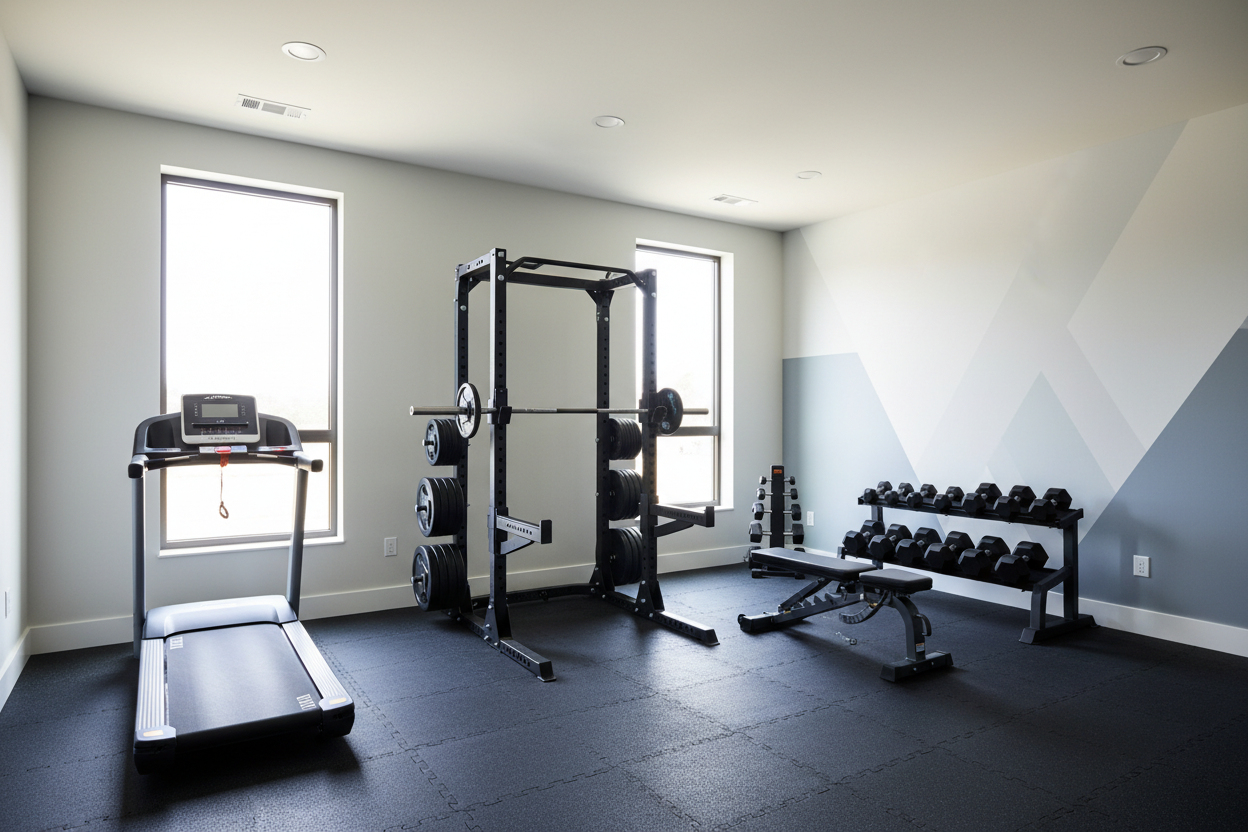
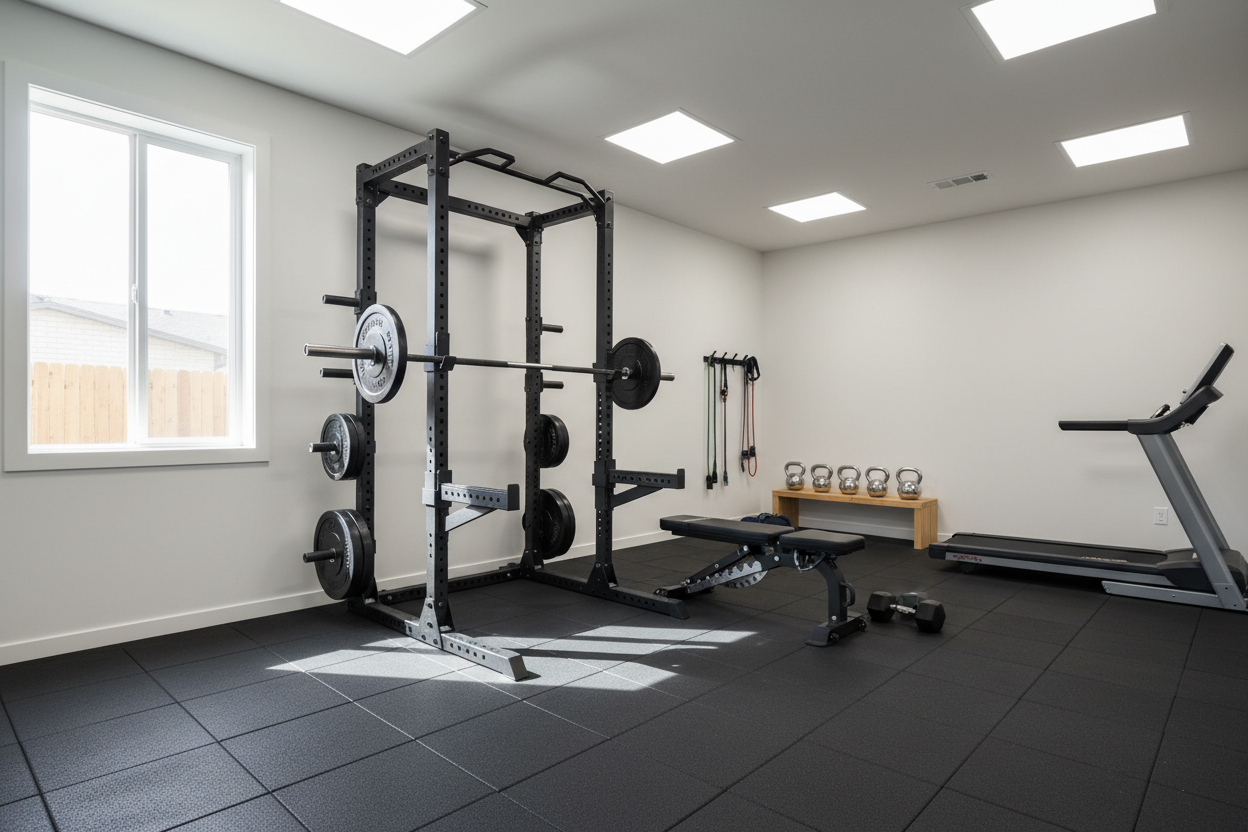
Investing in a large gym flooring mat changed the game for me. It provides a 7mm thick, non-slip foundation that doesn't budge. When you aren't worried about your feet sliding out during a heavy row or your floor cracking under a deadlift, you can actually focus on the lift itself. Stability is the foundation of strength.
Why Hard Work Beats a Fancy Spreadsheet Every Time
My breakthrough came when I deleted my 12-tab spreadsheet and replaced it with a notebook. I realized that giving 100% effort to four basic exercises and resting properly is infinitely better than giving 60% effort to eight complex variations. Most people under-recover because they're trying to do too much fluff.
I also stopped rushing. I used to think that if my heart rate wasn't at 160 bpm, I wasn't working hard enough. Now, I take my time. If you want to know why I'm not gasping for air between sets, read Why I Sit Still for 3 Minutes in My Basic Muscle Building Workout. It’s about being ready to give everything to the next set.
FAQ
How long should I stay on a basic routine?
At least 12 to 16 weeks. You need enough time to push through the initial neurological gains and start forcing actual tissue growth through progressive overload.
Can I add 'extra' arm work?
You can, but don't let it take away from your main lifts. If your curls are making you too tired to row heavy, you're doing it wrong. Keep the main lifts the main priority.
What if I get bored with the same exercises?
Chase the PR, not the variety. Seeing the weight on the bar go up is much more exciting than trying a new fancy cable variation that doesn't actually make you stronger.