Cardio for Lean Muscle: Home Training Guide
Finding the right balance between aerobic conditioning and lifting weights often creates unnecessary confusion. Many lifters worry that adding aerobic work will sacrifice their hard-earned progress, but doing cardio for lean muscle is entirely practical when approached with a deliberate plan. Aerobic conditioning builds stamina, enhances work capacity between sets, and supports recovery without eroding muscular size. When paired with smart programming and a floor-conscious training environment, conditioning becomes an ally rather than an obstacle.
Cardio for Lean Muscle: Finding the Right Balance
The primary concern with endurance exercise among weightlifters is the interference effect, where excessive endurance signaling blunts hypertrophic adaptation. However, integrating cardio for lean muscle does not require grueling marathon preparation. When programmed thoughtfully, aerobic exercise increases capillary density, improves nutrient delivery to working tissues, and elevates general fitness.
Instead of thinking of aerobic conditioning and lifting as opposing forces, consider how cardiovascular health feeds directly back into resistance training. A lifter with better endurance recovers faster between heavy barbell sets, handles more total training volume, and maintains better form during high-repetition blocks. If you are examining lifting heavy for lean muscle, understanding how conditioning fits alongside your working sets ensures that you maintain strength while supporting overall conditioning.
The goal is to maintain sufficient muscle mass while managing overall energy expenditure. When cardio for lean muscle is programmed as an auxiliary tool rather than the cornerstone of your routine, it supports your lifting rather than competing with it.
Do You Need Cardio to Get Lean and Defined?
Many home lifters wonder: do you need cardio to get lean? The short answer is no, because achieving a defined appearance fundamentally depends on maintaining a consistent caloric deficit while stimulating muscle retention through resistance training. That said, using cardio to get lean offers distinct advantages over relying solely on dietary restriction.
When you omit conditioning entirely, creating a deficit requires steeper reductions in food intake, which can leave you feeling drained during demanding strength sessions. Relying strictly on food cuts can also make progressive overload harder to sustain. Incorporating modest conditioning workouts broadens your energy deficit while allowing you to consume enough macronutrients to fuel intense lifting sessions and protect your hard-won muscle tissue.
Furthermore, evaluating exercise plans to get lean highlights that cardiovascular activity supports systemic metabolic health. Conditioning keeps your daily caloric burn higher without requiring severe meal restrictions. Using strategic cardio to get lean simply grants you more nutritional flexibility and preserves your training energy.
What Is the Best Cardio for Lean Muscle Retention?
The best cardio to lean out while preserving strength is low-impact exercise that creates minimal eccentric muscle damage and places negligible joint stress on your body. When conditioning mimics the mechanical strain of heavy lifting without providing the hypertrophic stimulus, your body struggles to repair both simultaneously. Selecting the right lean muscle cardio format keeps systemic fatigue low.
Low Impact Steady State and Incline Walking
Low impact steady state conditioning, often abbreviated as LISS, represents one of the most reliable options for lifters. Activities like incline walking on a treadmill, pedaling a stationary cycle, or utilizing an elliptical machine maintain a steady heart rate without pounding your joints. Because low impact steady state exercise avoids forceful impact, it demands very little recovery time and leaves your lower body fresh for upcoming squat or deadlift days.
Controlled Interval Training
High-intensity interval training can also serve as an effective form of lean muscle cardio when used sparingly. Short bouts of exertion—such as sled pushes, stationary bike sprints, or bodyweight movements performed in quick intervals—engage fast-twitch fibers without causing the catabolic breakdown associated with prolonged distance running. If you want practical inspiration for structuring these intervals, exploring combined weights and cardio sessions can provide balanced templates that keep heart rates elevated without draining power output.
The best cardio to lean out ultimately matches your individual schedule and recovery capacity. A routine that alternates gentle low impact steady state sessions with occasional interval training lets you reap cardiovascular benefits while prioritizing strength training.
How Much Cardio to Get Lean at Home?
Determining how much cardio to get lean comes down to evaluating your current lifting volume, daily lifestyle activity, and rate of recovery. Doing too much conditioning creates excessive systemic fatigue, whereas doing too little might force you into uncomfortably low caloric targets.
A practical baseline for home lifters is two to three conditioning sessions each week, lasting roughly twenty to thirty minutes per session. This volume creates meaningful energy expenditure without interfering with your strength training goals. If you perform intense interval training, keeping those sessions to fifteen or twenty minutes once or twice weekly is generally sufficient to retain conditioning without compromising leg drive for squats.
For those questioning the balance between sets, reps, and conditioning, reading about the exercise volume needed for muscle will help put weekly training thresholds into perspective. Structuring a predictable weekly schedule ensures that conditioning workouts support rather than sabotage your muscle retention targets. When deciding how much cardio to get lean, begin conservatively, monitor your lifting performance across two weeks, and adjust only if your progress stalls.
Should You Do Cardio Before or After Lifting for Lean Definition?
You should prioritize resistance training first and complete your cardio for lean muscle after your lifting sessions, or separate the two modalities into different times of day altogether. Lifting weights while fresh allows you to recruit motor units fully, handle heavier loads, and signal for muscle retention. Exhausting your energy reserves on conditioning prior to lifting reduces power output, compromises technical form, and increases your risk of strain under load.
If you must train both within the same window, complete your heavy compound lifts first, followed by isolated accessory movements, and finish with your lean muscle cardio. Alternatively, separating lifting sessions and conditioning by several hours—or placing them on alternating days—optimizes recovery time and ensures peak performance in every workout.
Gym Flooring and Equipment Setup for Hybrid Training
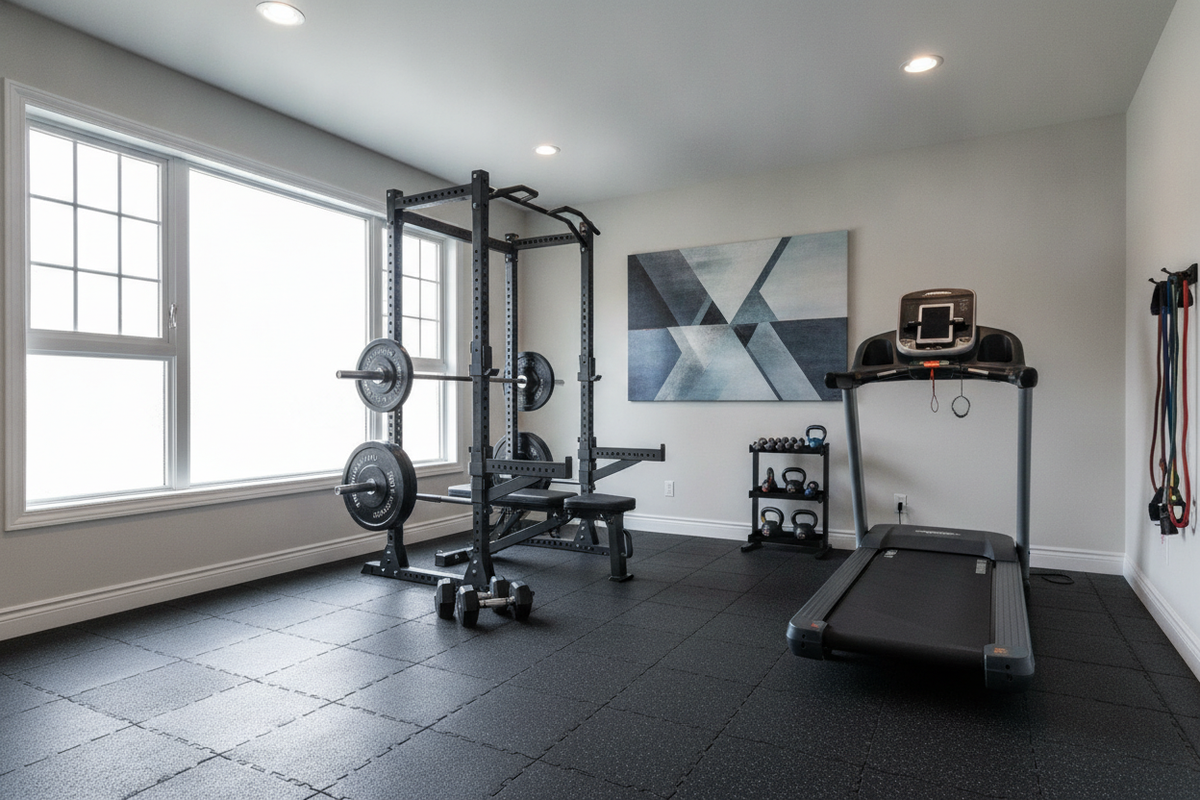
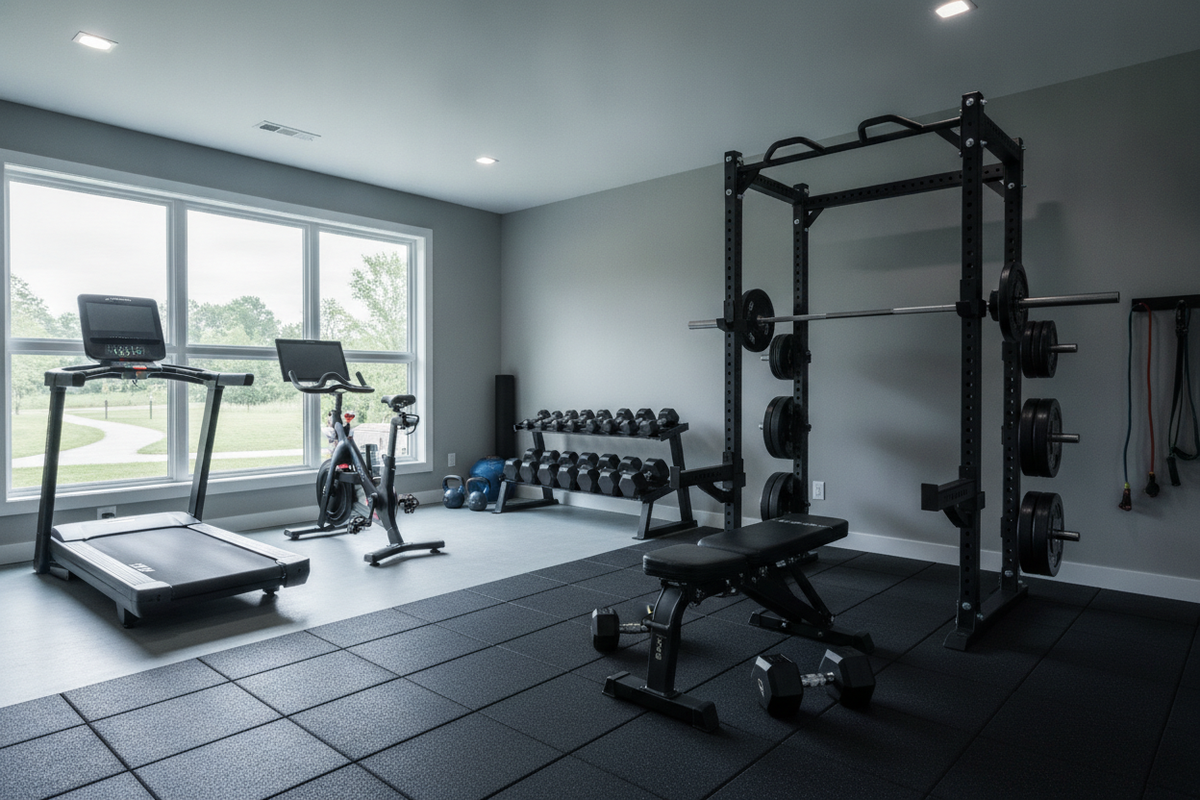
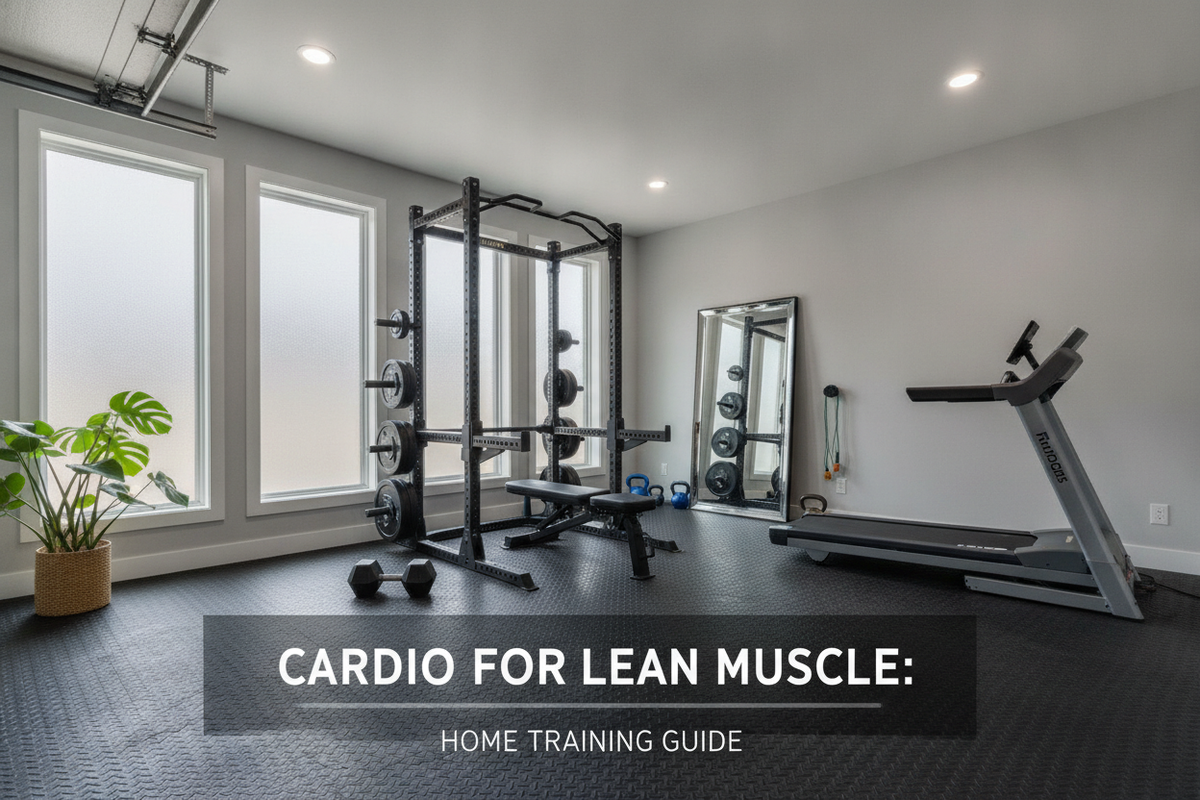
A successful home gym setup must accommodate both heavy resistance training and dynamic aerobic drills. High-impact conditioning such as jump rope drills, burpees, and lateral bounding puts repeated force on your joints, while dropped dumbbells and kettlebells demand dependable subfloor protection. High-quality gym flooring bridges these distinct needs.
Deploying a dedicated, high-density exercise mat delivers the shock absorption necessary to cushion ankles, knees, and hips during repetitive jumping. Ordinary residential surfaces—such as concrete basements or slick hardwood floors—lack forgiveness and can quickly cause joint stress during high-energy intervals. A proper exercise mat disperses impact energy, making long-term conditioning far more sustainable.
In addition to joint protection, a textured non-slip surface provides stability during rapid direction changes, mountain climbers, and jump rope sessions. That same non-slip surface prevents heavy weight benches from sliding during bench presses and provides solid traction for heavy deadlifts. Durable gym flooring also insulates against noise and vibration, ensuring your conditioning workouts remain home-friendly while delivering essential subfloor protection against stray weights.
Weekly Schedule Strategies for Combining Cardio and Lifting
Organizing your weekly schedule properly prevents endurance work from cannibalizing your strength progress. The key is distributing different training stresses so your body has time to adapt and repair.
- Upper-Body Lifting Days: Schedule moderate-intensity intervals or jump rope drills immediately following upper-body lifting sessions, as your legs remain relatively rested.
- Lower-Body Lifting Days: Avoid high-intensity conditioning immediately before or after heavy leg training. Keep post-leg conditioning limited to gentle walking or complete rest.
- Dedicated Conditioning Days: Utilize non-lifting days for low impact steady state sessions, such as a thirty-minute incline walk or light stationary cycling, to promote blood flow without joint strain.
- Recovery Days: Reserve at least one or two days each week entirely free from intense conditioning workouts to support connective tissue repair and muscle retention.
By organizing your weekly schedule around your lifting sessions, you can utilize cardio to get lean without dreading your heavy training days. Consistency in planning prevents the fatigue spillover that often halts muscle progress.
Common Conditioning Mistakes That Burn Muscle Mass
Many lifters stumble into avoidable traps when attempting to lean out. Recognizing these mistakes preserves your physique and keeps your training productive:
- Excessive Running on Hard Surfaces: Logging long miles on asphalt introduces severe eccentric pounding that impairs leg recovery and increases joint stress, compromising squat strength.
- Fasting Through Intense Intervals: Performing demanding interval training while under-fueled increases the likelihood that your body taps into amino acids for energy, threatening your muscle mass.
- Neglecting Shock Absorption: Performing dynamic bodyweight movements or jump rope on hard tile or bare concrete wears down joints; an appropriate exercise mat is essential for regular impact work.
- Overtraining Without Adequate Rest: Adding multiple high-intensity conditioning workouts on top of a demanding lifting routine without increasing sleep or nutritional support leads directly to burnout.
Maintaining Muscle While Conditioning at Home
Using cardio for lean muscle does not mean sacrificing the strength or definition you have spent months developing. By selecting the best cardio to lean out—such as low impact steady state sessions, controlled intervals, and low-impact bodyweight circuits—you can elevate energy expenditure while keeping systemic fatigue under control.
Pairing thoughtful programming with a supportive home gym setup ensures that every jump, sprint, and lift happens on a forgiving surface designed to cushion your joints. Invest in durable gym flooring, manage your weekly schedule with care, and view cardio to get lean as a valuable conditioning companion to your primary strength training goals.