Building Bulletproof Hips With an Adductor Machine at Home
Most home gym owners obsess over squat racks and barbells, often ignoring the smaller stabilizers that actually dictate how much weight you can move. We tend to neglect the inner thigh muscles until a groin strain forces us to pay attention. Adding an adductor machine at home isn't just about aesthetics or filling a corner of your garage; it is a critical investment for pelvic stability, knee health, and driving out of the bottom of a heavy squat.
Key Takeaways
- Injury Prevention: Strong adductors prevent knee valgus (knees caving in) during squats and deadlifts.
- Dual Functionality: The best home options often combine adduction (inner thigh) and abduction (outer glute) to save space.
- Space Savers: If floor space is tight, look for a standing adductor machine or cable attachments rather than a seated tower.
- Performance Carryover: Direct adductor work significantly improves explosive power in sprinting and lateral movements.
Why Adductor Strength Matters (Beyond the Gym)
The adductor magnus is essentially a third hamstring. When you are in deep hip flexion (the bottom of a squat), your adductors are primary hip extensors. If you fail coming out of the hole, it might not be your quads; it could be weak inner thighs.
Having dedicated hip abduction equipment and adduction tools allows you to isolate these muscles without the systemic fatigue of compound lifts. This isolation ensures that your stabilizers don't become the bottleneck for your primary lifts.
Choosing the Right Equipment for Your Space
The Dual-Function Unit
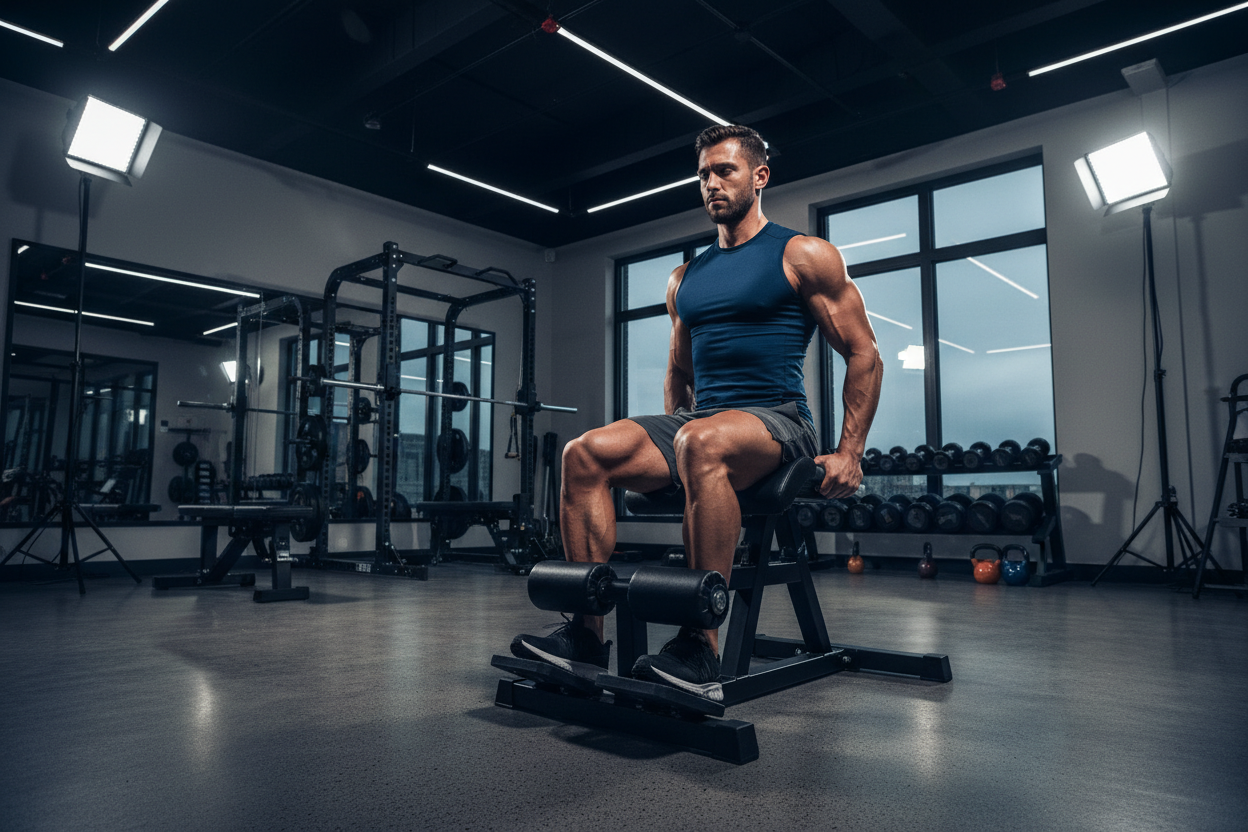
For most garage gyms, a dedicated single-purpose machine is a waste of footprint. You want an at home abductor machine that converts easily to an adductor unit. These usually involve swiveling pads and changing the cam starting position. Look for units with a heavy enough weight stack; cheap plate-loaded versions often have poor resistance curves where the movement feels too easy at the start and impossible at the end.
The Standing Adductor Machine
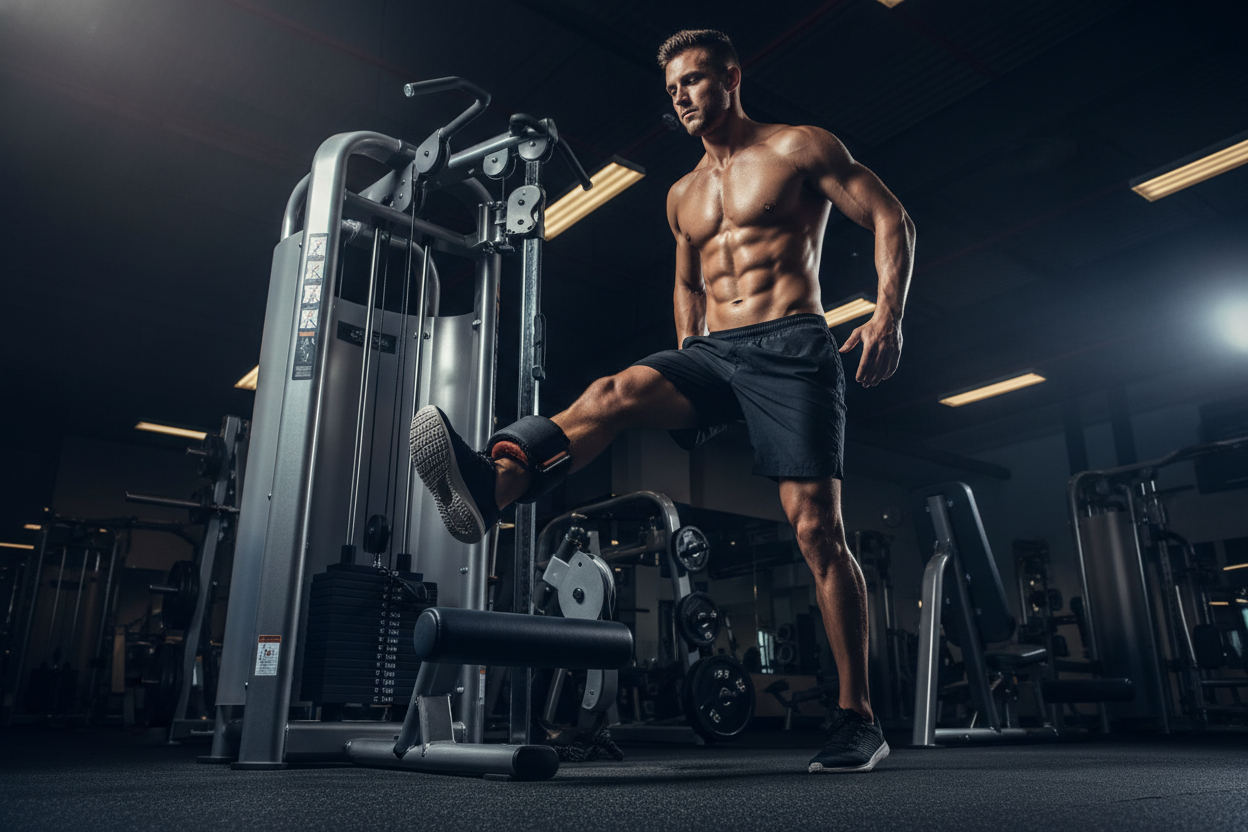
A standing adductor machine is a rare but brilliant piece of engineering for tight spaces. Instead of sitting, you stand on a platform and swing one leg across the other against a padded lever. These provide a greater range of motion and force you to stabilize your core while working the hip, mimicking athletic movements more closely than the seated variety.
Cables and Bands: The Budget Route
If a physical machine isn't in the budget, you can replicate the movement with ankle straps and a low pulley. However, the stability provided by a machine allows you to push closer to true muscular failure safely. With cables, balance often fails before the muscle does.
Programming for Hip Health
Don't treat this like a max-effort powerlifting move. The adductors are prone to nasty strains if overloaded too quickly. Aim for higher volume to drive blood flow and hypertrophy.
I recommend 3 sets of 12–15 reps. Focus on a slow eccentric (opening) phase. If you are using an at home hip abductor machine combo, superset the two movements. Do a set of adductions (in), immediately switch the pin, and do a set of abductions (out). This pumps blood into the entire hip complex, creating a massive stability pump.
My Training Log: Real Talk
I bought a plate-loaded dual adductor/abductor unit for my basement about three years ago. Here is something the product descriptions won't tell you: the friction on the inner thigh pads can be brutal if you are wearing loose shorts. I learned the hard way that you need compression shorts or leggings, otherwise, the skin pinch is worse than the muscle burn.
Also, there is a very specific, unglamorous reality to owning this machine. The first time I really pushed the weight—doing drop sets until failure—I got off the seat and literally couldn't walk straight. I had to do this awkward wide-stance waddle to get up the stairs because my legs refused to close properly. It feels ridiculous, but that specific "waddle" is how I know I actually hit the stabilizers deep enough to matter. If you can walk normally immediately after, you didn't go hard enough.
Conclusion
Integrating an adductor machine into your home routine bridges the gap between looking strong and actually being durable. Whether you opt for a standing unit or a seated combo, the goal is the same: bulletproof hips that support heavy lifting and pain-free movement.
Frequently Asked Questions
Is an adductor machine at home worth the floor space?
Yes, but only if you buy a dual-function machine (adductor and abductor). The ability to prevent knee injuries and improve squat strength makes it valuable, but a single-function machine is generally inefficient for home gyms under 500 square feet.
Can I build inner thighs without a machine?
You can use Copenhagen planks or sliding lunges, but they are difficult to progressively overload. A machine allows you to incrementally increase weight, which is superior for building raw muscle tissue compared to bodyweight variations.
How often should I use the adductor machine?
Twice a week is optimal for most lifters. Place it at the end of your leg days as a finisher. Doing it before squats can fatigue the stabilizers too much, potentially compromising your heavy compound lifts.