The Underrated Hip Flexor Machine Secret for Explosive Speed
Walk into any commercial gym, and you will see rows of treadmills, benches, and squat racks occupied. Meanwhile, tucked away in the corner, often gathering dust, is the **hip flexor machine**. It’s arguably the most neglected piece of equipment on the floor, yet it holds the key to unlocking athletic potential that squats and deadlifts simply cannot touch.
Most lifters obsess over the posterior chain—glutes and hamstrings—but completely ignore the anterior chain responsible for lifting the leg. If you want to run faster, squat deeper, or simply undo the damage of sitting at a desk for eight hours, this machine is non-negotiable.
Key Takeaways
- Targeted Isolation: The hip flexor machine allows you to load the iliopsoas directly, which is difficult to do with free weights alone.
- Speed Mechanics: Stronger hip flexors improve knee drive, directly translating to faster sprinting and explosive power.
- Injury Prevention: Strengthening the hip flexors can alleviate lower back pain caused by tight, weak hips pulling on the lumbar spine.
- Versatility: Most gyms use a "Multi-Hip" station, which serves as a standing hip machine for flexion, extension, and abduction.
Why Your Training Routine Needs Hip Flexion
The hip flexors (specifically the psoas and iliacus) are the bridge between your upper and lower body. When you sprint, jump, or squat, these muscles initiate the movement of pulling the knee upward or stabilizing the trunk.
Many people confuse tight hips with strong hips. If you sit all day, your hips are likely tight and weak. Stretching them provides temporary relief, but strengthening them on a hip mobility machine provides structural stability. A strong psoas acts as a pillar for your spine, reducing the load on your lower back during heavy compound lifts.
The Equipment: Identifying the Machine
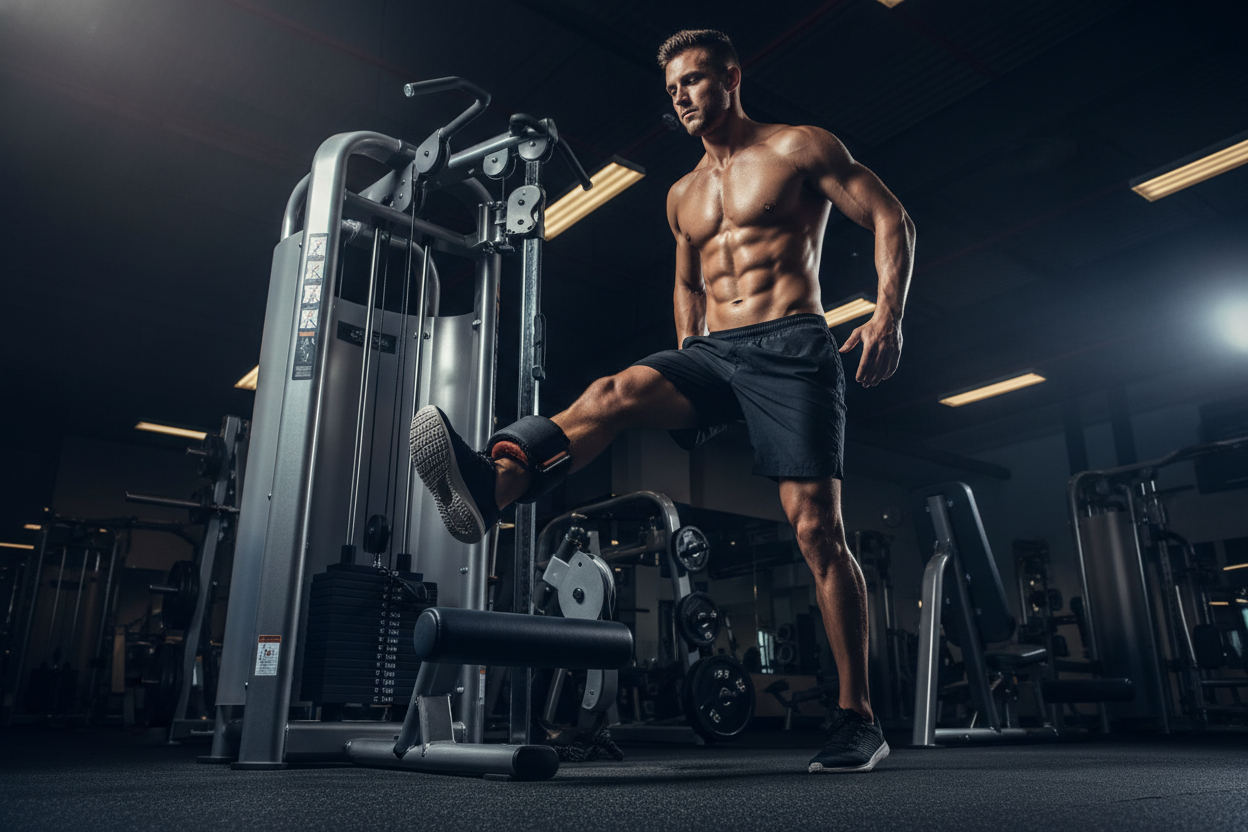
In most commercial facilities, you won't find a machine labeled "Hip Flexor." Instead, you are looking for the standing hip machine, often called a Multi-Hip station. It features a padded roller arm attached to a weight stack with an adjustable axis of rotation.
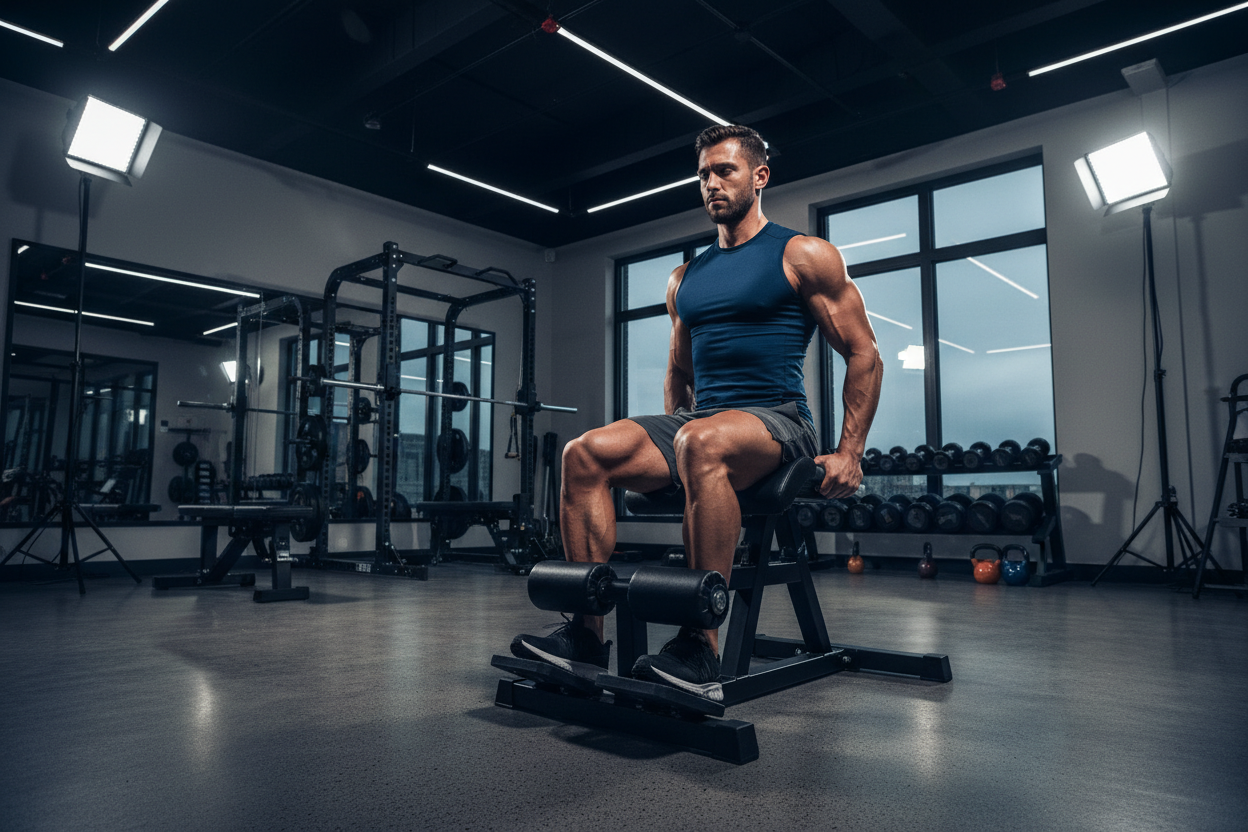
For those in specialized athletic performance facilities, you might encounter a dedicated hip flexor workout machine like a Reverse Squat strap machine. However, for 99% of gym-goers, the standing multi-hip station is the tool of choice.
How to Use the Hip Flexor Machine Correctly
Using hip flexor equipment looks simple, but subtle errors can render the movement useless. Here is how to execute the movement for maximum benefit.
1. Align the Axis
The most critical step is aligning your hip joint with the machine's pivot point (the red dot or bolt on the machine arm). If this is misaligned, the roller pad will slide up and down your leg during the rep, killing the tension.
2. Set the Pad Height
Adjust the roller pad so it rests comfortably on your lower thigh, just above the knee. Avoid placing it too high up the quad, as this reduces leverage. This setup transforms the station into an effective hip flexor exercise machine.
3. Brace and Drive
Stand on the non-working leg. Grip the handles firmly. Keep your torso upright and rigid—do not lean forward or backward to cheat the weight up. Drive your knee toward your chest aggressively, hold for a split second at the top, and lower slowly.
Common Mistakes to Avoid
Using Momentum
If you have to swing your torso to get the weight up, the load is too heavy. The hip flexor gym machine is an isolation tool, not a powerlifting station. Drop the pin down a few plates and focus on the squeeze at the top of the movement.
Ignoring the Eccentric
Don't let the weight stack slam down. The hip flexors respond incredibly well to eccentric loading (the lowering phase). Control the descent for a count of two to three seconds to stimulate real growth.
Alternatives If Your Gym Lacks the Machine
If you cannot find specific hip flexor exercises machine options, you can replicate the movement pattern using cable pulleys. Attach an ankle strap to a low cable pulley, face away from the stack, and perform standing knee drives. While less stable than a fixed machine, it offers a similar stimulus.
My Personal Experience with Hip Flexor Machines
I have a love-hate relationship with the standard Multi-Hip machine found in most big-box gyms. I remember specifically training for a 40-yard dash and realizing my knee drive was weak. I started using an older Life Fitness standing hip unit.
The first thing I noticed wasn't the strength gains—it was the bruising. On those older machines, the roller pad often lacks sufficient cushioning. When I started pushing heavier weights (around 60-70 lbs), the pad would dig aggressively into my distal quadricep. I actually had to start wrapping a small towel around the roller arm to stop it from mashing my muscle tissue.
Another nuance I found is the "wobble." On a hip flexor machine standing variation, your plant leg gets tired faster than your working leg because you are stabilizing your entire bodyweight plus the machine load. I learned that wearing a flat-soled shoe (like a Converse or lifting shoe) rather than a squishy running shoe made a massive difference in my stability. Once I locked that in, my squat depth improved within three weeks because my hips stopped fighting the bottom position.
Conclusion
The hip flexor machine is not just for rehab patients or elite sprinters; it is for anyone who wants to move better and hurt less. By integrating this equipment into your leg day—even just for three sets of 12 reps—you correct the imbalances caused by modern sedentary life. Stop skipping the anterior chain. Your squat, sprint, and lower back will thank you.
Frequently Asked Questions
How often should I use the hip flexor machine?
Because the hip flexors are smaller endurance muscles, they recover relatively quickly. You can train them 2 to 3 times per week. However, start with light volume to avoid straining the psoas, which can feel like lower back pain if overworked initially.
Can the hip flexor machine help with back pain?
Yes, often back pain is the result of a weak or tight psoas pulling on the lumbar spine. Strengthening the hip flexors through a full range of motion on a machine can improve posture and spinal stability, potentially reducing back pain.
Is a cable machine better than a dedicated hip flexor machine?
The dedicated machine offers more stability, allowing you to focus purely on muscle output without worrying about balance. However, the cable machine recruits more stabilizer muscles. Both are effective, but the machine is generally better for isolating raw strength.